

I once watched a friend try on six jumpers before a winter dinner and reject every one. Too bulky, too fussy, too warm, too forgettable. The piece she finally kept on was a black jumper vest, and by the time pudding arrived it had already earned the status of wardrobe friend.
The Enduring Charm of the Black Jumper Vest
There’s always one garment that adeptly sorts things out. It doesn’t shout from the rail or demand a whole new personality. It effortlessly slips into your life and makes the rest of your wardrobe behave.
That’s the black jumper vest for me. It layers without sulking, gives shape without stiffness, and somehow manages to look right with a crisp shirt, an old tee, a floral dress, or smart trousers. In a season of fleeting micro-trends, it feels more like a trusted neighbour who always remembers your birthday.
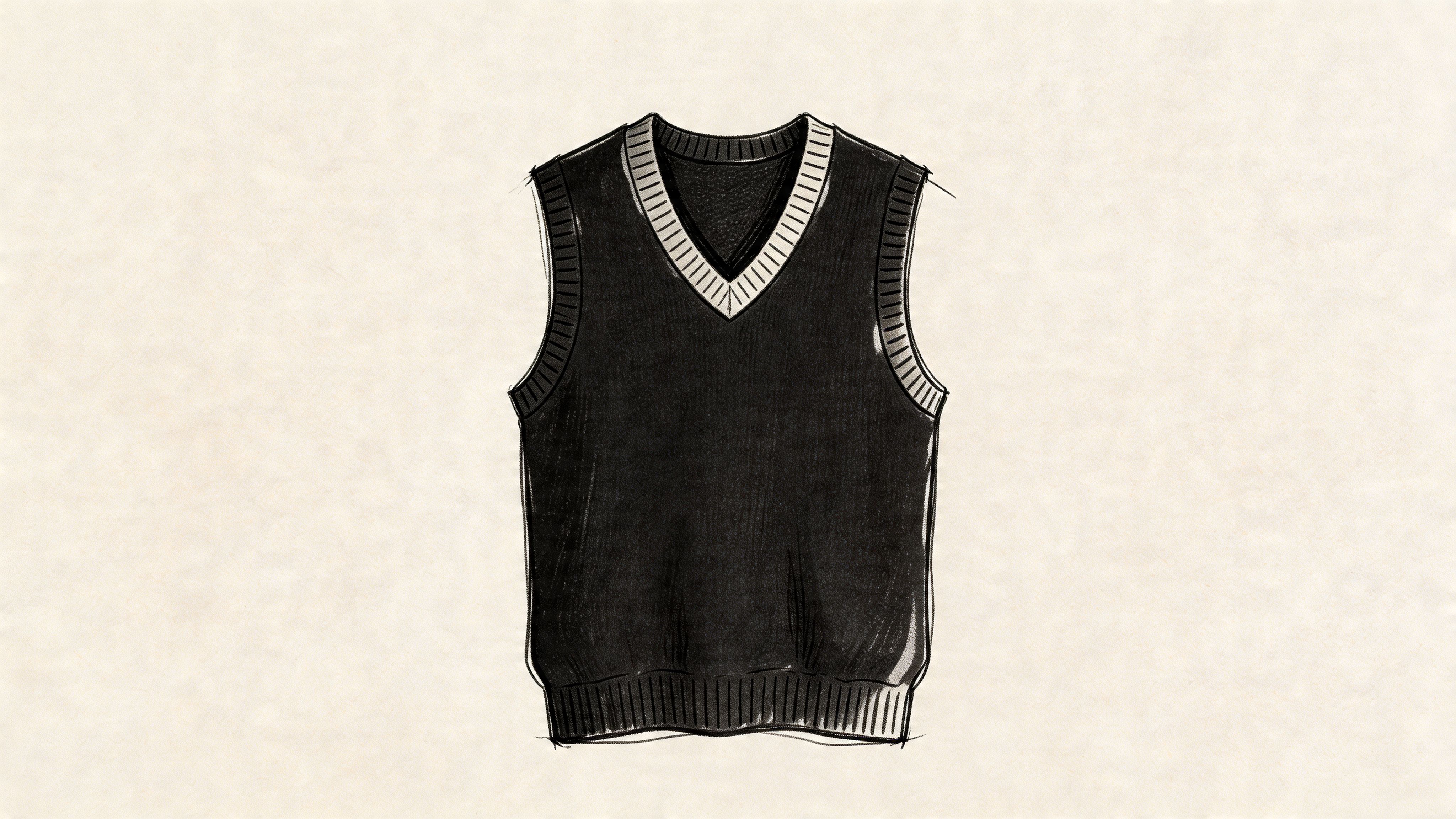
A garment with sea air in its story
The romance begins long before the modern wardrobe. The black jumper vest’s roots in the UK trace back to the Channel Islands, where the word jumper grew from jersey, the thick knit worn by fishermen. It wasn’t born in a showroom. It was born in salt wind, hard work, and practical layering.
Its fashion reputation arrived later, and with a wonderfully British flourish. When Edward VIII wore a Fair Isle sweater vest for golf in the 1920s, the style moved from sensible knit to desirable classic, helping sales rise 300% by 1925 according to this history of jumpers from utility to fashion.
Some clothes feel new when you buy them. Others feel storied. A black jumper vest belongs to the second camp.
That old practicality still matters. A good vest leaves room for movement, takes the edge off a cool day, and gives you that lovely feeling of being dressed rather than merely covered. It’s also one of the rare pieces that works across moods. Scholarly one day, relaxed the next, elegant by candlelight.
Why it still feels modern
Part of the charm is restraint. Black doesn’t fight with the rest of your wardrobe, and the sleeveless shape leaves space for contrast. Collar, cuff, dress print, necklace, tousled hair, all of it gets its moment.
If you love knitwear with a sense of heritage, this look at British knitwear adds lovely context to why these pieces still feel so grounded and relevant. A black jumper vest may be modest, but it has excellent manners and remarkable stamina.
How to Choose Your Forever Jumper Vest
The best black jumper vest doesn’t just look nice on a hanger. It passes a small series of quiet tests in your hands.
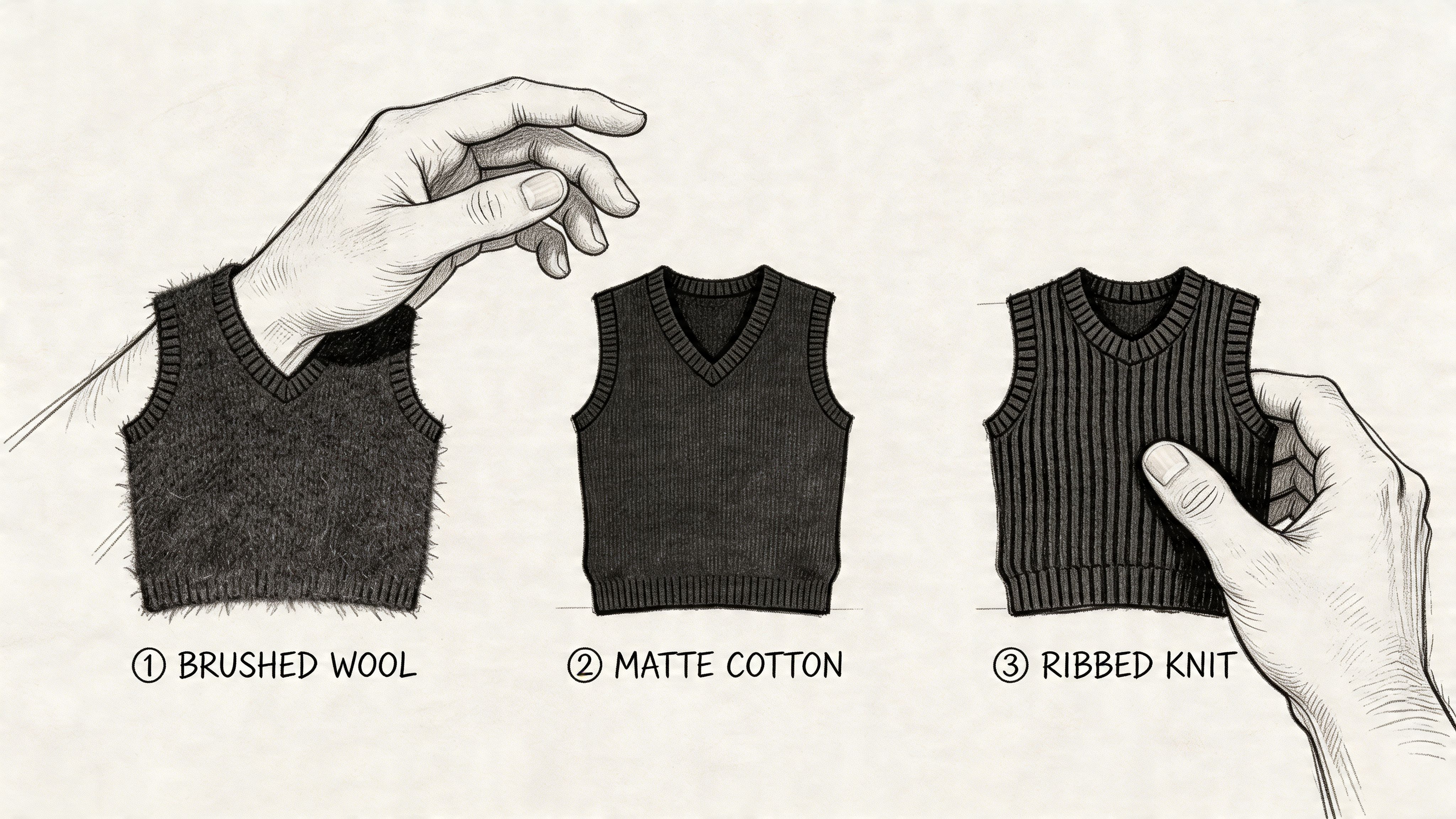
Start with touch, not trend
Run your fingers over the knit before you look at the label for too long. A natural fibre vest should feel alive rather than slick. There’s usually a softness with a little character to it, not the shiny flatness that often makes synthetic knits feel tired too quickly.
In UK artisan mills, a high-quality alpaca vest is knit on 12gg gauge machines for a breathable fabric, with ribbed welts that help prevent rolling. That matters because 68% of UK knitwear returns stem from fit distortion, and the best versions are built with durability in mind, aiming for 500 wash cycles with less than 5% shrinkage. Those details appear in the verified manufacturing notes provided for this article.
When you’re comparing silhouettes, it can help to think of the vest as part of a family of hard-working knitwear. If you also wear pieces like a black crew neck sweater, notice whether your vest complements that role or duplicates it. A forever piece should broaden your wardrobe’s possibilities, not just repeat them.
What to inspect before you buy
A lovely vest often reveals itself in the finishing. Look at the hem, the armholes, and the neckline first.
- Check the ribbing: Ribbed welts at the hem and armholes help the garment keep its shape and stop edges from curling.
- Look at the drape: A good black jumper vest should skim, not cling. If it hangs like cardboard, the yarn or construction may be working against you.
- Read the fibre label carefully: Natural fibres usually reward patience. If traceability matters to you, note where the wool comes from and whether the maker shares anything meaningful about it.
- Stretch gently at the side seam: The knit should recover rather than sag.
Practical rule: If a vest only looks good when you stand perfectly still in a fitting room, it probably won’t be a loyal companion in real life.
There’s also a quiet confidence in knowing how a garment was made. Alpaca fibre from UK farms, thoughtful spinning, careful blocking, and finishing steps designed for shape retention all tell you this isn’t a throwaway purchase. It’s a piece someone built to be worn properly.
A useful primer on fibre qualities and why alpaca knitwear behaves the way it does is this guide to alpaca knitwear.
Let the garment move before you decide
Stand up. Sit down. Lift your arms. Pretend you’re reaching for a book on a high shelf or carrying a cup of tea and your keys at the same time. The right vest won’t nag at you.
This short video is helpful if you like seeing knitwear details and fit considerations in motion.
Sometimes the wisest purchase is the one that feels slightly uneventful in the best way. No costume. No compromise. Just ease.
A Year of Whimsical Layering Recipes
A black jumper vest is less a single outfit and more a clever ingredient. Once you stop treating it like a statement piece, it starts behaving like seasoning. A little depth here, a little structure there, and suddenly familiar clothes feel freshly arranged.
Four easy combinations to keep in your back pocket
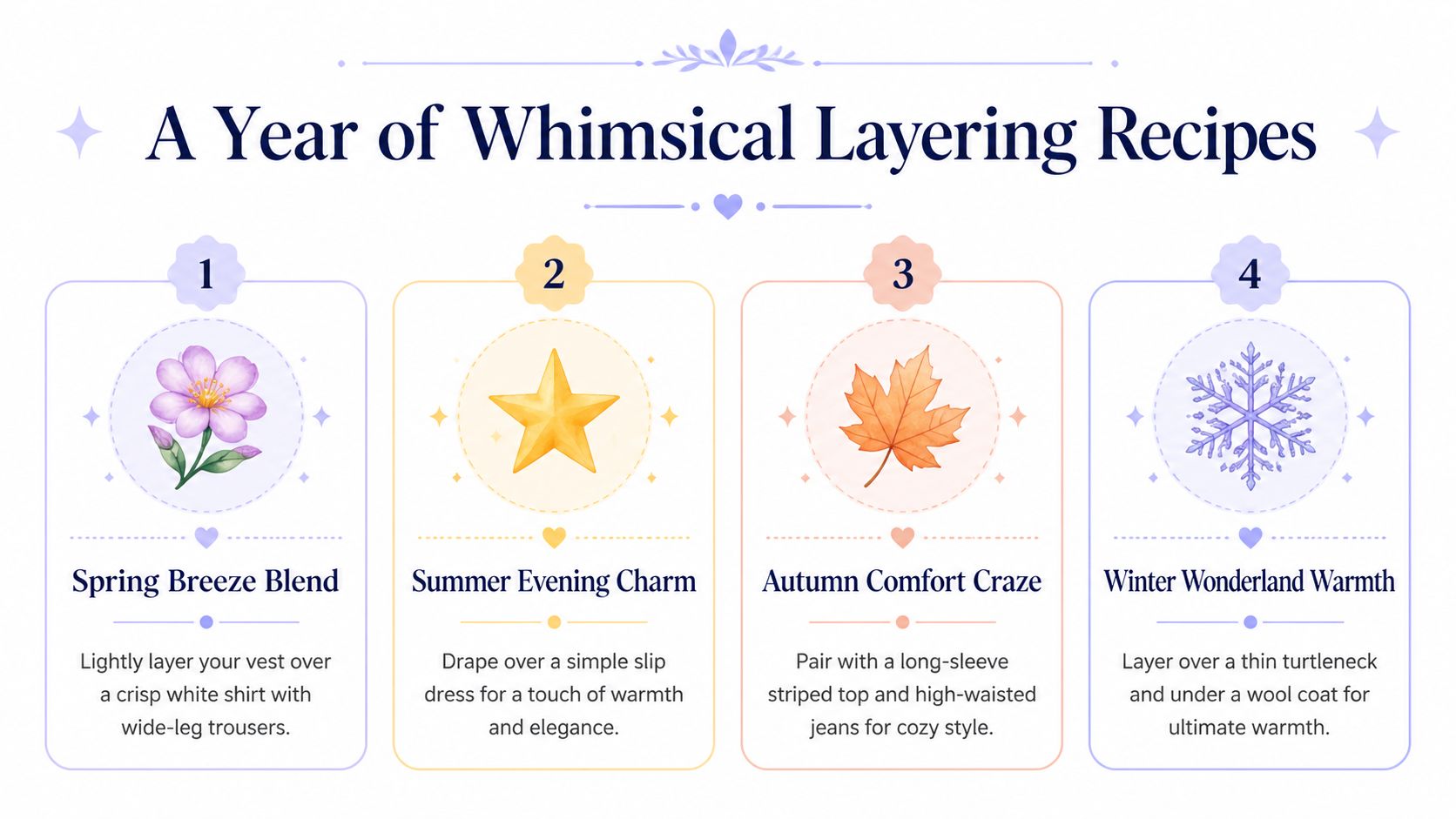
Here’s the quick visual version I’d tuck into your imaginary coat pocket.
| Recipe | Wear it with | Why it works |
|---|---|---|
| Spring Breeze Blend | White shirt, wide-leg trousers | Clean lines, soft contrast, easy polish |
| Summer Evening Charm | Slip dress | A little warmth without swallowing the dress |
| Autumn Comfort Craze | Striped top, high-waisted jeans | Playful layering with a grounded base |
| Winter Wonderland Warmth | Thin turtleneck, wool coat | Warmth, depth, and excellent collar framing |
The Seaside Scholar
This is the one I reach for when I want to look composed but not rigid. Put your black jumper vest over a crisp white or pale blue shirt, then add structured trousers and loafers or simple boots. Let the shirt cuffs show.
The magic sits in contrast. The shirt brings light and architecture, while the vest softens the whole thing. If you wear jewellery, keep it near the face. Small hoops or a chain necklace work beautifully with a V-neck.
The Countryside Curator
A black jumper vest over a dress can feel unexpectedly poetic. Choose a floral midi or a simple long-sleeved dress and let the vest add a little structure at the torso. This is especially lovely when you want your dress to work beyond one season.
If your dresses have volume, make sure the vest doesn’t cut you in an awkward place. A slightly relaxed fit usually looks more intentional than one that grips.
A good vest doesn’t flatten a dress. It edits it.
The Weekend Wanderer
For market mornings, train journeys, and ordinary Saturdays, pair the vest with jeans and a simple tee or striped top. Add trainers, clogs, or ankle boots depending on your mood. The vest makes even old denim feel considered.
Black earns its keep. It ties together mixed tones, weathered blue denim, cream canvas trainers, a tan bag, a red lip, without looking overworked.
Dressing for real bodies, not mannequins
Fit matters more than people admit. 70% of UK women report vests gapping at the bust, and ONS data shows the average UK women’s size is 16-18, according to this fit-focused sweater vest guide. The same source notes that alpaca’s natural elasticity offers 20% better stretch than merino, which helps a vest layer over curves without turning baggy, especially when it’s designed with graded grading and deeper armholes for UK proportions.
That sounds technical, but the styling effect is simple. The right vest should leave room where you need it and still look clean.
- If you have a fuller bust: Look for deeper armholes and a shape that skims rather than pulls. Layer it over shirts with a softer collar rather than a very stiff one if you want less bulk.
- If you prefer more waist definition: Wear the vest with high-waisted trousers or skirts so the proportions feel balanced.
- If you like an oversized look: Keep one part of the outfit neat. A slim turtleneck or column skirt stops the whole outfit drifting into tent territory.
- If you’re petite: Shorter hems or a half-tucked shirt underneath can help preserve shape.
A little seasonal play
The vest also responds beautifully to mood. In spring, it likes cotton poplin and loafers. In autumn, it gets along with corduroy and checked coats. In winter, it’s happiest nestled between a fine knit and outerwear like a sensible secret.
The trick isn’t to invent endless outfits. It’s to notice how one calm piece lets the rest of your wardrobe speak more clearly.
The Gentle Art of Caring for Natural Fibres
A black jumper vest made from natural fibre asks for care, yes, but not fussy devotion. More like the kind of attention you’d give fresh flowers, a loaf of good bread, or a favourite mug with a hairline crack you’d never dream of throwing away.
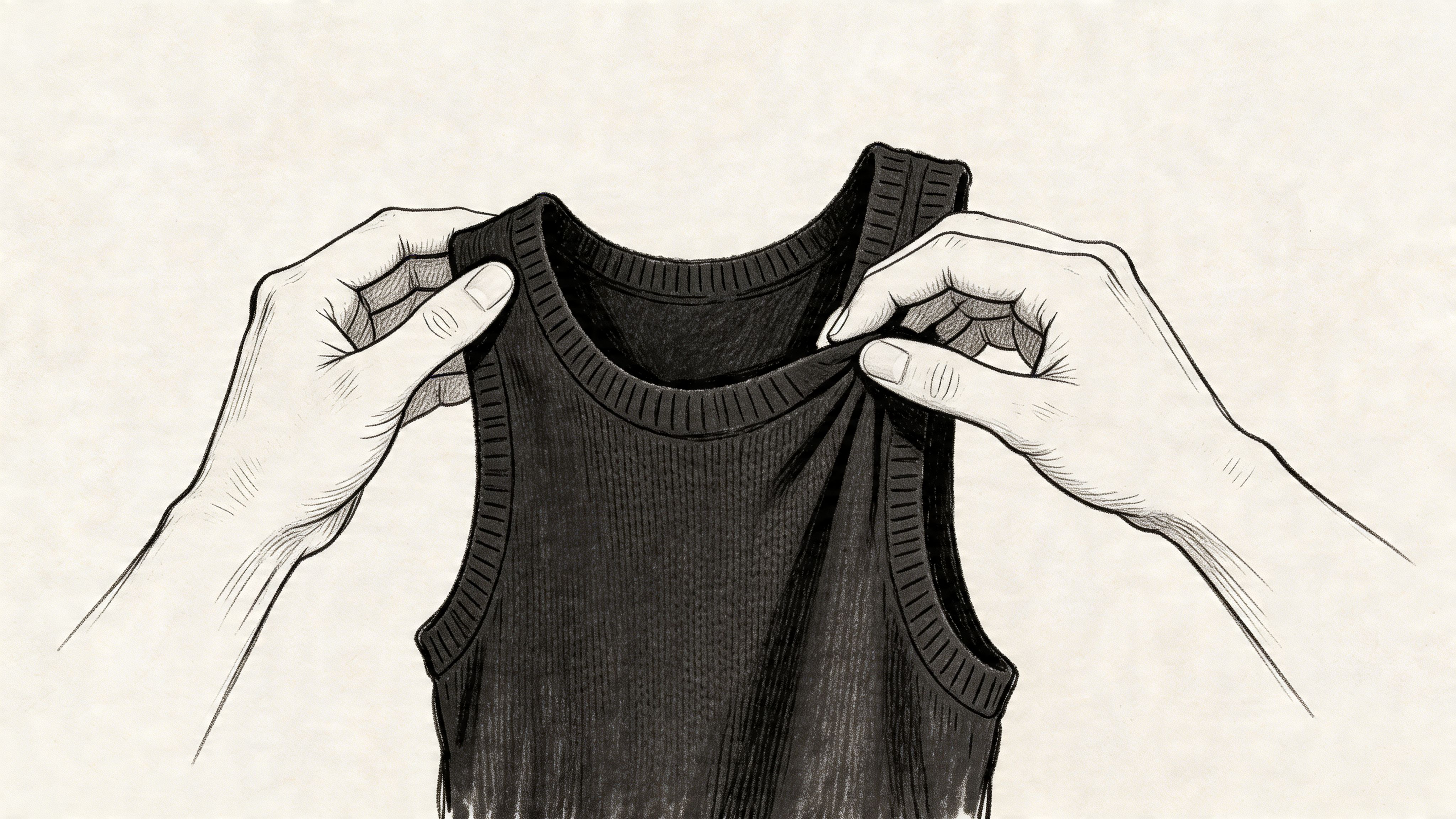
Why UK weather changes the care routine
In the UK’s damp climate, improper care can reduce a natural-fibre garment’s life by 40%. 25% of knitwear complaints involve shrinkage from washing, and cold, Woolmark-approved washes prevent fading in black dyes 50% better than with synthetics, according to this knitwear care reference.
That’s why “just bung it in” is a risky household phrase. Damp air slows drying, lingering moisture can encourage misshaping, and heat is rarely the friend of black wool.
A kinder washing ritual
You don’t need a grand laundry ceremony. Just a slower one.
- Wash less often: Air the vest after wear unless it needs cleaning.
- Use cold water: Hot water invites shrinkage and can dull the depth of black.
- Choose a Woolmark-approved detergent: Harsh formulas can roughen the fibre and fade colour.
- Support the shape: Press out water gently. Don’t wring.
- Dry flat on a towel: Reshape neckline, hem, and armholes with your hands.
Care note: Never hang a wet vest. Gravity will happily redesign it for you.
Storage matters too. Fold rather than hang. Keep it somewhere dry, and if you like a small domestic flourish, tuck in a lavender sachet. It smells lovely and makes opening the drawer feel like a tiny act of civilisation.
Build a cosy care corner
I like keeping knitwear care items together. A gentle detergent, a clean towel, a soft brush, a sachet or two, and a basket for folding. If you enjoy surrounding yourself with tactile natural materials, even a look at textured home layers like wool throw blankets can help inspire the same sort of care-minded atmosphere at home.
For a broader look at why natural fibres deserve this kind of treatment, this guide to natural fibre clothing is worth bookmarking.
The point isn’t perfection. It’s preservation. Small acts of care keep a good garment in active, happy use.
More Than a Purchase A Piece to Cherish
The old shopping script says the best fashion experience is immediate. Find it, click it, receive it tomorrow, forget it by next month. That story has never felt particularly luxurious to me. It feels rushed.
A black jumper vest makes a good argument for slower, smarter ways of bringing clothes into your life. In UK retail, organic knit vests have a 78% sell-through rate versus 52% for synthetics, and pre-order drops via Instagram can achieve 85% conversion. Rental trials also show each vest is worn 2.3 times, extending its lifecycle threefold, according to the verified retail data provided for this article.
Why waiting can be part of the pleasure
Pre-ordering changes your relationship with a garment. You’re not grabbing the last biscuit from the tin. You’re choosing something with intention and allowing it to be made or released in a more measured way.
That often means less waste, a more engaged customer community, and a stronger feeling that the item belongs in your wardrobe before it even arrives. There’s also something delightful about anticipation when it’s attached to a piece you know you’ll wear often.
Rentals make fashion feel lighter
Not every knit needs to be owned forever to be appreciated. Rentals are useful when you want to test a silhouette, style around a special event, or enjoy beautiful clothing without crowding your wardrobe.
A black jumper vest is especially suited to this model because it layers so well. You can try it over shirts, dresses, and fine knits, then decide whether you want to commit long term. That’s a more honest kind of shopping.
Owning less works best when what you keep, or borrow, earns its place.
The better question to ask
Instead of asking, “Do I want this right now?”, it helps to ask, “Will this become part of my real life?” A wardrobe-friend garment should survive weekday dressing, awkward weather, changing plans, and shifts in taste.
That’s why thoughtful buying models matter. They create space for discernment. And discernment, though less glamorous than impulse, is usually what leads to beloved clothes.
Your Wardrobe's Most Loyal Companion
A black jumper vest doesn’t need much fanfare. It proves itself, in the Monday morning scramble, the last-minute dinner plan, the cold office, the train platform breeze, the dress that needed grounding, the shirt that needed softening.
It earns affection because it’s useful, but also because it has character. There’s history in it. There’s tactility in it. There’s a certain calm intelligence in a garment that layers beautifully, asks for decent care, and keeps showing up.
If you choose one well, style it with a little curiosity, and treat the fibres kindly, it will stay close for years. That is true luxury. Not novelty, but companionship.
And if you’d like to find one made with that same long-view spirit, you can explore The Lavender Lobster, where British alpaca knitwear, pre-orders, rentals, and a softly whimsical approach to dressing all live together rather beautifully.
If a black jumper vest finds its way into your wardrobe, don’t be surprised if it becomes the piece you reach for when nothing else feels quite right. Some clothes are purchases. Some are pen pals. This one, I think, is the latter.