

On a blustery Saturday in Margate, a woman in a navy wool coat fastened a brass D-ring belt over her dress, gave the tail a neat tug, and stepped straight into the wind as if the outfit had always belonged to her. The belt looked small, but it held the whole shape together, a tiny bit of hardware doing proper work with a bit of sparkle.
A Small Loop with a Long Story
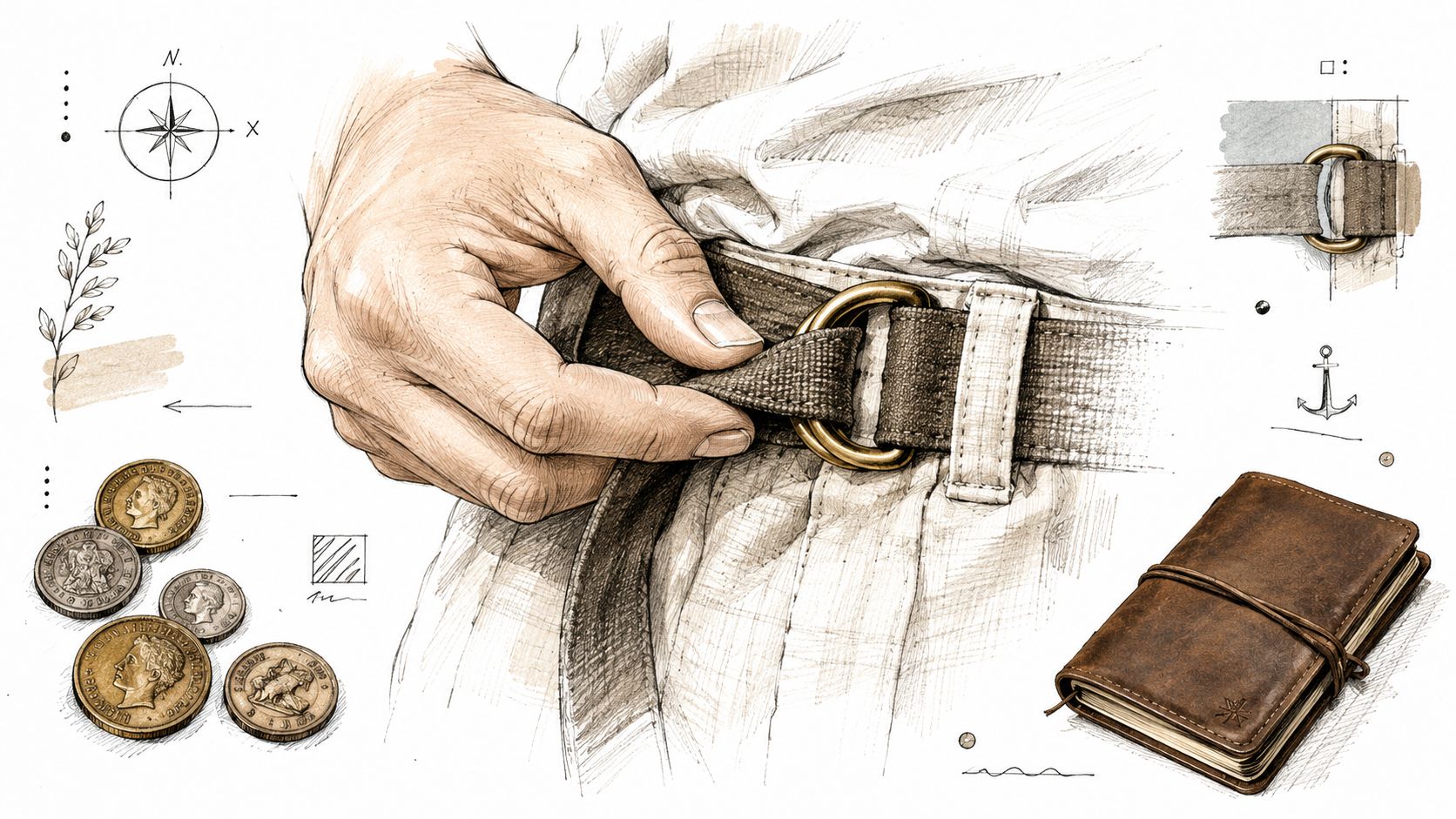
A good D-ring belt has the charm of a seaside keepsake and the logic of a tool. You notice it first in the hand, the cool weight of brass, the faintly burnished edge of leather, the soft grain of webbing passing through metal. Then you notice what it does to an outfit, a blouse cinched cleanly at the waist, a coat that stops flapping like a sail and starts standing to attention.
Its strongest British anchor is the Sam Browne belt, a military leather system linked to General Sir Samuel James Browne (1824 to 1901). The British Army adopted it service-wide in 1900 during the Second Boer War, after earlier use in India, and the waist belt included D-rings that helped secure the shoulder strap and equipment British Museum record. That detail matters because it shows the hardware moving from battlefield practicality into a broader British uniform language, where function started to pick up a little poetry.
From kit to wardrobe
The old appeal never really left. D-ring fastening suited different bodies, different layers, and different jobs, which is why the design keeps resurfacing in workwear, school uniform echoes, and modern styling. The belt doesn't need a fixed hole to behave. It folds, grips, and stays where you put it, which feels almost seaside in spirit, steady as a pier railing and clever without showing off.
That's why the little twin rings endure. They solve a very ordinary problem, how to keep a belt secure, adjustable, and neat, while looking faintly decorative. In British textiles, that sort of elegance often wins out over trend noise. The best details don't shout, they just keep doing their job while the wool, leather, and cotton around them soften with age.
How D Ring Belts Work
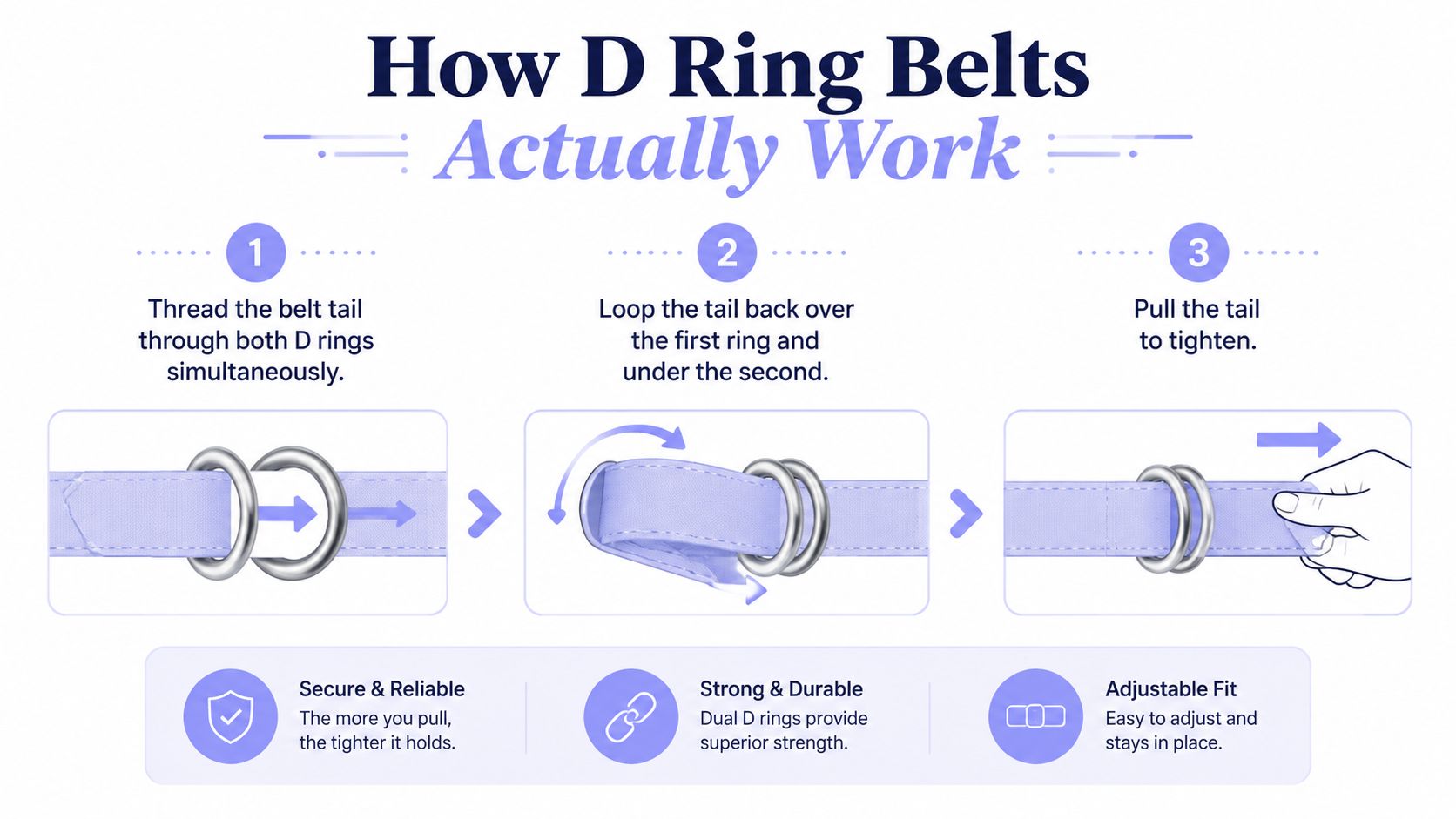
A D-ring belt fastens by threading the tail through both rings, folding it back, then bringing it under the first ring so the friction holds everything in place. Pull the loose end, and the belt tightens in one steady motion.
That simple path is why the closure feels so forgiving. There are no punched holes to stretch out, no fixed notch that lands between sizes, and no prong choosing the wrong day. The metal spreads tension across the strap, while the wrap-through shape gives the belt enough grip to stay put through a long lunch, a train ride, or a coat-heavy commute.
Practical rule: if the webbing twists or the tail slips when you move, the belt is either threaded badly or built too lightly for the load.
Why the closure still makes sense now
A D-ring closure suits changing layers and changing bodies. That was useful in military kit, and it still helps in modern wardrobes, where the same belt might sit over a tee one day and a knit dress the next.
It is kinder to everyday wear, too. Because the fit comes from friction and wrap length, you can adjust it in small steps instead of living with rigid hole spacing. That makes it easier to sit, breathe, eat, and still look pulled together, which is a tidy trade for two metal loops.
The shape also suits a wardrobe with a little personality. The Sailor Hats, for instance, are made from offcuts of larger garments, available in Garden Society, Ledger, and Regatta Stripe prints, and individually made by seamstresses in the UK. Paired with a D-ring belt, they give the outfit a coordinated feel without tipping into matchy-matchy, which suits the belt's old-world neatness.
Choosing the Right Material and Finish
A D-ring belt can feel like a brisk village walk or a proper handshake, depending on what it's made from. Vegetable-tanned leather brings structure and a bit of patina, recycled leather keeps the same visual seriousness with a lighter conscience, and waxed canvas leans into utility with a weatherproof sort of calm. British wool webbing softens the whole idea, especially over knitwear, while vegan microfibre gives a smoother, plant-based alternative for people who want the look without the hide.
The finish changes the mood just as much as the strap. Antique brass looks warm and heritage-minded, polished nickel reads crisp and modern, matte black keeps everything pared back, and wooden rings bring a gentler, almost craft-fair feeling. If you like a belt to disappear into the outfit, go matte or nickel. If you like it to catch the light as you move, brass does that lovely old-lantern thing.
Material, mood, and use case
| Material or Finish | Best For | Feel and Drape | Sustainability Note |
|---|---|---|---|
| Vegetable-tanned leather | Coats, trousers, sharper dresses | Firm, structured, improves with wear | Good if sourced well and kept for years |
| Recycled leather | Everyday styling, lighter wardrobes | Similar body to leather, slightly softer edge | Reuses material that already exists |
| Waxed canvas | Utility looks, weekend layers | Sturdy, practical, slightly textured | Durable and repair-friendly |
| British wool webbing | Knit dresses, cardigans, loungewear | Soft, flexible, warmer against the body | Natural fibre, often a quieter visual choice |
| Vegan microfibre | Clean, minimal outfits | Smooth, lighter, less traditional | Plant-based or synthetic depending on construction |
| Antique brass | Heritage styling | Warm, mellow, characterful | Ages attractively with use |
| Polished nickel | Modern, neat outfits | Bright, cool, precise | Easy to pair with cooler palettes |
| Matte black | Minimal wardrobes | Low-shine, understated | Keeps focus on the silhouette |
| Wooden rings | Bohemian, soft styling | Gentle, tactile, less industrial | Good for a softer finish if well made |
For a linen dress such as The Lobster Bisque Dress, a softer ring finish can keep the waistline feeling airy rather than stern. For coat weather, I'd reach for rigid leather or waxed canvas, because the belt needs enough backbone to sit over layers without sulking. If you're exploring natural fibres more broadly, the brand's own thinking on the subject is set out in this note on natural fibre clothing, and it sits neatly alongside the practical question of what you'll wear.
A repaired vintage belt, a British-made belt, or a plant-based alternative can all be sensible choices. The right one is the one you'll wear often enough to justify keeping.
Getting the Fit Right Without a Tape Measure Drama
A belt that looked perfect over a cotton tee can feel awkward over a wool cardigan, and that's where D-ring sizing starts to trip people up. These belts are judged by where they sit on the body, how much fabric they need to pass over, and how much tail you want left to drape neatly. UK retailers usually size them against real waist measurements rather than vague S/M/L labels, which makes far more sense once you've worn one a few times.
A useful starting point is the body, not the tag. One UK guide maps women's belt sizes from UK 6 to 22, with the smallest fitting a waist up to 25 inches (64 cm) and larger sizes stepping through ranges such as 30.5 to 32 inches (77 to 81 cm) and 39.5 to 41 inches (100 to 105 cm) Boden sizing guide. Another UK chart measures from the middle belt hole to the point where the buckle joins the belt, with 7 holes spaced 2.5 cm apart and sizes 28 to 44 mapping to total lengths from 96 cm to 115 cm Strait City sizing guide. If you want the simplest check, use the Lavender Lobster size chart alongside your usual waist measurement, then compare it with how you plan to wear the belt.
Waist placement changes everything
A belt worn at the natural waist usually needs a shorter length than one worn over a coat or low on the hips. Over winter knits, a shirt dress, or a thicker layer of wool, you need room for fabric bulk and a little movement. That is why generic labels can mislead. A belt that feels neat over a thin top may pinch over a cardigan, or hang too loosely when you swap it for a lighter dress.
The smartest at-home method is almost dull, which is exactly why it works. Wrap a soft tape, ribbon, or an existing belt around the spot where you plan to wear it, then check how much tail you want left after threading. If you are between lengths, choose the longer one, because a D-ring system can usually be tightened, while a short belt leaves no room to adjust.
If the belt is for dresses, measure over the dress. If it is for coats, measure over the coat. The garment changes the number more than people expect.
If you like a ready-made reference point, measure over a similar outfit and compare it with the brand's own notes rather than guessing from size letters alone. Keep the wrap-through tail even on both sides, then use a mirror or phone photo to check that the belt sits level. That small habit saves a lot of faff when buying online, and it helps cut avoidable returns too, which matters in a category where fit problems are a common reason clothes come back UK online fashion returns coverage.
Styling D Ring Belts Across Your Wardrobe
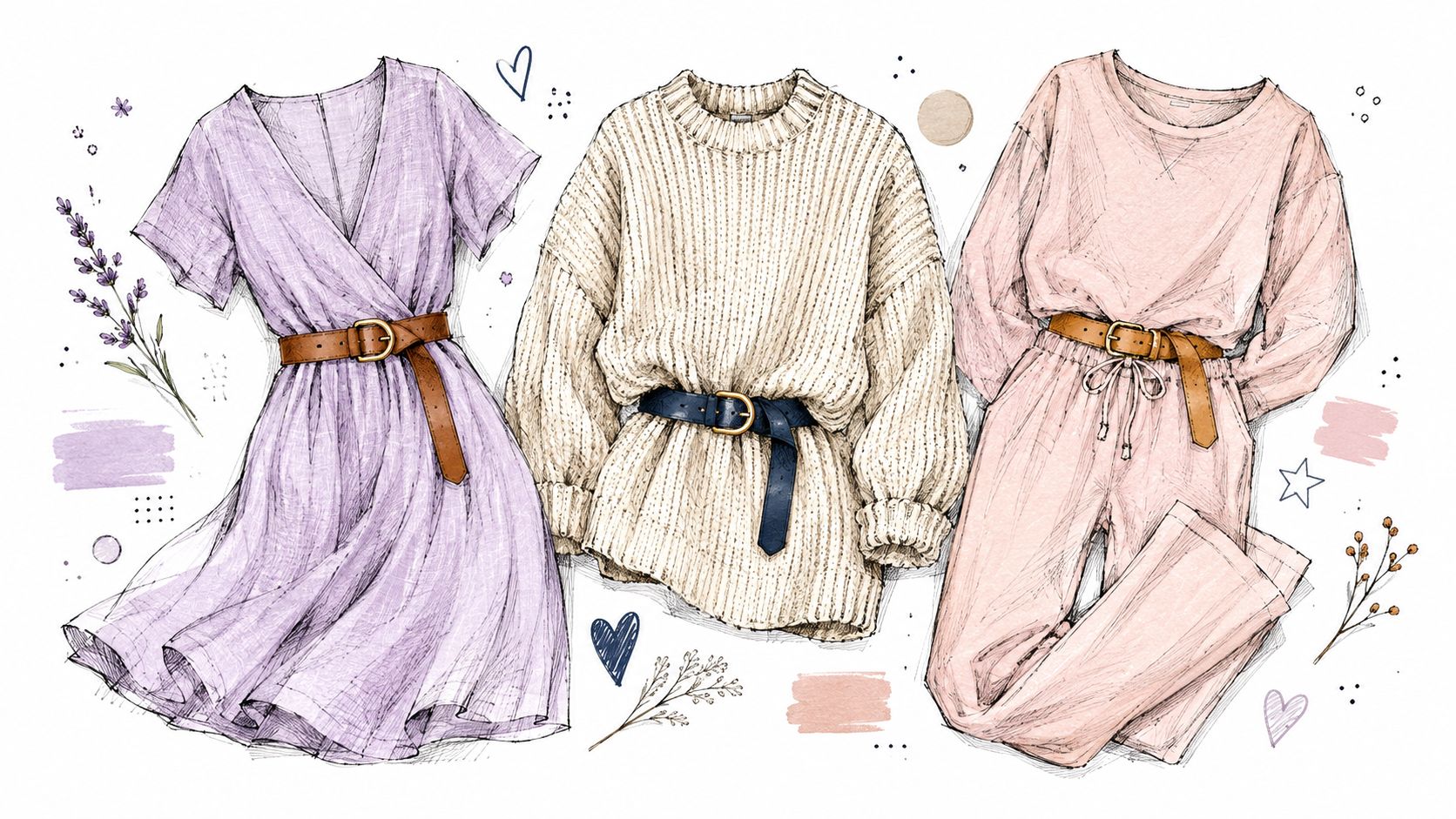
On a July afternoon, a linen tea dress can look finished with a slim D-ring belt in faded brass, especially if the belt sits slightly off-centre and the tail hangs like ribbon after the knot. On a drizzly October morning, the same belt changes the mood over an oatmeal knit and a wool skirt, drawing the outfit into one quiet line. The hardware matters, but proportion does most of the work.
Three ways it earns its keep
- For dresses: A floral midi with mossy tweed or a soft leather belt creates a waist without fuss. Let the buckle sit front and centre if you want the belt to read as an accent, or shift it slightly to the side for a softer finish.
- For knitwear: Chunky jumpers and cardigans need a belt with enough body to sit over the fabric. British wool webbing feels especially right here, because it keeps the look soft rather than overworked.
- For loungewear: A matching set can look surprisingly polished when cinched with a slim belt and worn with loafers or bare feet by the fire. The belt adds shape without making the clothes feel overdone.
A small wardrobe can still feel varied if the belt changes the story. Faded oxblood leather against a pale oatmeal sweater gives a pub-at-dusk mood. Polished nickel over a navy jumpsuit feels cleaner and sharper, while a matte black ring keeps a monochrome outfit modern. For outfits with a coastal, countryside tilt, those small shifts do more work than a pile of extra accessories.
The Lobster Bisque Dress has the kind of breathable linen shape that likes a gentle waist definition, especially when the rest of the outfit stays easy. One belt can cover a surprising amount of ground if you let the tail hang long one day and knot it shorter the next.
Caring for Your Belt So It Lasts for Years
Leather likes a bit of attention, not a fuss. If you wear a full-grain belt often, condition it sparingly so it doesn't dry out. Suede needs a soft-bristle brush, canvas webbing prefers spot-cleaning, and wool straps are happier aired between wears than scrubbed into submission.
One UK care guide is very clear on belt maintenance, telling customers not to wash, bleach, tumble dry, iron, or use biological cleaning products, and to clean only in a professional care centre or by sponge-cleaning with lukewarm water and mild soap. It also says to dry the item away from heat sources UK care guidance. That's the sort of instruction that sounds stern until you've seen a lovely strap go stiff or warped from impatient drying.
Small habits that save a belt
Do this instead: roll the belt loosely or lay it flat in a cool, dry drawer. Hanging it from one ring is the quickest route to a warped loop.
Rain splashes usually need blotting, not drama. Salt stains from winter walks can be handled gently once the belt has dried, and accidental indigo transfer from denim is best treated as soon as you spot it, before it settles into the fibres. A seasonal ritual with beeswax balm for leather and cedar blocks in the drawer keeps the whole arrangement feeling cared for rather than merely stored.
If you're looking for a broader philosophy on longevity, the brand's own guidance on how to make clothes last longer sits neatly with belt care. The principle is the same in both places. Treat the thing well, and it gives you more seasons back.
That's the quiet sustainability of accessories like this. A belt that stays neat, dry, and properly stored doesn't need replacing nearly as often, and that keeps one more little item out of landfill.
Building a Whimsical, Wardrobe That Lasts
A good wardrobe doesn't need dozens of belts. It needs the right few, chosen as if they're meant to stay. That means looking at patina, repairability, and how a belt will age with a coat you love rather than buying whatever matches the mood of the week.
A small, sensible belt collection
- Slim wool webbing belt: Best for everyday knitwear, shirt dresses, and low-key weekday looks.
- Wide leather belt: Best for coats, sharper dresses, and outfits that need a bit more structure.
- Waxed canvas belt: Best for weekends, utility layers, and anything that leans practical without losing charm.
A micro-capsule like that covers most styling moments without turning the drawer into a tangle. It also leaves room for better sourcing choices, like vegetable-tanned leather from British tanneries, undyed British wool straps, recycled brass rings, or secondhand finds from vintage fairs. Each option has a different feel, but they all reward slower buying if you're prepared to let them age with you.
The reason this works is simple. D-ring belts aren't seasonal in the way prints sometimes are. They're shape tools, and shape tools belong in a wardrobe for years, not months. If a belt can go from a fisherman's coat, to a knit dress, to a Sunday errand outfit without looking out of place, it's already earned its keep.
That's the sort of piece The Lavender Lobster gravitates towards, things with a bit of character, room for repair, and enough visual calm to live alongside better-made clothes. Slow down, choose with intention, and let a few well-loved belts do the steady work of anchoring the wardrobe while the rest of it changes with the weather.
If you've got one old belt lurking in a drawer, pull it out, check the rings, and try it over your favourite coat or dress this week. If it still has good bones, keep it in rotation, and if you need a new one, choose the material, width, and finish that will work hardest in your real life, not just in the mirror.