

You're standing in front of the wardrobe with a dress on the hanger and one question forming fast: is the bow on the shoulder too much, or is it exactly the point? The answer depends less on bravery than on proportion, fabric, placement, and whether the rest of your outfit knows when to be quiet.
A shoulder bow changes the line of a dress. It frames the face, pulls attention upwards, and gives even a simple silhouette a little theatrical flutter. The trick is making that flutter feel like you, not like you've wandered into a costume cupboard inhabited by very opinionated swans.
Why a Bow on the Shoulder Changes the Whole Dress
A bow at the shoulder isn't merely a pretty addition. It acts like a visual exclamation mark, creating a focal point near the face and altering how the neckline, sleeves, waist, and skirt are read together. A small tied detail can make a relaxed linen dress feel romantic. A stiff, oversized bow can turn a sleek evening dress into something deliberately dramatic.
That upper-body emphasis has a long history in British dress. During the 1820s, fashion moved from the Empire silhouette towards the Romantic silhouette. By 1825, the natural waistline, large puffed sleeves, and wide skirt had become established in Britain and Europe, while by 1827 sleeve breadth had grown into gigot, or leg-o’-mutton, proportions. In 1828, skirts had become so full that fabric needed to be pleated into the waistband rather than shaped with gores alone. Fashion historians observed that, by the end of the decade, the upper arm could appear “quite double the size of the waist” in the period's exaggerated proportions. Fashion History Timeline
Victorian clothing continued that conversation between shoulder exposure, structure, and ornament. Formal womenswear often used low, almost off-the-shoulder necklines from 1837 onward, while stays had straps positioned close to the shoulders so they could remain hidden beneath sweeping necklines. By the 1850s, the open triangle created by sloped shoulders remained a defining shape, with floor-length skirts gathered or box-pleated at the waist. Victoria and Albert Museum
A detail with proper staying power
Shoulder emphasis later became unmistakably modern. Shoulder padding was widely adopted after Elsa Schiaparelli's 1931 collection, surged again in the early 1940s, and returned in the 1980s, according to the historical record documented by the Fashion History Timeline. Fashion History Timeline on shoulder padding Vogue UK places the power shoulder's peak between 1984 and 1989, when Oprah, Princess Diana, and Michael Jackson helped make accented shoulders a pop-culture phenomenon. Vogue UK
So, no, you're not chasing a flimsy micro-trend. You're joining a very confident line of dressing that has always understood the charm of a little architecture above the waist. Choose the right bow and you'll have something whimsical, wearable, and surprisingly grounded.
Picking the Right Bow Placement for Your Body and Occasion
Start with the bow's position, not the colour. Placement decides where the eye lands, how broad the shoulder line appears, and whether the dress feels polished, playful, or faintly overexcited.
A centre-shoulder bow creates symmetry and adds gentle width to the upper frame. That can balance fuller hips or a generous skirt, especially when the waist is clearly defined. An off-shoulder knot lifts the neckline visually and suits a longer neck or an open décolletage, but it can feel crowded if the bow sits too close to a high collar.
A single asymmetric bow creates a diagonal line across the body. It's the most animated option, particularly on a simple column or softly draped dress. A detachable tie is the practical charmer. Wear it for a garden party, remove it for work, then put it back on for supper without buying a second personality.
| Bow Placement | Silhouette Effect | Best For |
|---|---|---|
| Centre shoulder | Adds symmetry and a touch of width | Balancing a fuller skirt or wider hips |
| Off-shoulder knot | Lifts the neckline and opens the upper frame | Longer necklines and formal occasions |
| Single asymmetric bow | Draws the eye diagonally and creates movement | Simple dresses, date nights, and artistic styling |
| Detachable tie | Changes the mood without changing the dress | Day-to-evening wardrobes and repeat wear |
Match scale to the invitation
For a wedding or christening, choose a bow with graceful volume rather than a rigid, enormous loop. Natural linen, cotton, or a soft blend works beautifully for daytime celebrations, while a smoother fabric can sharpen the look for an evening reception.
A garden party welcomes colour, texture, and a bow that moves in the breeze. Keep the footwear grounded if you'll be crossing grass. For a date night, an asymmetric bow on a clean silhouette feels flirtatious without looking overworked. A work dinner calls for restraint, particularly around the neckline, while a weekend stroll benefits from a smaller tie, practical shoes, and a layer you can carry.
The Lobster Bisque Dress is made from 100% organic linen with a soft organic cotton lining, a useful example of how a natural-fibre dress can keep a decorative detail feeling relaxed rather than overly formal.
Proportion rule: The bow should match the dress's mood, not fight it. A floaty dress wants softness, a tailored dress can handle definition, and a heavily embellished dress rarely needs a competitive ribbon.
Styling Accessories, Footwear, and Layers That Let the Bow Shine
The bow is already doing the talking, so your accessories should behave like polite dinner guests. They can be interesting, but they shouldn't interrupt.
Give the dress three separate lives
For daytime, pair the dress with a low block heel, soft canvas or raffia bag, and one small gold or silver stud. Pull your hair back so the shoulder line remains visible. This is particularly effective with organic linen, where the natural texture already supplies enough visual interest.
For evening, sharpen the outline with a sleek mule or barely-there sandal. Add a small clutch and a delicate drop earring, then let a softly waved hairline frame the face without hiding the bow. If the dress has a high-volume shoulder detail, skip a necklace entirely. The neckline has already found its leading role.
The transitional version needs texture rather than sparkle. Throw a fine alpaca cardigan or an unstructured blazer over your shoulders, add ankle boots, and carry a leather satchel. Keep the layer loose enough that it doesn't crush the bow. If you need more guidance on finishing a formal look without cluttering it, the Get Spliced bridal accessory guide offers useful ideas for balancing statement details with quieter jewellery.
Edit with a firm hand
Avoid chunky chokers. They crowd the neckline and create a visual traffic jam beside the shoulder detail. Oversized tote bags can overpower a smaller bow, particularly on a narrow dress, while scarves often cover the exact feature you chose the dress to show.
Think in fabric rhythms. A soft linen dress works with raffia, canvas, leather, and fine knits because those materials preserve its relaxed character. A heavy synthetic blazer can flatten the bow's volume and make the whole outfit look stiff. Natural fibres don't need to be matched perfectly, but they do need compatible movement.
For countryside-to-coast dressing, choose a woven bag, practical sandals or boots, and a cardigan with enough softness to sit lightly on the shoulders. The same dress can move from a village fête to a sea-front supper if the accessories change, not the entire wardrobe. That's where the bow earns its keep.
Caring for Natural and Organic Fabrics So the Bow Keeps Its Shape
A shoulder bow is a small architecture project. Washing and storage decide whether it remains a crisp flourish or becomes a tired little knot with no ambitions.
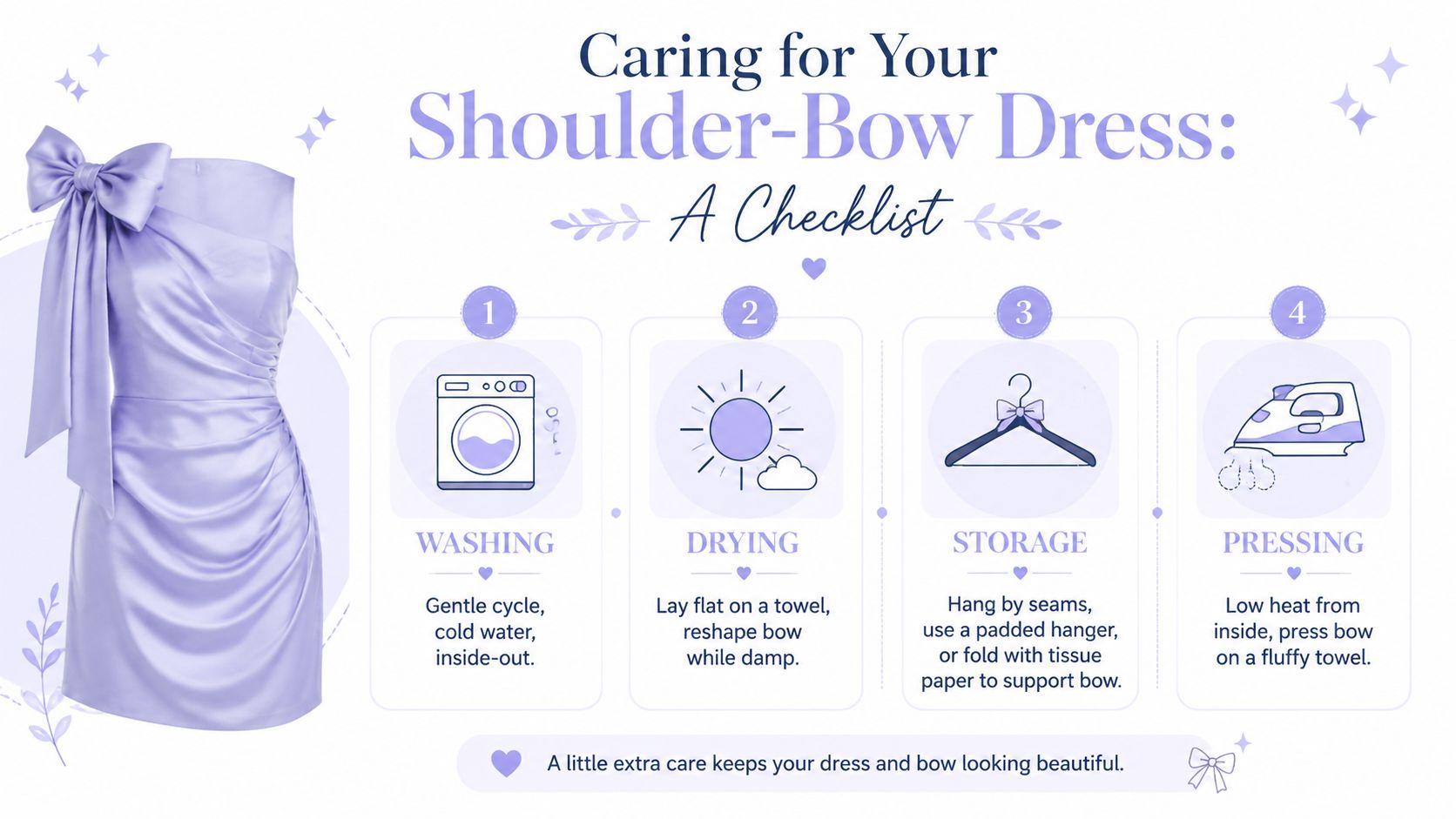
Organic linen softens beautifully with washing, but a hard spin can crush the bow and set unwanted creases into its loops. Organic cotton linings need cool treatment because heat and rough handling can stress the seam structure. Alpaca knit is different again. Pieces such as the Après Ski Cardigan and Sailor Scarf at The Lavender Lobster use 100% British alpaca wool, a fibre that's naturally odour-resistant, so airing and a gentle brush will often be preferable to full washing.
For delicate garments, follow a specialist's instructions rather than trusting a generic cycle. Tumble Laundry's guide to how to wash silk clothes is a useful reference for understanding why temperature, agitation, and drying method matter for fragile fibres. For linen-specific advice, keep the linen care guide close to your laundry basket.
A fabric cheat sheet worth saving
- Organic linen: Use a cool, gentle wash. Reshape the bow while damp and dry the dress according to its care label. Avoid a forceful spin.
- Organic cotton lining: Wash cool and handle the garment inside out where appropriate. Support the shoulder seams while wet.
- Alpaca knit: Air first, brush gently, and wash only when needed. Dry knit bows flat, never hung, because their weight can pull the shape down.
- Satin or silk: Use the garment's specific care instructions. Avoid rough agitation and direct heat.
Press the bow rather than ironing across it. Place it on a soft towel, use low heat if the fibre allows, and press from the reverse side. Shape the loops with your fingers while the fabric is warm, but don't stretch them.
For storage, place tissue paper inside the bow loops, use a wide hanger for woven dresses, and choose a breathable garment bag. Never squash a sculptural bow beneath a stack of jumpers. It will remember, and it has an excellent memory.
Fit and Simple Alterations Around the Shoulder
Shoulder fit decides whether the bow looks intentional or whether it droops like it's just received disappointing news. Measure before you blame the dress.
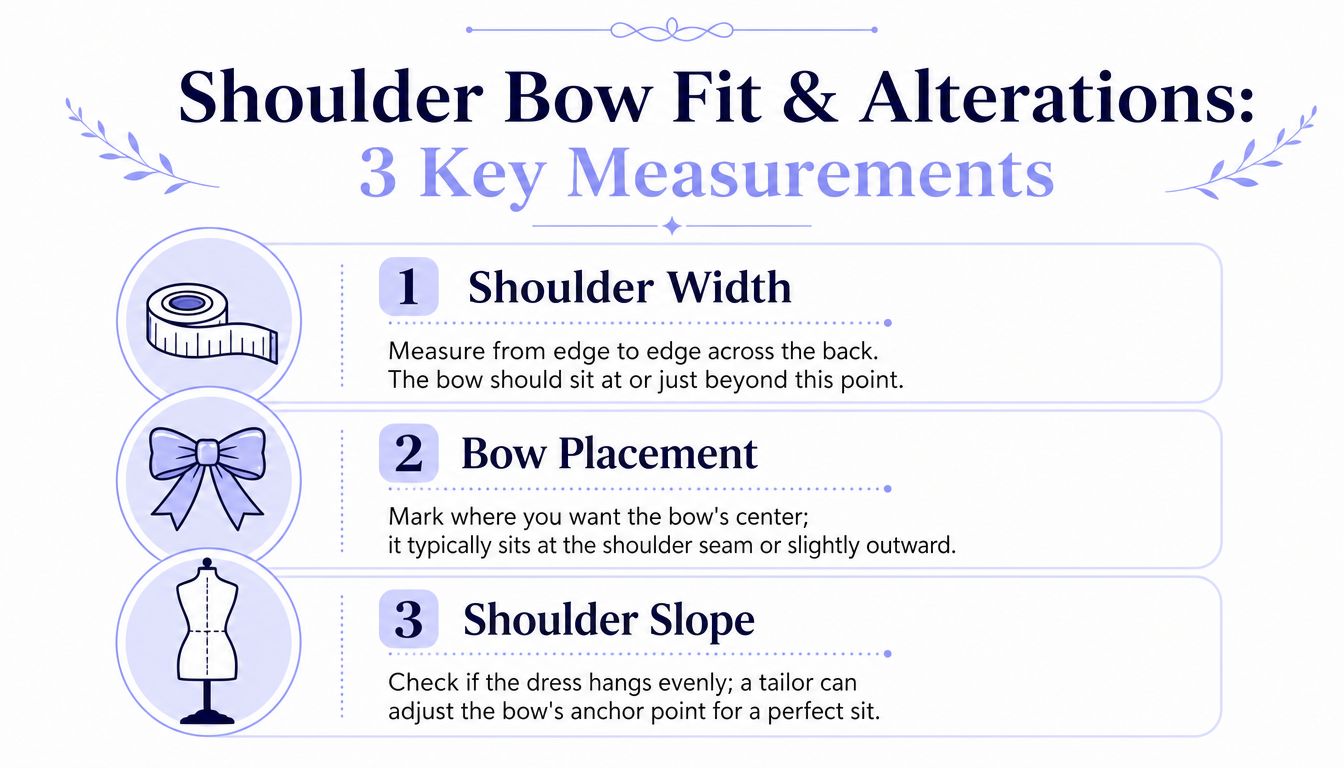
You need three measurements: shoulder width, shoulder slope, and the distance from the shoulder seam to your natural waist. Stand in front of a mirror with a soft tape, keep your posture natural, and measure across the back from shoulder edge to shoulder edge. Mark the seam position on the garment, then compare it with your own shoulder line.
Shoulder slope matters because shoulders don't all descend at the same angle. A dress can have the correct width and still pull, gape, or drag the bow down if the slope is wrong. The distance from shoulder seam to natural waist helps you judge whether the bodice is sitting at the right height, particularly on a fitted dress with a defined waist.
Try the bow before reaching for scissors
Clip the bow slightly off-centre with a temporary pin or fabric clip and look at the full silhouette in a mirror. If the dress suddenly sits better, your shoulders may be uneven or the original anchor point may need adjustment. Don't make a permanent change until you've tried the dress with the shoes and undergarments you'll wear.
A practical starting point for shoulder-based fitting is roughly 1/2 inch of ease at the shoulder width, across back, and across front, with typical shoulder slope cited at about 1 3/4 to 2 inches. In-House Patterns presents these as starting points rather than rigid rules, which is exactly right. Bodies vary, and a bow exposes small errors.
Small alterations, large improvement
A tailor may only need to take in or let out the shoulder seam by a few millimetres. That modest adjustment can bring the armhole, neckline, and bow back into alignment. If the bow itself droops, re-securing its anchor point or adding a discreet hook-and-eye inside the shoulder seam can stop a strapless or off-shoulder style from migrating.
If you're considering a softer silhouette rather than a structured shoulder, compare the shape with advice on how to find your flattering dress styles. The aim isn't to force your body into the dress's pattern. It's to make the bow sit where the designer intended, not where gravity sends it after half an hour and a canapé.
Renting, Pre-Ordering, and Choosing Pieces That Last
Whimsy doesn't need to become wardrobe clutter. A bow-shoulder dress can be a responsible choice when you're honest about how often you'll wear it and choose the shopping route accordingly.
Renting makes sense for a one-off occasion, especially if the dress is white, embellished, or so couture-feeling that it would spend most of its life in the back of the wardrobe. You get the drama without asking your everyday clothes to perform as formalwear.
Pre-ordering suits shoppers who want to support small makers while reducing the pressure to hold large quantities before demand is known. It requires patience, so check the delivery information and make sure the timing works for your event. A pre-order is a poor bargain if it arrives after the garden party.
Investing in one well-made dress is the strongest option when you can already name several ways to wear it. Look for a natural or organic fabric, secure shoulder construction, a lining that feels comfortable, and a bow that can survive sitting in a car, walking along a coast path, and being stored properly afterwards.
The Lavender Lobster is a UK-based example of this broader approach, working with organic linen and 100% British alpaca wool across dresses, knitwear, and accessories. Its shopping model includes pre-orders, a rentals option, GBP and USD pricing, free UK shipping thresholds, and an Instagram community that announces drops and pop-ups. The relevant question isn't whether every feature suits you. It's whether the brand's materials, ordering model, and garment life match the way you want to shop.
Bows are also firmly present in current British fashion conversation. Red reported that bows were appearing across social media, the high street, and the runway by mid-2024, while Harper's Bazaar UK described them as a spring look with a notably romantic appeal. Glamour UK's coverage of the pussy-bow trend captures that wider movement without making it a reason to buy something you won't wear.
Use the UK clothing rental guide to think through rental logistics before committing. My rule is simple: rent the theatrical dress, pre-order the considered one, and buy the piece that already has a place in your weekly life.
Your Bow-Shoulder Wardrobe Checklist
Before buying, ask yourself:
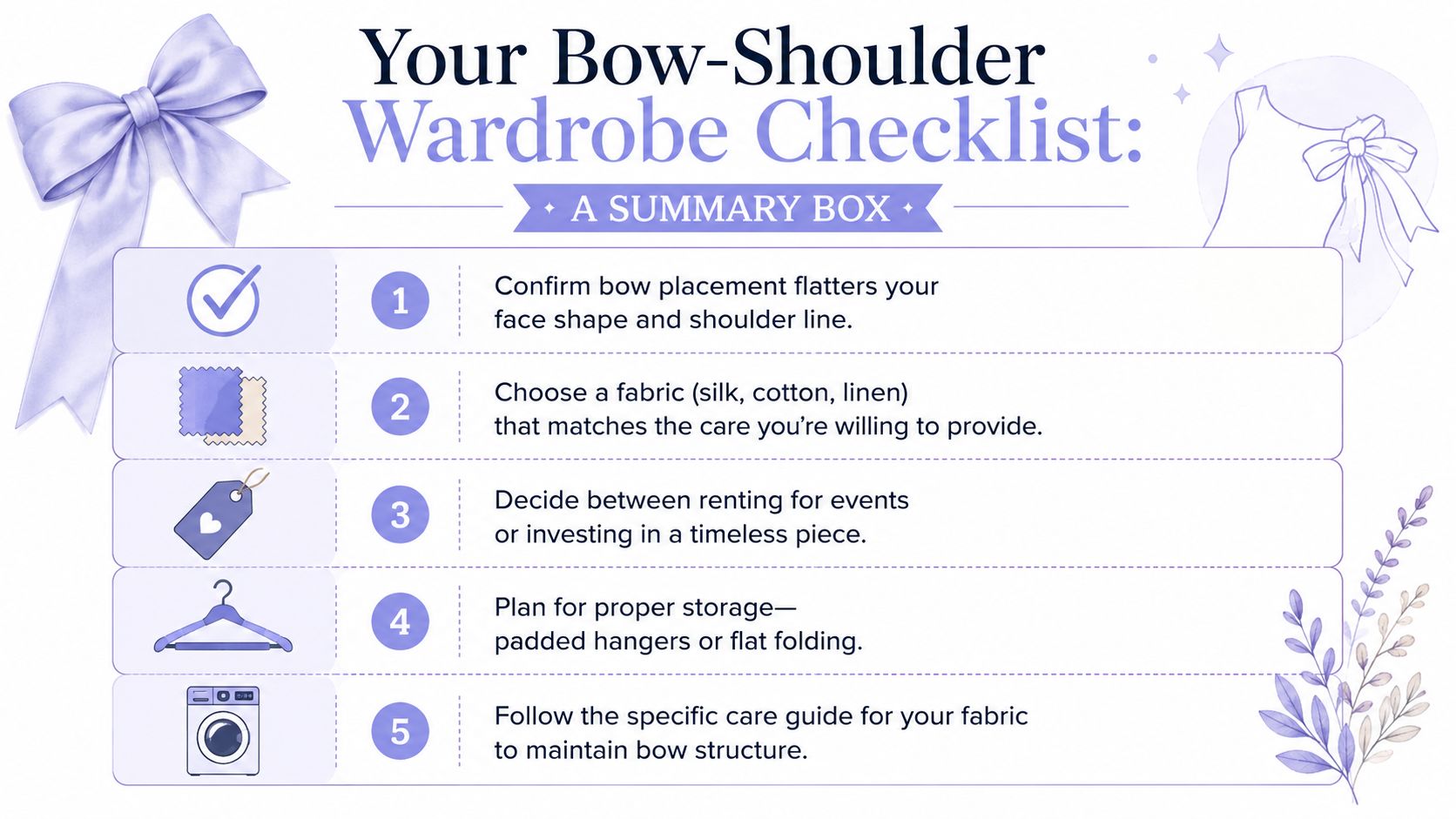
- Placement: Does the bow suit your shoulder line, face, and occasion?
- Fabric: Can you give the linen, cotton, silk, or knit the care it needs?
- Styling lives: Can you wear the dress for daytime and evening, or with a useful layer?
- Alteration: Would one shoulder adjustment make the whole silhouette sharper?
- Shopping route: Should you rent, pre-order, or invest this season?
For a relaxed shape that still feels deliberate, explore guidance to find your perfect loose dress fit. A dress with bow on shoulder should bring joy, not laundry dread or wardrobe guilt. Choose it with intention, style it with restraint, and care for the bow as carefully as the rest of the garment. That little flourish can keep earning its place for years.
Choose your shoulder-bow dress by checking the placement, fabric, and care label today, then plan two complete outfits before you buy or book it. That small bit of wardrobe homework will turn a charming bow into a dress you'll reach for, from a country garden to a windswept coast.