

You're standing in a high-street fitting room with one arm in a sleeve and your phone balanced on a handbag. The label says “conscious”. The product page says “eco”. Somewhere beneath the price, the questions begin to gather: Who made this? What's it made from? Will I still want it next winter?
A useful ethical shopping guide shouldn't leave you feeling guilty for needing clothes. It should help you follow one garment from field to wardrobe, then care for it long enough to give the story a proper ending. Think of it as a small countryside map, with fewer moral cliffs and more practical stepping stones.
What Ethical Shopping Actually Means
The word “ethical” can feel enormous in a changing room. It seems to ask you to know everything about wages, farms, dyes, animal welfare, packaging, transport, carbon, and what happens after you've finally grown tired of the hemline.
Start smaller. Imagine a jumper made from alpaca wool. Ethics asks whether the animals were treated responsibly and whether the people who handled the fibre and made the jumper worked in fair conditions. Sustainability asks what the fibre, processing, washing, drying, and eventual disposal mean for the planet over time. Conscious shopping is the habit that joins those questions together, helping you pause before buying rather than letting a charming button make the decision for you.
For a broader introduction to the language around clothing, the sustainable fashion guide offers useful context. But no single badge can answer every question. A certification may address one part of a supply chain while saying little about repairability, animal welfare, worker representation, or the garment's end of life.
Look past the lovely label
A responsible product page should give you something to hold on to. Look for the fibre composition, the country where the garment was made, information about mills or farms, and clear care instructions. A brand that explains what it knows, and admits what it can't yet verify, often tells you more than one that scatters vague green words across a page.
The UK's clothing problem makes this practical rather than philosophical. Parliamentary environmental audit evidence recorded around 620,000 tonnes of used textiles collected for reuse and recycling in 2018, while 530,000 tonnes of clothing, shoes, bags and belts entered household residual waste in 2017. The evidence is available through the UK fashion sustainability report.
A kinder rule: buy fewer pieces that can earn their place repeatedly, rather than relying on recycling to rescue a garment you never loved.
Perfection isn't the entrance fee. You might choose second-hand trousers one month, a transparent new coat the next, and mend the cardigan already in your drawer. Ethical shopping is a decision-making toolkit, not a purity test.
Reading a Garment From Fibre to Finish
The easiest way to understand a garment is to follow it backwards from your wardrobe. Hold the sleeve, then ask where its material began, what happened to it in a mill, who assembled it, and what details were added before it reached you.
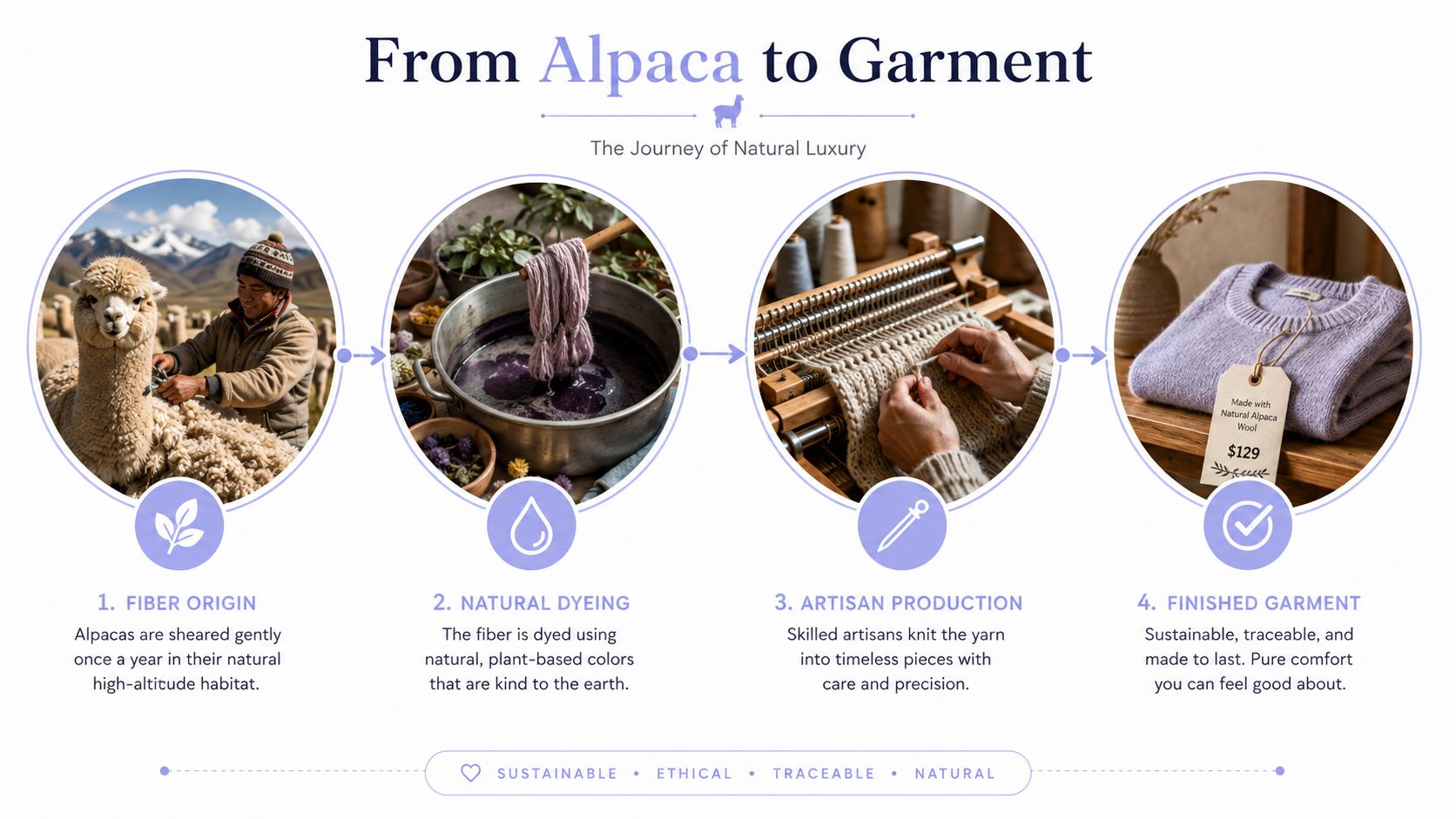
Alpaca wool makes a useful example because the fibre begins with an animal rather than a factory-made polymer. First ask about the herd and the fibre's provenance. Was the alpaca identified by a named farm or region? Does the brand explain how shearing is carried out? Natural fibres such as alpaca, linen, and organic cotton can offer a route away from synthetic microplastics and may biodegrade more readily, although their full impact still depends on farming, processing, care, and disposal.
Then follow the fibre into processing. Wool must be cleaned, spun, dyed, and finished. Ask about water, energy, chemicals, and dyes. Alpaca requires far less water than conventional cotton, but that doesn't make every alpaca garment automatically responsible. A transparent brand should still explain how the yarn was prepared and coloured. The guide to eco fabrics in the UK can help you compare material choices without treating one fibre as a magical answer.
Follow the hands
Making is the human middle of the story. Find out where the yarn was spun, where the fabric was woven or knitted, and where the garment was sewn. “Made responsibly” doesn't tell you enough on its own. Named workshops, mills, manufacturing countries, worker policies, and answers to direct questions give the claim shape.
Finishing includes the small things that can become large problems later, such as trims, buttons, zips, linings, treatments, and packaging. A garment with a natural main fibre may still contain a complicated blend or hardware that makes repair and recycling difficult. Consider whether the buttons can be replaced, whether the seams can be accessed, and whether the packaging is proportionate.
For accessories made with animal-derived materials, traceability matters just as much. A resource such as vegetabla tanned leather pieces can be useful when you're assessing how leather has been processed, rather than accepting “natural” as a complete explanation.
A small example of material recovery is The Sailor Hats, which are crafted from offcuts of larger garments. They're made to order by seamstresses in the UK, with Garden Society, Ledger, and Regatta Stripe prints, plus custom print requests subject to fabric availability.
New Versus Second-Hand Versus Rental
The alpaca jumper doesn't have to enter your wardrobe through a brand-new purchase. It might already be hanging in a charity shop, waiting for a second life. It might be rented for a winter gathering, or made after you place a pre-order, allowing a maker to work with clearer demand.
Second-hand usually avoids the need to create another garment and keeps an existing piece in use, but its history may be uncertain. Check for moth damage, stretched cuffs, weakened elastic, odours, and missing fastenings. Renting works beautifully for occasionwear and pieces likely to be worn briefly, though collection, cleaning, packaging, and limited sizing can make it less practical for everyday dressing. New ethical clothing can offer stronger traceability and a long service life, but a transparent supply chain doesn't erase the environmental cost of producing another item.
Pre-order sits between desire and restraint. It can support smaller initial runs and reduce the risk of making large quantities without confirmed customers, although you'll need patience and a clear understanding of delivery and returns.
| Method | Carbon Footprint | Cost Per Wear | Best For | Limitations |
|---|---|---|---|---|
| New, transparently made | Adds production impact, with potential for long use | Can improve with frequent wear | Reliable wardrobe foundations | Higher upfront cost and resource use |
| Second-hand | Avoids creating a new garment | Often favourable if condition is good | Denim, tailoring, everyday layers | History, fit, and repair needs may be unclear |
| Rental | Shares one garment across wearers | Useful for occasional use | Weddings, parties, statement dressing | Cleaning, returns, availability, and limited everyday practicality |
| Pre-order | Can help align making with demand | Depends on wear and waiting time | Investment knits and considered purchases | Delivery delay and less immediate choice |
UK policy evidence shows why the end of the story matters. England's waste prevention consultation recorded 530,000 tonnes of clothing, shoes, bags and belts entering the waste stream in 2017, alongside 391,000 tonnes of non-clothing textiles, while 620,000 tonnes of used textiles were collected for reuse and recycling in 2018. The figures appear in the England waste prevention consultation.
For second-hand browsing, ScanFlip AI thrift app reviews may help you explore the practical side of resale shopping. If you're comparing new and rented wardrobes, the UK clothing rental guide adds another useful lens.
A dress made from 100% organic linen with a soft organic cotton lining, such as The Lobster Bisque Dress, illustrates the new-purchase route. Its value depends less on the phrase “sustainable” than on whether you'll wear, wash, repair, and keep it in circulation.
The Buyer's Checklist Before You Click
At the edge of the checkout button, give yourself the length of one cup of tea. Not a dramatic boycott, not a solemn vow. Just a pause long enough to ask whether the garment fits your actual life.
Provenance
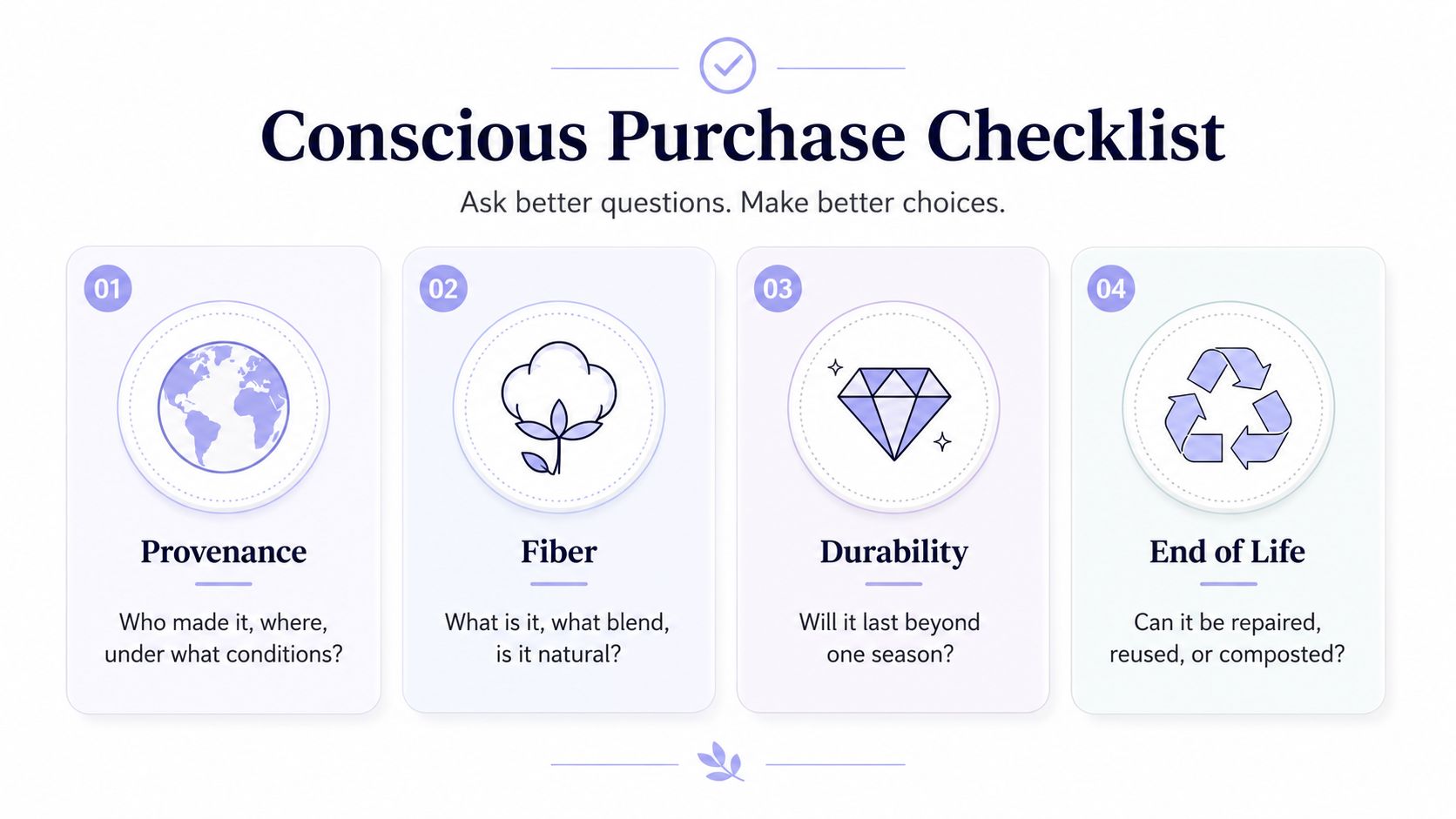
- Who made it? Look for the manufacturing country, named makers, mills, or farms.
- What can the brand prove? “Eco-friendly” is a description, not evidence. Search for specific explanations.
- Would I feel comfortable asking? Send a polite question about wages, animal welfare, or fibre origin. A useful answer is part of the product information.
Fibre
- What's the fibre content? Check the full composition rather than stopping at the first attractive material.
- What does the blend change? A blend may improve stretch or strength, but it can also complicate repair and end of life.
- Will care be gentle? Ask whether you can wash at a lower temperature, air-dry, and avoid frequent laundering.
Construction
- Do the seams look calm and secure? Even stitching, finished edges, and reinforced stress points suggest a garment prepared for use.
- Would a tailor understand it? Simple construction and replaceable fastenings make future repairs easier.
- Will the hardware survive the wardrobe? Buttons, zips, hooks, and linings deserve the same scrutiny as the cloth.
Longevity and the little life test
Ask, “Will I still love this on a wet Tuesday in February?” If the answer is no, it may be an occasion piece, a rental candidate, or just a passing fancy. Ask whether it works with at least three outfits you already own, whether the fit allows movement, and whether you could handwash it in the kitchen sink.
Think beyond the first owner. Can the garment be mended, altered, resold, lent, donated, or reused? UK online shoppers have a statutory 14-day cooling-off period, followed by another 14 days to return goods, with the retailer required to refund within 14 days of receiving the returned item, as explained by GOV.UK's returns and refunds guidance.
Before you click: if the product page can't answer the important questions, pause the purchase rather than filling the gaps with optimism.
Smart Shopping Strategies That Last
A wardrobe doesn't need one grand method. Your life may ask for a sturdy second-hand blazer on Monday, a rental dress for a summer wedding, and a carefully chosen jumper when the evenings turn crisp.
Pre-order suits someone who can wait for an investment piece and enjoys a smaller, more deliberate wardrobe. Rental suits the statement garment that would otherwise spend most of its life behind a wardrobe door. A seasonless capsule works for everyday foundations, especially when the colours and silhouettes can move between work, weekends, and weather.
Second-hand often makes sense for denim, tailoring, coats, and branded pieces with plenty of wear ahead. Explore local charity shops, Oxfam Online, Vestiaire Collective, and By Rotation, while checking condition, fit, cleaning requirements, and the platform's own policies.
| Strategy | Best For | Watch Out For |
|---|---|---|
| Pre-order | Investment knits and considered designs | Waiting time, sizing, and final-sale conditions |
| Rental | Occasionwear and statement pieces | Cleaning, return deadlines, and limited repeat access |
| Seasonless capsule | Everyday foundations | Buying too much in the name of “versatility” |
| Second-hand | Denim, tailoring, and durable layers | Hidden wear, uncertain provenance, and alterations |
The same thinking applies beyond clothing. If you're choosing a carryall for trains, ferries, and weekends away, a guide to the best eco travel bags for women can help you compare materials and practical design details.
You can also borrow the logic for home textiles. The Clubhouse Cocktail Napkins | Set of 4 are made from 100% flax linen, with a pale blue plain weave, red stitched border, and embroidered Lavender Lobster Club scenes.
Choose one primary strategy and one backup. Perhaps yours is second-hand first, pre-order second. Or rental first for occasions, a seasonless capsule second. A personal rule is easier to follow than a universal commandment, and it leaves room for real life, muddy shoes, changing bodies, and the occasional irresistible hat.
Caring for What You Already Own
The greenest garment is often the one already waiting on your rail. It has no new fibre to grow, no new dye bath to manage, and no fresh packaging to unwrap. Its next chapter begins with the ordinary care you give it on a Sunday afternoon.
Return to the alpaca jumper. Wash it only when it needs washing, rather than after every wear. Use a cool handwash, such as a 30 degree handwash, with a gentle wool product such as Ecover wool wash. Press the water out carefully, roll the jumper in a towel, and dry it flat away from direct sunlight. Heat and rough handling can change the shape of delicate fibres before you've had time to notice.
Make the washing basket less busy
Air the jumper between wears. Spot-clean a small mark instead of washing the whole garment. If you use a Guppyfriend bag for synthetic items, treat it as one part of a wider care routine, not a substitute for buying thoughtfully or washing less.
Clothing's environmental burden stretches across fibre production, dyeing, finishing, washing, and drying. Parliamentary evidence says the fashion sector contributes roughly 4% of annual global carbon emissions, and estimates UK clothing lifecycle carbon rising from 24 million tonnes to 26.2 million tonnes per year in 2016. The UK Parliament environmental audit report also records that Sustainable Clothing Action Plan signatories reduced their water footprint by 17.7% and their carbon footprint by 11.9% between 2012 and 2017.
Care is part of the purchase. A fibre label tells you what a garment is. Your routine decides how long it remains useful.
Fold, mend, repeat
Store knits folded rather than hung. A hanger can pull at the shoulders and leave a small, permanent slope where a soft jumper once sat neatly. Keep moth protection sensible, inspect cuffs and elbows, and deal with loose threads before they become holes.
When the alpaca jumper develops a worn elbow, mend it early. A neat darn can disappear into the texture, or a visible patch can become part of the garment's character. Local repair cafés and sewing cafés can help if your needlework confidence is still at the “button emergency” stage.
With steady care, a cherished jumper can move from a short wardrobe life into something much longer. The aim isn't to promise that every garment will last forever. It's to make repair, gentle washing, flat drying, and proper storage normal parts of ownership.
A Wardrobe You Can Be Proud Of
Years later, the alpaca jumper has a softer drape. One elbow carries a careful darn, and the label has faded from repeated wear. It isn't pristine, but it has become more itself, like a seaside cottage whose paint has met enough weather to acquire a story.
That single garment can hold a whole shopping philosophy. Choose natural or lower-impact fibres where they suit the job. Ask who made the piece. Prefer construction that can be repaired. Buy second-hand when the right garment already exists. Rent for occasions that don't need a permanent resident in your wardrobe. Then care for what arrives with the same attention you gave it at the fitting-room mirror.
The UK textile stream shows why this patient approach matters. Government guidance says 620,000 tonnes of used textiles were separately collected for reuse and recycling each year, while WRAP data cited in the same programme says 60% was exported. The figures appear in the Waste Prevention Programme for England, and they leave a useful question hanging over every donation bag: where does this go next?
Three quiet commitments
- Make one slow purchase. Choose the garment you've considered properly, one that works with clothes already in your wardrobe and has a clear care plan.
- Repair one thing. Sew the loose button, patch the elbow, replace the zip, or take the coat to someone who knows their way around a machine.
- Have one conversation with a maker. Ask a brand where the fibre came from, how the piece was made, or what happens when it can no longer be worn.
The 2025 UK Sustainable and Circular Practices research describes progress as happening, but “too slow”, while the 2025 UK Sustainable Retail Barometer reports that repair use fell by 10 percentage points in 2025, even as participation in recommerce, donation, and repair rose overall. Those findings are discussed in the UK circular practices research. The message isn't that your wardrobe choices are pointless. It's that shoppers need clearer information and better systems, and brands need to make circular promises practical.
Start this week with one garment already in your home. Wear it, mend it, and learn its story. Then choose your next piece as though you'll still be telling that story years from now.
Open your wardrobe today and select one item you want to keep in service. Check its seams, read its care label, and arrange the smallest useful repair. When you're ready to buy, use this ethical shopping guide to ask the maker specific questions, compare new, second-hand, rental, and pre-order options, and choose a garment with a life you can carry forward.