

Finding an ethical UK clothing brand can feel a bit like discovering a secret garden, tucked away just behind a familiar city wall. It’s a world filled with pieces that don’t just look beautiful, but feel beautiful—each one woven with stories of care, craftsmanship, and just a little bit of magic. This is a journey into a more conscious kind of style, where choosing well is an act of joy, not a sacrifice.
Your Guide to a More Magical Wardrobe
Stepping into the world of ethical fashion is about so much more than just shopping. It’s about thoughtfully curating a wardrobe that truly reflects your values. Think of it as a quiet rebellion against the fleeting, disposable trends of fast fashion, favouring instead pieces designed with beauty, longevity, and a little stardust at their heart. This shift isn’t just a niche interest anymore; it’s a blossoming movement.
And the proof is in the numbers. The UK's sustainable fashion market, valued at USD 261.04 million in 2024, is expected to soar to an incredible USD 1,757.42 million by 2033. This remarkable growth shows just how powerful the demand is from shoppers who, like our community, are seeking out brands that put both people and the planet first. You can read more about this impressive market growth and its drivers.
Choosing ethical fashion is like tending to a garden. You select seeds (materials) with care, nurture the soil (environment), and ensure the gardeners (workers) are treated with respect, resulting in something that blossoms beautifully for years to come.
What You Will Discover
This guide is your compass for navigating this enchanting landscape. We’ll wander through the key ideas that make a brand truly ethical, helping you understand the stories told by garment tags and certifications. Together, we'll explore:
- The Pillars of Ethical Fashion: We’ll unravel what 'ethical' really means, from fair wages for the people who make our clothes to supply chains as clear as a forest stream.
- A Guide to Materials and Certifications: You'll learn how to decode labels, from the wonders of natural fibres like British alpaca wool to the promises behind stamps like Fair Trade.
- Practical Tips for Mindful Shopping: Discover the art of building a conscious closet with practical, joyful advice for a more sustainable way of life.
Our journey will be one of discovery, empowering you to fill your wardrobe with pieces that bring you comfort, confidence, and a touch of everyday whimsy.
What Makes a Clothing Brand Truly Ethical?
Figuring out what makes a clothing brand ‘ethical’ is a bit like understanding what makes a garden truly flourish. It isn’t just about one beautiful flower; it’s about the rich soil, the well-cared-for plants, and how the whole ecosystem works in harmony. In the same way, a genuinely ethical brand cares about every single thread of its story, from the field where the fibre was grown to the hands that stitched the final seam.
This isn't just about a clever marketing slogan. It’s a real, deep-seated promise to put people and the planet first. And it's clear that more and more of us are looking for this kind of integrity. The UK's ethical fashion market has blossomed to £3.2 billion in 2024, a massive jump from £2.1 billion in 2022. This isn't just a trend; it's a powerful shift towards fashion with a conscience. You can discover more insights into these fashion industry statistics to see the full picture.
This chart helps to visualise all the different layers that come together to create a truly ethical fashion brand here in the UK.
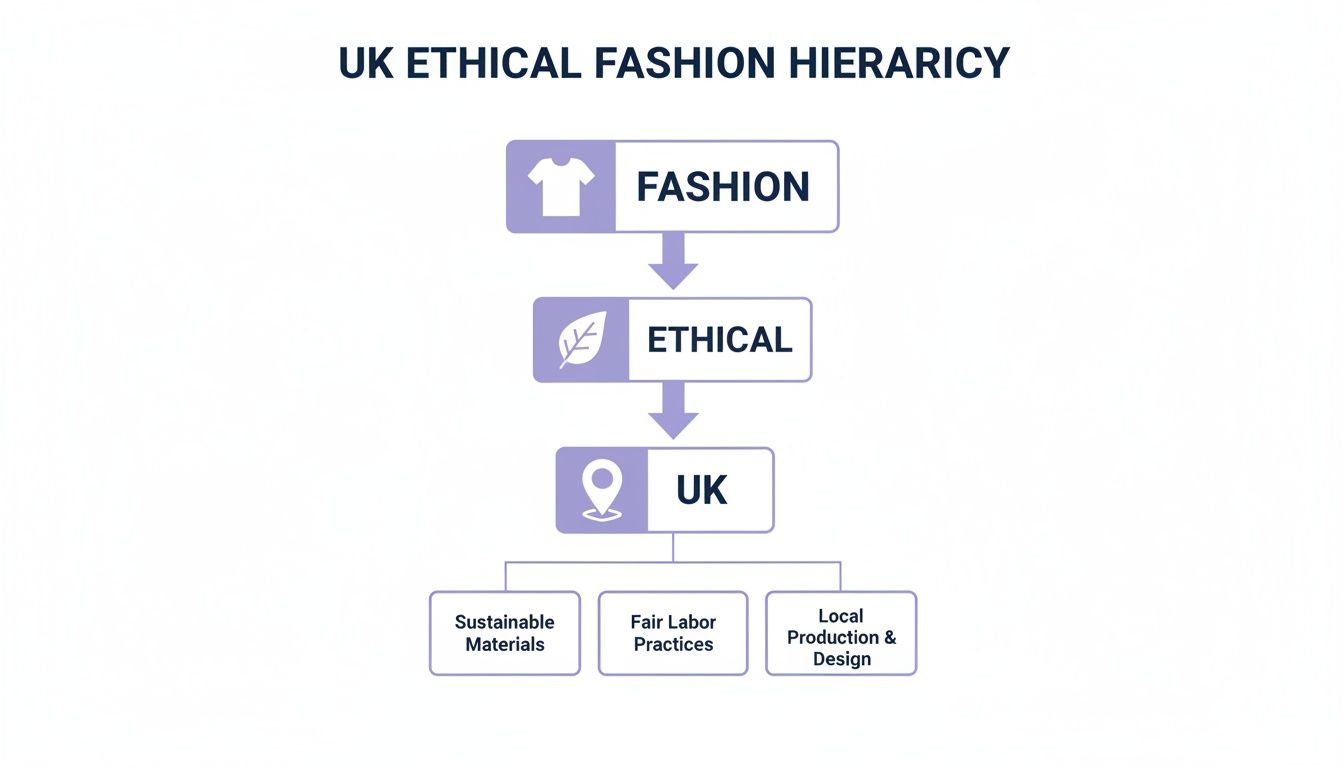
As you can see, it's a philosophy built on a foundation of sustainability, fairness, and a commitment to local values.
To help you navigate this, we've broken down the core principles into a simple reference guide. Think of these as the five essential pillars holding up a truly ethical wardrobe.
The Five Pillars of an Ethical Wardrobe
| Pillar | What It Means | Questions to Ask |
|---|---|---|
| People | Every person in the supply chain is treated with dignity, paid fairly, and works in safe conditions. | Who made my clothes? Does the brand pay a living wage? Are their factories safe? |
| Planet | Materials are chosen and processes are designed to minimise harm to the environment. | What is this made from? Is it organic, recycled, or renewable? How do they manage water and waste? |
| Animals | Any animal-derived materials are sourced without cruelty, or vegan alternatives are offered. | Is this wool mulesing-free? Are the animals treated humanely? Do they offer vegan options? |
| Transparency | The brand is open and honest about its entire production process, from farm to finished garment. | Can I trace this garment’s journey? Does the brand share information about its suppliers? |
| Longevity | The clothing is designed to last, encouraging you to buy less but choose better. | Is this piece well-made? Is the style timeless? Can it be repaired? |
These pillars give you a framework for looking beyond the tag and understanding the true story behind your clothes. Let's explore a few of them more closely.
The People Behind the Seams
At the very heart of ethical fashion are the people. They are the artisans, the farmers, the weavers, and the seamstresses. Fair labour isn't just a nice-to-have; it's absolutely non-negotiable. It means ensuring every single person—from the one picking the cotton to the one sewing on the final button—is treated with respect.
This starts with a living wage, which is different from a minimum wage. It’s enough for someone to support their family and live with dignity. It also means their workplace is safe, their hours are fair, and their skills are valued. Brands that are genuinely ethical aren't afraid to be transparent about this; they proudly share the stories of the people who bring their clothes to life.
An ethical garment carries the invisible signature of its maker—a story of fair pay, safe conditions, and respected craftsmanship. When a brand hides its supply chain, it erases that signature.
Caring for Our Shared Planet
Beyond people, an ethical brand acts as a guardian of the environment. Think of the materials as the ‘soil’ in our fashion garden—they have to be chosen with incredible care. This means prioritising natural, organic, and renewable fibres that don’t drain our planet’s precious resources.
But it goes deeper than that. It’s about consciously trying to lessen the environmental impact at every single step. This can look like:
- Reducing Water Usage: Choosing less thirsty crops like linen or using clever dyeing techniques that save water.
- Minimising Waste: Designing clothes to last for years, not just a season, and sometimes using pre-order models to avoid making more than is needed.
- Avoiding Harmful Chemicals: Keeping toxic dyes and harsh finishes out of our rivers, oceans, and away from our skin.
Kindness to All Creatures
Finally, a truly ethical approach extends that same circle of compassion to animals. This pillar is all about making sure that if animal fibres like wool are used, they are sourced without any cruelty. It means championing farms where animals are treated humanely throughout their lives. Many thoughtful brands also offer beautiful vegan alternatives, proving that kindness and style absolutely can go hand-in-hand. This complete, holistic view—caring for people, planet, and animals—is what truly defines the best ethical UK clothing brands.
Decoding the Labels: A Guide to Materials and Certifications
Stepping into the world of sustainable fashion can feel a little like trying to read a magical map without a key. The labels on our clothes are filled with curious symbols and strange new words. But fear not! This guide is your secret decoder ring, helping you understand the wonderful stories woven into every garment.
Think of fabrics as the primary colours in a painting. Natural fibres are gifts from the earth, each with its own unique personality. They’re breathable, gentle on the skin, and when their long life is over, they can return to the soil from whence they came.
The Magic of Natural Fibres
Choosing natural materials is one of the simplest, most joyful ways to build a more conscious wardrobe. Unlike their synthetic counterparts, which are derived from fossil fuels and can shed microplastics, natural fibres work in harmony with the planet.
Here are a few of our favourites:
- Organic Cotton: This isn't just any cotton. It's grown without harsh pesticides and uses significantly less water, making it kinder to the soil and the farmers who tend it.
- Lovely Linen: Made from the flax plant, linen is wonderfully strong, breathable, and gets softer with every wash. It’s a timeless choice for breezy dresses and summer shirts.
- British Alpaca Wool: A true treasure, alpaca wool is incredibly soft, warm, and hypoallergenic. When sourced from UK farms, it supports local agriculture and ensures the highest standards of animal welfare. We invite you to learn more about why we choose alpaca wool, a fibre we believe is one of the world's most luxurious.
These materials tell a tale of sun, soil, and careful craftsmanship. They are the heart of garments designed to be loved for a lifetime.
Understanding the Trustmarks
While materials tell part of the story, certifications are like official seals of approval—proof that a brand is walking its talk. This is where we have to be careful, though. It’s wise to be wary of "greenwashing," where brands use vague terms like 'eco-friendly' without any evidence. A 2021 report found a shocking 60% of sustainability claims by major fashion brands were misleading.
A genuine certification is a promise. It's a brand's way of saying, "We invited independent experts to look behind our curtains, and they confirmed we are doing what we say we are."
To help you spot the real deal, here are three of the most respected certifications you'll find among ethical UK clothing brands:
- GOTS (Global Organic Textile Standard): Think of this as the gold standard for organic textiles. A GOTS label means the entire journey of the fabric, from harvesting the raw materials to the final stitching, has met strict ecological and social criteria.
- Fair Trade: When you see this logo, you know the people who made your garment were paid a fair price for their work. It champions better working conditions and fairer terms of trade for farmers and workers in developing countries.
- B Corp (Certified B Corporation): This is a big one. It's a certification for the whole business, not just a single product. It shows a company has met high standards of social and environmental performance, accountability, and transparency.
These labels aren't just logos; they are stories of integrity. By learning to read them, you gain the power to choose clothes that align with your values, weaving a little more kindness into the world with every piece you welcome into your wardrobe.
The Art of Mindful Shopping: Practical Tips for a Conscious Closet
Once you know what to look for in materials and certifications, you can move on to the most enchanting part of the journey: building a wardrobe that feels like a collection of treasures. This is where we shift from just looking at labels to cultivating a new mindset, one rooted in the joyful philosophy of “buy less, choose well.” It’s about falling in love with pieces that are made to last, turning your closet into a gallery of wearable stories.
This mindful approach isn’t just a charming idea; it’s part of a powerful movement. By 2025, an impressive 73% of UK fashion brands had invested in circular initiatives, a clear sign the industry is responding to conscious consumers. This is part of a larger trend where the UK's ethical market grew by 7% to £141.6 billion in 2022, with fair trade products alone jumping 16% to £2.3 billion. You can discover more insights about the UK sustainable fashion market here.
Embrace Quality Over Quantity
The first secret to a conscious closet is learning to recognise real craftsmanship. When you hold a well-made garment, you can feel the difference. Look for neat, tight stitching, natural fibres that feel substantial, and thoughtful details like finished seams and quality buttons. These are the quiet signatures of a piece designed for longevity, not just for a fleeting trend.
A garment crafted with care will not only look better but will also stand the test of time, becoming a beloved companion on your adventures. This focus on durability is a gentle act of rebellion against the throwaway culture of fast fashion.
Explore Wiser Ways to Shop
Mindful consumption also opens up a world of wonderfully creative shopping models that innovative ethical UK clothing brands are embracing. These methods are designed to reduce waste and encourage a more thoughtful relationship with our clothes.
- The Magic of Pre-Orders: By ordering a piece before it’s made, you help brands produce exactly what is needed, which cuts out excess stock and waste. It’s a beautiful exchange of patience for sustainability.
- The Joy of Rentals: For that one-of-a-kind event, renting a stunning outfit is a brilliant alternative to buying something you might only wear once. It gives you all the glamour with none of the long-term commitment.
"Buying less is not about deprivation. It's about being more intentional, more selective, and finding deeper joy in the pieces we choose to bring into our lives."
Cherish and Care for Your Garments
The final, and perhaps most lovely, step in mindful shopping happens after you’ve brought your new treasure home. Extending the life of your clothes is a true act of love. Simple habits like washing garments in cold water, air-drying them, and storing them properly can make a world of difference.
Mending a small tear or sewing on a lost button transforms you from a mere consumer into a custodian of your wardrobe. Each careful stitch adds to the garment's story. For specific fabrics, like airy linen, understanding their unique needs is key. You can check out our guide on how to care for linen to keep your pieces looking beautiful for years. By cherishing what we own, we weave a more sustainable and whimsical future, one garment at a time.
Our Promise: Wearable Whimsy with Longevity
Putting all these principles into practice is where the real magic happens. It’s the moment a brand’s values stop being lovely words on a page and become tangible, beautiful garments you can actually wear and love.
For us at The Lavender Lobster, this isn't just a business model; it’s a heartfelt promise. It’s a story that began with a pledge to our founder's daughter, Lavender, to build a legacy of care, thread by thread.
Our ethos is simple: create pieces where seaside whimsy meets countryside grace, proving that beauty and responsibility can, and should, coexist. We believe choosing an ethical garment shouldn't ever feel like a compromise. Instead, it should leave you feeling comfortable, confident, and with that little spark of enchantment that makes a piece feel truly special.
A Love for Natural Materials
Our story is woven from the finest natural fibres, chosen not just for their softness and strength, but for their gentle impact on the earth. We have a particular fondness for 100% British alpaca wool, the hero of pieces like our beloved Sailor Scarf. Sourced directly from UK farms, this fibre is exquisitely soft and warm, but it also supports local agriculture and guarantees the highest standards of animal welfare.
Choosing materials like this is a deliberate act. It’s about more than the finished product; it's about honouring the entire journey, from a contented alpaca grazing in a British field to the cosy scarf that will keep you warm for years to come.
"A garment's true beauty lies not just in its design, but in the integrity of its creation—in the kindness woven into every single thread."
Thoughtful Construction for Timeless Style
We truly believe that longevity is the cornerstone of a conscious wardrobe. It’s why we obsess over thoughtful construction and timeless details, creating pieces designed to be cherished across seasons, year after year.
This philosophy naturally led us to embrace mindful shopping practices, and we love inviting our community to explore them with us.
By offering models like pre-orders, we can produce exactly what is needed, gracefully sidestepping the shocking waste that comes from overproduction. Our rental options also offer a playful way to enjoy a special piece for a fleeting moment, without the need to own it forever. These aren't just business strategies; they are reflections of our deepest values.
We invite you to discover more about our promises and processes. You can learn more about our sustainability journey and see how we are working to weave a kinder future. It’s our way of showing, not just telling, how a brand can create wearable whimsy that lasts.
Weaving a Kinder Future, One Garment at a Time
Choosing to support ethical UK clothing brands is more than just a transaction; it's a quiet, joyful statement. It’s a way of saying you value craftsmanship, creativity, and compassion far more than fleeting trends. When you choose consciously, you're not just buying clothes—you're joining a community that believes in a kinder, more thoughtful way of living.
Think of your wardrobe not as a collection of garments, but as a library of beautiful stories. Each piece is a testament to fair hands, gentle materials, and a commitment to our shared planet.
Your style journey is a deeply personal one, and every small, considered choice you make helps weave a better future for fashion. Now that you know what to look for, you can start building a closet that truly reflects your values. It's time to write your own story of mindful style, one beautiful garment at a time.
FAQ
Is Sustainable Fashion the Same as Ethical Fashion?
While they're certainly close companions on this journey, they aren’t quite identical twins. Think of it this way: ‘sustainable’ often looks at the bigger picture of the planet, focusing on environmental impact—things like using earth-kind materials and shrinking carbon footprints.
‘Ethical’, on the other hand, turns its attention to the human side of the story. It’s all about fair wages, safe working conditions, and complete honesty for the wonderfully skilled people who bring our clothes to life. Of course, the most enchanting ethical UK clothing brands weave the two together, creating pieces that show kindness to both our planet and its people.
How Can I Spot Greenwashing from a Brand?
Greenwashing is a bit like a costume party where some brands dress up their claims to look far more eco-friendly than they really are. To see who’s genuine, you have to look past the grand, vague statements for specific, heartfelt details.
A truly ethical brand doesn’t whisper its secrets; it shares its story openly. Look for brands that proudly introduce you to their factories, show off their certifications, and are transparent about every material they use.
If a brand's claims feel like all glitter and no substance—using words like ‘eco-friendly’ or ‘conscious’ without a shred of proof—it’s wise to get curious. Don’t be afraid to ask for the story behind the sparkle. Vague answers are often the biggest red flag.
Does Buying from Ethical Brands Have to Be More Expensive?
It can sometimes feel that way, but it helps to think of it as investing in a beautiful, well-told story rather than just buying an item off the rack. An ethically made garment costs more because that price honestly reflects fair wages for artisans and high-quality, sustainable materials that are kinder to the earth.
But here’s the secret: the cost-per-wear is often much lower. These pieces are designed with love and longevity in mind, meant to be cherished for years, not just a fleeting season. Embracing pre-loved treasures, renting for special occasions, and shopping from mindful sales are also lovely ways to enjoy ethical fashion without stretching your budget.
Prepared with Outrank