

The morning starts with a familiar British compromise. The sky is pale and undecided, the sea breeze has teeth, and your favourite jumper looks perfectly pleasant until you step outside. You reach for a scarf, then pause in front of the mirror, wondering whether to loop it, knot it, drape it, or surrender and let it trail like a small flag towards the harbour.
The answer to how to style scarf isn't a catalogue of complicated knots. It's a question of fabric, proportion, weather, and mood. A soft wool wrap can make a practical coat feel considered, while a small silk square can turn a plain shirt into something with a little seaside mischief. The right placement gives an outfit a centre of gravity, whether you're walking a cliff path, catching a train, or carrying a basket home through drizzle.
Why Scarves Are Your Most Versatile Accessory
On a blustery morning, I often choose the scarf before the coat. A long, textured piece can soften a navy peacoat, add warmth around the collar, and bring a quiet note of colour to an otherwise grey outfit. Later, once the wind drops, it can move to a handbag handle or sit loosely over the shoulders without making the look feel unfinished.
That flexibility has deep roots in British dress. The London Museum's record of a suffragette motor scarf describes white Japanese silk with green and purple stripes and the printed slogan “Votes for Women.” By the suffrage era, the scarf had already moved beyond warmth into public identity and political messaging. Its fibre, colour and placement all carried meaning.
That history helps explain why a scarf still feels like more than a layer. It can sharpen a neutral outfit, echo a favourite colour from a print, or announce that you're fond of theatrical details, even when the rest of your wardrobe is restrained.
A small accessory with a large wardrobe role
The wider setting matters too. Figures from the UK Fashion & Textile Association, available through the Siddons Scarf Collection, place the British fashion and textile sector's contribution at £62 billion, equivalent to £1 in every £34 of total UK gross value added. Scarves sit inside that broader world of fibre, construction, craft and retail, rather than existing as disposable afterthoughts.
A useful styling question: don't ask only whether a scarf keeps you warm. Ask what it adds to the outfit's shape, colour and story.
That might mean a restrained silk square with a waxed jacket, a knitted scarf tucked neatly into a fisherman's coat, or a bright accent against a brown countryside knit. The charm comes from intention. One carefully chosen flourish usually looks more graceful than several competing ones.
Foundational Knots and Wraps for Everyday Elegance
A scarf behaves according to its fibre and fold. Thick wool needs room to breathe, while smooth silk rewards a flatter, more controlled arrangement. Start with the material in your hands, not with a picture of a knot you hope to recreate.
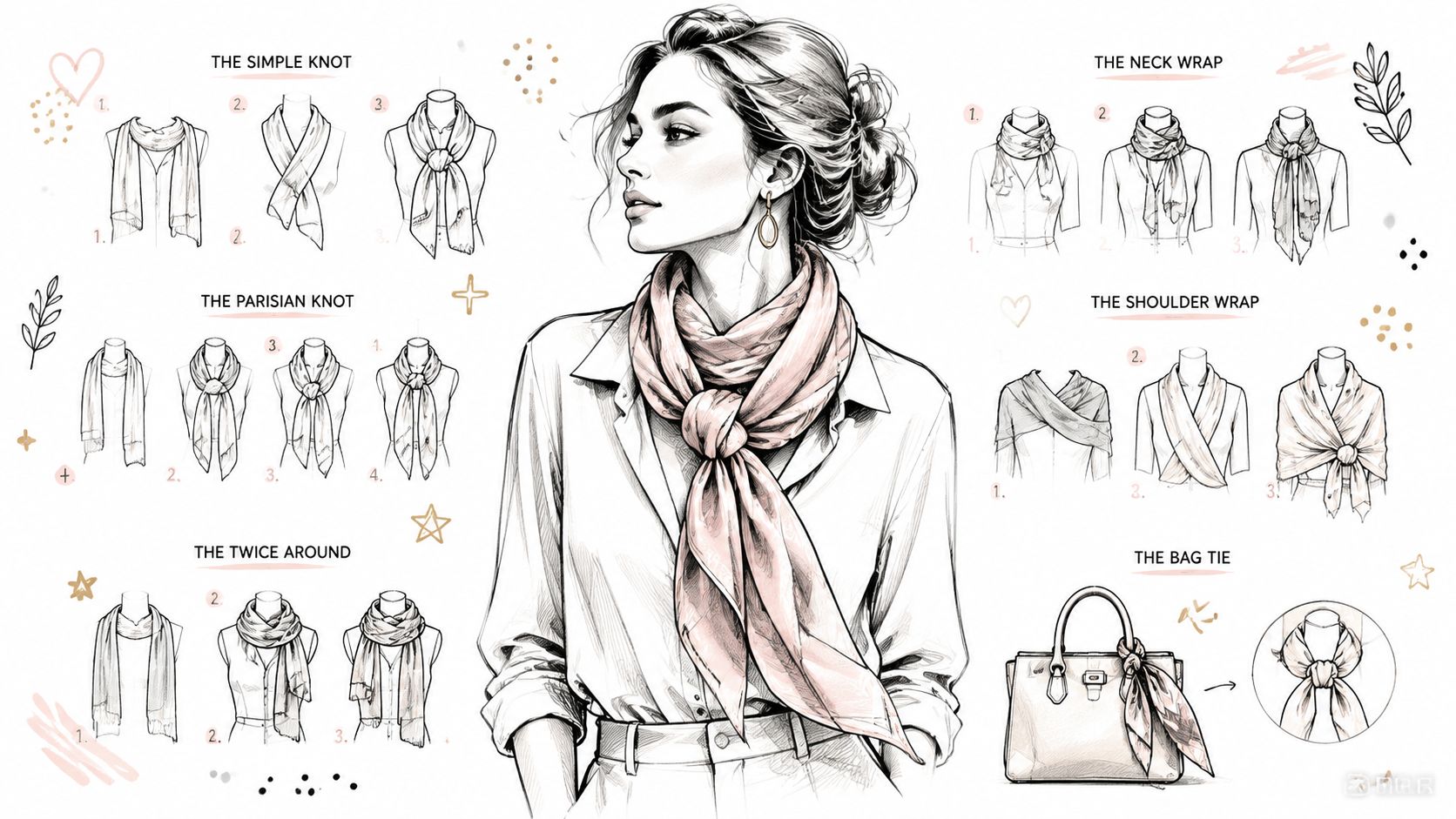
The classic neck wrap
Fold the scarf in half and place the folded edge at the front of your neck. Pull both loose ends through the loop, then tighten only until the fabric lies flat. The method reduces bulk and keeps the knot centred, which works especially well with wool and alpaca, where an open loop can distort thicker yarns. The House of Fraser guide to styling a scarf supports this practical approach.
Don't yank the ends in one decisive movement. Adjust them in small increments so the fold remains even and the visible drape doesn't become too short. If one side hangs lower, loosen the loop, smooth the fold, and correct the balance at the neck rather than pulling harder.
For a shorter neck, keep the loop slightly lower and avoid building height directly beneath the chin. A longer neck can carry a fuller fold, particularly when the coat has a broad lapel or an open neckline.
A short lead-in before practising can make the difference between a relaxed finish and a knot that looks overly engineered.
The polished square knot
Lay the scarf flat and fold both sides inward until you've created a narrow band. Wrap it around the neck, then tie left-over-right and right-over-left. This keeps the knot flat rather than bunched, making it particularly useful for smooth fabrics and printed scarves. The Wardrobe Consultant's scarf-tying guidance notes that a flatter knot helps preserve pattern visibility and reduces twisting across the chest.
Length changes the whole effect. Shorter or regular lengths look composed when the ends finish around the lapel or upper torso. If the tails extend well beyond the midsection, refold the scarf more narrowly before tying. The aim is a clean vertical line, not a fabric curtain.
The structured shoulder drape
For a shoulder-based arrangement, fold the scarf into a triangle. Swoop it around the shoulders with the long side at the back, allowing the point to settle across the front. This creates a defined silhouette rather than a loose, uncertain wrap. Liberty's guide to wearing a scarf describes this triangular shoulder method as a way to give the drape structure.
It suits a linen dress on a cool evening, a simple jumper during a countryside lunch, or a coat worn open indoors. Keep the front point aligned with the garment's centre line, unless you deliberately want an asymmetrical, more windswept finish.
Matching Fabric Weight to Season and Silhouette
Weight determines whether a scarf anchors or distracts. On a blustery British pier, a bulky knit beside a narrow collar can crowd the upper body. A delicate silk square may vanish against a substantial winter coat, leaving the outfit short of the colour and texture it needs.
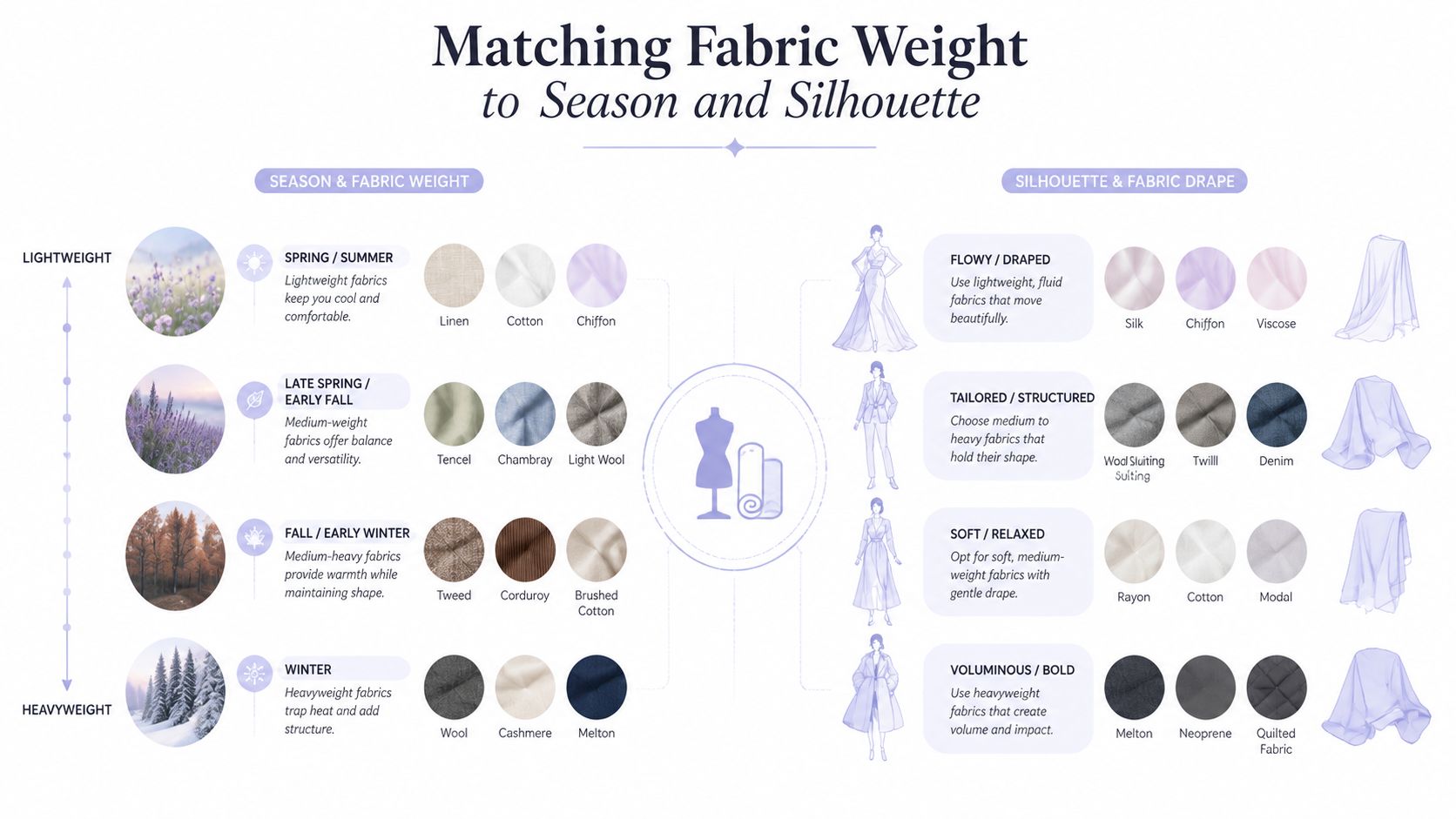
Alpaca and wool offer softness, warmth and visible texture. I treat them as part of the outer layer, especially on countryside walks, rather than forcing them into a tiny knot. Let a thicker scarf rest over a coat lapel, or use a folded wrap that keeps the yarn smooth instead of compressing it into a lumpy bundle.
Silk asks for a lighter hand. Its surface slips, its print can twist, and a large drape may look untidy when the edges are left loose. A square knot forms a narrow band, keeping the design visible and giving the fabric a crisp line. Against a plain blouse, the pattern has room to speak without competing with a busy neckline.
Lightweight cotton sits comfortably between the two. Fold it into a small neckerchief, tie it around a ponytail or braid, or fasten it to a bag when the neck feels too warm. Its informal texture pairs naturally with denim, linen and relaxed tailoring. Repeat one shade from the scarf elsewhere in the outfit, perhaps in socks or a seaside-painted button, and leave the remaining colours to wander.
Let the garment set the scale
A full coat can carry generous volume. A close-fitting cardigan usually looks calmer with a smaller scarf or narrow fold. Broad shoulders gain balance from a longer scarf hanging softly down the front, creating a vertical line. A petite frame can be overwhelmed by excessive width, so keep the drape controlled and the edges quiet.
Proportion rule: if the garment already has strong volume, make the scarf's placement deliberate and its edges calm.
Season follows more than the thermometer. A cool summer evening may call for a lightweight shoulder wrap, while rain on a winter commute favours a compact knot close to the neck. Choose the fibre first, then decide whether the outfit needs warmth, colour, texture or a small ribbon of personality. That order keeps a practical scarf from swallowing the silhouette, even when the weather turns thoroughly British.
Whimsical Pairings with Seaside and Countryside Charm
A scarf becomes most wearable when it borrows the spirit of a trend without copying its costume. On a coastal walk, I like the idea of a soft knitted scarf worn with a waxed jacket, cord trousers and sturdy shoes, with the colour picked up in a small detail rather than repeated everywhere. The result feels maritime without turning into a uniform.
A printed silk square can take a quieter route. Thread it through a shoulder strap or an unused loop ring, then knot it so it cascades down “like a charm,” as described in Liberty's UK scarf-styling guide. Against a plain canvas bag, the movement feels playful without adding bulk around the face.
That small gesture works particularly well with a neutral coat and simple trainers. The scarf doesn't need to match the bag exactly. Pick up a single shade from the print, then let the rest remain unexpected, like a tiny painted lobster hiding among the flowers.
A shoulder wrap for changing weather
For a linen dress, fold a lightweight scarf into a triangle and drape it around the shoulders with the long edge at the back. The point gives the eye a gentle centre, while the fabric can be removed easily when the sun returns. The Lobster Bisque Dress is made from 100% organic linen with a soft organic cotton lining, so a light shoulder layer can add warmth without fighting the dress's breathable character.
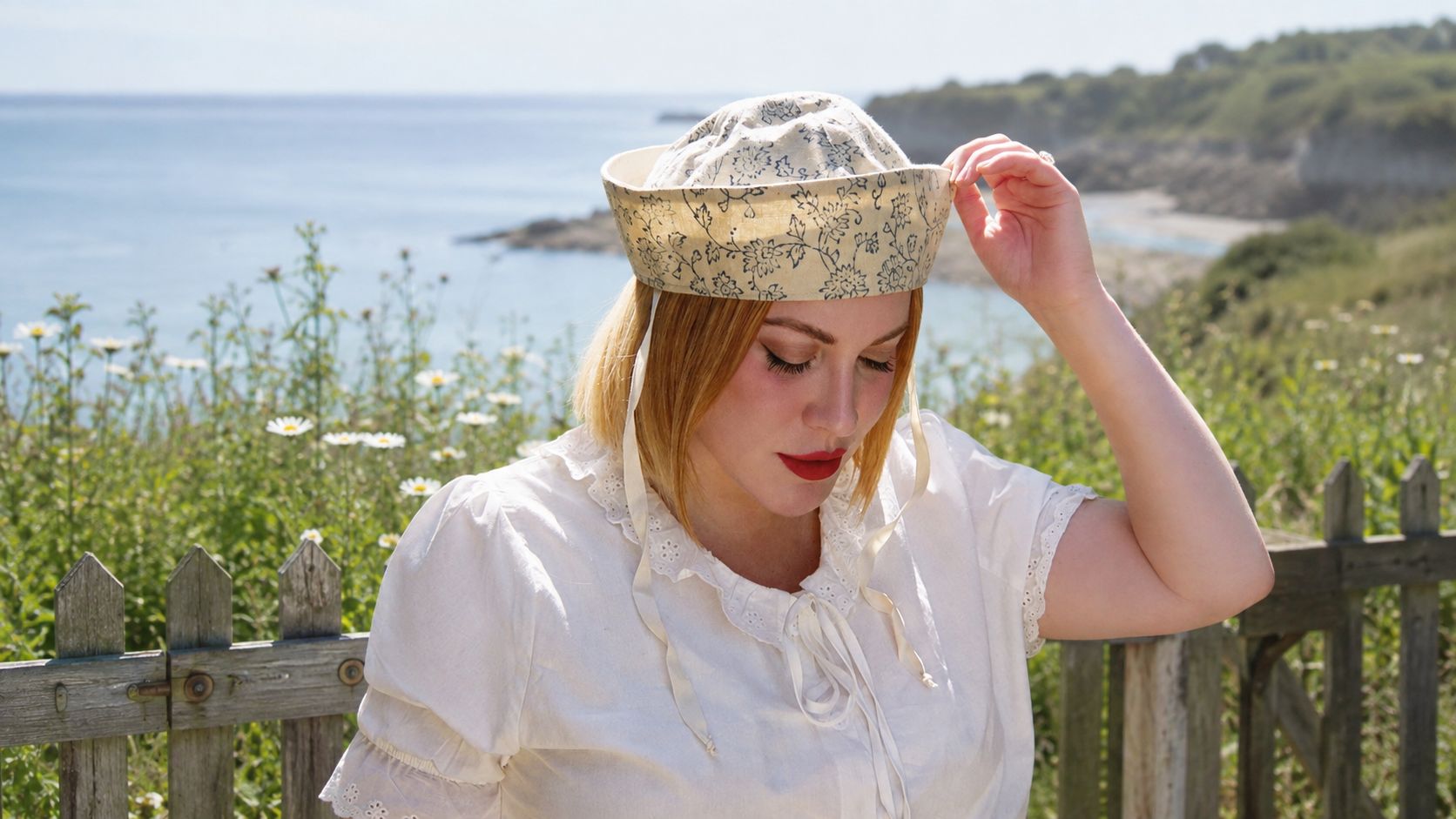
The same instinct applies to accessories with a nautical reference. The Sailor Hats are made to order from offcuts of larger garments, with designs including Garden Society, Ledger and Regatta Stripe prints. Each is individually made by UK seamstresses, and custom print requests are welcomed subject to fabric availability.
If you're exploring how clothing can carry cultural meaning and place, this Maori clothing style guide from Blitz Surf offers useful wider context. For British seaside dressing, the nautical clothing edit provides another way to think about stripes, texture and restrained maritime references.
Troubleshooting Wind Rain and Proportion Challenges
Generic scarf advice often assumes a still room, a cooperative fabric and a perfectly balanced outfit. British weather refuses all three. Current UK coverage presents scarves as headscarves, neckerchiefs, waist ties, bag charms and shoulder wraps, yet the Standard's scarf trend coverage also highlights a practical gap. Inspiration rarely explains which shape, weight or tying method suits a particular body proportion or a gusty commute.
For wind, reduce loose ends. Tuck one tail beneath the coat lapel, use the folded classic wrap, or choose a smaller scarf tied close to the neck. A long open drape may look lovely beside a calm harbour, but it can become an unruly sail beside a bus stop.
Rain changes the choice again. Delicate silk is better protected beneath a coat collar or kept on a bag, while a resilient wool or alpaca piece can sit over outerwear when the forecast is unsettled. Avoid placing a thick knot directly beneath a high fastening point, because the layers will compete for space and the scarf may shift.
Adjusting the line
Shorter necks usually benefit from open space around the face. Keep the knot lower, choose a slim fold and avoid a wide roll pressed beneath the chin. Broader shoulders can take a longer vertical drape, but the ends should remain balanced so they guide the eye down rather than spreading outward.
If your outfit already has a strong print, a tonal scarf often looks more polished than another contrasting pattern. Smaller scarves can also feel more current and less theatrical when the rest of the look is well-fitted.
For practical notes on dressing around unsettled forecasts, the weather-appropriate clothing guide is a useful companion. A breathable base such as The Lobster Bisque Dress can then take a carefully chosen layer without becoming visually crowded.
Caring for Natural Fibre Scarves to Preserve Their Story
Care begins before the scarf enters the wash. Check its fibre and care label, then treat the fabric according to its needs rather than assuming every scarf can share the same routine.
Alpaca and wool prefer gentleness. Air the scarf after wearing it, fold it loosely rather than hanging it from a narrow hook, and keep it away from damp storage. If washing is permitted, use cool water and a suitable wool detergent, support the fabric as you lift it, and dry it flat in its natural shape. Hanging wet knitwear can stretch the shoulders and length.
Silk needs a quieter kind of attention. Protect it from rough jewellery and bag hardware, avoid squeezing or twisting, and store it folded with smooth edges. If creases appear, use careful steaming or follow the label's cleaning instructions. A professional cleaner is sensible when the scarf has a complex finish, a fragile print or a stain you can't identify.
A small ritual of wardrobe stewardship
Natural fibres reward a slower rhythm. Rotate scarves rather than wearing the same favourite every day, allow them to air between outings, and inspect the edges before a loose thread becomes a larger problem. Keep them in a dry drawer or breathable storage, away from anything that may snag the weave.
The Lavender Lobster guide to caring for knitwear offers a useful reference for extending the life of natural-fibre pieces. Good care preserves more than softness. It protects the memory of a windy walk, a market morning, a borrowed coat and the small flourish that made an ordinary outfit feel like yours.
The lasting habit: fold a scarf with care, and you'll reach for it with care too.
If you're ready to make your own scarf rotation more intentional, choose one textured winter piece, one smooth printed square and one lightweight everyday option. Try each with your favourite coat, dress and bag, then explore The Lavender Lobster for natural-fibre clothing and accessories that suit a wardrobe built around seaside whimsy, practical layering and long-lived style.