

You've pulled your favourite alpaca jumper from the drawer, the October mirror is fogged from the kettle, and the washing machine is looking rather pleased with itself. You know the jumper needs freshening, but one wrong wash could turn a beloved layer into a very expensive doll's cardigan. Put the machine lid down. Alpaca care is a small act of wardrobe stewardship, not a wrestling match with the laundry.
At The Lavender Lobster, we think clothing should gather memories rather than replacement dates. British-farm alpaca yarn deserves the same patience as a good country garden, a little attention, the right season, and no frantic digging. Here's how to wash alpaca wool without ruining its softness, shape or quiet magic.
Why Alpaca Wool Asks for a Gentle Hand
Alpaca fibre has a hollow-core structure, helping it feel warm without becoming heavy. It is breathable and naturally resistant to odour, so a jumper can often be worn longer between washes than cotton or synthetic clothing. That makes alpaca a thoughtful choice for a lasting wardrobe, not a disposable layer, but the fibre still needs care at the sink.
The trouble comes from heat, friction and unsuitable detergent. Use cool or lukewarm water, keeping it below roughly 29°C, because warmer water can encourage felting or shrinkage. Temperature control protects the fibre's structure, as outlined in Scotfield Alpaca's garment-care guidance.
A vigorous wash cycle rubs fibres together. Harsh or enzyme-based detergents can also be too aggressive for this delicate protein fibre. Once alpaca has felted, steam will not restore its former size. The scales have locked together, and the change is usually permanent.
That is why caring for alpaca feels closer to wardrobe stewardship than ordinary laundry. A British-farm yarn deserves the patience we give anything made to stay with us through many seasons.
The Lavender Lobster rule: wash alpaca less often, use cooler water, and move it as little as possible.
Wet knitwear becomes heavier and easier to distort. Rough handling can pull a shoulder, stretch a sleeve or narrow a ribbed hem, leaving the jumper with a lasting disagreement about its original shape. Gentle care must continue from basin to towel, not stop once the washing begins.
For the story behind our choice of fibre, read our thoughts on alpaca as a luxurious natural fibre. A beautiful yarn should be treated as something you are keeping, not something you are consuming.
The Calm Ritual of Hand Washing
Hand washing is the safest default for an alpaca jumper, cardigan, scarf or blanket. It gives you control over water and movement, two things this fibre appreciates. Set aside a quiet moment, rather than treating a British-farm knit as another item to rush through the laundry.
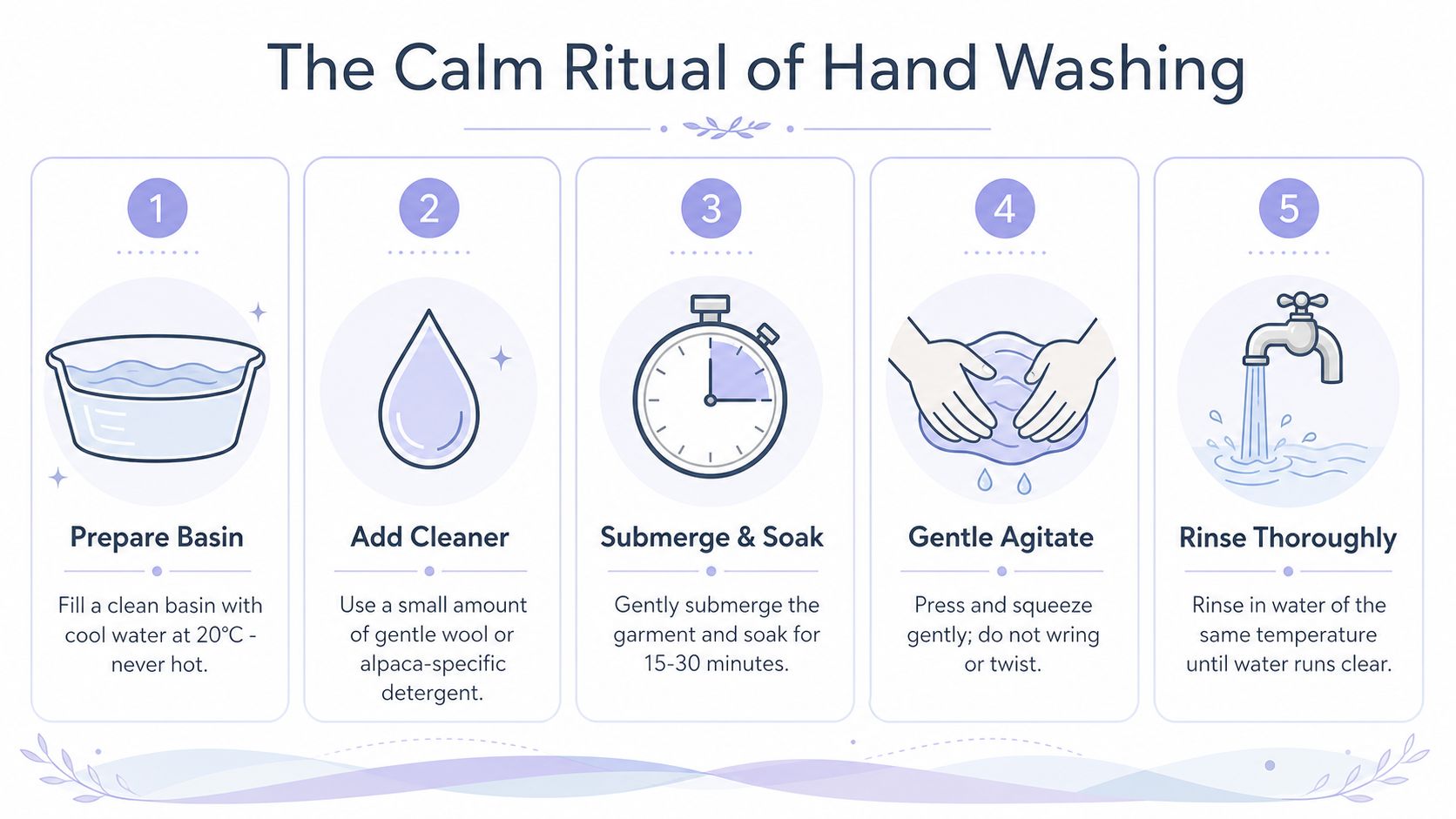
Prepare the basin
Fill a clean basin with cool water, around 20°C. Never use hot water. Sudden temperature changes can shock the fibre, while cool or lukewarm water helps protect its structure. Keep to the garment label's instructions and, as noted earlier, avoid warmer washing temperatures.
Add a small amount of pH-neutral wool wash, such as Eucalan or Soak, and mix it through the water before adding the garment. A specialist wool detergent is preferable to biological laundry liquid. Avoid enzyme detergents, bleach and ordinary heavy-duty washing products, which can be too harsh for alpaca.
Let the water do the work
Turn the garment inside out if the care label allows it, then lower it into the basin with both hands. Press it gently beneath the surface so water can pass through the knit. Don't rub the fabric against itself or knead it like bread dough, tempting though that may be.
Keep the soak brief. Some UK alpaca-care advice recommends only 3 to 5 minutes, while other guidance allows 15 to 20 minutes for suitable garments. Follow the care label first, particularly if the knit is fine, loosely made or hand-loomed. The aim is a controlled soak, not a prolonged bath. Hush's UK fabric-care guidance advises gentle soaking and towel-pressing, while warning against twisting, wringing and scrubbing.
Rinse without a temperature shock
Drain the basin and refill it with water at the same temperature. Press the garment gently to release detergent, then drain and repeat until the water runs clear and no soapy residue remains. Don't hold the knit under a powerful running tap, as the force can stretch wet fabric.
Lift the garment with both hands supporting its full weight. Press excess water against the basin side, but never wring or twist. Alpaca Emporium's UK washing advice also recommends cool water, specialist detergent, minimal agitation and careful towel-pressing.
The rhythm is simple: basin, cleaner, soak, press and rinse. Alpaca rewards a calm household, and this small ritual helps keep a cherished garment ready for many seasons.
When the Machine Is Allowed
The washing machine is an exception, not the household alpaca department. I'd reserve it for small, structured items such as socks, mitts, thin scarves or baby alpaca blankets, and only when the garment label permits machine washing. Put the item inside a mesh laundry bag before it goes anywhere near the drum.
Choose the wool or hand-wash cycle, use cold water with a maximum of 30°C, and select an extra rinse if the programme allows it. Keep the spin at 400 rpm or lower, or skip spinning altogether. UK alpaca-care guidance treats machine washing as a limited option for smaller items, generally on a gentle wool or silk-type cycle at 30°C or below, with spinning omitted or minimised. See Alpaca Emporium's machine-care recommendations for that cautious approach.
Front-loaders are usually kinder than top-loaders with a central agitator. The agitator can catch knitwear, pull it sideways and stretch the fabric before you've had a chance to rescue it. A no-rinse wool wash can help you avoid an additional rinse and spin sequence, but it doesn't turn a rough machine into a gentle one.
Keep these garments out
Don't machine wash:
- Heavy or chunky British knitwear, which becomes weighty and difficult for a drum to handle gently.
- Hand-loomed blankets, whose construction may not tolerate repeated mechanical movement.
- Structured shoulders or ribbed trims, which can lose their shape during wet agitation.
If you're determined to test the machine, use an old alpaca item first. One cautious test is cheaper than learning on the jumper you wear whenever the weather turns theatrical.
| Factor | Hand Wash | Machine, Wool Cycle |
|---|---|---|
| Control | You control water, pressure and movement | The programme controls movement |
| Best for | Jumpers, cardigans and treasured knitwear | Small items approved by the care label |
| Temperature | Cool or lukewarm, around 29°C maximum in UK care guidance | Cold, with 30°C maximum |
| Agitation | Gentle pressing only | Wool or hand-wash cycle |
| Spin | Not required | Keep to 400 rpm or lower, or skip |
| Main risk | Stretching during lifting | Felting, catching or distortion |
For a non-knitwear example of careful natural-fabric construction, The Lobster Bisque Dress is made from 100% organic linen with a soft organic cotton lining. Its care needs differ from alpaca, but the broader principle remains useful: read the fibre and construction before reaching for a standard wash.
Spot Stains Before They Set In
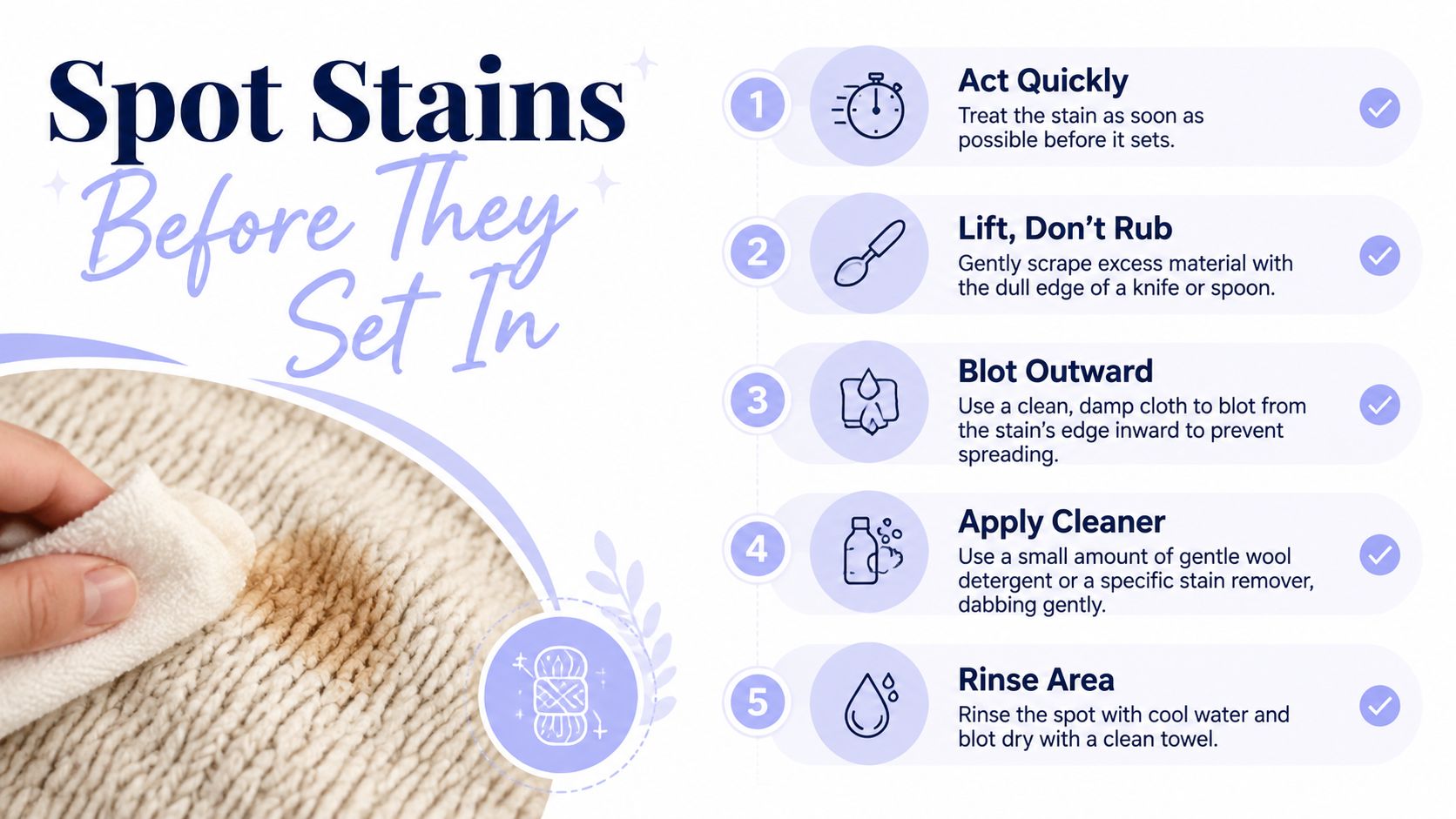
A splash of tea on your favourite alpaca jumper calls for a cloth, not a full wash. Deal with the mark promptly and locally, keeping the rest of the garment dry. That small act of wardrobe stewardship protects the fibre and saves a perfectly good heirloom from unnecessary soaking.
Lift crumbs or dried residue with a clean spoon or the blunt edge of a knife. Work gently, without scraping. Then blot with a damp white cloth, moving from the outside of the stain towards the centre so the spill stays contained.
Match the treatment to the mark
For tea, coffee, red wine, chocolate or grass, mix cool water with a drop of wool-safe detergent or a little white vinegar. Dab from the outer edge inward. Rubbing is a poor bargain: it drives colour into the fibres and creates the friction that encourages felting.
Oily marks, including butter and makeup, need a different first move. Dust the area with cornflour or baby powder and leave it for 20 minutes to absorb the grease. Brush the powder away with a very light touch, especially across a loosely knitted surface.
Finish before washing
Rinse the treated patch under cool running water, supporting the surrounding fabric so it does not stretch. Press out moisture with a clean towel and inspect the area in good light. If the mark has lifted, stop there. Your jumper has had a small adventure, not earned a full spa day.
Avoid bleach, biological enzyme cleaners and vigorous rubbing. For more guidance, see The Lavender Lobster's guide to removing stains from fabric. Its British-farm approach to seasonal care suits the same principle: preserve what you own through small, timely interventions. If one gentle attempt leaves the stain behind, do not scrub harder. Escalate to a specialist cleaner rather than turning a visible mark into a damaged patch.
Drying and Reshaping the Right Way
Drying is where fit is either preserved or lost. A beautifully washed alpaca garment can still emerge misshapen if you hang it wet, leave it beside a radiator or toss it into a tumble dryer. The tumble dryer is forbidden territory. Heat and agitation can felt alpaca quickly.
Press water into a towel
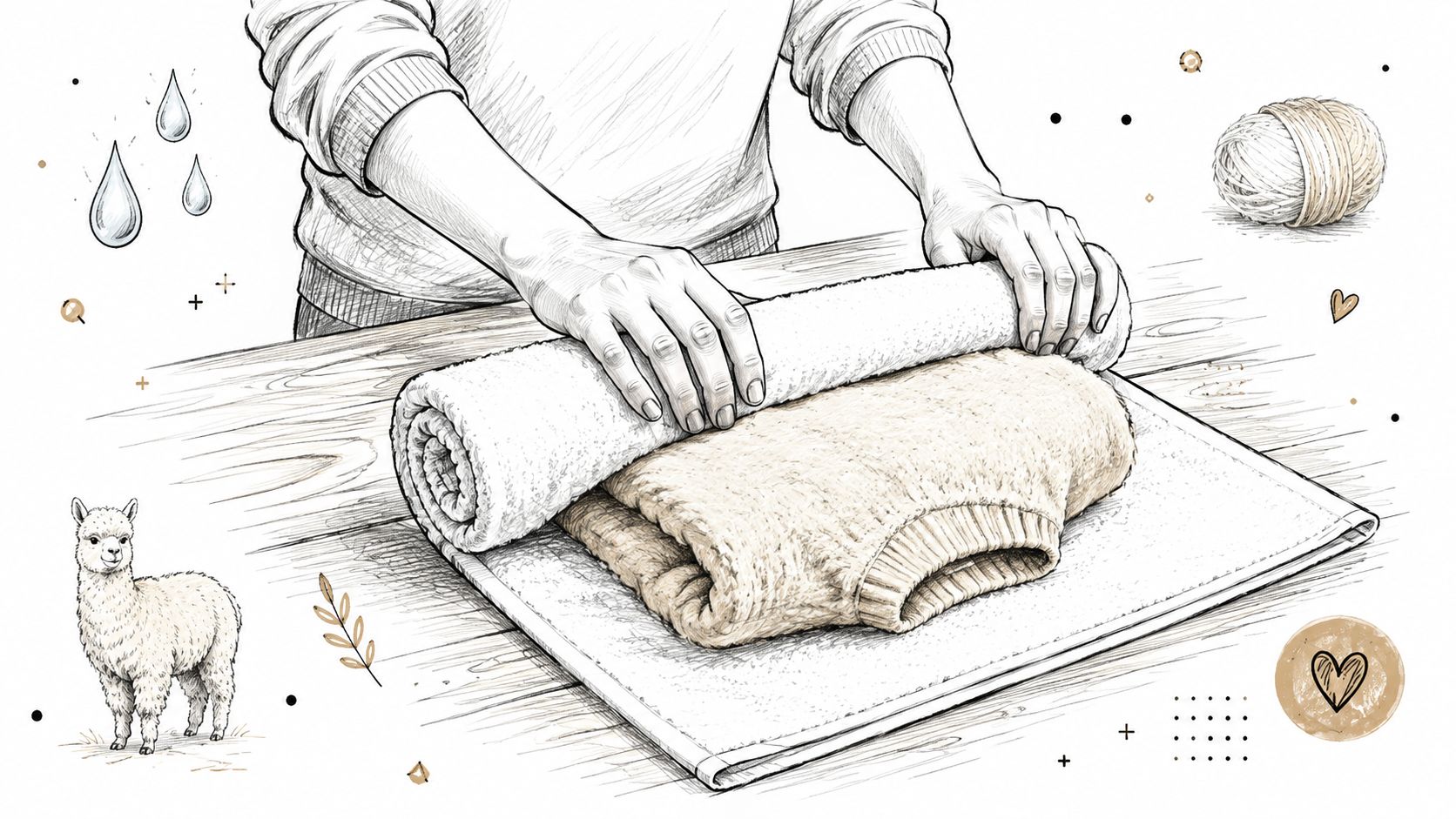
Lay the washed garment flat on a clean, dry towel. Roll the towel and garment together into a loose sausage, then press firmly with both palms. You're asking the towel to wick away water, not asking the knit to survive a wrestling bout.
Unroll the bundle and lift the garment with both hands, supporting it by the shoulders and body rather than pulling from one edge. A UK alpaca-care guide from Lacorine recommends laying alpaca flat in its natural shape and avoiding hot water, scrubbing and twisting.
Restore the original silhouette
Place the knit on a fresh, dry towel over a flat surface, away from radiators and direct sunlight. Pat the body into position with flat palms, align the side seams and square the shoulders. Take special care with cuffs, hems and neckline ribbing, which can creep inward while wet.
Don't stretch the garment to make it larger. Reshape it to the measurements and proportions it had before washing. If the sleeves look a little wayward, smooth them rather than tugging them into submission.
Wet alpaca belongs on a flat surface. Hangers are for coats, not waterlogged knitwear.
Replace the towel underneath after 12 hours and turn the garment so it dries evenly. Allow 24 to 48 hours for thorough drying, depending on the room and the thickness of the knit. Patience is less glamorous than a tumble dryer, but it produces the far more desirable result of a jumper that still fits.
For broader guidance on maintaining beloved knits, read our knitwear-care advice. The same basic courtesy applies after every wash, support the fabric, preserve its shape and let air do the work.
Washing Less and Storing Smarter
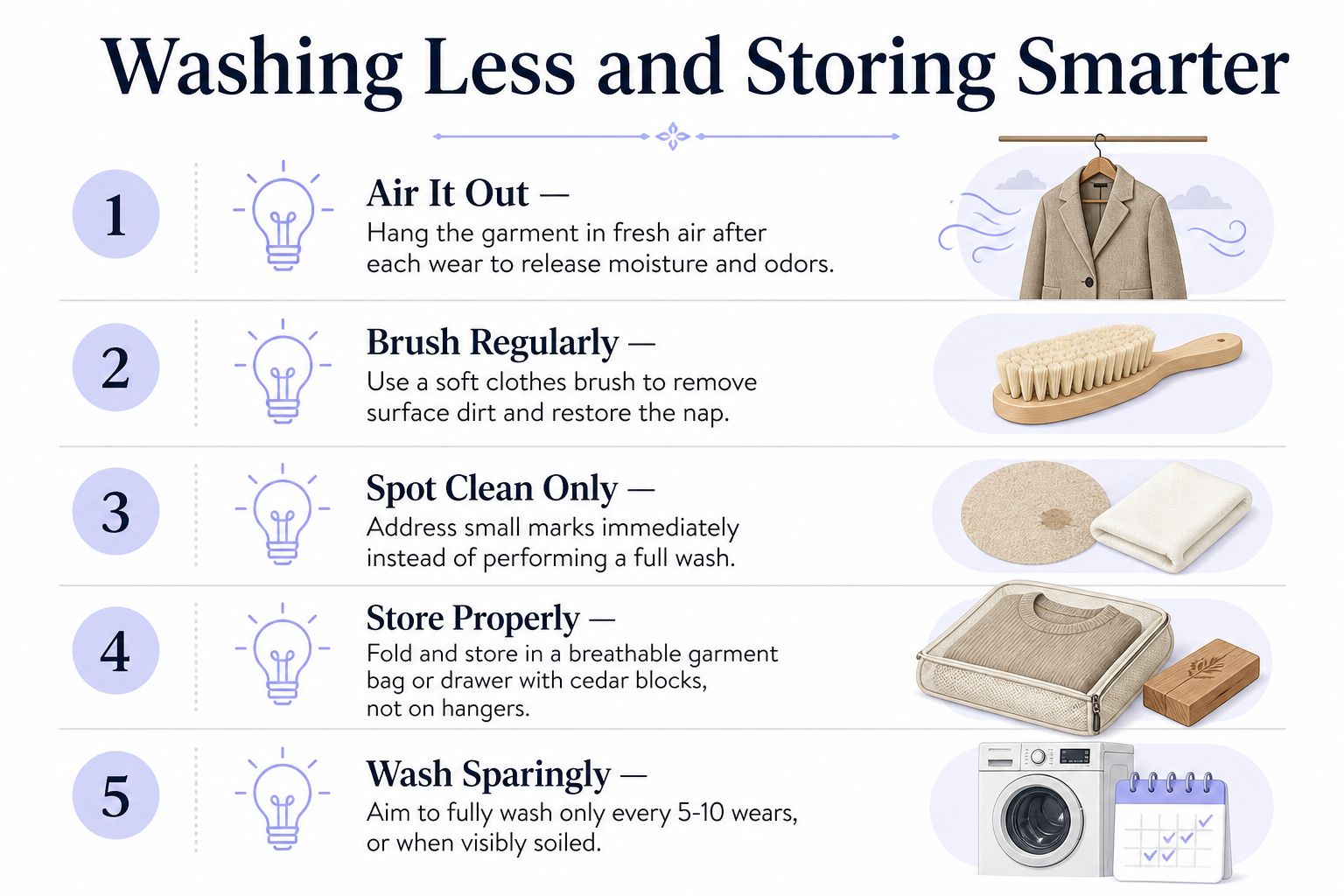
The most sustainable alpaca-washing habit is not washing it unnecessarily. Alpaca fibres naturally resist odour and moisture, so airing, brushing and spot cleaning can often handle the small aftermath of a day's wear. Give the jumper a brisk shake, let it breathe in fresh air, and use a soft-bristled garment brush to lift surface dust.
A steamy bathroom can refresh a knit after wear, provided the garment isn't left damp for long. Avoid hanging it from a narrow hook while wet or humid. Lay it flat when the fabric needs to recover, then fold it once it's properly dry.
Make the drawer do the protecting
Fold alpaca rather than hanging it. The weight of a folded knit is supported across the drawer, while a hanger can pull at the shoulders and leave unwanted points in the shape. Place a sheet of acid-free tissue across the shoulders, store each piece in a breathable cotton bag, and avoid plastic, which can trap moisture.
Cedar blocks and lavender sachets are sensible additions to a clean storage space. They deter moths without covering the natural scent of the wool in a chemical fog. Rotate the folded stack monthly so the same creases don't become permanent residents.
- Before summer storage: Wash or spot clean the garment, dry it completely and fold it before packing away.
- During winter: Air a stored piece on a dry day if it needs refreshing.
- Between wears: Brush lightly and inspect cuffs, hems and underarms before deciding whether a full wash is necessary.
For further ideas on using and caring for wool textiles around the home, The Sofa Cover Crafter's guide to wool sofa throws is a useful companion read. The same instinct applies to clothing and interiors, natural materials reward gentle handling.
The Lavender Lobster's Clubhouse Cocktail Napkins | Set of 4 are made from 100% flax linen in a pale blue plain weave, with a red stitched border and embroidered Lavender Lobster Club scenes. They're linen rather than alpaca, but they belong to the same larger pleasure of choosing useful things with enough character to keep and care for.
Quick Answers for Common Alpaca Worries
Is pilling a sign that alpaca is poor quality?
No. Pilling happens when shorter fibres work loose and tangle on the surface through ordinary friction. It isn't automatically a flaw, and it doesn't mean the garment has failed.
Use a cashmere comb or a specialist wool comb, moving gently in one direction across the fabric. Don't pull pills away with your fingers, because that can draw out sound fibres and leave the surface rougher.
Can alpaca be ironed?
Avoid direct ironing wherever possible. If you must press a small area, use the lowest wool setting and place a pressing cloth between the iron and the garment. Steam from a distance is the safer option, and you shouldn't let the iron sit in one place.
A little patience often works better than pressing. Wear and gentle steam can allow minor creases to relax without flattening the texture that makes alpaca so pleasant.
How do I prevent moths?
Store alpaca only when it's clean and completely dry. Fold it in a breathable cotton bag or drawer, then add cedar rings or lavender sachets. Inspect the storage area and the garment periodically, especially before and after seasonal storage.
Moths favour neglected, undisturbed textiles, so regular airing and sensible rotation help you notice trouble early. Don't rely on fragrance alone. Clean storage is the foundation.
When should I call a specialist?
Stop experimenting at home if the garment has felted, carries a deep-set stain, or is an oversized heirloom you can't replace. A specialist cleaner with experience handling wool and alpaca can assess the fibre and construction before making matters worse.
Tell them exactly what happened, including the detergent, temperature and whether the garment went through a spin cycle. That information gives them a better chance of choosing an appropriate treatment.
A good alpaca jumper should have a long life, a few stories and perhaps one slightly overconfident moth-proofing sachet.
The British philosophy is simple. Wear the piece often, wash it thoughtfully, store it properly and repair it when needed. That's how a beautiful jumper becomes part of your life rather than merely part of a season.
Choose one alpaca garment from your wardrobe today, air it, inspect it and check its care label. If it needs washing, prepare a clean basin, specialist wool wash and two dry towels before you begin. Treat the knit as an heirloom, and let The Lavender Lobster's approach to thoughtful, seasonless dressing start with the next careful wash.