

You've got the invitation, the venue looks glorious, and your wardrobe is offering the same three dresses it has served at every wedding since the last royal jubilee. Buying a £900 silk gown for one reception can leave you with a beautiful garment and a slightly haunted bank balance. Hiring gives you another route, one that feels less like compromise and more like borrowing a little wardrobe magic for the evening.
This guide follows the experience from the first browser tab to the moment the dress goes back into the post. You'll learn how UK rental works, what the price really includes, where to search, how to manage fit risk, what damage and cleaning policies mean, and how to decide whether a rental model aligns with your values.
Why Rent a Designer Dress in the UK
A wedding invitation often creates a peculiar fashion problem. You want to look special, but not so recognisable that the same outfit appears in every photograph. You might also want a designer cut, a dramatic colour or a fabric that would never make sense as an everyday purchase. Dress hire solves that one-event puzzle neatly.
The UK market has grown beyond a tiny experiment. Westfield research estimated the potential value of the UK clothing rental market at £923 million, with 25% of Londoners saying they'd like to rent clothing. The same research found that 50% of 25- to 34-year-olds would spend £200 or more per month on hired clothes, according to Drapers' coverage of rental fashion opportunities. Those figures point to something important: hiring isn't only an emergency option for someone watching their spending. It can be a deliberate way to access a more adventurous wardrobe.
The practical appeal
Rental makes particular sense for occasions where novelty matters:
- Summer weddings: Choose a floral midi or bright silk look without storing it for years afterwards.
- Ascot and the races: Hire a statement silhouette, then return it before the next season arrives.
- Graduations and galas: Wear something polished and memorable when the event won't recur often.
- Black-tie invitations: Reach for a gown with the sort of presence most wardrobes can't justify buying.
There are quieter advantages too. A small London flat has limited rail space, and even a larger home can become a museum of “perhaps I'll wear it again” dresses. Renting also helps people rotate their clothes around the calendar, without carrying the resale burden when an outfit no longer feels right.
Consumer motivation is mixed rather than purely financial. A VoucherCodes survey reported by FashionUnited found that two-thirds of Brits intended to use clothing rental companies during the 2021 party season. It also recorded sustainability, saving money and avoiding outfit repetition as reasons for renting. The same report found women were willing to spend about £61 on a new look compared with £45 on a rented outfit, a 35% difference that illustrates why hire works especially well for event dressing.
The right question isn't “Can I afford to buy this?” It's “Do I want to own this after the party?” Once you see rental as access rather than a lesser version of ownership, the process becomes much easier to judge.
How UK Dress Rental Actually Works
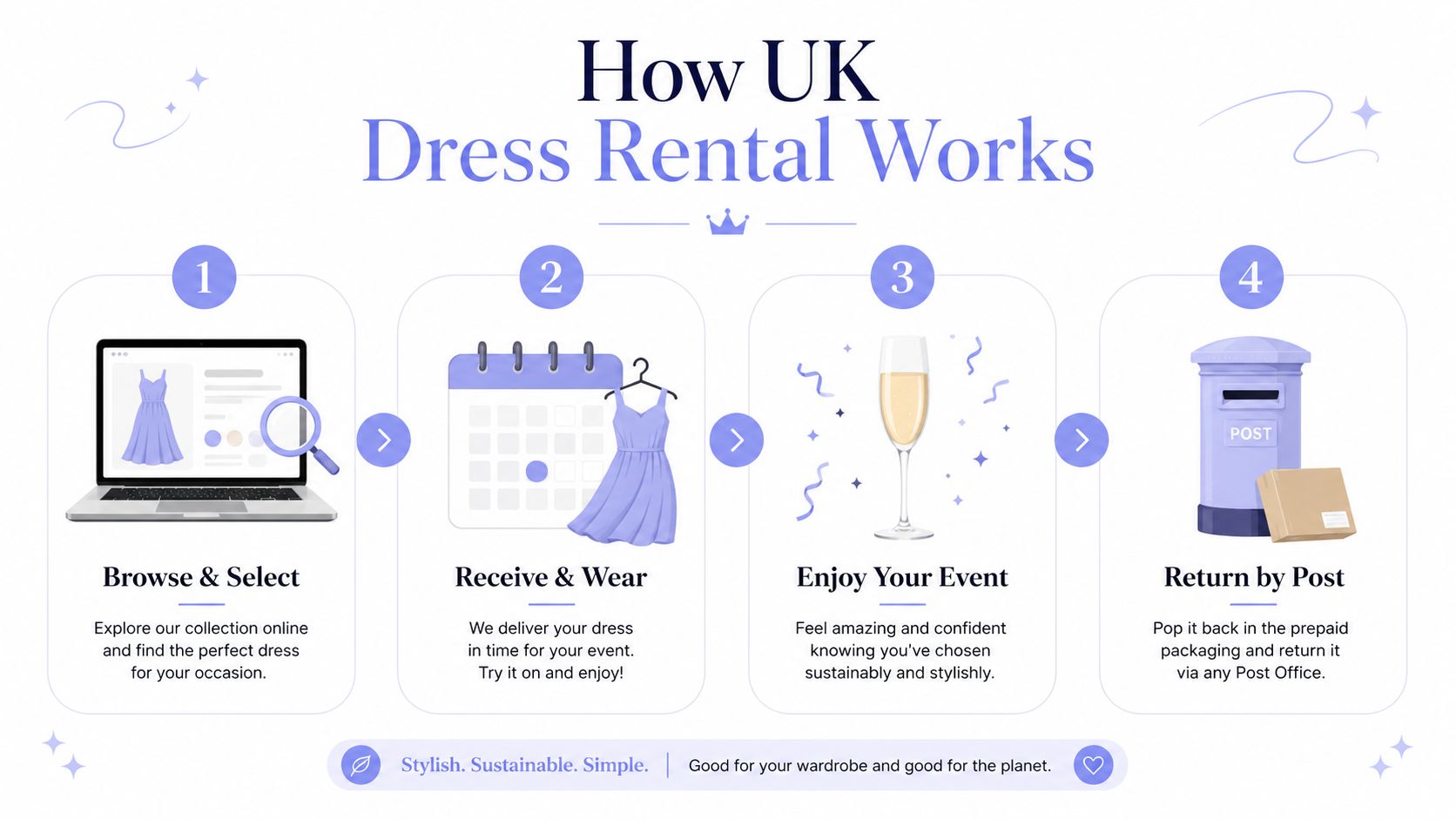
The evening is on your calendar, but the dress is still somewhere online. UK dress hire connects those two points through a simple exchange: you choose a garment, wear it during a fixed booking window, then return it. The platform, individual lender or brand keeps ownership throughout, so your task is to follow the dates and care instructions carefully.
Start with the date, not the dress
Check the event date, delivery area and return deadline before browsing seriously. Filter by designer, size, occasion and availability, rather than choosing a beautiful dress that cannot arrive in time. UK services use short, fixed windows. HURR offers 4-day or 7-day rentals, while other services list periods such as 4, 8, 16 or 30 days.
The usual sequence looks like this:
- Browse and select: Read the measurements, fabric notes, photographs and terms. Treat the size chart as more reliable than the label in your usual high-street dress.
- Choose the rental window: Select dates covering delivery, the event and the return journey. The booking normally has a defined start and end date.
- Pay the charges: The checkout may include the rental fee, postage, a refundable deposit and optional damage cover. The combination differs between services.
- Receive the parcel: Delivery may come through tracked Royal Mail or a courier such as DPD. Keep the packaging and return instructions together.
- Wear and inspect: Try the dress on carefully, complete any permitted steaming, and keep makeup, fake tan, perfume and food away from delicate fabric.
- Return promptly: Use the prepaid bag or arrange the stated collection. Keep proof of postage or the tracking record.
Practical rule: Your rental window belongs to the calendar, not your good intentions. Put the return deadline in your phone as soon as you book.
The ownership model changes who handles the practical details. A peer-to-peer lender owns the garment and may set individual rules. A curated platform manages inventory and customer service, while a brand-led service handles its own garments within its commercial model. You remain responsible for following care instructions and reporting problems quickly.
Late returns can interfere with the next booking. A service may charge a fee or pursue costs if the parcel misses its deadline. Damage rules also vary: one provider may treat a small mark as normal wear, while another may charge for it. Read those terms before paying, not after the dress has acquired a story.
For a fuller explanation, this guide to renting clothes in the UK offers useful background. A brand-led example is The Lobster Bisque Dress, described as 100% organic linen with a soft organic cotton lining, with 18 variants across its options and availability data for 6 of them.
Here's a short visual reminder of the journey:
The system can feel formal at first, with labels, deadlines and garment bags, but the routine is manageable. You need the date, your measurements and a few minutes with the terms. The small joy is opening a parcel that gives you a new look without asking your wardrobe to keep it forever.
What It Costs to Hire a Designer Dress
A four-day hire can look wonderfully affordable in a browser tab, then grow at checkout. Start with the advertised rental fee, but also check postage, deposit arrangements, damage cover and cleaning rules before confirming the booking. The final cost is a small bundle, not one neat number.
The wider market makes the appeal clear. Designer dresses can cost far less to hire than to buy, especially when you need one for a single event. A premium gown can be a bit like borrowing a car for a weekend: you pay for the use, while the owner carries the long-term cost of keeping it available.
The example below uses a £1,200 gown. A hire fee of 5% to 15% of retail would put a four-day rental at £60 to £180. Treat those percentages as a budgeting illustration, not a promise from every provider. The individual listing and its terms remain the final authority.
| Cost Line | Peer-to-Peer Marketplace | Curated Rental Platform | Brand-Led Rental (e.g. The Lavender Lobster) |
|---|---|---|---|
| Base rental fee | Set by the individual lender or platform | Listed by the platform | Set by the brand |
| Deposit | May be required or held temporarily | Depends on the service and garment | Depends on the brand's terms |
| Damage cover | May be optional or included | Often presented during checkout | Set directly by the brand |
| Postage | May be charged separately | Usually shown before payment | Set by the brand |
| Cleaning | Usually handled through the service rules | May be bundled or charged for damage | Explained through the brand's care policy |
Charges that catch people out
A refundable security deposit is not usually a final charge, but it can temporarily reduce the money available in your account. Check whether the service takes a payment or places an authorisation, and find out when the hold should be released.
Late-return fees need close attention. They may be substantial and can equal the rental price when another customer is waiting for the same dress. A stain can also lead to a charge, even if it looks minor to you, particularly on silk, sequins or pale fabric.
Cleaning is another easy assumption to get wrong. It may be included in the hire price, or the provider may charge after assessing a stain. Do not wash the dress at home unless the terms specifically tell you to. Specialist garments often need professional handling, and an enthusiastic wash can turn a small mark into a costly repair.
Use this formula for the amount you expect to spend:
Rental fee + postage + optional insurance = expected out-of-pocket cost
Keep the deposit separate in your mental budget, while leaving enough available balance for the temporary hold. The cheapest-looking listing may not be the cheapest booking once delivery, cover and the timing of the return are included. A few minutes with the terms can save an unpleasant surprise after the party.
Where to Find Designer Dresses for Hire
The UK rental market is easier to understand when you stop treating every service as the same kind of shop. There are three broad models, and each suits a different personality.
| Service Type | Inventory Source | Best For | Typical Lead Time | Price Band |
|---|---|---|---|---|
| Peer-to-peer marketplace | Wardrobes from individual lenders and members | The treasure hunter seeking rare, vintage or specific pieces | Depends on lender availability and dispatch | Varies by garment and lender |
| Curated rental platform | Professionally managed or selected inventory | The planner who wants a predictable process | Usually tied to published delivery and rental windows | Varies from accessible occasionwear to premium designer hire |
| Brand-led rental | Garments supplied directly within a designer's own business model | The values-led buyer who wants clearer provenance and care information | Set by the brand's production and booking process | Set by the individual brand |
Peer-to-peer marketplaces
ByRotation and Hurr sit naturally in the treasure-hunting category. You may find a particular brand piece, an unusual print or a vintage silhouette that would never appear in a tightly edited catalogue. The trade-off is variation. Listing photos, measurements, dispatch speed and communication can differ between lenders.
This route suits someone who has time to read carefully and enjoys a little detective work. Check the lender's reviews, ask questions before booking and make sure the return journey is practical for your event date.
Curated rental platforms
Rotaro, Girl Meets Dress and Rental Boutique offer a more planner-friendly experience. Curated images and structured product pages can make it easier to compare dresses by occasion, colour, size and rental date. A first-time hirer may prefer this consistency, especially for a wedding where delivery timing matters as much as the neckline.
The selection can feel more edited, but that's often useful. You're less likely to disappear into a rabbit hole of beautiful dresses that don't match your measurements or schedule.
Brand-led and ethical options
A brand-led model, such as The Lavender Lobster's rental option, keeps the relationship closer to the designer. The potential benefit is clearer information about provenance, care and how the garment fits into the brand's own commercial structure. You'll still need to check its specific hire terms, lead time, cleaning policy and size availability.
Membership fees aren't universal. Some services may offer memberships or account-based benefits, while others charge per booking, so check the current terms rather than assuming a subscription is required. UK coverage and lead times also vary, particularly where a piece comes from an individual lender instead of a central inventory.
Match the service to your temperament:
- Choose peer-to-peer if finding the exact rare piece matters most.
- Choose a curated platform if timing, standardisation and easy comparison are your priorities.
- Choose brand-led rental if you want to understand who made the garment, who manages it and how rental fits into the label's model.
The best platform isn't universal. It's the one whose inventory, timeline and responsibilities fit your event without making you perform three acts of postal wizardry.
Getting the Fit Right and Handling Surprises
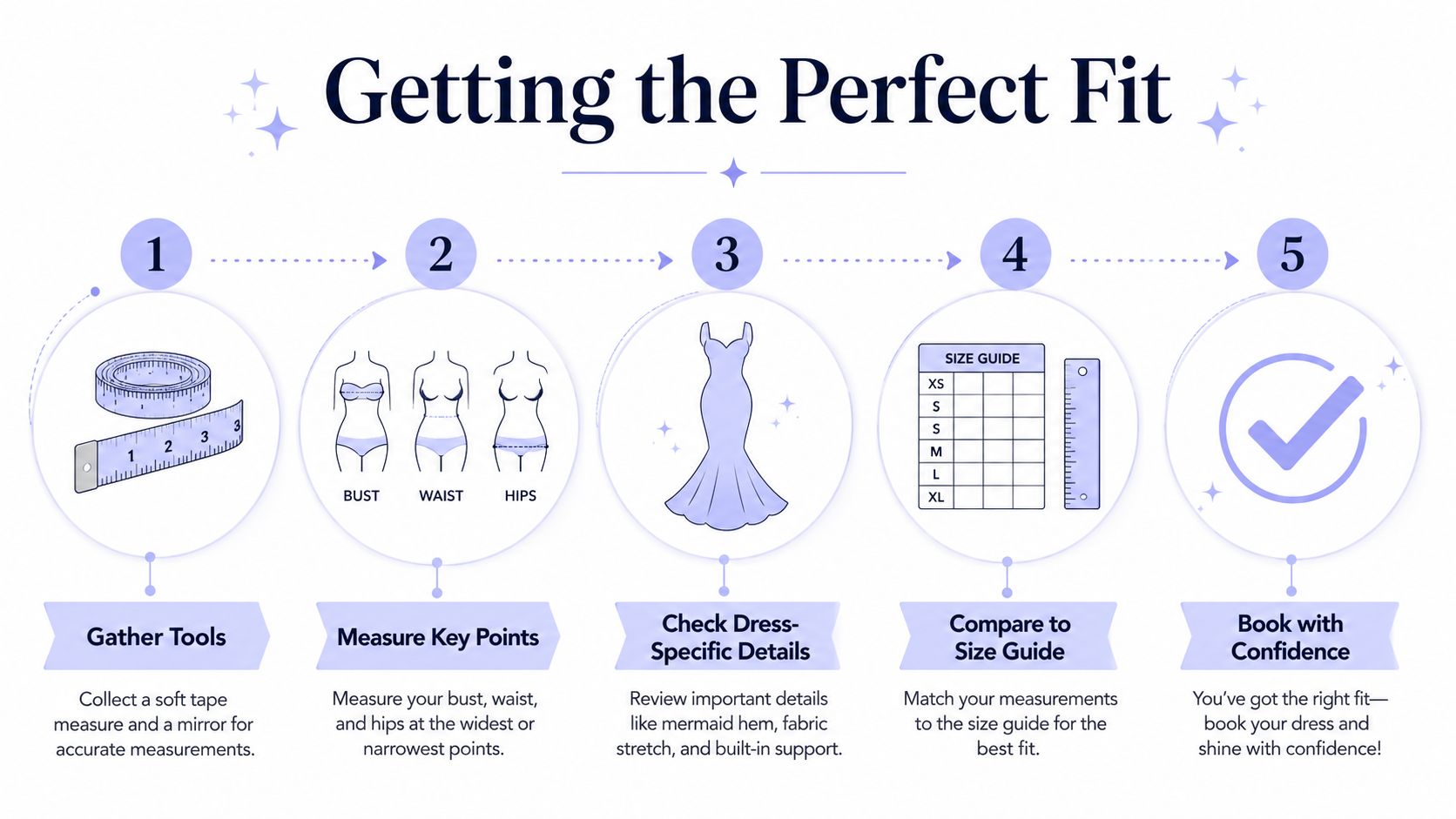
Fit is the main reason a rental can feel either brilliantly easy or unexpectedly dramatic. Start at home with a soft tape measure and write down your bust, waist and hip measurements. Add any dress-specific measurement that matters, such as the thigh for a fitted mermaid hem, then compare your numbers with the platform's chart.
High-street sizing is only a rough clue. A designer's UK 12 may not behave like another designer's UK 12, and the garment's cut can matter more than the printed label.
Read the dress, not just the photograph
Model images show the intended silhouette, not necessarily how the dress will sit on you. Look for customer photos, lender selfies and reviews that mention whether the fabric has stretch, whether the waist runs narrow and whether the length suits different heights.
Silk satin and heavyweight taffeta rarely forgive a sizing error. Stretch jersey, wrap shapes and adjustable straps may offer more flexibility, but don't rely on fabric names alone. Read the garment notes and ask the service a direct question if the description is vague.
When the parcel arrives, try the dress on before the event, ideally with the shoes and underwear you plan to wear. Steam only if the care instructions permit it, then sit, walk, lift your arms and do a full, quiet dance test. A dress that looks perfect while standing still may become a tiny travelling curtain when you sit down.
Take photographs as soon as the parcel arrives, before wearing the garment. Include any mark, pulled thread, missing fastening or fit issue in the images.
If the size is wrong
Don't panic, and don't alter the dress yourself. Contact the platform or lender promptly, preferably within the service's stated reporting period, and explain exactly what has happened. UK providers may offer a size swap when stock allows, a partial refund or account credit, but the available remedy depends on the booking terms and inventory.
Support your message with:
- Clear photographs: Show the whole garment and close-ups of the problem.
- A measurement comparison: Note your body measurement and the relevant chart measurement.
- A written description: Explain whether the issue is tightness, looseness, length, damage or a missing component.
- Booking details: Include the order reference and event date so the team can assess urgency.
For practical styling ideas that may help you judge silhouettes before booking, this guide to flattering dress styles offers useful visual prompts. Fit confidence doesn't mean guaranteeing perfection. It means creating enough time and evidence for a sensible solution if the dress arrives with its own opinion.
Sustainability, Care and the Ethics of Rental
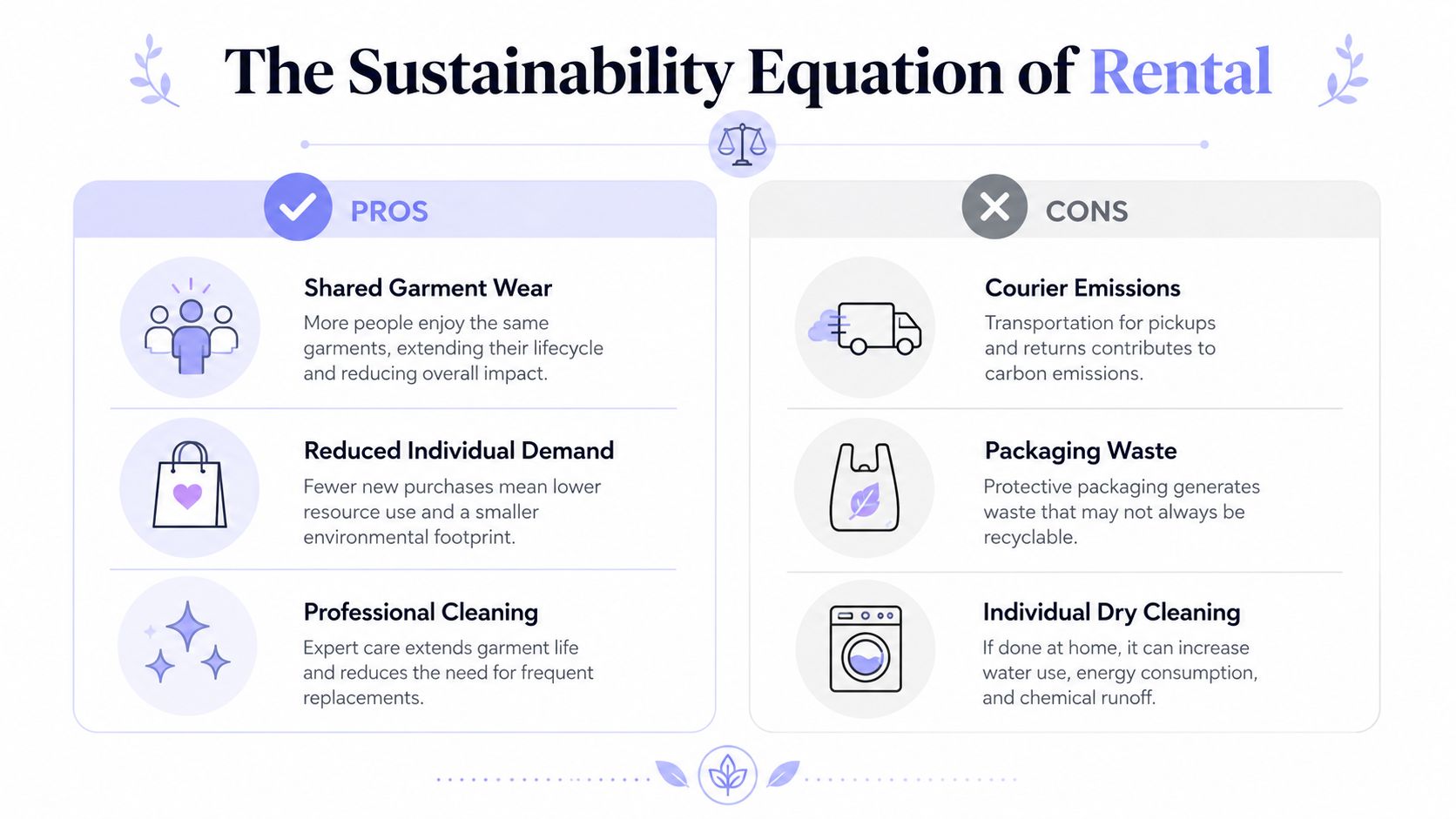
Rental can reduce the need to buy a new outfit for every occasion, but it isn't automatically greener. A dress shared across many wears may spread the environmental cost of production over more use. Courier journeys, return packaging and frequent dry cleaning can offset some of that benefit.
A study summarised by The Independent's coverage of fashion rental and climate impact found hidden emissions from transport, packaging and dry cleaning, and concluded that rental had the highest climate impact among the ownership and disposal methods it compared. The same source also discusses wider fashion impacts, including a Cardiff University paper stating that the global fashion sector accounts for 8% to 10% of global CO2 emissions and 20% of global waste streams. WRAP estimates that £140 million worth of clothing goes to landfill in the UK each year, also cited in that reporting.
That makes the honest comparison more useful than a green halo. Renting a well-made dress repeatedly can make sense, especially when it replaces a purchase that would be worn once or twice. Renting a dress for one booking, sending it through a long delivery chain and then seeing it discarded doesn't offer the same advantage.
Care is part of the ethics
Your role is simple but important:
- Spot-treat only when instructed: Don't experiment on delicate fabric.
- Keep perfume and deodorant away from silk: Apply them before dressing and allow them to dry.
- Never machine wash a rental: Return it according to the provider's cleaning instructions.
- Avoid food, fake tan and rough accessories: Prevention is kinder than heroic stain removal.
Peer-to-peer rental also raises questions about who profits and whether lenders are fairly protected when something goes wrong. Read the insurance and damage terms from the lender's perspective as well as your own. A cheap booking isn't ethically tidy if the owner carries all the risk.
Brand-led rental can offer a clearer line between the designer, the garment and the revenue generated by hire. That doesn't prove a model is perfect, so ask about care, provenance and worker conditions rather than accepting a sustainability label at face value. You can find more practical ideas in this guide to reducing clothing waste.
Small design choices can support the same principle. The Sailor Hats are made to order from offcuts of larger garments, with fabrics given a second life. They're available in Garden Society, Ledger and Regatta Stripe prints, with custom print requests subject to fabric availability, and each is individually made by seamstresses in the UK.
Booking Your First Hire with Confidence
Treat your first booking like a calm little mission, not a fashion exam. You're checking a few practical details in a sensible order.

Your pre-booking checklist
- Confirm the occasion: Check the event date, venue dress code and the time you need the dress to arrive. A countryside wedding, black-tie reception and daytime graduation may each call for a different level of formality.
- Measure yourself: Record bust, waist and hips, then check any relevant garment-specific measurement.
- Inspect the listing: Read fabric notes, customer reviews, photos and the exact rental window. Pay attention to the return post-by time.
- Understand responsibility: Check the deposit hold, damage cover, insurance, cleaning policy and late-return fee before payment.
- Plan the parcel: Keep the garment bag, hang the dress after wearing it and schedule the prepaid return label or collection immediately.
Photograph yourself in the dress when it arrives, along with its condition before wear. If something looks wrong, contact customer support straight away rather than hoping the problem will disappear under flattering lighting.
The first hire is practice. You'll learn how much room you need for delivery, which fabrics suit you, how a particular platform handles returns and which small rituals keep the process tidy. The second booking usually feels less like a gamble and more like opening a well-organised wardrobe door.
If you're planning an event now, write down the date, dress code and your three key measurements, then browse UK rental listings that match all three before choosing a style. Read the full terms, book enough time for a proper try-on, and let the dress have its one-night adventure before you send it safely home.