

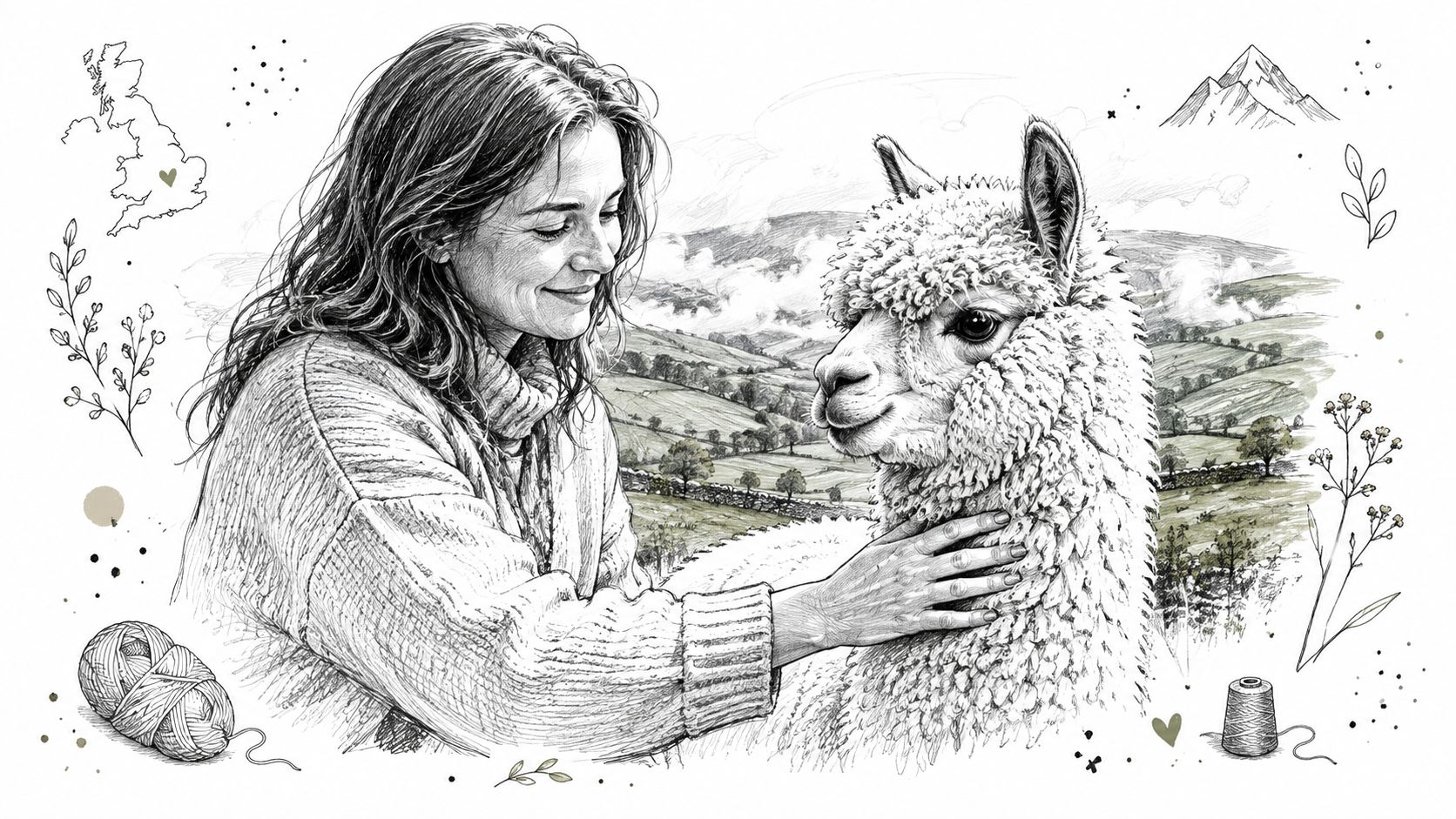
The first alpaca fibre I ever touched was warm, springy and softer than I expected, with the sea-grey sky behind it making the whole afternoon feel like a page from a storybook. That small moment, shared with someone I love, became the beginning of a wardrobe built for repeat wear, not quick applause.
A Personal Beginning Behind the Label
We'd driven inland from the coast, leaving the salt wind behind for hedgerows, wet grass and a real British alpaca farm tucked among rolling fields. The alpacas watched us with quiet curiosity, their long faces framed by the softest-looking fringes. When I ran my fingers over a handful of fibre, I felt its gentle bounce before I understood anything about spinning, knitting or garment construction.
That tactile moment mattered. It made clothing feel connected to a living environment, a skilled maker and the person who'd eventually wear it. The palette that followed came from the coast I knew best, chalky blue, lobster-shell pink, seaweed green and the creamy white of foam caught between rocks. I wanted each colour to feel as though it had washed ashore rather than arrived from a trend report.
A personal love story sits at the centre of the label, along with a promise to my daughter, Lavender. That promise is simple. Make beautiful things with care, choose materials thoughtfully and create clothes women can reach for across changing seasons and changing lives.
A smaller rhythm than fast fashion
A seaside small business can't, and shouldn't, move like fast fashion. We work with small runs, honest sourcing and designs intended to be worn on repeat. A garment has to earn its place through comfort, versatility and construction, not just through being new.
That means asking questions before a sketch becomes a sample. Can the fabric work across more than one season? Will the fastening survive regular use? Does the silhouette still feel like itself when styled with a different scarf, cardigan or pair of shoes? Those questions are more useful than attaching a vague “eco” label at the end.
Founders also have to tell the story clearly. If you're learning how a small fashion business can build a community online, a practical resource such as how lolo wood monetizes instagram offers useful context around turning attention into a sustainable business rather than treating social media as decoration.
Sustainable clothing for women begins with that relationship, between wearer, maker, material and place. The practical test comes next: what the fabric is, who made it, how long it can serve and what happens when its first chapter ends.
What Sustainable Clothing Actually Means
Sustainability isn't a single fabric, badge or mood-board colour. A linen dress can be thoughtfully made or poorly constructed. Recycled polyester can divert material from disposal, yet still create care and end-of-life challenges. A responsible wardrobe needs a wider lens.
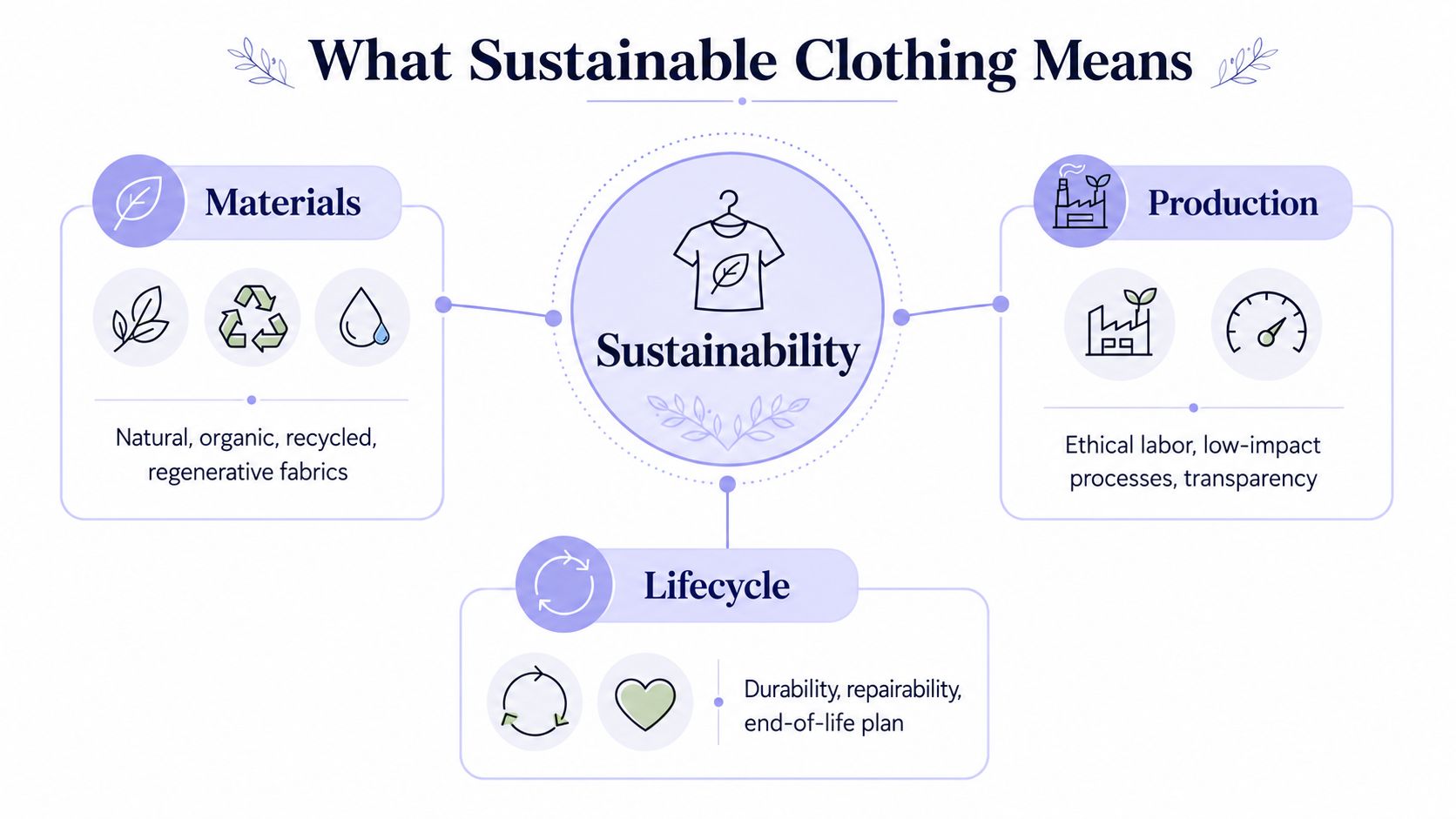
I use three connected pillars: materials, production and lifecycle. They work together, like three legs of a slightly eccentric seaside stool. Remove one and the whole thing wobbles.
The three questions behind the label
Materials cover the fibre's origin and behaviour. Natural, organic, recycled and regenerative inputs can each play a role, but none should be treated as automatically perfect. Organic cotton, for example, still needs responsible dyeing and finishing. Alpaca and wool offer warmth and breathability, while animal welfare, land management and processing remain important parts of the picture.
Production asks who made the garment and how. Look for information about sewing, dyeing, finishing, wages, supply-chain visibility and production volume. Small-batch or made-to-order production can help a brand align output with actual demand, but transparency matters more than a fashionable phrase.
Lifecycle begins with the first wear. Durable seams, replaceable buttons, repairable construction, clear care instructions and a credible reuse or recycling route all affect how long a garment remains useful. A recyclable fibre isn't enough if the garment is unlikely to survive regular wear or can't be separated at the end.
A useful browsing rule: ask where the fibre came from, who made the garment and what proof supports the claim.
Certifications can help make those answers less hazy. Depending on the product and claim, shoppers may encounter GOTS, OEKO-TEX, RWS, Fairtrade and B Corp. Each signal addresses different parts of a product or organisation, so certification should be read alongside fibre content, construction details and supply-chain information. “Eco”, “conscious” and “green” are marketing terms unless the brand explains what they mean.
A simple example is The Lobster Bisque Dress, described as 100% organic linen with a soft organic cotton lining. That fibre information gives a useful starting point, but a careful shopper should still consider fit, seams, care requirements and how often the dress will be worn.
The point isn't to find a mythical flawless garment. It's to replace a quick label check with a fuller habit of looking, asking and choosing pieces that have a believable future.
The Scale of UK Textile Waste and Why Longevity Matters
A wardrobe rail can feel private, but clothing waste is a national system. WRAP's 2024 Textiles Market Situation Report estimates that the UK generated approximately 1.45 million tonnes of used textiles in 2022. Around 650,000 tonnes were diverted to reuse and recycling, while 421,600 tonnes were exported and 276,000 tonnes were sold to the public.
The same report estimates that about 711,000 tonnes of used textiles were discarded in household bins and at household waste recycling centres in 2021. That was almost half of all used textiles, equivalent to 35 items per person per year, with 84% incinerated with energy recovery and 11% landfilled. Those figures turn an abstract environmental concern into a very ordinary image: a jumper, a dress or a pair of trousers dropped into a bin because repair or resale felt harder.
The useful life is the main lever
UK lifecycle modelling for clothing sold in 2021 estimated total emissions at 29.4 million tonnes of CO2e and water use at 7.4 billion cubic metres, as described in the UK government's waste-prevention programme announcement. The modelling points towards a practical conclusion. Extending a garment's life spreads the manufacturing, dyeing, finishing and transport burdens across more wears.
That doesn't make fibre choice irrelevant. It means a durable, repairable dress worn repeatedly can be a stronger choice than a supposedly lower-impact fibre in a fragile garment that quickly leaves the wardrobe. Cleaner production and recycling could reduce clothing's land and water footprints by 60 to 70% by 2040 in a UK scenario study referenced by the same government source, but those improvements still depend on garments entering workable reuse and recovery pathways.
| Metric | Annual UK Figure | Why It Matters |
|---|---|---|
| Used textiles generated in 2022 | Approximately 1.45 million tonnes | Shows the scale of clothing entering the UK system |
| Diverted to reuse and recycling in 2022 | Around 650,000 tonnes | Indicates the value of keeping garments in circulation |
| Exported in 2022 | 421,600 tonnes | Makes sorting, quality and downstream markets significant |
| Sold to the public in 2022 | 276,000 tonnes | Highlights the volume of textile purchases feeding the system |
| Discarded in 2021 | About 711,000 tonnes | Shows why disposal prevention matters at household level |
| Items placed in general waste | 35 items per person per year | Connects national waste to individual wardrobe habits |
Repair, resale, rental and careful gifting aren't moral sacrifices. They're practical ways to keep a useful object useful. Before buying another dress, ask whether the one already hanging in the wardrobe needs a new button, a different layer or another chance in the sunshine.
Natural and Organic Fabrics Worth Knowing
Fabric choice is best understood through touch and use. Linen feels cool against the skin and often becomes more relaxed with wear. Wool and alpaca can bring warmth without the heavy, sealed-in feeling some winter synthetics create. The right choice depends on the garment's job, the care you'll give it and the years you expect it to serve.
Organic cotton can reduce reliance on routine synthetic pesticide use, yet its wider impact still depends on water management, dyeing and finishing. Linen and hemp are durable, breathable fibres that suit season-spanning pieces, especially when the design allows room for layering. A natural fibre isn't a free pass, but it can be part of a considered system.
Fibre by fibre, with the trade-offs included
Wool and alpaca offer warmth, breathability and natural biodegradability. Their story also includes animal welfare, land management, fibre preparation and processing. A named source, clear provenance and responsible handling give shoppers more to assess than a generic “natural” claim.
Viscose and lyocell begin with plant-based inputs, but their impact depends on responsible forestry, chemical management, recovery systems and transparent manufacturing. “Plant-based” describes the origin, not the complete production story.
Recycled synthetics can keep existing plastic in use and away from disposal, especially in garments that need stretch or technical performance. They may shed microfibres during laundering and can be difficult to recycle again when blended with other fibres, so construction and care still matter.
For a deeper, practical introduction to fabric behaviour, a sewist's guide to natural fabrics is useful because it approaches cloth through making, handling and suitability. The natural fibre clothing guide also provides a helpful starting point for comparing plant and animal fibres in a wardrobe context.
| Fabric | Benefits | Important Considerations | Best For |
|---|---|---|---|
| Organic cotton | Familiar, breathable and versatile | Water, dyeing and finishing still need scrutiny | Everyday tops, dresses and soft layers |
| Linen | Breathable, durable and suited to warm weather | Creases easily and may need thoughtful construction | Shirts, relaxed dresses and summer tailoring |
| Hemp | Hard-wearing and breathable | Processing and blending should be checked | Casual separates and durable basics |
| Wool | Warm, breathable and biodegradable | Animal welfare, land management and care | Knitwear, coats and insulating layers |
| Alpaca | Warm, soft and naturally breathable | Provenance, welfare and processing matter | Jumpers, cardigans and refined winter pieces |
| Viscose or lyocell | Fluid handle and plant-based origin | Forestry, chemicals and manufacturing transparency | Draped dresses and lightweight separates |
| Recycled synthetics | Uses existing plastic and can provide performance | Microfibre shedding and difficult future recycling | Activewear and technical garments |
My reading order is straightforward: fibre, certification, construction, colour process, care needs, expected lifespan. That sequence prevents one appealing word from doing all the thinking.
Building a Seasonless Wardrobe You Truly Wear
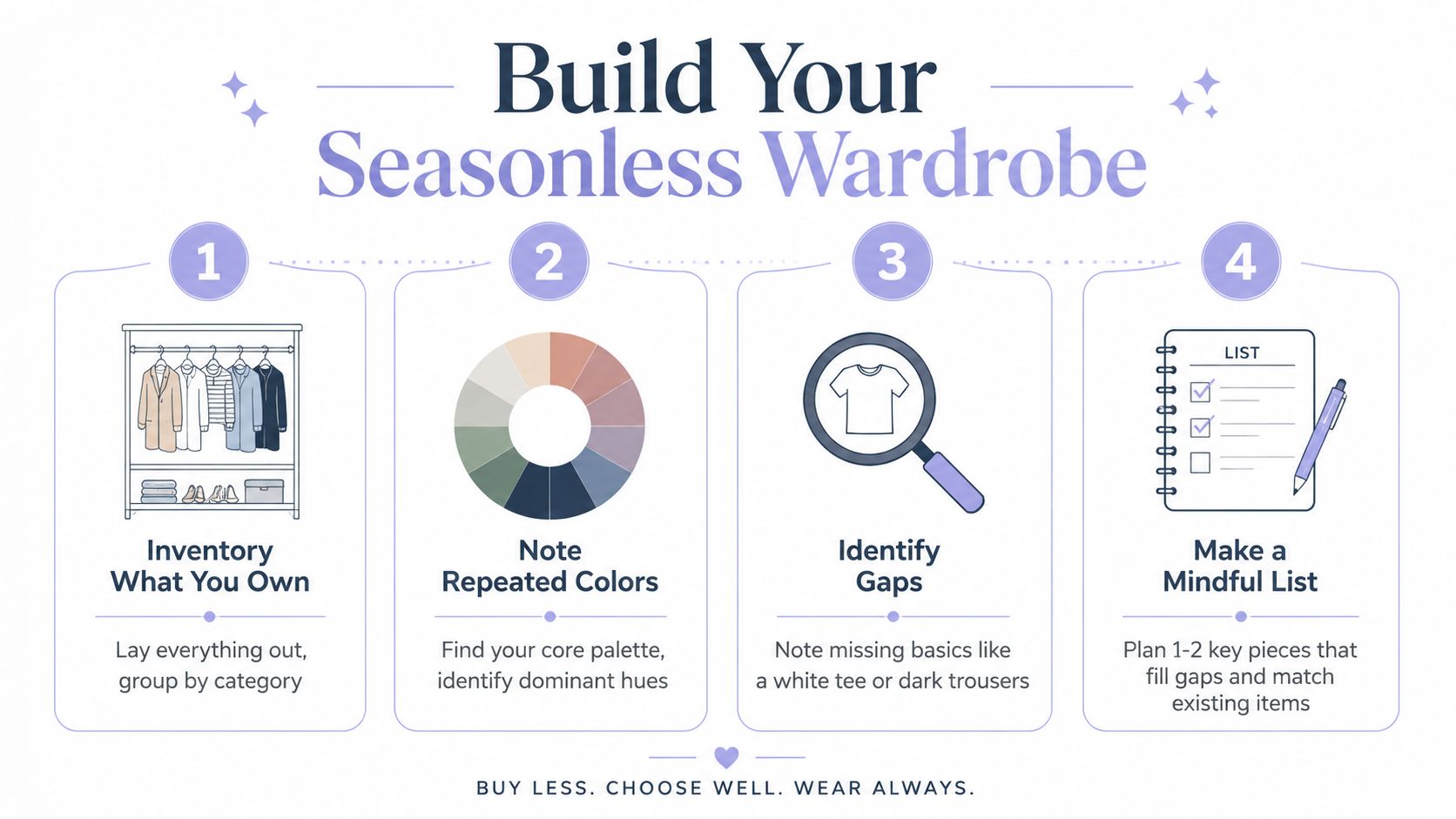
The most sustainable wardrobe plan begins with what you already own, not with an empty rail and a basket full of promises. Lay everything out on the bed, group garments by category and notice what your hands reach for without hesitation. Repeated colours, familiar silhouettes and well-loved textures reveal your actual style more authentically than a trend forecast.
Start with the wardrobe in front of you
Make three notes:
- Inventory what works. Identify the dresses, trousers, tops and layers you already combine.
- Notice the palette. Look for recurring neutrals and the colours that make you feel cheerful rather than merely “on trend”.
- Name the gaps. A missing warm layer or dependable dark trouser is a clearer need than a vague desire for something new.
Then test each proposed purchase against daily life. A lower cost per wear comes from wearing a piece often, not from buying something because it appears versatile in a photograph. I like the three-piece test: every new garment should work with at least three existing pieces, fill a genuine gap and suit more than one setting.
The wardrobe question: where will I wear this, what will it replace, and can I care for it properly?
A small foundation of compatible neutrals can carry texture and colour beautifully. Add a breathable dress that works with bare legs in warmer weather and fine knitwear later. Choose adjustable layers, packable knits and silhouettes that move from a seaside lunch to an evening gathering with a change of shoes, scarf or jewellery.
Choose the buying model that fits the occasion
Pre-ordering can help align production with demand. Rental makes sense for an occasional statement piece that doesn't need to live in your wardrobe. Everyday essentials are usually better owned, repaired and maintained, because repeated access matters more than novelty.
A delayed-purchase rule creates breathing room. Leave the item in your notes, return to the wardrobe and see whether the desire still has a practical reason behind it. A one-in, one-out policy can also keep good intentions from becoming clutter.
Even small household details can remind us that useful objects deserve a long life. Clubhouse Cocktail Napkins | Set of 4 are described as 100% flax linen, made in a pale blue plain weave with a red stitched border and whimsical club scenes. The same seasonless thinking applies to clothing: choose something with a role, a personality and enough durability to return to the table, or the wardrobe, again and again.
For a more structured wardrobe exercise, use the capsule wardrobe essentials guide as a companion to your own inventory. A seasonless wardrobe shouldn't feel beige or joyless. It should feel like a well-packed weekend bag, with every item ready for weather, plans and a little unexpected magic.
Styling, Care, and the Joy of Pieces That Last
Longevity starts before laundry day. When a new garment arrives, I check the seams, fastenings and lining before the first wear, then read the care label while the parcel tissue is still on the floor. That small ritual tells me how the piece is built and what it needs from me.
A jumper deserves a different rhythm from a cotton vest. Wool, alpaca and knitwear often benefit from being aired and rotated between wears, while structured garments need enough space to hold their shape. Broad or padded hangers can support pieces that require hanging, but heavy knits belong folded so their weight doesn't pull at the shoulders.
A gentler laundry ritual
Wash according to soil level rather than habit. Separate by colour and fabric where useful, choose cool water when the care instructions allow it, use a mild detergent and avoid packing the machine too tightly. Mesh bags, lower-spin settings and air drying can help protect delicate fibres, surface texture and shape.
Reshape knitwear while damp and store natural fibres clean and dry. A pill isn't a death sentence, and a loose button is a small task rather than a reason to discard a whole garment. Deal with little problems while they're little.
Style the familiar in new ways
A summer dress can sit over fine knitwear when the evenings turn cool. A lightweight top can become the comfortable layer beneath a winter cardigan. Scarves, belts and jewellery can change the feeling of a familiar silhouette without requiring a new outfit.
Visible mending makes maintenance part of the story. A neat patch, contrast thread or carefully replaced button records the garment's life instead of hiding it. I once kept a slightly worn cardigan in rotation because its repaired cuff reminded me of the person who had helped me fix it. The stitch became a tiny blue tide mark, proof that care had happened.
Wear with attention: rotate pieces, mend promptly and style what you own before searching for something else.
The guide to making clothes last longer offers further practical ideas for protecting garments through storage, washing and repair. The aim isn't pristine perfection. Clothing becomes meaningful when it can accommodate real life, including spills, alterations, changing bodies and the occasional adventurous walk along a muddy path.
Wearable Whimsy with a Conscience
A conscious wardrobe doesn't have to look solemn. Mine has always made room for a hand-drawn lobster, a bright scarf, an unexpectedly cheerful cuff and colours borrowed from the water at dusk. Responsibility feels more durable when it leaves space for delight.
That philosophy brings the earlier choices together. Materials need to be selected for the job and the expected life of the garment. Production can be rooted in pre-order and small-batch craft, helping a founder make with greater care rather than treating excess stock as inevitable. Design can resist the trend cycle through silhouettes that remain useful when the fashion conversation moves elsewhere.
A story in the details
For a small label, decisions gather in the details. Alpaca wool from a single named British farm gives the fibre a traceable beginning. Natural dyes can be used where suitable. Deadstock fabrics may find a purposeful life when their weight, quality and quantity fit the design. Recyclable packaging can reduce unnecessary material in the delivery experience. A made-to-order model connects the finished garment more closely to the person who will wear it.
None of those choices removes the need for scrutiny. A natural material still needs good construction. A charming print still needs a place in your real wardrobe. A made-to-order piece still deserves careful care after it arrives.
The founder's role is partly to make those decisions visible. A useful overview of clothing brand marketing strategies 2025 can help explain how brands communicate their values, but communication should never replace evidence. The most persuasive story is the one a garment continues to tell after repeated washing, styling, repair and wear.
Sustainability as a continuing relationship
Sustainable clothing for women isn't a checklist completed at the checkout. It's a continuing relationship with a piece, its maker, its material and its future. You learn which fibres suit your skin, which cuts support your days and which repairs are worth making because the garment has become part of your life.
That relationship can be playful. A cardigan may carry the colour of sea glass. A linen dress may become a winter layer. A repaired hem may resemble a little shoreline. When clothing gives us enough beauty to keep wearing it, and enough quality to make that possible, sustainability becomes ordinary in the best sense.
The Lavender Lobster is one example of that founder-led approach, combining seaside whimsy and countryside grace in womenswear designed around natural and organic fabrics, considered construction and use across seasons. Other brands and makers will express the same principles differently. The question is whether their materials, processes and lifecycle plans support the story they tell.
Start with one garment this week. Check its seams, wear it in a new combination, wash it gently or mend the small fault you've been ignoring. Then choose future pieces for a real role in your wardrobe, and support makers who can tell you where those pieces began and how they expect them to last.
Open your wardrobe today and choose the garment you'd most like to keep for years. Give it a careful inspection, plan three fresh outfits and make the first small repair or care change before the day ends. When you're ready for your next addition, explore thoughtfully made, seasonless pieces from The Lavender Lobster and choose something with a material, maker and story you'll be happy to live with.