

The first time I learnt this lesson, I was standing at the side of a chilly studio, tugging at a top that kept sliding at the shoulders every time I lifted my arms. Across the room, another dancer moved as if her clothes had signed a quiet pact with her body. Nothing distracted her. Nothing needed adjusting.
Finding Your Perfect Dance Partner
A good dance top doesn't feel like a costume. It feels like the friend who remembers your counts, steadies your nerves, and never steps on your toes.
I think about a Saturday morning ballet class in the UK, the sort with fogged windows, a kettle hissing somewhere in reception, and rosin dust catching the light. One dancer wears a cropped tee that twists every time she moves through fifth. Another wears a close-fitting camisole that stays put through pliés, port de bras, and a slightly wobbly pirouette. The difference isn't vanity. It's peace. When a top behaves, your mind can return to turnout, breath, and music.
That quiet attention to dancewear isn't a niche obsession. In the United Kingdom, the dance apparel market is projected to expand at a CAGR of 4.5% from 2021 through 2026, reflecting steady investment in functional clothing such as tops for dance, according to UK dance apparel market analysis. That feels believable in the most human way possible. More dancers are looking for pieces that can survive rehearsal, washing, repeating, and the occasional dramatic sigh in the changing room.
What a top is really doing
A dance top has several jobs, and some of them are surprisingly poetic.
- It protects concentration: If you're fiddling with straps, you're not listening to the correction.
- It supports expression: A top can sharpen a line or soften a mood, depending on the class and the style.
- It earns trust over time: The best ones become part of your ritual. You reach for them before auditions, workshops, and those classes where you know your legs will tremble.
A dancer doesn't need a top that shouts. She needs one that listens.
The best tops for dance also reflect who you are. Some dancers want clean discipline. Some want ease and drape. Some want sustainability stitched into every seam. The search becomes less about shopping and more about choosing a partner for movement. Not flashy, necessarily. Faithful.
The first question to ask
Before you look at colour or neckline, ask one simple question. How do you want to feel when class begins?
You might want to feel held. You might want to feel cool and dry. You might want to feel graceful, unencumbered, and a little bit like a swan who has figured out online returns. That answer will guide everything that follows, from fabric to fit to how many tops you really need.
The Choreography of Fabric Performance
Fabric is where practical sense meets small magic. Some materials are brisk and businesslike. Others feel as though they've wandered in from a windswept hillside carrying a basket of blackberries.
In dancewear, the usual conversation leans heavily towards synthetic performance fabrics. They have a reputation for managing sweat and coping with repeated movement. But the UK conversation is more interesting than that. According to One Dance UK industry standards, technical specifications for dance tops in the region prioritise high-wicking, breathable natural or organic fabrics that support rapid evaporative cooling during 6+ hours of weekly strenuous activity. That gives natural fibres a serious place at the table.
Two fabric personalities
Think of fabric choice as casting two very different performers.
The first is the practical workhorse. Synthetic blends tend to feel light, stretchy, and ready for long rehearsal days. They suit dancers who want a close fit and a familiar athletic feel. For fast classes, high repetition, and a lot of washing, they can be dependable.
The second is the gentle soul. Natural and organic fibres, including cotton blends and alpaca-based knits, often offer softness, breathability, and a more grounded hand-feel. They can feel kinder on skin and more elegant in movement, especially when the knit and cut are carefully chosen.
That doesn't mean one is always better. It means the right choice depends on what the class asks of you, and what your body likes best.
A dancer's fabric comparison
| Fabric Type | Best For | Key Benefit | A Whimsical Quirk |
|---|---|---|---|
| Synthetic blends | High-energy rehearsals and repeated studio sessions | Stretch and a sporty, low-fuss feel | The brisk friend who arrives early with a water bottle and a spreadsheet |
| Organic cotton blends | General class, layering, and dancers who prefer a softer touch | Breathability and comfort against the skin | The calm classmate who always remembers a spare hairpin |
| Alpaca or other natural knit options | Warm-ups, cool-downs, travel to and from class, and gentle layering | Soft warmth and a tactile, seasonless feel | The cardigan equivalent of tea in a proper mug |
For dancers with reactive skin, fabric choice can affect comfort as much as performance. A useful companion read on fabrics for sensitive skin helps sharpen that lens.
How it feels in motion
A fabric can look lovely on a hanger and become a nuisance by grand battement. That's why touch matters, but movement matters more.
Here's what to notice in the studio:
- After the warm-up: Does the fabric trap heat, or does it settle with you?
- During arm phrases: Do the shoulders glide without tugging?
- On the floor or at the barre: Does it twist, cling oddly, or recover well?
- After class: Does it still feel pleasant when damp, or are you desperate to peel it off?
Practical rule: Test fabric with the movements you actually do, not just with a mirror turn in the fitting room.
There's also a meaningful gap in the conversation. Many guides praise synthetics and stop there. Dancers who want natural fibres often get handed romance instead of information. They hear words like soft, artisanal, breathable, but not enough about how a natural fibre top behaves during brisk combinations, repeat jumps, or a crowded class where the heating has ideas of its own.
That gap matters. Eco-conscious dancers don't just want beautiful fibre stories. They want garments that can keep up with tendus, sweat, and Thursday nights when the studio feels warmer than the sun.
The Art of a Perfect Fit and Form
A dance top can have excellent fabric and still fail you if the cut is wrong. Fit is the engineering hidden beneath the poetry.
In professional UK training settings, rehearsal tops often need to be plain, unbranded, black/dark so teachers can assess alignment and muscle engagement clearly, as set out in the Leeds Conservatoire kit guidance. That detail says a lot. A top isn't only there to flatter. It helps teachers see the truth of your placement.
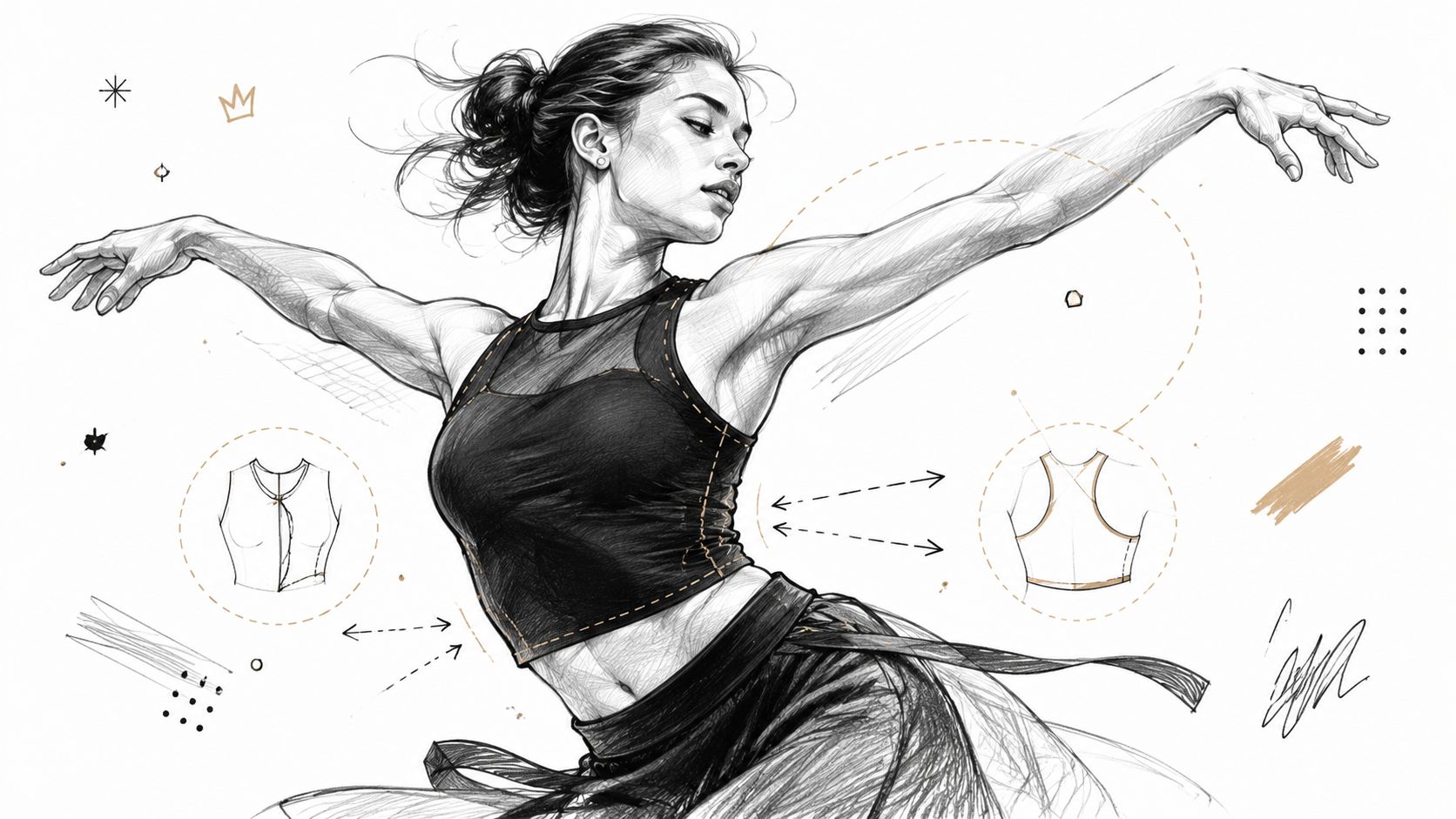
For ballet and technical training
Ballet asks for clarity. Teachers need to see the ribcage, shoulders, and line of the spine without visual fuss. That's why sleek camisoles, fitted short sleeves, and form-fitting crop tops work so well.
Look for these features:
- Stable straps: They shouldn't slip when you move through port de bras.
- Close body fit: Not tight to the point of distraction, but close enough to show placement.
- Hem security: A top that rides up during adagio becomes a tiny villain.
If you're choosing online, a reliable size chart for fit comparison can save a lot of guesswork.
For contemporary and lyrical work
Contemporary changes the mood completely. You may roll across the floor, spiral through the torso, and sweep your arms in ways that demand space. A slightly looser top can work beautifully here, especially if the fabric still follows the body rather than floating off into its own subplot.
The sweet spot is controlled ease. You want room, but not so much volume that the top falls over your face in inversions or bunches around the waist in floor work.
If a top makes you aware of itself every few minutes, it isn't ready for rehearsal.
The details that make a difference
A top can look simple and still be thoughtfully built. When you're shopping for tops for dance, inspect the invisible decisions.
- Underarm shaping matters. If the armhole is cut too low, support disappears. Too high, and it rubs.
- Neckline affects confidence. A scoop can feel elegant, but it needs enough structure to stay put as you bend and turn.
- Length changes function. Cropped styles suit some dancers beautifully, while longer cuts provide reassurance during partnering, floor work, or teaching.
One of the most useful tests is brutally ordinary. Raise your arms overhead. Fold forward. Twist side to side. If the top creeps, gaps, pinches, or needs rescuing, leave it behind like a bad audition memory.
Matching form to discipline
Different styles ask different things of your clothing.
- Jazz and musical theatre: Secure, flexible tops that can cope with sharper accents and fast directional changes
- Ballroom or social styles: Pieces that feel elegant but won't distract when you're dancing close to a partner
- Open class and conditioning: Simple tops that wash well, recover shape, and don't require precious handling after every wear
A perfect fit doesn't announce itself. It lets your body speak in full sentences.
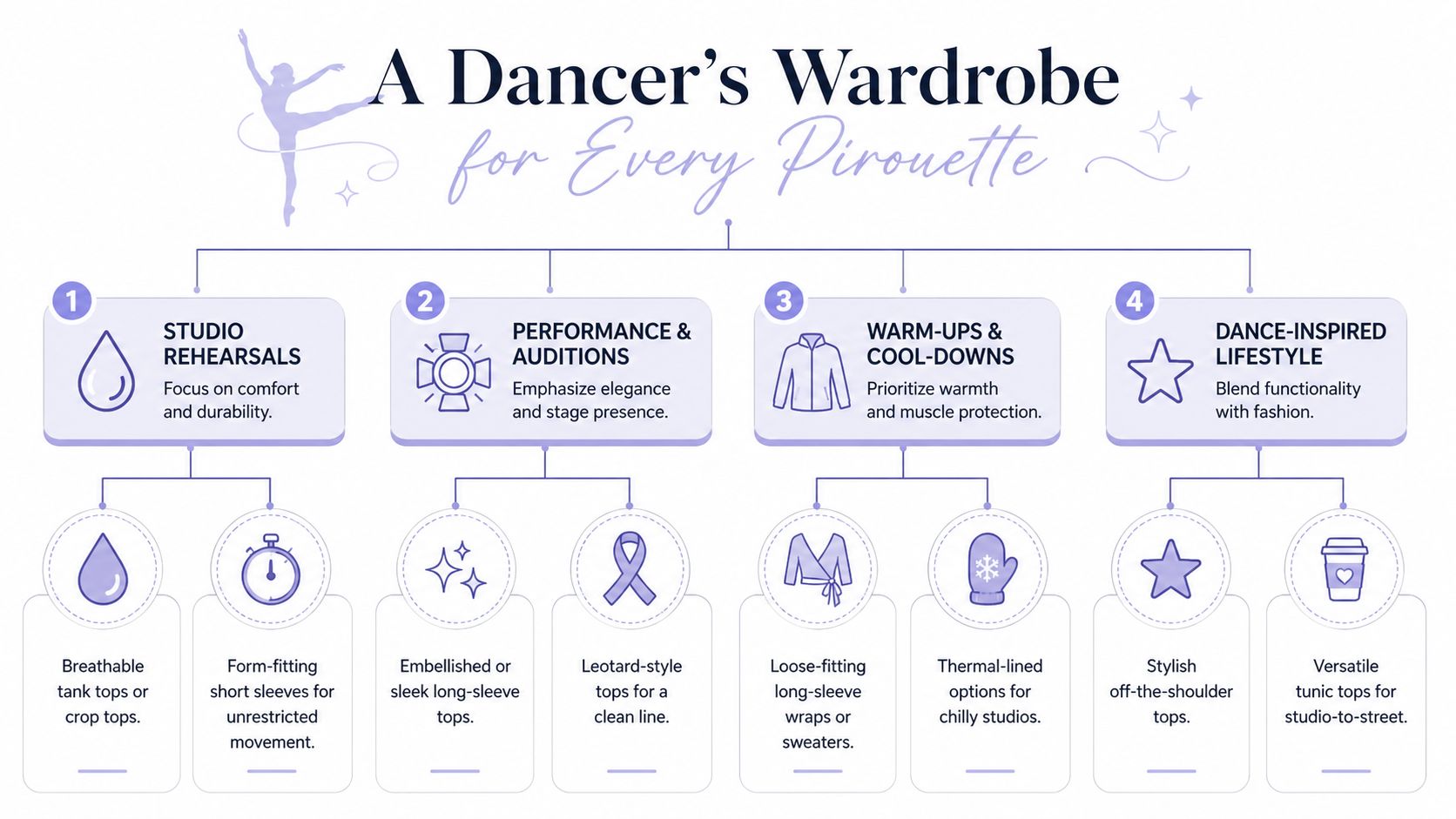
A Dancer's Wardrobe for Every Pirouette
The most useful dance wardrobe isn't enormous. It's versatile. Think of it as a small cast of reliable characters, each with a different speciality, each ready for their cue.
A dancer I once knew kept three tops in constant rotation. One was her no-nonsense studio staple, faded but trustworthy. One was her “I need to feel polished today” top for auditions and workshops. One was soft enough for warm-up and the walk home, the clothing equivalent of being handed a biscuit after a long rehearsal. She never seemed underdressed, and she never looked like she'd packed in a panic.
The rehearsal regulars
For daily classes, your top needs stamina more than drama. Breathable tank tops, simple crop tops, and fitted short sleeves are the styles that earn their keep.
A hushed ballet studio wants clean lines and minimal distraction. A busy mixed-level class wants something that won't wilt under repeated washing. If you're just beginning and you're not sure what belongs in your bag, this guide to prepare for your first dance lesson is refreshingly practical.
The polished choices
Workshops and auditions often call for a slightly more deliberate look. Not fussy. Not theatrical. Just considered.
A sleek long-sleeve top can create a beautiful line through the arms. A leotard-style top gives the torso a clean silhouette. A fitted camisole under a wrap layer can work when you want options before class starts and certainty once the music begins.
Some tops are for sweating. Some are for being seen. The best wardrobe has room for both.
The social and expressive pieces
Social dance opens the window a little wider. Salsa, swing, and evening classes often allow more personality. Off-the-shoulder cuts, tunic styles, or tops with a graceful drape can feel right at home, provided they still let you move comfortably.
The trick is to choose expression without sabotage. If a sleeve slips during turns or a neckline needs constant checking, the charm fades quickly.
Here's a simple way to build a capsule of tops for dance:
- One dependable fitted top: Your default for technical classes
- One slightly more polished option: For auditions, workshops, or days when you need extra composure
- One easy layer-friendly piece: Good for warm-up, cool-down, and studio-to-street wear
- One expressive style: For social dancing or classes where personality belongs in the room
A wardrobe that follows your week
Monday evening conditioning doesn't need the same top as a Saturday workshop. Wednesday contemporary may ask for drape and softness. Sunday ballet may ask for discipline and quiet structure.
That's why the best wardrobe feels less like a shopping category and more like a repertoire. You don't wear every piece for every role. You choose the one that helps you perform this variation, in this room, on this particular day when the body feels springy, shy, or somewhere in between.
Beyond the Studio Layering and Styling
Some of the loveliest dancewear decisions happen before and after class. The warm-up layer. The cardigan shrugged on while pinning your hair. The piece that carries you from studio door to café table without making you feel as though you're still in costume.
There's a real gap in UK guidance here. Existing advice rarely answers whether 100% natural, organic fibres like British alpaca wool can cope with high-intensity movement while staying breathable. That missing conversation is worth noting, especially in light of wider fashion interest in knitwear described in this UK fashion piece on statement knitwear. Dancers who prefer natural fibres need more than mood boards. They need styling and use-case clarity.
Why layering matters to dancers
Layering isn't decorative fluff. It serves the body.
A fitted dance top may be perfect once you're warm, but the moments before class and after the final reverence are different. Muscles cool quickly. Drafty corridors exist. So do train platforms, rainy pavements, and that awkward stop at the shops while wearing leg warmers and pretending this is all very normal.
Useful layers tend to share a few qualities:
- Soft warmth: Enough to protect, not so much that you overheat instantly
- Easy removal: You should be able to peel it off between exercises without a wrestling match
- Gentle silhouette: Something that sits nicely over a camisole or fitted top without crushing it
Studio to street
A cardigan, wrap, or fine knit can become the bridge between rehearsal life and ordinary life. Here, dance style becomes personal style. A simple top under a beautifully made layer looks intentional, not accidental. You can go from warm-up to coffee without feeling half-dressed.
That's especially appealing for women building a seasonless wardrobe. If one piece works over a rehearsal camisole, with high-waisted trousers, and over a dress on a cool evening, it earns its space.
The best outer layer for a dancer doesn't erase the body. It accompanies it.
A glimpse of that softer, layered mood sits nicely in moving form too:
The charm of natural fibre styling
Natural fibres bring a particular mood. They can soften the athletic edge of dancewear and make the whole outfit feel more grounded, more tactile, and a little more storybook in the best sense.
For styling, keep the balance simple:
- Pair a fitted dance top with a looser knit layer.
- Let the top do the practical work and the outer piece provide warmth and character.
- Keep colours harmonious. Dark rehearsal tops often sit beautifully under muted or textured layers.
There's also something emotionally satisfying about a wardrobe where your dance pieces and your everyday pieces speak to each other. It means your movement life isn't locked away in a separate drawer. It moves with you, through the whole day, with a bit of whimsy tucked into the sleeve.
The Encore A Sustainable Dance Wardrobe
Dancers have a unique understanding of repetition. We repeat phrases, corrections, habits, and class combinations until they become part of the body. That same discipline can shape a more sustainable wardrobe.
The UK holds approximately 12% of Europe's total dance apparel revenue, and rental models are beginning to influence how dancers buy, with 15% of UK dance studios offering curated rental programmes for practice and performance tops, according to dancewear market reporting. That matters because it points towards a less wasteful rhythm. Not every top has to be owned forever to be useful.
Buy less, choose better
A sustainable dance wardrobe starts with restraint. Not severe restraint. Sensible restraint.
Instead of collecting a pile of mediocre tops, choose a few that meet real needs. One for technical clarity. One for layered comfort. One for occasions when presentation matters. If you wear them often, wash them carefully, and repair small issues early, they'll serve you far longer than trend-led impulse buys.
For a broader mindset on clothing longevity, these sustainable fashion tips offer a helpful foundation.
Care is part of the craft
Clothing lasts longer when you treat it as equipment, not clutter. That sounds unromantic, but it's rather tender.
Try this rhythm:
- Air before washing: If a top isn't heavily soiled, airing it can help between wears
- Wash with care: Follow fibre-specific instructions rather than tossing everything into one hot cycle
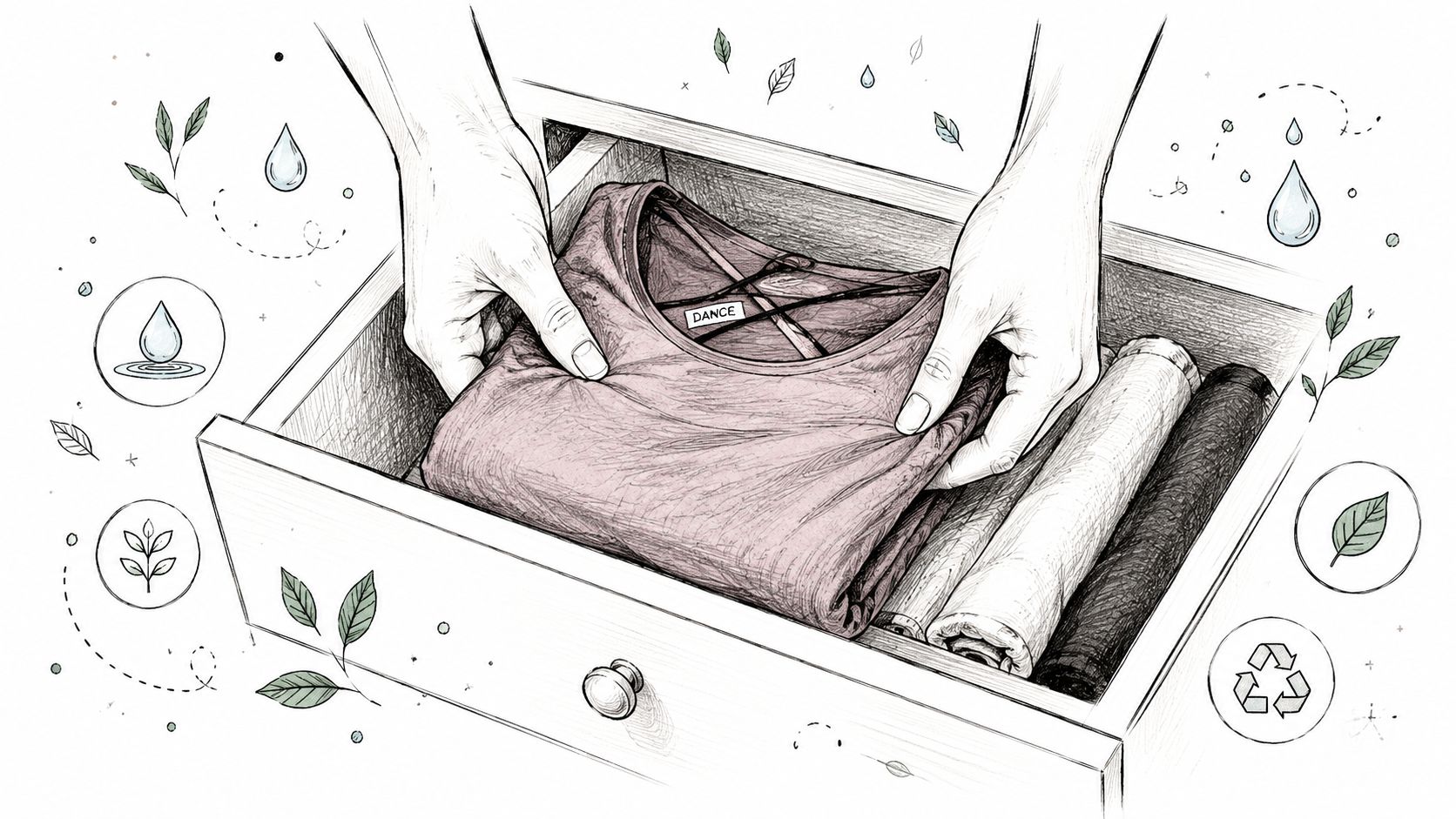
- Store with intention: Fold knits neatly, hang only what benefits from hanging, and keep dancewear easy to reach so it doesn't become a jumbled nest
A well-kept dance top often outlives a fashionable one.
Rentals, pre-orders, and thoughtful timing
Rental and pre-order models are especially interesting for dancers. Rentals can make sense for performances, specific looks, or experimental styles you don't need every week. Pre-orders can reduce overproduction and encourage more deliberate buying. Both ask you to pause and decide whether a garment belongs in your life, rather than in a momentary mood.
Natural fibre rentals bring extra questions, of course. Dancers want to know how softness, elasticity, and hygiene hold up over time. Those questions deserve clearer answers across the industry. Even so, the model itself has promise, particularly for occasional wear and for people trying to avoid wardrobes that multiply like enthusiastic rabbits.
A wardrobe with memory
The most beautiful dance wardrobes aren't the biggest. They're the ones with memory.
There's the top you wore to your first confident audition. The one that got you through winter evening rehearsals. The one you nearly didn't buy, but now wash with absurd care because it has become part of your rhythm. Sustainability lives there, in attachment, maintenance, and use.
A good top for dance isn't disposable. It becomes familiar to your body. It learns your shoulders, your habits, your pre-class nerves. That's why the best approach is less but better, softer but stronger, practical with a touch of moonlight.
If you're drawn to dancewear and layers that favour natural fibres, seasonless styling, and a gentler way of buying, The Lavender Lobster is worth exploring for its whimsical UK-made approach to clothing, including pre-orders, rentals, and pieces crafted from British alpaca wool.