

Searching for the best ethical fashion brands? The real treasures, my friend, are the ones that whisper their secrets, choose kind materials like cloud-soft alpaca wool, and make sure their makers are treated like the artisans they are. It’s all about finding those special pieces that mix timeless style with a good heart.
Finding Joy in a Thoughtful Wardrobe
Welcome to the wonderful, whimsical world of ethical fashion, where every garment tells a story of care, craft, and creativity. Think of this guide as a friendly pixie, helping you flutter away from fleeting trends and toward a style that truly lasts. We’ll explore what ‘ethical fashion’ really means—not as a strict set of rules, but as a joyful way to bring more kindness into your life.
This kindness flows in three beautiful directions:
- For the planet: Choosing natural fibres and leaving behind only the faintest, most respectful footprint.
- For the people who make our clothes: Ensuring they have fair wages, safe places to work, and happy hands.
- For ourselves: Investing in pieces that feel like a warm hug and give us lasting confidence.
More Than a Trend—A Treasure Hunt
Imagine building your wardrobe as if you were curating a collection of personal treasures. Picture a perfectly made alpaca wool jumper that feels like sunshine on a chilly day, or a dress that fits so well it feels like it was spun just for you. These are the kinds of pieces that don’t go out of style and become the trusty companions you reach for again and again.
Ethical fashion is about the deep, satisfying joy of wearing something that not only looks good but also does good. It’s a shift from mindless buying to mindful curating, where each piece is chosen with intention, love, and a little bit of stardust.
Making this shift is easier than you might think. A huge 73% of UK fashion brands are now bringing in circular initiatives, listening to our growing desire to know where our clothes come from. When you choose well, you’re joining a powerful and positive movement for change.
Our goal here is to help you find the best ethical fashion brands that connect with your personal style and what makes your heart sing. Together, we'll discover how to make your wardrobe a genuine source of delight and a quiet force for good in the world. Your journey to a more thoughtful closet starts right now.
What Defines a Truly Ethical Fashion Brand?
To find fashion brands that are genuinely doing good, we need to peek behind the curtain and understand what really makes them tick. Think of it like a magical checklist for your wardrobe—a way to spot the brands that truly walk their talk. It’s about looking beyond pretty designs to see the heart and soul stitched into every single garment.
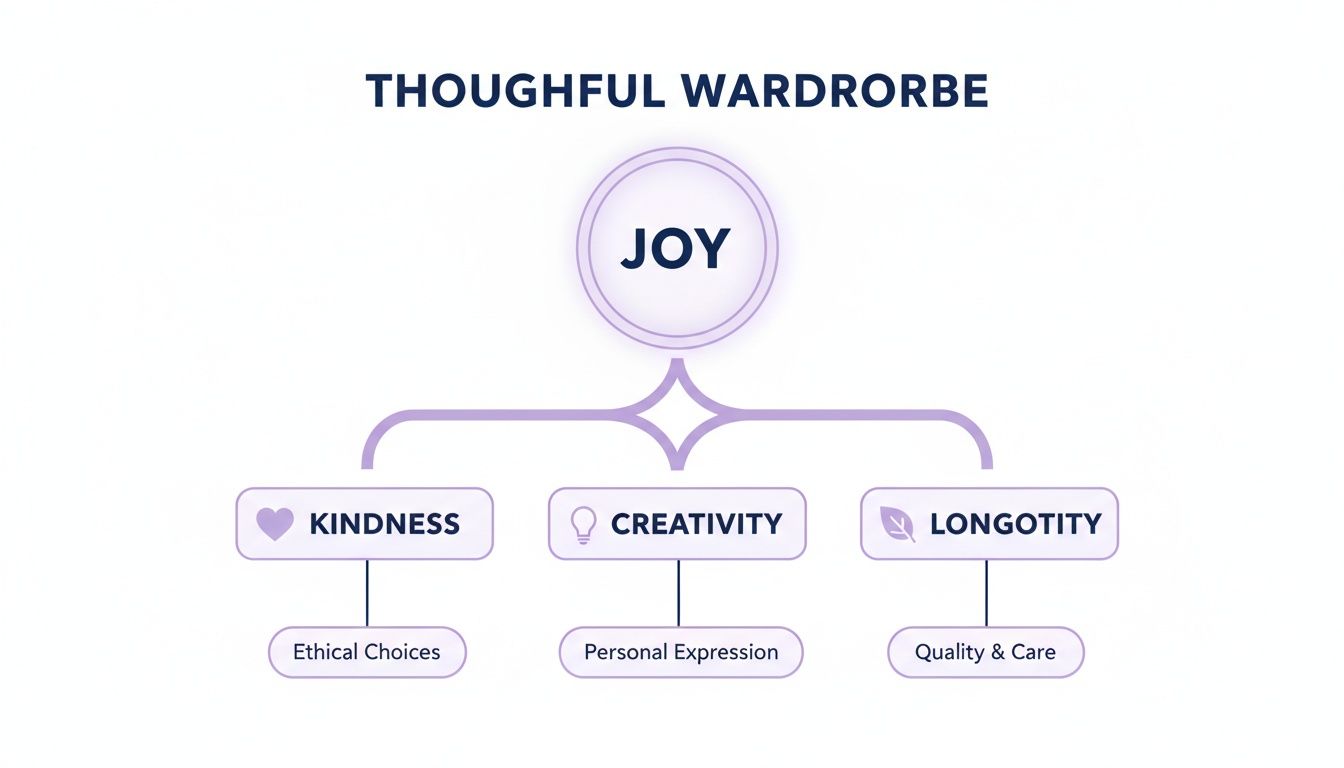
True ethical fashion isn’t built on a single, grand gesture. It's a holistic potion, a foundation of interconnected values where kindness towards the planet, its people, and our clothes is woven into the very fabric of the business itself.
Let’s explore the five enchanted pillars that hold up a truly ethical brand.
The Ethical Brand Checklist: A Quick Guide
Navigating the world of sustainable fashion can feel a bit like wandering through an enchanted forest. This little table is your handy map, breaking down the five key pillars to look for when you're deciding if a brand aligns with your values.
| Ethical Pillar | What to Look For | Red Flag to Avoid |
|---|---|---|
| Sustainable Materials | Natural, organic, or recycled fibres (e.g., linen, alpaca, recycled cotton). Certifications like GOTS or FSC. | Vague spells like "eco-friendly" or "green fabric" without any proof. An over-reliance on virgin synthetics. |
| Fair Labour | Fair Trade certification, whispers of living wages, and long-term relationships with artisan partners. | "Made in the UK/EU" labels used to imply ethical production without any further details. A mysterious silence about their workshops. |
| Environmental Stewardship | Use of non-toxic dyes, water-saving production methods, and packaging that Mother Nature would approve of. | Claims of being "carbon neutral" by only purchasing offsets, without reducing their actual emissions. |
| Circularity & Longevity | Timeless designs, high-quality construction, and offerings like repair programmes or take-back schemes. | Trend-driven collections that are quickly bewitched by discounts. Language that encourages frequent, disposable purchases. |
| Transparency & Honesty | Detailed scrolls about the supply chain, from farm to factory. Openness about challenges and progress. | Green-hued marketing with no substance. Hiding behind confusing jargon instead of providing clear answers. |
Think of these as conversation starters for your own quest. A truly ethical brand will be happy—and proud—to share this information with you.
Sustainable Materials and Thoughtful Fibres
It all begins with the raw ingredients. The best ethical brands are like mindful chefs, choosing materials that are gentle on the earth. They prioritise natural, renewable, and recycled fibres that don’t deplete our precious planetary pantry.
You’ll see them championing materials like:
- Organic Cotton: Grown without nasty pesticides, it keeps the soil healthy and farmers safe.
- Linen: A wonderfully resilient fibre from the flax plant that sips water and needs very few pesticides to thrive.
- Recycled Fibres: Giving old materials a new chapter, like turning plastic bottles into soft, wearable magic. This cuts down on landfill waste and our reliance on virgin resources.
- Animal-Friendly Wool: Sourcing fibres like alpaca wool from small farms where animal welfare and sustainable land management are paramount.
By making better choices from the very first thread, these brands shrink their environmental footprint before a single stitch is even sewn.
Fair Labour and Happy Hands
A brand's kindness must extend to every single person who helps conjure its clothing. This is about making sure the talented artisans, pattern cutters, and seamstresses behind the scenes are treated with the dignity and respect they deserve.
This means providing fair wages that allow workers to comfortably support their families, guaranteeing safe and healthy working conditions, and having a zero-tolerance policy for forced or child labour. It’s about honouring true craftsmanship and remembering the human story woven into every garment.
Environmental Stewardship in Production
Beyond the materials themselves, how a garment is made matters immensely. Ethical production focuses on minimising harm at every single stage, from dyeing the fabric to shipping the final piece to your door.
This involves things like:
- Reducing water waste through clever, modern dyeing techniques.
- Using non-toxic, eco-friendly dyes that don't pollute our rivers and oceans.
- Minimising energy use and finding ways to offset carbon emissions responsibly.
- Committing to plastic-free packaging.
True environmental stewardship means treating our planet like a cherished partner, not just a resource. It's a promise to leave the world a little more beautiful than we found it.
Circular Design for a Longer Life
In a world obsessed with throwaway trends, ethical fashion champions longevity. The whole idea behind circular design is to keep clothes in our wardrobes—and out of landfills—for as long as humanly possible. This is where the concept of slow fashion truly comes to life.
Brands bring this to life by creating timeless designs that won't look dated next season, using high-quality construction that’s built to last, and sometimes even offering enchanting programmes like:
- Repair services to lovingly mend wear and tear.
- Rental options for a special occasion piece.
- Take-back programmes to recycle or upcycle garments at the end of their life.
Radical Transparency and Honest Stories
Finally, the cornerstone of any ethical brand is honesty. Radical transparency means they aren't afraid to pull back the curtain and share real information about their supply chain—from the farm where the cotton was picked to the workshop where the dress was sewn.
They’re open about their progress and even the areas they’re still working to improve. They back up their claims with real proof, like certifications and detailed reports, building a relationship with you that’s based on trust, not just marketing pixie dust.
How to Spot Fashion Greenwashing
Ever had that dizzying feeling, staring at a tag that screams ‘eco-friendly’ and wondering if it's the real deal or just a clever marketing spell? You're not alone. Think of this as your field guide to becoming a greenwashing detective, helping you see past the marketing fog and find the brands that are genuinely trying to do good.
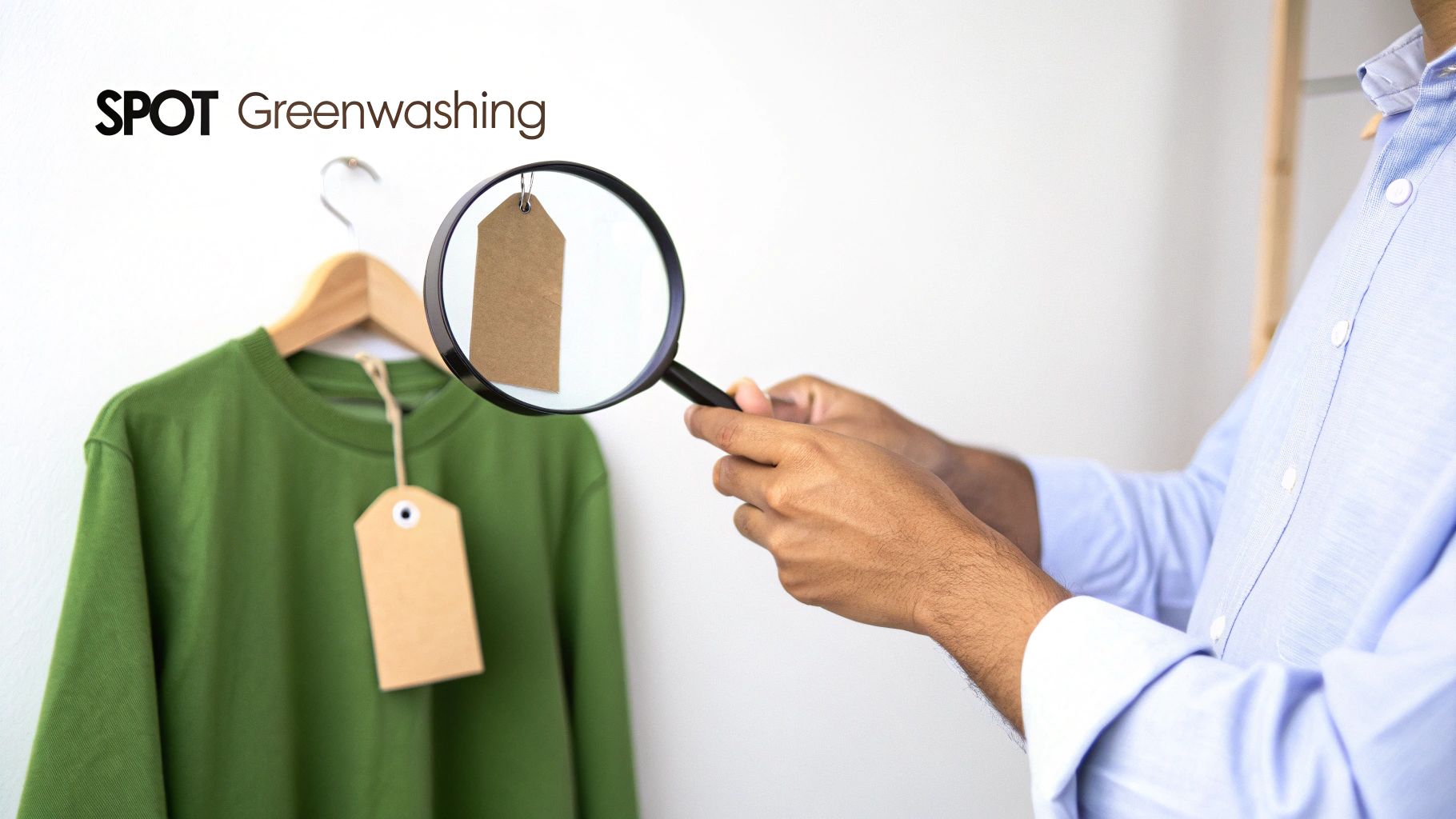
Greenwashing is the sneaky art of making a brand seem more environmentally friendly or ethical than it actually is. It's a marketing illusion designed to win your trust and your pounds, often by distracting you with pretty pictures of nature and feel-good words that don't mean much at all.
Common Greenwashing Traps to Avoid
Becoming a savvy shopper means learning to spot these common tricks. A fast-fashion giant might launch a "conscious collection," but if it's made from just 10% recycled materials and the other 90% follows their usual wasteful model, it’s more of a distraction than a real solution.
Here are a few classic greenwashing tactics:
- The Vague Virtues: This is the use of fluffy, undefined words like 'eco-friendly', 'green', or 'natural' without any real proof or explanation. If a brand can’t tell you why something is green, it probably isn’t.
- The Hidden Trade-Off: This trick involves highlighting one small, positive attribute—like a top made from organic cotton—to distract from much bigger problems, such as paying garment workers unfairly or using toxic dyes.
- Irrelevant Claims: Sometimes, brands will boast about something that’s completely irrelevant or legally required, like saying their products are "CFC-free"—a substance that was banned decades ago. It sounds good but means nothing.
A brand that is truly one of the best ethical fashion brands won't just tell you they're sustainable; they'll show you. They provide clear, specific details and are proud to answer your questions with honesty and transparency.
Asking the Right Questions
So, how do you see through the smoke and mirrors? The secret is to get curious and ask a few simple questions before you buy. Think of it as a mini-investigation where you’re the lead detective, searching for clues that tell the real story behind the label.
Start with these three questions:
- Can you prove it? Look for specific details. Instead of "sustainably made," look for "Made with 100% GOTS-certified organic cotton."
- What are you hiding? If a brand only talks about materials but is silent about who makes their clothes, that's a red flag. True ethics cover both planet and people.
- Are you encouraging overconsumption? Does the brand promote endless new trends and constant sales? A truly sustainable mindset champions buying less and loving your clothes for longer.
By asking these simple questions, you empower yourself to support brands that are committed to making a genuine, measurable impact. This simple shift helps you invest in a wardrobe that truly aligns with your values, one thoughtfully chosen piece at a time.
Cultivating Your Own Conscious Closet
Building a sustainable wardrobe isn’t about following a rigid set of rules. It’s a creative journey, more like tending a much-loved garden than passing an exam. It’s about nurturing what you already own and choosing new additions with real care and intention. This shift towards a conscious closet is really about fostering a deeper, more joyful connection with your clothes.
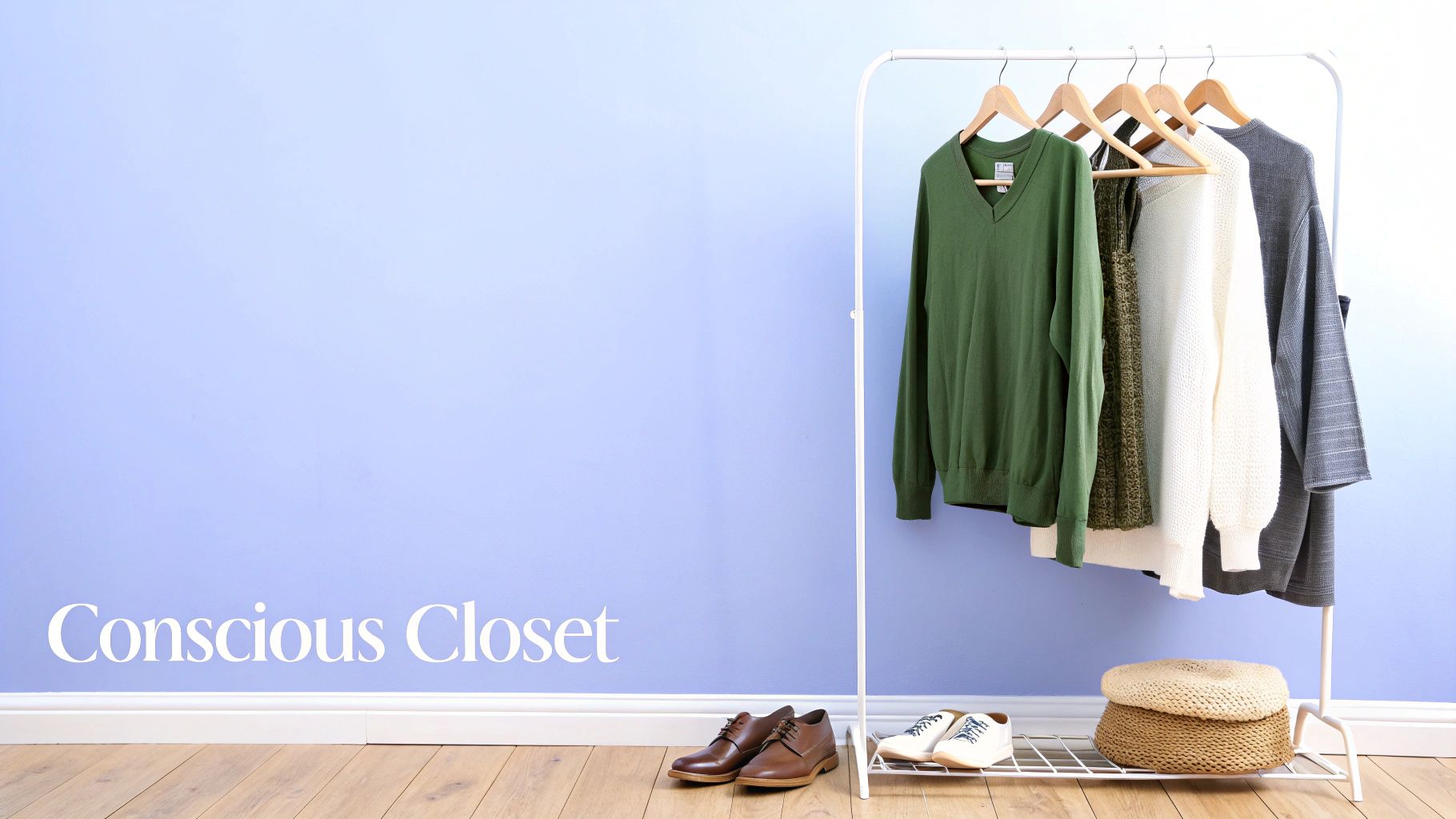
The heart of this philosophy is simple: buy less, choose well, and make it last. Instead of chasing fleeting trends, you start to curate a collection of pieces that truly resonate with your personal style. This is where the magic of a capsule wardrobe comes into play, helping you build a small collection of versatile items you absolutely adore.
Mindful Shopping and Wardrobe Adventures
Embracing a conscious closet opens up some delightful new ways to shop and style your outfits. Think of it as an invitation to explore beyond the high street and discover fashion that actually tells a story. This change in mindset is powerful, and it's reshaping the industry from the inside out.
The growing demand for transparency and circularity has prompted a massive shift, with many UK fashion brands now embracing resale and zero-waste initiatives. This consumer-led movement is catapulting the sustainable market towards a projected value of USD 2,561.64 million by 2035, proving that our thoughtful choices truly matter.
This new landscape makes finding the best ethical fashion brands feel like a thrilling treasure hunt. Here are a few joyful ways to build your wardrobe:
- Discover Secondhand Gems: Charity shops, vintage boutiques, and online resale sites are filled with unique, high-quality pieces just waiting for a new chapter.
- Embrace the Capsule Wardrobe: Curate a small collection of high-quality, interchangeable items that you absolutely love. It simplifies getting dressed and ensures every piece is worn and cherished.
- Rent for Special Occasions: Need a standout outfit for a wedding or event? Renting is a clever, waste-free way to wear something spectacular without the long-term commitment.
"The most sustainable garment is the one already in your wardrobe."
This simple truth is the perfect place to start. Learning to properly care for your clothes not only honours the craftsmanship behind them but also dramatically extends their life. Small acts, like learning the right way to wash a delicate knit, are acts of love that reduce waste and deepen your appreciation for each piece. You can even check out our guide on how to care for linen 101 for simple tips that make a big impact.
An Inside Look at an Ethical Brand
All these principles sound lovely in theory, but what do they actually look like in the real world? Let’s pull back the curtain and see how whimsical style and a deep commitment to the planet can dance together beautifully.
This isn't just about showing off a pretty garment; think of it as a case study to see how our 'Ethical Brand Checklist' works in practice. We’ll follow the journey from happy alpacas grazing in a field to the timeless piece hanging in a conscious closet.
A Foundation of Natural Fibres
It all starts with the earth. Instead of synthetic fabrics derived from fossil fuels, a truly ethical approach begins with fibres grown, not manufactured. At The Lavender Lobster, we champion materials like 100% British alpaca wool.
This choice is a perfect illustration of thoughtful sourcing. Alpaca fleece is incredibly soft, durable, and biodegradable. By working with local British farms, we not only support our agricultural community but also dramatically cut down the carbon footprint that comes with global shipping. This deep commitment to natural, regional fibres is the very cornerstone of responsible design.
An ethical brand treats its materials not as mere commodities, but as precious gifts from nature. Every thread has a story, and the best brands are eager to share that story with you.
Designing for Longevity, Not Landfill
Fast fashion is built on fleeting trends, a cycle of constant buying and discarding that fills our landfills. We believe in the complete opposite. Our focus is on creating timeless designs that you’ll want to cherish for years, not just for a season. This means prioritising classic silhouettes, high-quality construction, and details that feel special and enduring.
The goal is to create future heirlooms. When a brand invests in superior craftsmanship, it’s an invitation for you to invest emotionally in your clothes. This simple shift in mindset—from disposable to durable—is one of the most powerful ways to build a truly sustainable wardrobe. You can learn more about how we approach this by exploring The Lavender Lobster's commitment to sustainability.
Embracing Circular and Slow Models
To truly break the cycle of overproduction, forward-thinking brands are exploring creative ways to give clothes a longer, more adventurous life. This moves beyond just selling a product; it’s about fostering a more circular, thoughtful relationship with your wardrobe.
A few ways this comes to life:
- A Pre-Order System: This allows a brand to produce only what is truly wanted, completely eliminating the waste from unsold inventory. It’s a patient, mindful way to shop.
- Rental Options: Perfect for a special occasion, renting gives you access to a beautiful garment without the long-term commitment, promoting a culture of sharing over owning.
These models challenge the fast-fashion impulse for instant gratification. Instead, they encourage a slower, more intentional approach to style, proving that the best ethical fashion brands aren’t just selling clothes—they’re building a kinder, more thoughtful community.
Your Wardrobe Is More Powerful Than You Think
Stepping into the world of conscious style reveals a simple, beautiful truth: your choices matter. Immensely. Every time you ask a brand where its clothes are made, mend a beloved jumper, or choose to buy from a label that shares your values, you're casting a vote for a kinder, more thoughtful fashion industry. This isn't about a sudden, radical overhaul of your wardrobe. It’s a gentle, joyful process of weaving more intention into the way you dress, one beautiful piece at a time.
This path isn’t about sacrifice or giving things up. Think of it more as a creative invitation to express who you are and what you believe in through your clothes. You’re joining a growing movement of people and forward-thinking brands who are working together to prove that style and substance can, and should, go hand in hand.
The Future of Fashion Is in Your Hands
The shift towards ethical fashion isn't just a fleeting trend—it’s a powerful movement that’s gathering real momentum. Just look at the numbers. The UK's sustainable fashion market was valued at USD 261.04 million in 2024 and is expected to soar to an incredible USD 1,757.42 million by 2033. You can read more about the rise of sustainable fashion in the UK from IMARC Group.
What's driving that growth? Shoppers like you, who are asking for more transparency and integrity from the brands they choose to support. It’s proof that every small, thoughtful decision really does add up to a much bigger, more positive change.
Here are a few key ideas to carry with you on your quest:
- Remember the Five Pillars: Keep materials, labour, environment, circularity, and transparency in mind. They’re your compass for finding brands that are genuinely committed.
- Learn to Spot Greenwashing: Get curious. A truly ethical brand won’t just welcome your questions—they’ll have clear, honest answers ready for you.
- Love What You Already Own: The most sustainable act of all is to care for and extend the life of the clothes you already have. A little mending can go a long way.
Your wardrobe can be a source of deep personal joy and a quiet force for good. The future of fashion is being re-written, and you are an essential part of its beautiful new story.
Got a Question? Let's Chat Ethical Fashion
Dipping your toes into the world of ethical fashion can feel a little like learning a new language. It’s full of new ideas and terms, but once you know a few key phrases, you’ll be speaking it fluently in no time. Here are some of the questions we hear most often.
Does Ethical Fashion Always Cost More?
It's true that the price tag on an ethically made piece is often higher than something you’d find on the high street. But it's worth looking at it in a different way. These clothes are made with so much more care, from higher-quality materials, which means they’re designed to last for years, not just a season.
Think of it as an investment. Instead of buying something fleeting you’ll only wear a handful of times, you're choosing a piece you’ll love and turn to again and again. When you look at the 'cost-per-wear', that thoughtful purchase often works out to be far more economical in the long run.
How Can I Start Without Ditching My Whole Wardrobe?
Please don't! The most sustainable clothes you have are the ones already hanging in your wardrobe. The first step on this journey isn’t about a massive clear-out; it’s about appreciating what you already own. Mend that loose button, learn how to treat a tricky stain, and find new ways to style your old favourites.
Then, when you genuinely need something new, you can use the ideas in this guide to make a more mindful choice. The goal is to gradually replace items as they naturally wear out with beautiful, well-made pieces from brands you trust. It’s an evolution, not a revolution. Slow and steady is the way to go.
What’s the difference between 'ethical' and 'sustainable' fashion? Think of them as two peas in a very chic pod—they belong together and the best brands care about both.
Typically, 'ethical' puts the focus on people and animals. It asks: Are the garment workers paid a living wage? Are their working conditions safe? Was any animal cruelty involved?
On the other hand, 'sustainable' is all about the planet. It looks at the environmental impact: What materials were used? How much water and energy did it take to make? What happens to the garment at the end of its life?
The most wonderful brands weave these two ideas together, creating beautiful things that are kind to the planet and the people who made them.
Prepared with the Outrank tool