

In the simplest of terms, slow fashion is about dressing with a little more thought and a lot more heart. It’s a gentle philosophy that champions quality over quantity, focusing on beautifully made garments designed to be cherished, rather than trends that flicker and fade. Think of it as carefully curating a wardrobe, piece by beloved piece, like collecting stories you can wear.
Understanding Slow Fashion Beyond the Buzzword
Imagine your favourite jumper—not one you simply bought, but one you chose. It was crafted with such care that wearing it feels like a warm, woolly hug, a feeling you know will last for years. That sensation, that little bit of magic, is the very heart of slow fashion.
It stands in stark contrast to the frantic, fleeting world of its counterpart, fast fashion. It's the difference between a lovingly prepared home-cooked meal and a takeaway burger; one nourishes you deeply, while the other offers a momentary fix.
Slow fashion isn't about a rigid set of rules or a specific look; it’s a mindset, a quiet whisper inviting us to pause and ask gentle questions about our clothes: Where did this come from? Who spun its threads? And, most importantly, will I still adore wearing it next year, and the year after that?
Quality and Connection
This movement is really an invitation to fall back in love with the things we wear. Instead of getting caught in a dizzying carousel of micro-trends, you cultivate a collection of pieces that genuinely reflect your personal style and what you hold dear. It's about building a wardrobe that tells your unique story.
This infographic breaks down the core differences between the two fashion philosophies.
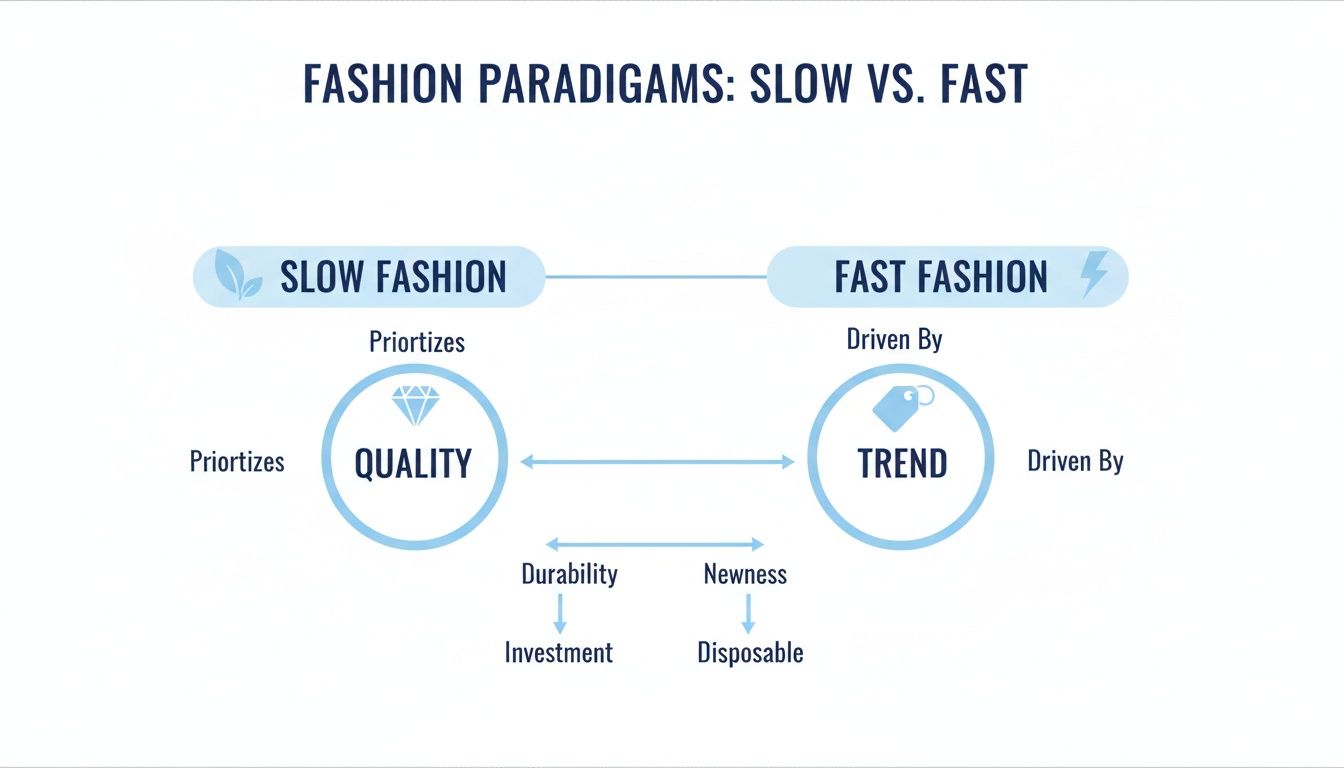
The key takeaway here is the shift from a disposable, trend-obsessed model to one centred on durability, ethics, and conscious choices. By being more thoughtful, we can build a more sustainable and meaningful relationship with our clothes. You can learn more about how these principles guide our work by exploring The Lavender Lobster's commitment to sustainability.
Slow fashion is a protest against the idea that clothes are disposable. It's a return to viewing garments as little treasures to be cared for, repaired, and loved for a lifetime.
Ultimately, it’s a gentler, more considered way of dressing that benefits not only your wardrobe but also the planet and the people who make our clothes.
Slow Fashion vs Fast Fashion At a Glance
To make the distinction even clearer, let's look at the two approaches side-by-side. Think of it as the age-old tale of the tortoise and the hare, but for your wardrobe.
| Characteristic | Slow Fashion (The Thoughtful Tortoise) | Fast Fashion (The Hasty Hare) |
|---|---|---|
| Production Speed | Small batches, released seasonally or whenever feels right. | Rapid, with 50-100 "micro-seasons" per year. |
| Focus | Timeless style, enchanting quality, and longevity. | Fleeting trends and instant gratification. |
| Materials | Natural, sustainable fibres (linen, alpaca, organic cotton). | Cheap synthetics (polyester, nylon) derived from fossil fuels. |
| Craftsmanship | High-quality construction, made to last and be mended. | Poor quality, designed to fall apart after a few wears. |
| Supply Chain | Transparent, ethical, and often local. | Opaque, often with exploitative labour practices. |
| Consumer Mindset | "Buy less, choose well, make it last." | "Wear once, throw away." A disposable mentality. |
| Price Point | Higher upfront cost, but lower cost-per-wear over time. | Low price, encouraging impulse buys and overconsumption. |
This table highlights the fundamental divide: slow fashion is an investment in pieces that endure, while fast fashion is a cycle of constant, low-cost consumption. It's about choosing lasting magic over a temporary thrill.
The Enduring Principles of Mindful Style
 To really get to the heart of slow fashion, we need to look beyond the term itself and embrace the philosophy that gives it life. Think of it less as a set of rigid rules and more as a friendly compass, guiding us toward a more intentional and joyful relationship with our clothes.
At its core, slow fashion is about choosing lasting quality over fleeting quantity. It’s the difference between a beautifully crafted wool coat that feels like a piece of heirloom furniture—an investment made to serve you for decades—and a paper-thin t-shirt that loses its shape after a few tumbles in the wash.
This focus on longevity naturally leads to another principle: cherishing timeless design. Slow fashion pieces are created to stand apart from the dizzying cycle of micro-trends. They have an enduring charm that feels just as right next year as it does today, becoming trusted friends in your wardrobe rather than temporary guests.
Valuing People and Planet
Beyond the garment itself, slow fashion is deeply concerned with the hands that make our clothes and the earth that provides the materials. It’s a commitment to ethical production, making sure every artisan and maker is paid a fair wage and works in safe, respectful conditions. This principle helps restore the human connection so often lost in mass production.
It also means celebrating natural and sustainable materials. The focus shifts to fibres that are kinder to our planet, such as:
- Organic Cotton: Grown without harmful pesticides, which helps protect soil health and precious water sources.
- Linen: A resilient fibre from the flax plant that requires very little water and can thrive in poor soil.
- Alpaca Wool: A wonderfully soft, durable fibre sourced with deep respect for animal welfare.
These choices aren't just about environmental responsibility; they result in clothes that feel so much better against your skin and age with a beautiful, whimsical grace.
Slow fashion asks us to see our clothes not as disposable items, but as stories—stories of skilled makers, natural materials, and thoughtful design. Each piece carries an intention of care from its creation right up to the moment it joins your life.
By embracing these ideas, we move beyond simply buying clothes and begin to curate a wardrobe that truly reflects our values. It’s a quiet, gentle rebellion against disposability, favouring pieces made to be loved, mended, and cherished for a lifetime.
Discovering the Benefits of a Slower Wardrobe
Embracing slow fashion is a bit like planting a garden—the rewards grow quietly at first, then blossom for you and the world around you. This thoughtful approach to style creates a powerful, positive ripple effect that extends far beyond your wardrobe, touching everything from pristine forests to the artisans who stitch our clothes with care.
Choosing a slower path just feels right, and for good reason. It’s a gentle rebellion against the wastefulness of a throwaway culture. Every time you opt for a well-made garment designed to last, you help divert clothing from overflowing landfills, where mountains of textiles end up each year.
This shift also conserves precious natural resources. By valuing natural, sustainable fibres and favouring quality construction, the slow fashion movement reduces the demand for the water-intensive and chemical-heavy processes that fast fashion relies on.
A Kinder Approach for People
Beyond its environmental kindness, slow fashion is a movement rooted in human dignity. It champions the skilled makers and artisans behind our clothing, ensuring they receive fair wages for their craft and work in safe, respectful conditions.
When you invest in a slow fashion piece, you’re supporting a more transparent and ethical supply chain. This means celebrating heritage skills and empowering small communities, turning a simple purchase into an act of solidarity.
Embracing a slower wardrobe is about more than just clothes; it’s about aligning your personal style with your deepest values. It’s the quiet joy of knowing that what you wear reflects a commitment to a kinder, more conscious world.
This shift in how we think about our clothes is not just a niche interest; it's a growing economic force.
The Personal Perks of Mindful Dressing
The rewards of slow fashion are also deeply personal, bringing a sense of calm and intention to your daily routine. One of the most tangible benefits is financial. While the initial cost of a high-quality item might be higher, its longevity drastically lowers its cost-per-wear over time, saving you money for more adventures in the long run.
This mindful approach also nurtures a unique and authentic personal style. You move away from chasing fleeting trends and start curating a collection of clothes that truly speak to you. Each piece has a story and a purpose, making your wardrobe a genuine reflection of who you are.
The growing desire for this authenticity is clear. In the UK, the sustainable fashion market, which mirrors these slow principles, was valued at USD 261.04 million in 2024 and is projected to soar to USD 1,757.42 million by 2033. You can explore more data on this significant shift in UK fashion spending.
Ultimately, there is a simple, profound joy in wearing clothes made with care and intention. It’s the comfort of a beautifully crafted jumper or the confidence that comes from a perfectly fitting dress—pieces that aren't just worn, but cherished.
How to Build Your Own Slow Fashion Wardrobe
Ready to bring the principles of slow fashion into your own wardrobe? It’s not about a sudden, dramatic overhaul or a rigid set of rules. Think of it more as a gentle, thoughtful process of curating a collection of clothes you genuinely love to wear.
It’s less about a destination and more about enjoying the journey, one delightful stitch at a time.
The goal is to cultivate a wardrobe that brings you comfort and confidence, day in and day out—like tending to a small, beloved garden rather than stocking a vast warehouse.
Buy Less by Choosing Better
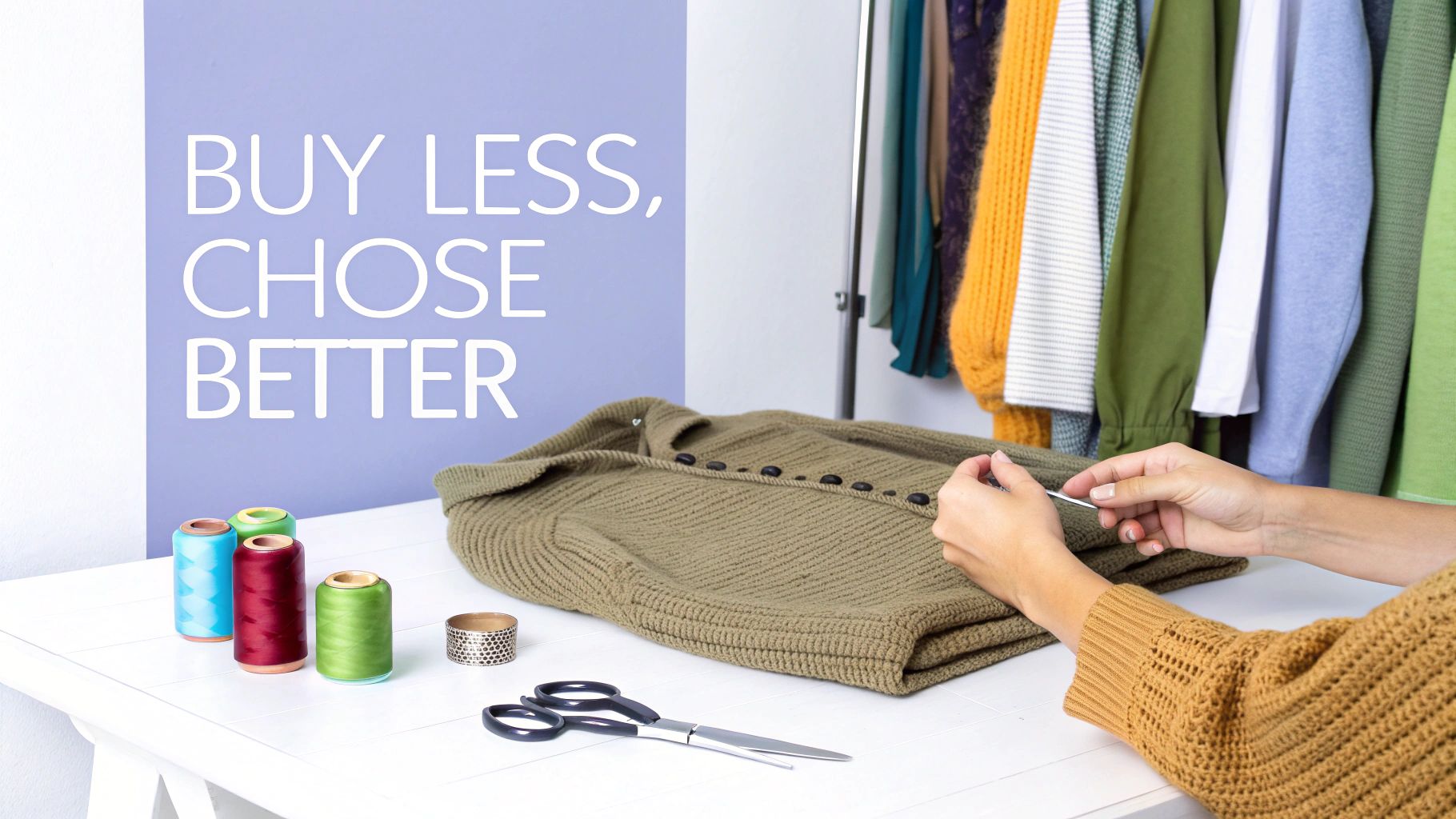
The simplest principle in the slow fashion philosophy is this: buy fewer things, but make them count. Choose pieces that truly resonate with you, the ones that feel special the moment you put them on.
Before you buy something new, take a moment. Ask yourself, "Will I still love this in a year? Will I want to wear this thirty times, or even a hundred?" This simple pause shifts your perspective from being a consumer to becoming a curator of your own style. You stop chasing fleeting trends and start investing in timeless pieces that tell your personal story for years to come.
Rediscover the Beauty of Natural Fabrics
There’s a unique feeling that comes from wearing materials grown from the earth. Choosing natural fabrics like linen, organic cotton, and alpaca wool isn't just a better choice for the planet; it’s a sensory one. These materials breathe with you, soften beautifully with every wear, and feel wonderful against your skin.
Unlike synthetic fibres, which are so often derived from fossil fuels, natural materials connect us back to the land. They serve as a gentle reminder that our clothes have a life and a story that began long before they ever reached our wardrobes.
Master the Art of Garment Care and Mending
Looking after your clothes is an act of love. Simple habits like washing items less often, using a gentle detergent, and letting them air-dry can dramatically extend their life. And when a favourite jumper gets a snag or a button comes loose, don’t see it as the end—see it as a new beginning, a chance for a little whimsy.
Mending a garment is like adding a new chapter to its story. A colourful patch or a visible darn becomes a badge of honour, a testament to a piece that is truly well-loved and cherished.
These small acts of maintenance transform your wardrobe from a collection of disposable items into a family of treasured friends. If you're wondering where to start, you can learn more about how to care for linen in our detailed guide.
Use Cost-Per-Wear Thinking
It can be wonderfully freeing to shift your mindset from the upfront price tag to the long-term value of a piece. The "cost-per-wear" calculation is simple: just divide the price of an item by the number of times you realistically expect to wear it.
- A £20 top worn only four times has a cost-per-wear of £5.
- A beautifully made £100 jumper worn a hundred times has a cost-per-wear of just £1.
This little bit of maths often reveals that investing in quality is the most economical choice in the long run. It encourages you to see your clothes as companions on life's adventures, not temporary flings.
Explore Modern Ways to Wear
Slow fashion also embraces creative, modern ways to enjoy clothing without constantly buying new. Clothing rental services, for example, are a fantastic way to experiment with different styles or find the perfect outfit for a special occasion without the commitment of a purchase. It’s like having access to an ever-changing, magical wardrobe that’s both stylish and sustainable.
Bringing Slow Fashion Principles to Life
This is where the lovely philosophy of slow fashion moves from an idea into a beautiful reality. It’s the point where brands who are truly committed turn these principles into practices you can actually see, feel, and wear. It’s about so much more than just making clothes; it’s about weaving a story of care and intention into every single thread.
Think of traceable wool from small, local farms or organic linen grown with the gentlest touch on the earth. These aren't just empty buzzwords; they are promises. They represent a deep dedication to creating garments that not only feel good but do good, connecting a whimsical aesthetic with a profound sense of responsibility. This is what you’ll find at the heart of any genuine slow fashion brand.
Designing for Forever
A huge part of this is the focus on timeless design. Instead of churning out new collections to chase fleeting trends, slow fashion brands create pieces designed to last a lifetime. The goal isn't to sell you something for a season, but to craft that perfect cardigan or go-to dress that you'll reach for year after year, like an old friend.
This approach invites you to become part of a kinder, more sustainable story. The beauty of these pieces isn't just in how they look, but in how they endure, becoming cherished parts of your life’s journey. By championing this approach, you support a better way of doing business and discover brands you can truly believe in. To see some wonderful examples, have a look at our guide to ethical UK clothing brands that share these values.
In the world of slow fashion, a garment's journey doesn't end when you buy it—it begins. Each wear, each mend, and each memory adds a new layer to its story, making it uniquely yours.
And this thoughtful way of thinking is catching on. As more people grow tired of greenwashing—one report found less than 4% of London Fashion Week designers had proper emissions targets—shoppers in the UK are starting to look elsewhere. A staggering 77% of adults plan to cut their fashion spending in 2025, choosing to invest in durable, long-lasting pieces that offer better value. It’s a clear shift toward quality over quantity.
Your Slow Fashion Questions Answered
Stepping into the world of slow fashion is a bit like learning a wonderful new craft. It’s a personal journey, and it’s only natural to have a few questions as you begin. Here are some gentle answers to the queries we hear most often.
This thoughtful way of dressing is quietly gaining momentum all across the UK. In 2023, a hopeful 81% of people said they supported higher industry standards for clothing that lasts, signalling a real shift in how we think about our wardrobes. The change is especially clear among younger generations, with 25% more of the youngest Gen Zs buying fewer clothes in 2024 than the year before. They’re choosing lasting style over throwaway trends, a movement you can read more about in this piece on the growing UK sustainability movement in fashion.
Must I Discard My Fast Fashion Clothes?
Not at all! In fact, the most sustainable thing you can do is to love the clothes you already have. Slow fashion is about building new, more mindful habits for the future—not creating more waste by clearing out your current wardrobe. Keep wearing, mending, and cherishing every piece until its story is truly complete.
The heart of slow fashion is mindfulness. It’s about honouring the story of each garment, whether it’s a treasured heirloom or a piece you’re learning to love for longer.
Is Slow Fashion Always Expensive?
A beautifully made garment might have a higher price tag, but it often works out to be more economical in the long run. When you start thinking in terms of ‘cost-per-wear’—dividing the price by the number of times you’ll wear it—that one special piece becomes a far wiser investment than several disposable ones. Shopping secondhand is also a joyful and gentle way to embrace slow fashion without a hefty price tag.
How Can I Spot a Genuine Slow Fashion Brand?
Look for a wonderful, open-hearted transparency. Brands that are truly committed to slow principles are always proud to share the story behind their clothes—from the materials they choose to the artisans who bring them to life.
Get curious and ask about:
- Small Batch Production: Are they creating fewer, more thoughtful collections instead of churning out new trends every week?
- Timeless Design: Do they focus on pieces that will feel just as lovely in five years as they do today?
- Traceable Materials: Can they tell you where their fabrics come from and how they were made?
Built with Outrank