

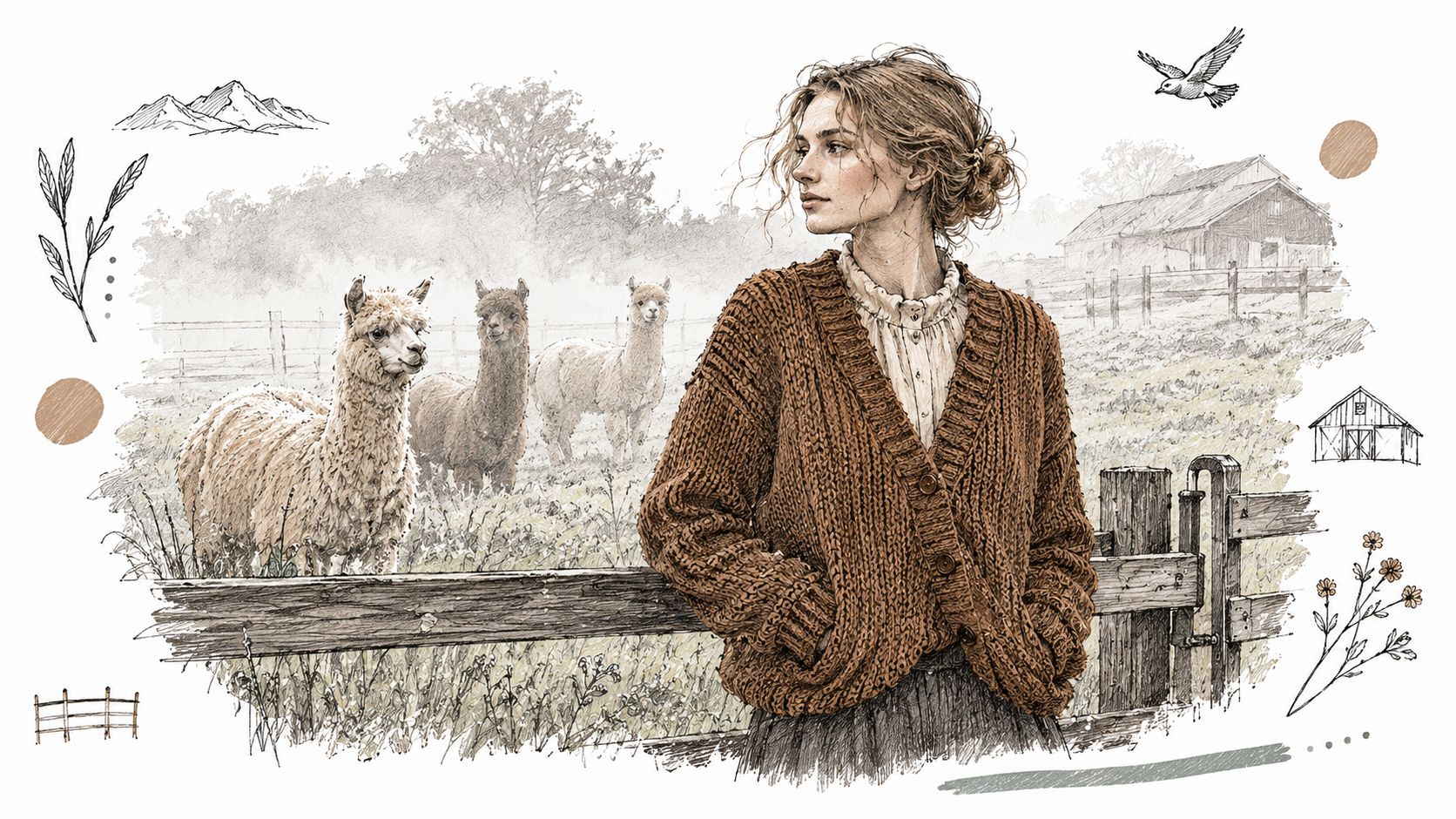
At 7am on a misty Somerset morning, the alpacas hum in the damp grass while a brown cardigan hangs over a studio chair, warming beside the kettle. By the time the first school run begins, it has already earned its place.
A Brown Cardigan with a Story
The paddock is quiet except for soft animal sounds, wet boots on the path, and the faint rustle of fleece being sorted across a wooden table. Oat, mushroom, chestnut and espresso shades sit in small, cloudlike piles, each one carrying the colour into the studio. Brown feels at home here. It doesn't need to shout for attention, because its warmth is already in the colour.
That quality makes a brown knitted cardigan unusually useful in a wardrobe. It brings warmth to faded denim, settles neatly beside linen, and gives a polished slip dress something relaxed to lean against. In the same week, it can be pulled over a striped T-shirt for errands, buttoned over a shirt for work, or draped across the shoulders at dinner.
From military layers to everyday comfort
The cardigan's history has its own sturdy thread. Its British roots are traceable to the Crimean War in 1854, when James Thomas Brudenell, the 7th Earl of Cardigan, was associated with a knitted wool waistcoat worn by British Army officers. The modern name came from his title, and the garment later moved from military clothing into civilian wardrobes, as documented by the history of the cardigan. Its core design remains recognisable more than 170 years later.
That history matters because the cardigan was never only decorative. It was warm, breathable and practical, qualities that helped it endure, while Coco Chanel later carried it into high fashion, according to Country Life's account of the cardigan's style history.
British wool adds another layer to the story. Around 30,000 tonnes of wool are shorn annually from approximately 45,000 sheep farmers in the UK, but only about 10% goes into knitting and around 5% into other uses such as cloth and insulation, according to British Wool information shared by the Great British Wool Revival. A brown knit, particularly one in an undyed or earthy shade, feels connected to that practical tradition.
For a closer look at how British alpaca fibres become considered knitwear, explore British alpaca knitwear. The appeal isn't a passing colour forecast. It's the possibility of owning one soft, adaptable layer that travels through spring mornings, autumn commutes and winter evenings without asking you to rebuild your wardrobe around it.
Finding the Brown Cardigan That Fits Your Life
A cardigan can look beautiful on a hanger and still become the piece you never reach for. The deciding factor is usually less about the shade of brown than about whether its fit, weight and shape suit the way you dress.
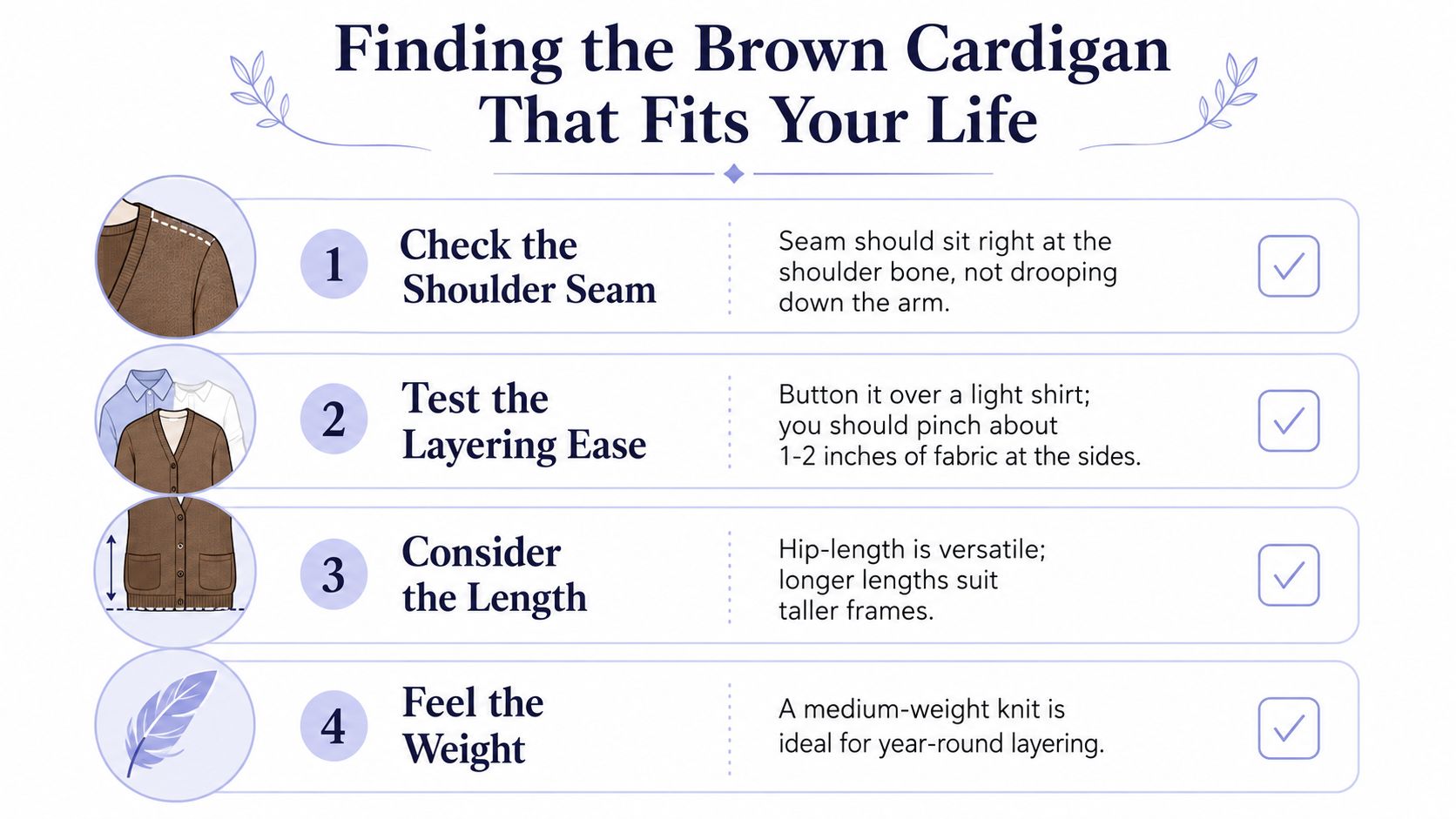
Start at the shoulder. The seam should rest close to the shoulder bone rather than sliding down the arm, unless the garment is intentionally designed with a dropped shoulder. Try it over the layer you wear most often. A fine shirt needs less room than a roll-neck, and the cardigan should close without pulling across the buttons or bunching beneath the arms.
Fit it around a real Tuesday
If your week involves a shirt, allow enough ease for the shirt's collar and sleeves to sit smoothly underneath. If you live in roll-necks, test the cardigan with one rather than judging it over a vest top. A slightly longer body often works well over trousers because it creates an uninterrupted line through the hip, while a shorter hem can feel sharper with high-waisted skirts or wide-leg trousers.
Think about weight by feel. A heavier knit gives a more enveloping drape for a cold commute, particularly when you want the cardigan to function almost like a soft jacket. A midweight knit is easier to tuck, fold into a work bag, and carry from an office into an evening restaurant.
Fibre changes the experience. 100% alpaca offers softness and warmth, but it deserves gentle handling. Wool blends can bring useful structure and memory, helping the cardigan recover after wear. A small amount of nylon or recycled fibre can earn its place when it strengthens a hard-working cuff or seam, but the label should make that purpose clear.
A useful fitting test: Button the cardigan over your usual base layer, sit down, lift your arms, and reach forward. If the back rides up or the sleeves pull, the cardigan doesn't fit your week, however lovely the colour may be.
Choose the silhouette you keep reaching for
A classic V-neck suits someone who likes shirts, silk scarves and simple crew-neck tops. A cocoon shape works for relaxed dressing and gives a little more room through the body, while a cropped boxy style suits high-waisted trousers, full skirts and a wardrobe built around clear proportions.
The right shape depends on your habits rather than a fixed body-type rule. If you spend the day moving between desk, car and pavement, choose a cardigan that won't catch on chairs or require constant adjustment. If you prefer dresses, a neat cropped cardigan may frame the waist more effectively. If you layer generously, look for a longer, easier body with shoulders that can accommodate the pieces beneath it.
Chunky, Fine, or Brushed Alpaca
The same brown shade can behave like three different garments depending on the knit construction. A dense chunky cardigan has the presence of outerwear, a fine knit works as a flexible middle layer, and brushed alpaca brings a light, hazy softness that feels almost theatrical in the best way.
| Construction | Warmth | Drape | Pilling Risk | Best For |
|---|---|---|---|---|
| Chunky knit | High and enveloping | Structured, generous | More visible where friction is heavy | Cold commutes, coastal walks and winter weekends |
| Fine knit | Light to moderate | Smooth and easy to tuck | Usually less noticeable than a lofty halo, though still depends on friction | Offices, travel and indoor-outdoor layering |
| Brushed alpaca | Cosy without feeling dense | Lofty and fluid | Requires careful handling because of its soft surface | Market mornings, dinners and transitional weather |
Chunky knit
Choose a dense rib or cable when you want the cardigan to hold heat on a blustery walk. It looks happiest with roomy shoulders, straight jeans and sturdy boots, and it benefits from a little space rather than being pulled tightly across the body. Its drawback is practical: the thicker surface can show friction around a bag strap or under the arms, so inspect those areas before buying and care for them patiently.
Fine knit
A fine brown cardigan slips beneath a coat and over a summer dress without overwhelming either. It suits a wardrobe that moves quickly between heated rooms and chilly pavements, and it packs more easily for travel. Look for a smooth finish, even button bands and enough length to tuck or leave loose. If you're curious about the machinery behind precise knit construction, electronic knitting machines explained offers useful background without turning the cardigan into a technical puzzle.
Brushed alpaca
Brushed alpaca traps air in its lofty surface and creates a halo around the yarn. Alpaca is naturally available in 22 officially recognised colours, including browns and fawns, which supports an earthy palette without relying entirely on dye, according to Abberley Alpacas' fibre facts. The fibre is also described as almost lanolin-free and hypoallergenic by that source.
Micron matters when softness is important. Baby alpaca fibre is typically under 22 microns, adult fibre is 22 to 27 microns, and coarser fibre sits above that range, according to The Natural Fibre's alpaca reference. The Institute of Making describes alpaca wool as insulating and warmer to wear than sheep's wool, even when wet, while also noting its lack of lanolin, as explained in its alpaca materials library. That makes brushed alpaca a lovely choice for someone who wants warmth without a dense, heavy feel, provided they're willing to protect its delicate surface.
Outfits That Earn Their Place in a Seasonless Wardrobe
The most useful cardigan outfits begin with a moment, not a mood board. I keep returning to five ordinary scenes because they show how one brown knit can change character by meeting different clothes.
The early school run
For a 7am school run, reach for a chunky alpaca cardigan with a relaxed shoulder. Put it over a striped T-shirt, lived-in jeans and trainers. Roll the cuffs once so the stripe peeks through at the wrist, then add a practical tote. The cardigan supplies warmth without making the outfit feel over-planned.
The desk-to-dinner shift
At 9am, a fine-gauge V-neck works over a roll-neck and wide-leg trousers. Tuck just the front edge into the waistband, leave the back loose, and add loafers or low boots. The look stays composed at a desk but doesn't feel too formal when you leave work.
For more combinations built around familiar wardrobe pieces, cardigan outfit ideas offers a useful source of styling prompts. The principle is simple: let the cardigan soften a structured piece, or let it give structure to something fluid.
The Sunday market
A brushed alpaca cardigan with a softly rounded shape belongs over a long wool skirt and leather boots. Choose a tonal scarf rather than a contrasting one, so the brown shades look gathered from the same palette. This is the outfit for carrying a paper bag of apples, stopping for coffee, and pretending the morning has no timetable.
Friday evening
A darker brown cardigan becomes a third piece over a slip dress. Wear it buttoned at the centre, loose and open, or resting across the shoulders depending on the room. A small shoulder bag and simple earrings are enough. For wider packing inspiration that includes adaptable layers, these vacation style tips are a helpful reminder that the best travel pieces can work beyond their original setting.
The autumn dog walk
For a brisk walk, belt a mediumweight cardigan over a thermal top and waterproof trousers. Choose a longer shape with enough room through the arms, then keep the belt relaxed rather than cinched tightly. The cardigan won't replace proper weatherproof clothing, but it can add a warm middle layer before you step into the wind.
These are invitations, not uniforms. Swap the jeans for a skirt, the boots for trainers, or the roll-neck for a shirt you already own. The pleasure is in making the cardigan join your life, not building a new life to justify the cardigan.
Caring for Alpaca and Natural Fibres
A brown cardigan doesn't need a dramatic cleaning regime. It needs a quiet rhythm, a little space between wears, and someone who resists the urge to treat every mark as a washing emergency.
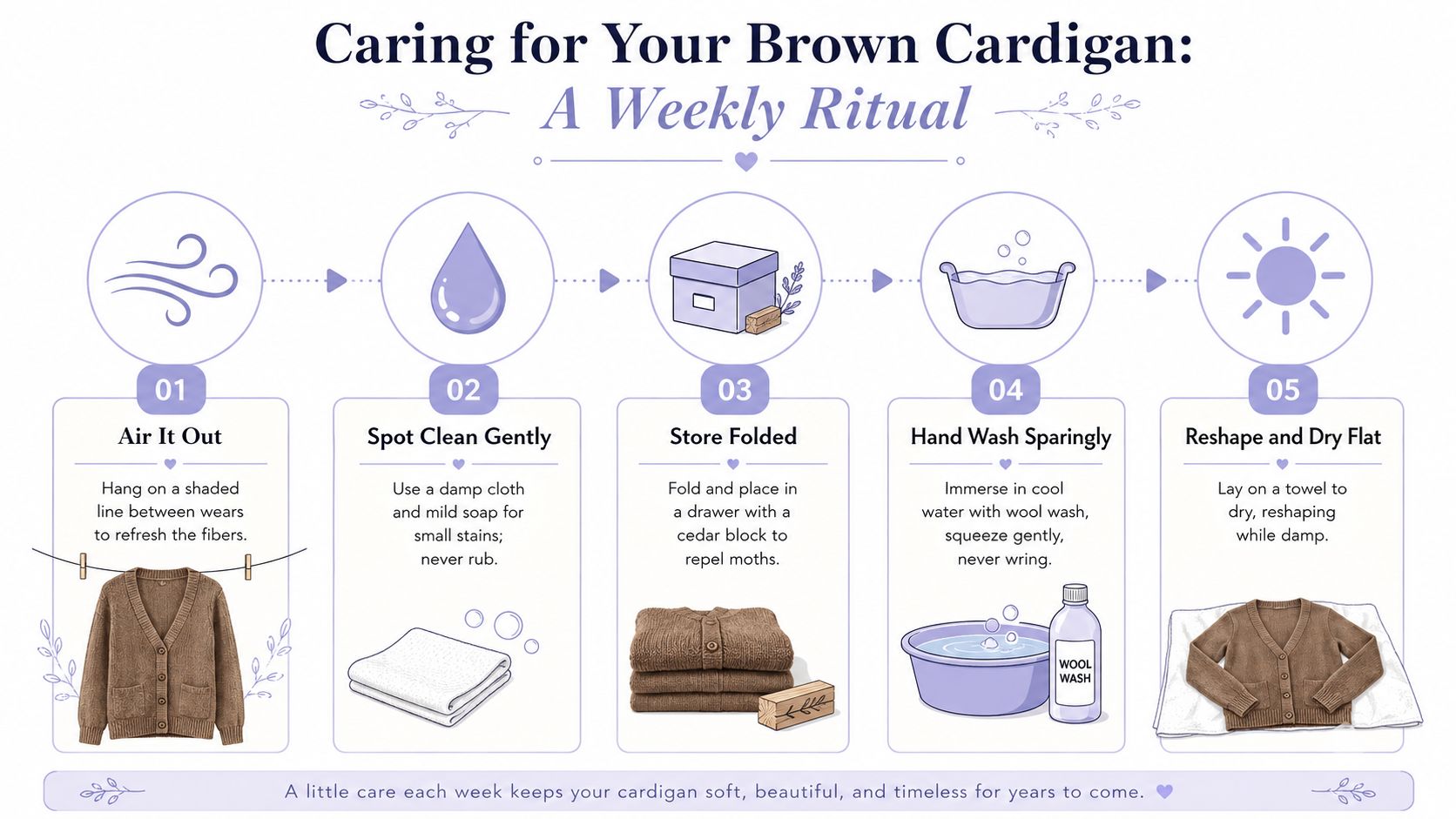
Five small habits that protect the knit
- Air it first. Hang the cardigan on a shaded line between wears, or lay it over a clean chair near an open window. Fresh air often does enough, and alpaca rarely needs a full wash after every outing.
- Spot-clean collars and cuffs. Use cool water, a wool-safe soap and a soft cloth. Dab rather than rub, because friction can roughen the surface and work a mark deeper into the yarn.
- Wash only when needed. Follow the care label before choosing a method. For a washable garment, use a basin with cool water and a no-rinse wool detergent, or a cold, delicate machine cycle inside a mesh bag. Keep the temperature at 30°C or below.
- Reshape while damp. Roll the cardigan inside a towel to press out water, then lay it flat and ease the shoulders, cuffs and hem back into shape. Keep it away from radiators and direct sun, both of which can distort or dry natural fibres harshly.
- Tend the surface and storage. Use a cashmere comb after the third or fourth wear if small pills appear. Store the cardigan folded with cedar rings or lavender sachets during summer. Freezing it for 48 hours can disrupt moth cycles, but clean and dry the garment first.
Read the label before reaching for the basin. Fibre content, construction and finishing can change the safest method, even when two cardigans feel similar in the hand.
Repair belongs in the same ritual. A loose button, a small seam opening or a thinning cuff is easier to address early than after the damage spreads. For a more detailed guide to washing, keep how to wash alpaca wool nearby, then return the cardigan to a drawer where it can rest folded rather than hanging and stretching.
Shopping Consciously Without the Lecture
Buying less often doesn't mean making every purchase solemn. It means asking whether the cardigan will still make sense on an ordinary Wednesday, after the first excitement has faded.
Pre-ordering from a small mill or farm-led label can help producers knit closer to demand and avoid making stock that may never find a wearer. A traceable route also gives you better questions to ask: where was the fibre spun, who knitted the garment, and does the brand offer repairs?
Four ways to make the choice last
- Choose fibres with a purpose. An alpaca and organic cotton blend may suit a lighter layer, while a wool and alpaca mix can provide structure. Compare the fibre story with the garment's intended use rather than treating every natural blend as automatically ideal.
- Use rental or resale for occasional pieces. If you want an embellished or very distinctive cardigan for a particular event, borrowing or buying peer-to-peer can prevent a special-occasion purchase from sitting untouched.
- Track wear, not just price. A £180 alpaca cardigan worn twice a week costs roughly £1.70 per wear over two years, based on that stated wearing pattern and calculation. Three cheaper replacements may look economical at checkout but offer less value if they lose their shape or stop fitting your life.
- Look for repair-minded design. Strong button bands, accessible seams and a brand willing to mend a small fault can matter more than a dramatic finish. Ask before buying, especially when the cardigan is intended as a long-term layer.
A breathable natural-fibre dress can also help a wardrobe work across seasons. For example, The Lobster Bisque Dress is described as made from 100% organic linen with a soft organic cotton lining. It can sit beneath a cardigan without competing with it, giving the knit another reason to leave the drawer.
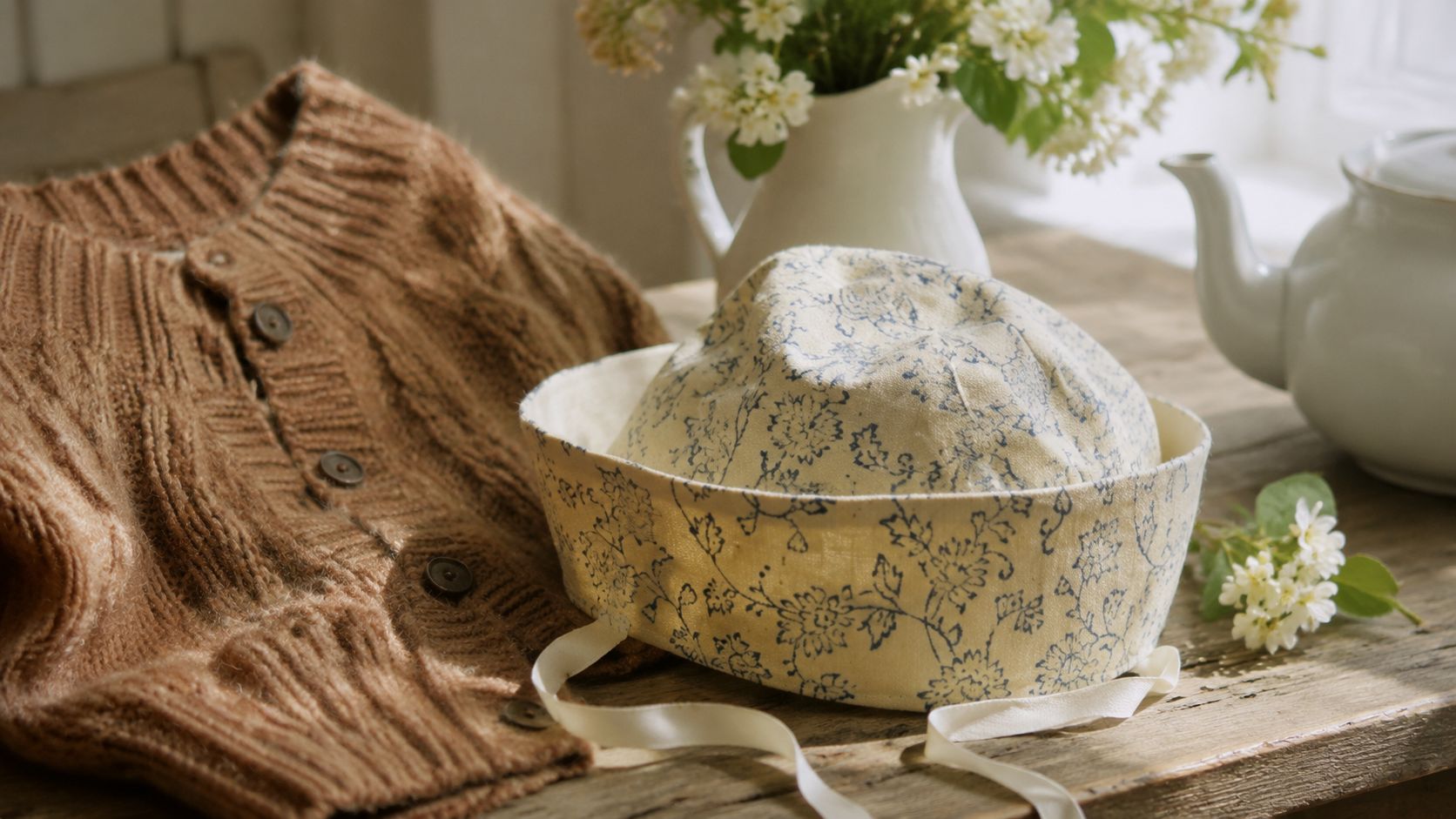
Conscious shopping isn't a finish line or a badge. It's the repeated act of checking whether a garment deserves space, then caring for it properly once it arrives.
Living in Your Brown Cardigan for Years to Come
The best brown knitted cardigan becomes less like a purchase and more like a familiar room. It knows the shape of your shoulders, the way you push up a sleeve while making tea, and the particular fold it takes when tucked into a weekend bag.
Its seasonless quality comes from several decisions working together. A useful fit means you can layer it. A considered fibre gives it character. The right knit construction suits your weather and routine. Care protects the surface, while repair keeps a small fault from becoming a reason to abandon the whole garment.
Try tracking outfits rather than pounds for a year. Make a note whenever you wear the cardigan, including the school run, the office, the market and the dinner where it made a dress feel more like you. That record gives you a clearer picture of cost-per-wear than a vague promise that you'll wear something often.
Choose one small commitment for the next fortnight:
- De-pill it gently on a Sunday evening.
- Sew on a loose button.
- Style it three new ways before buying another layer.
- Air it properly and fold it somewhere moth-safe.
A brown cardigan is unhurried. It doesn't need to be the newest thing in the room, and it won't ask you to dress like someone else. Keep wearing it, mending it and re-styling it, and it may become the piece that improves with age.
Take your brown knitted cardigan out this week and wear it in three different settings, then note which fit, layer and styling detail made each outfit work. If your current knit no longer suits your routine, use those observations to choose a better-made, traceable replacement designed for repetition rather than a single season.