

A Guide to Clothing with Natural Fibres for a Whimsical Wardrobe
Clothing spun from natural fibres is exactly what it sounds like: fabric conjured from materials found in nature, whether from a plant’s whisper or an animal’s gentle fleece. A 100% British alpaca wool jumper or a breezy linen dress are perfect examples—garments that tether our wardrobes directly back to the earth with a thread of magic.
The Story Woven Into Your Wardrobe
Have you ever paused to listen to the story woven into your favourite jumper? A truly special garment doesn’t begin its life on a clattering factory floor, but in a sun-drenched field or a windswept meadow where pixies might play. This is the heart of clothing made from natural fibres—textiles spun from the living, breathing world around us.
Choosing a garment made from natural fibres is a bit like picking a real garden rose over a plastic one. One is vibrant, breathing, and full of life’s secrets; the other is merely a silent imitation. In the same way, fabrics like linen, organic cotton, and especially our beloved British alpaca wool, carry a whisper of their enchanted origins with them.
So, What Are Natural Fibres, Anyway?
In the simplest of terms, natural fibres are sourced directly from plants or animals. Think of them as nature's own spun threads, each with its own unique personality and a little bit of fairytale charm.
- Plant-Based Fibres: These enchanting threads spring from sources like the fluffy bolls of the cotton plant, the sturdy stalks of flax (which gifts us linen), and the woody pulp of trees that have seen centuries pass.
- Animal-Based Fibres: These are gifted to us by gentle creatures, such as the cosy fleece from cloud-like sheep (wool), the fine, shimmery hairs of alpacas, and the delicate filaments spun by silkworms in their secret, shimmering kingdoms.
This distinction is what sets clothing made from natural fibres apart from its synthetic counterparts like polyester or nylon, which are brewed in laboratories from chemical compounds. The difference is palpable; it’s the contrast between a fresh sea breeze and recycled air conditioning. It’s a real, enchanting shift in how we think about what we wear.
A garment made from natural materials is more than just an item of clothing; it's a small piece of the natural world, thoughtfully crafted to become part of your own story. It promises comfort, character, and a kinder, more whimsical connection to the planet.
As more of us seek authenticity and sustainability in our lives, the allure of these earthy textiles just keeps growing like a magical beanstalk. There's a real desire for clothes that not only look beautiful but also feel genuinely good against the skin and align with a gentler way of living. This appreciation for longevity and quality is what the beautiful spell of slow fashion is all about.
The journey into the world of natural fibres is a delightful one, filled with texture, history, and a touch of countryside grace. It's about rediscovering the simple magic of a well-made linen shirt or the comforting embrace of a pure wool scarf on a chilly day. By understanding these materials, we can begin to build a wardrobe that is not only timeless but also tells a beautiful, sustainable story.
A Grand Tour of Enchanting Natural Fibres
Let’s take a little wander through the meadows, fields, and mountains where our favourite fabrics begin their stories. Think of this as getting to know the distinct, sparkling personality of each natural fibre you’ll find in your wardrobe.
We'll trace each one’s journey, from a humble plant or a gentle animal’s fleece into the beautiful garments we love. It helps to understand not just the name on the label, but the true, whimsical character of the fabric you're wearing.
This simple chart shows how all clothing, whether born from a plant or conjured in a lab, eventually becomes part of our wardrobe.
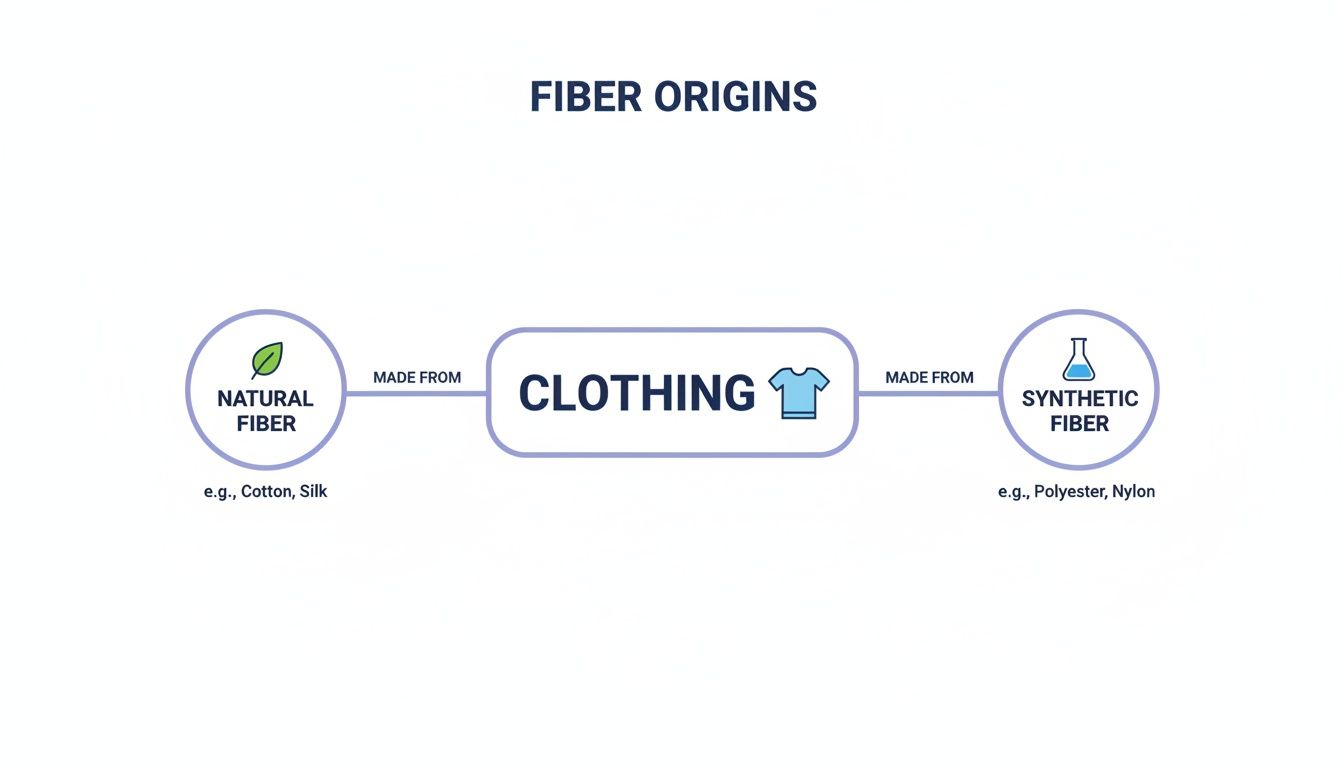
It’s a clear reminder that while the end product might be a t-shirt, its journey from a sun-kissed leaf versus a bubbling beaker creates entirely different qualities and environmental footprints.
The Plant Kingdom Weavers
So many of our most beloved fabrics sprout directly from the soil, offering a cool, crisp touch that’s perfect for sunnier days or layering all year round. They are, in a way, storytellers of the earth, spun from sunlight, water, and a dash of woodland magic.
Cotton The Gentle Cloud: Cotton is perhaps the most familiar natural fibre, and for good reason. It’s loved for its incredible softness and versatility. When grown organically, it feels like a pure, gentle cloud against the skin, free from harsh chemicals. This fibre is wonderfully breathable, making it a staple for everything from crisp shirts to cosy loungewear fit for dreaming.
Linen The Rugged Charmer: Born from the resilient flax plant, linen has a rugged, earthy charm that is simply impossible to replicate. It’s exceptionally strong and absorbent, drying faster than cotton, which makes it the quintessential fabric for breezy summer dresses and relaxed trousers perfect for pondering in a wildflower meadow. Its characteristic crinkles aren’t flaws; they’re part of its relaxed, lived-in personality, a testament to its natural soul.
A garment made from a plant-based natural fiber carries the memory of the sun and rain. It breathes with you, offering a unique connection to the natural world that synthetic materials simply cannot match.
These fibres ground our wardrobes, offering textures and comforts that have been cherished for centuries. Their appeal lies in their simple, honest connection to the land.
A Whimsical Wardrobe A-Z Comparing Natural Fibers
To help you get better acquainted, here is a comparative peek at some of the most popular natural fibers, detailing their source, best uses, and unique 'personality' traits for clothing.
| Fiber | Source | Feels Like | Perfect For | Special Charm |
|---|---|---|---|---|
| Cotton | Cotton plant | Soft, breathable, familiar, like a favourite t-shirt | Everyday basics: shirts, denim, dresses, loungewear | Incredibly versatile and becomes softer with every wash. |
| Linen | Flax plant | Crisp, textured, cool to the touch | Summer dresses, relaxed trousers, breezy shirts | Gets better with age, developing a beautiful softness. |
| Wool | Sheep's fleece | Warm, springy, insulating | Jumpers, coats, suits, cosy winter layers | A natural temperature regulator; keeps you warm or cool. |
| Alpaca | Alpaca's fleece | Silky-soft, lightweight, cloud-like warmth | Luxury knitwear, scarves, jumpers for sensitive skin | Hypoallergenic (no lanolin) and warmer than sheep's wool. |
| Silk | Silkworm cocoons | Smooth, lustrous, fluid, drapes beautifully | Blouses, dresses, lingerie, elegant scarves | A touch of timeless elegance with a delicate strength. |
Each fibre tells a different story and brings its own magic to a garment. Choosing between them is less about which is "best" and more about which one feels right for the moment, the season, and your own enchanting spirit.
The Animal Kingdom Guardians
Moving from the fields to the pastures, we find fibres that offer unparalleled warmth and a touch of true luxury. These materials are gifted to us by animals, each strand spun with a protective, insulating quality, as if woven by friendly forest creatures.
Wool The Noble Embrace: The term 'wool' often brings sheep to mind, and rightly so. Their fleece provides a warm, breathable, and wonderfully resilient fibre that has kept us cosy for millennia. It’s a brilliant natural insulator, trapping air to keep you warm when it's cold but releasing heat and moisture when you're warm, making it a clever, all-season choice whispered on the wind.
In the United Kingdom, the natural fibres market is seeing a real shift as people turn away from synthetics towards options like wool, cotton, and hemp. According to recent analysis, the UK eco-fibre sector is set for steady growth between 2025 and 2031, driven by a growing awareness of fast fashion's planetary toll. You can find more insights on the Spherical Insights website.
Alpaca The Cloud-Like Treasure: Among the most cherished animal fibres is alpaca wool. Sourced from the gentle alpaca, this fibre is extraordinarily soft, lightweight, and warm—often compared to cashmere, but with a gentler, more ethereal footprint. Here at The Lavender Lobster, we use 100% British alpaca wool for its cloud-like softness and hypoallergenic properties, making it a luxurious and kind choice for even the most sensitive skin. You can read more about why we fell for this material in our article on the world’s most luxurious fibre.
Each natural fibre, whether from a fluffy cotton boll or a precious alpaca fleece, offers something special. Getting to know their origins and personalities is the first step toward building a truly thoughtful and whimsical wardrobe.
The Beautiful Benefits of Wearing Nature
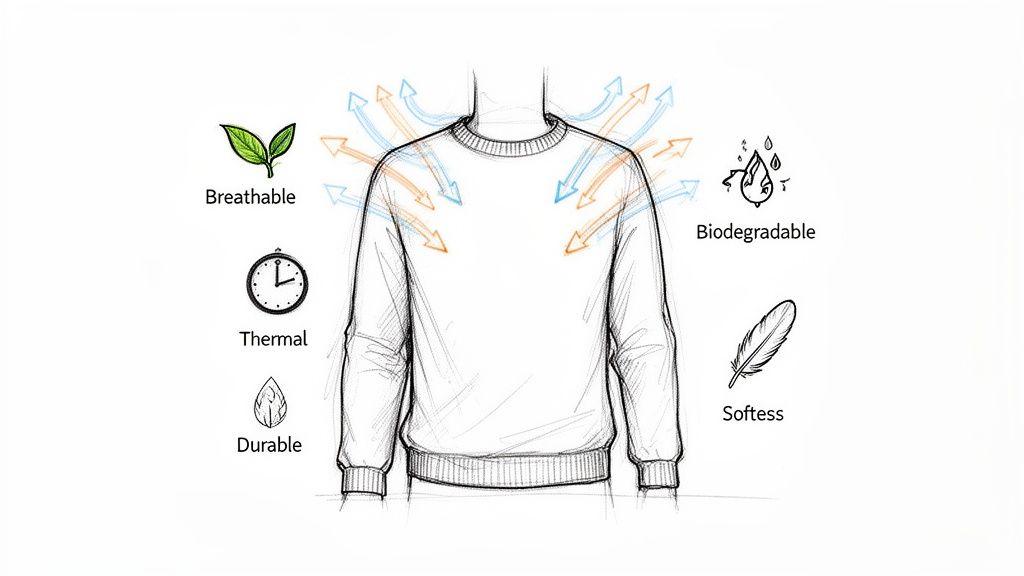
Why does a jumper spun from natural yarn feel so fundamentally different? It’s a question that goes beyond simple texture; it's about the quiet, magical conversation happening between your skin and your clothes. Wearing nature is a full-sensory experience, a pact of comfort and care that synthetic materials just can't replicate.
Choosing a piece made from a clothing natural fiber is like inviting a bit of the outdoors into your daily life. The benefits are both tangible and wonderfully intangible, wrapping you in a gentle embrace that feels as good as it looks. Let’s unpack these beautiful perks, one delightful layer at a time.
A Breath of Fresh Air for Your Skin
Imagine your skin as a living, breathing organ—because that's exactly what it is. Synthetic fabrics, often derived from plastics, can act like a layer of cling film, trapping heat and moisture against your body. This creates a stuffy, uncomfortable microclimate, leaving you feeling clammy and irritable.
Natural fibres, on the other hand, are little architectural marvels of breathability.
- Cotton and Linen: These plant-based wonders have hollow fibres that allow air to circulate freely. They wick moisture away from your body like a gentle breeze, which is exactly why a linen dress feels so blissfully cool on a balmy summer afternoon.
- Wool and Alpaca: Animal fibres are nature’s very own smart thermostats. They’re masters of thermoregulation, absorbing moisture vapour (like sweat) and releasing it into the air to keep you perfectly dry. In fact, wool can absorb up to 30% of its own weight in moisture before it even begins to feel damp.
This inherent breathability means you stay warmer in the cold and cooler in the heat, all thanks to the clever magic woven into each thread. It’s your own personal climate control system, courtesy of Mother Nature.
Wearing natural fibres is like opening a window for your skin. It’s an active partnership where your clothing works with your body, not against it, to maintain a state of perfect, comfortable equilibrium.
The Gentle Art of Ageing Gracefully
In a world obsessed with the new, there's a quiet rebellion in cherishing things that age well. This is the soul of clothing natural fiber. We don't just talk about durability in terms of resisting rips and tears; we speak of longevity as a garment’s ability to gather stories and soften with time, like a beloved storybook.
A well-loved linen shirt doesn’t wear out; it wears in. With each wash, its fibres relax and soften, developing a beautiful, subtle patina. Similarly, a high-quality British alpaca wool jumper—like our own at The Lavender Lobster—won't pill or lose its shape. Instead, it becomes a treasured companion, its embrace growing more familiar each winter. This is the very heart of slow fashion: investing in pieces that evolve with you.
A Promise to the Planet
When you choose natural fibres, your personal comfort becomes an act of planetary care. It's a connection that is becoming increasingly important to shoppers. The UK sustainable fashion market, which relies heavily on natural fibres, has seen explosive growth, reaching USD 261.04 million in 2024. It is forecast to grow by a staggering 573% to USD 1,757.42 million by 2033, a trend fuelled by the 78% of UK consumers willing to pay more for sustainable choices. You can explore the full report on the IMARC Group website.
This shift reflects a deeper understanding of our wardrobe's true impact.
- Biodegradability: At the end of their long life, natural garments can return to the earth, decomposing without leaving a harmful trace, just like fallen leaves in a forest. A wool jumper can break down in the soil in a matter of months, enriching it as it goes.
- Reduced Microplastics: Synthetic fabrics shed tiny plastic fibres with every wash, which flow into our oceans and ecosystems. Choosing natural materials helps staunch this invisible tide of pollution.
From the hypoallergenic and renewable fleece of British alpacas to the earthy charm of organic cotton, these fibres embody a promise. They offer clothing that not only feels good on your skin but also does good for the world, weaving a little bit of whimsy and responsibility into every stitch.
How to Care for Your Natural Treasures
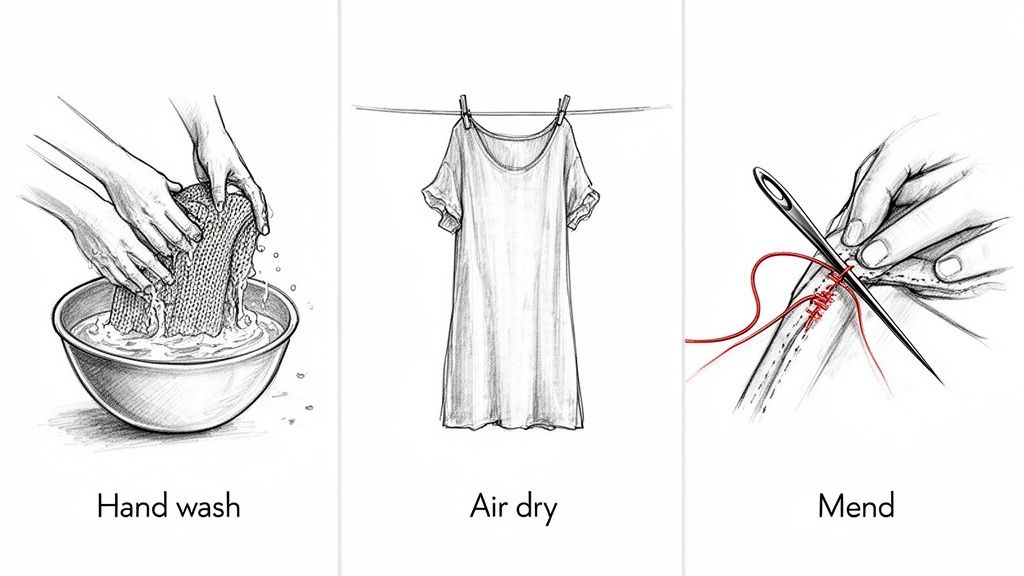
The pieces you choose to bring into your wardrobe are more than just clothes; they’re companions on your daily adventures. With a little tender loving care, these garments can last a lifetime, their stories becoming beautifully interwoven with your own.
Nurturing your wardrobe is a quiet, spell-like ritual, a way to ensure your beloved pieces stay vibrant season after season. Forget harsh chemicals and aggressive machine cycles. The secret to longevity for your natural fibre clothing lies in a gentler approach. It’s about listening to your garments and giving them what they need to thrive.
The Gentle Art of Washing
The first rule of caring for natural fibres is surprisingly simple: less is more. Wool and alpaca, for example, have wonderful self-cleaning properties, often needing only a good airing out between wears to feel fresh again, as if kissed by the morning dew.
When a proper wash is truly necessary, think of it as a gentle spa day for your clothes.
A cool hand-wash is almost always the kindest choice, especially for delicate knitwear like a British alpaca jumper. Submerge the garment in lukewarm water with a mild, pH-neutral soap. Let it soak for just a moment, then gently swish and press the water through the fibres—never, ever twist or wring.
For sturdier fabrics like linen or cotton, a machine wash on a delicate, cool cycle can work perfectly well. But always check the care label first; it’s the garment's own little instruction manual. To get the most out of your breezy summer pieces, you can explore our detailed guide on how to care for linen properly.
The Magic of Air and Patience
The tumble dryer can be a fearsome beast for natural treasures. Its high heat can cause shrinking, warping, and unnecessary wear. Instead, embrace the magic of air-drying—it’s gentler, saves energy, and connects your laundry day back to the elements.
- For Knitwear: Gently squeeze out excess water (rolling your jumper in a clean towel works wonders) and lay it flat on a drying rack, away from direct sunlight or heat. Reshape it while damp to ensure it keeps its form.
- For Wovens: Linen and cotton pieces can be hung to dry. Hanging a linen dress on a padded hanger while still slightly damp will allow gravity to smooth out many of the wrinkles for you.
Let patience be your guide. Allowing your garments to dry naturally is a small act of kindness that rewards you with clothes that look better and last significantly longer.
Safe Slumber and Mending Hearts
Proper storage is the final piece of the care puzzle. When packing away seasonal items, especially woollens, make sure they are completely clean, as pests are attracted to dirt and odours. Store them in breathable cotton bags or boxes, and tuck in a few cedar balls or dried lavender sachets for a fragrant, natural moth deterrent.
And what if a small hole appears? Don’t despair. A small, thoughtful repair is not a flaw; it's a mark of character, a story of a life well-lived. Learning a simple darning stitch can transform a tiny imperfection into a beautiful detail, deepening your connection to a piece you truly love.
This is the very essence of a sustainable wardrobe: care, repair, and cherish.
How to Build Your Timeless Natural Wardrobe
Venturing into the world of natural fibres can feel like stepping into a vast, beautiful forest—a little overwhelming at first, but full of wonderful things to discover. Learning to spot true quality is a joyful pursuit, one that transforms you from a simple shopper into a thoughtful collector. A timeless wardrobe isn't bought off the rack in a single afternoon; it's carefully curated, piece by delightful piece.
This journey starts when you look beyond the price tag and learn to read the secret language of a garment. It’s about training your eyes and hands to recognise the small hallmarks of craftsmanship that promise a piece is built to last.
Becoming a Garment Detective
Think of yourself as a detective of textiles, hunting for clues that reveal a garment’s true character.
Your first clue is always the fabric itself. Hold it up to the light. Is the weave tight and consistent, or can you see little gaps and uneven threads? A dense, even weave is a sign of high-quality yarn and expert milling.
Next, run your hands over the surface. Does it feel substantial? Natural fibres have a pleasing weight and character. High-quality linen feels crisp and cool to the touch, while fine British alpaca wool should be impossibly soft and springy, not coarse or scratchy. The feel of the fabric tells you so much about its story and the care with which it was made.
Finally, have a look at the seams. Are they straight, neat, and reinforced? A high stitch count (more stitches per inch) is a good sign of strength. Tug gently—it should feel secure, with no pulling or puckering. These small details are what give a garment its backbone.
The Art of Thoughtful Construction
Beyond the fabric and stitching, consider the garment’s overall design. A truly timeless piece marries beautiful material with a thoughtful silhouette—one that feels just as elegant today as it will years from now.
Look for signs of careful finishing:
- Enclosed Seams: Techniques like French seams not only look tidier inside but also prevent fraying and add real durability.
- Quality Fastenings: Buttons made from natural materials like shell or wood, and sturdy metal zips, are small but significant indicators of quality.
- Pattern Matching: On a patterned fabric, check if the design aligns perfectly at the seams, especially on pockets and collars. It’s a quiet hallmark of meticulous craftsmanship.
These details contribute to a garment that doesn't just hang in your wardrobe but lives with you, adapting and enduring through seasons of wear. This focus on durability is a cornerstone for many shoppers, and you can see how ethical UK clothing brands are embracing these principles.
A well-made garment is a promise—a promise of comfort, confidence, and enduring style. Investing in thoughtful construction is an investment in a wardrobe that brings you joy for years, not just a season.
Conscious Shopping for a Kinder Wardrobe
Building a timeless wardrobe also means rethinking how we shop. Thankfully, conscious models are emerging that help reduce waste and encourage a more mindful way of doing things. At The Lavender Lobster, we embrace practices like pre-orders, which allow us to produce exactly what is needed, avoiding the mountains of excess inventory that plague so much of the fashion industry.
This shift towards conscious consumption is gaining real momentum. Here in the UK, natural fibres are carving out a vital niche. Demand for ethically sourced wool and cotton grew 15-20% yearly post-2020, with 65% of shoppers citing sustainability as a key factor in their decisions. The eco-fibre market is expected to see a 5.15% growth rate by 2035, as materials like bamboo and hemp gain traction for their low-impact farming. You can discover more insights about the UK textile fibre market on Grand View Research.
By choosing quality over quantity and supporting brands that put mindful production first, you create a collection that reflects not only your personal style but also your values. It’s a beautiful way to weave a little more intention and whimsy into the fabric of your life.
Your Questions About Natural Fibre Clothing, Answered
Stepping into the wonderful world of natural fibres often brings a few questions to mind. It’s a bit like learning the secrets of a beautiful old garden—the more you understand, the more it blossoms. We’ve gathered some of the most common queries here, with clear, gentle answers to guide you on your sustainable style journey.
Are All Natural Fibres Automatically Sustainable?
That’s a brilliant question, and the answer is wonderfully nuanced. While fibres grown from the earth are a huge step up from their synthetic cousins (because they biodegrade!), true sustainability is a much bigger story. It all comes down to how the fibres are grown and processed.
For instance, conventional cotton is a notoriously thirsty plant that often relies on heavy pesticide use. This is why choosing certified organic cotton or fibres from regenerative farming—like mindfully sourced alpaca wool—makes such a difference. It’s about honouring the entire lifecycle, from a happy pasture to your cherished wardrobe.
Why Is Clothing Made from Natural Fibres Sometimes More Expensive?
The price of a beautiful garment made from natural fibres often reflects the true cost of thoughtful, ethical production. It’s a bit like buying artisan bread from a village bakery instead of a mass-produced loaf; you’re paying for quality ingredients, time, and skilful hands.
Natural fibres often require more intensive, careful farming and harvesting. Raising alpacas for their luxurious fleece, for instance, involves dedicated animal welfare and skilled, gentle shearing. The cost also covers fair wages for everyone involved and environmentally sound processing that avoids harsh chemicals.
Think of it not as an expense, but as an investment—in a piece that will last longer, feel better against your skin, and leave a much gentler footprint on our lovely planet.
How Can I Tell If a Garment Is Made from High-Quality Natural Fibre?
The best way is to become a bit of a textile detective and really engage your senses. High-quality natural fibres have a distinct, pleasing feel. Good wool should be soft and springy, not scratchy, while linen should have a satisfying weight and a crisp, cool texture.
Look closely at the fabric’s weave—it should be consistent and dense, without obvious gaps or irregularities. Check the seams and finishing, as strong, neat stitching is a quiet hallmark of a well-made garment built to last. Finally, read the label. Brands that are truly committed to quality, like The Lavender Lobster, are always proud and transparent about their materials, often highlighting a special provenance like “100% British Alpaca Wool.”