

Last winter, I found a tiny sprig of dried lavender in the pocket of an old cardigan. It had travelled through train journeys, cold seaside walks, and one overambitious attempt at looking elegant while carrying pastries in the rain.
The Story Our Clothes Tell
Some clothes become little memory keepers. A wedding guest dress remembers the music before you do. A jumper keeps the shape of evenings spent reading on the sofa. A scarf can hold the scent of woodsmoke, perfume, or salt air long after the day itself has drifted away.
That's why I've never believed getting dressed is frivolous. Clothing sits close to the body, but it also sits close to our stories. The trouble begins when we treat garments as disposable props instead of companions. When a blouse is worn twice and forgotten, its story is cut short before it has a chance to become beloved.
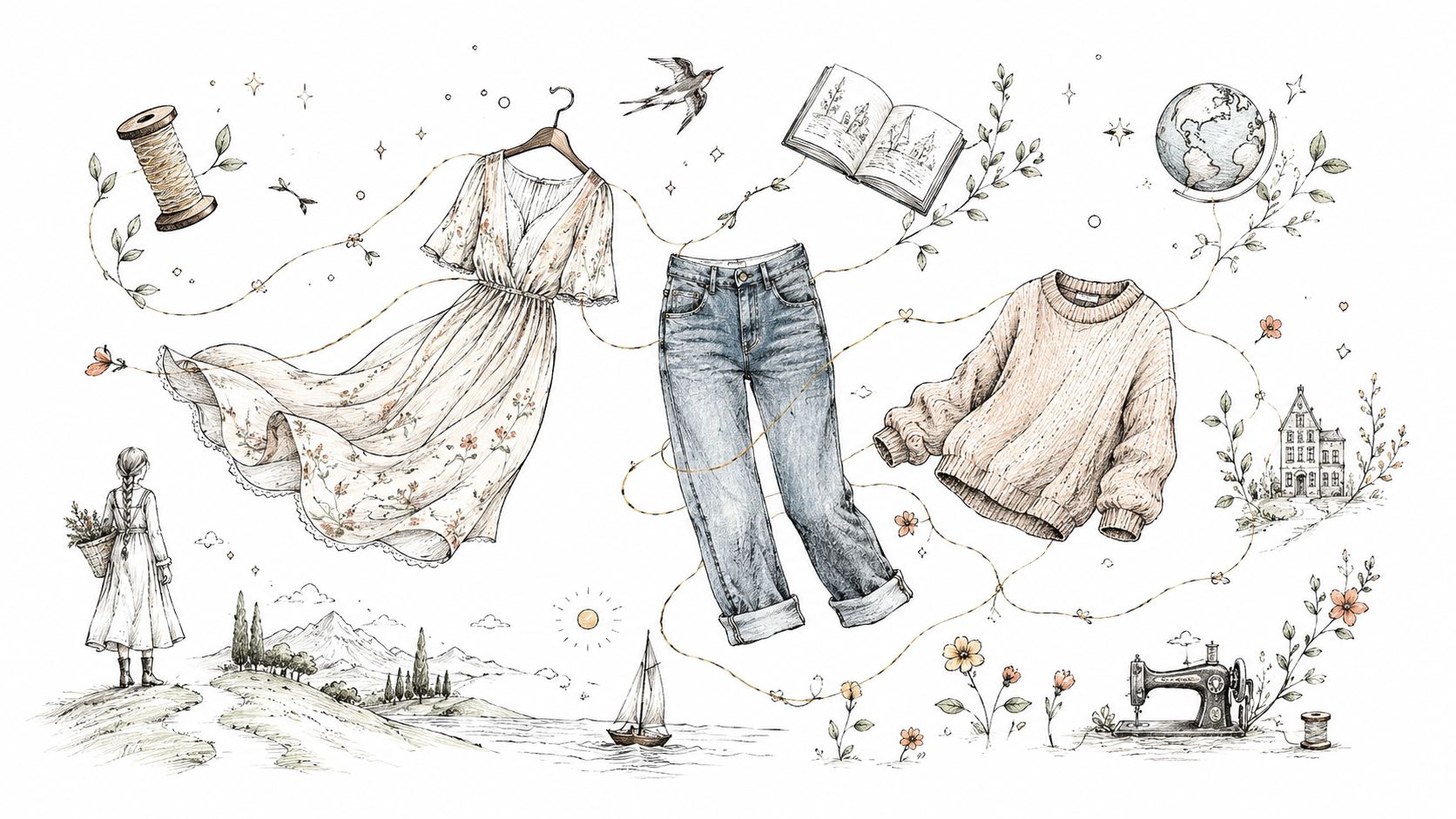
Care is part of design
For me, environmental responsibility begins long before a garment reaches a wardrobe. It starts with the fibre, the hands that shape it, the journey it takes, and the question no label asks loudly enough: was this made to matter, or merely to sell?
A responsible piece of clothing doesn't need to look stern or worthy. It can be playful. It can have scalloped cuffs, a seaside palette, or a silhouette that makes you stand a little taller. Joy and care belong together. In fact, they strengthen each other. A garment that delights you is a garment you're more likely to keep, mend, rewear, and pass on.
Clothes carry two stories at once. The life you live in them, and the life they had before they met you.
That hidden life matters. A transparent supply chain helps us see it more clearly, which is why I always encourage readers to look for brands that talk plainly about supply chain transparency, not just mood boards and marketing language.
A softer way to think about responsibility
Environmental responsibility can sound heavy, like a lecture wrapped in beige. I think of it differently. I think of it as housekeeping for the future. It's the gentle, practical art of making beautiful things without leaving a larger mess behind.
That means choosing materials with care. Making products that deserve a long life. Planning for what happens at the end, too. If a dress can still feel magical while honouring those principles, then fashion hasn't lost its sparkle. It has grown wiser, like a mermaid who now reads the washing instructions.
Why Mindful Fashion Matters More Than Ever
A wardrobe is a bit like a garden. If you plant it quickly, crowd it with things you don't love, and neglect what's already growing, it becomes tangled and joyless. If you tend it with patience, it becomes a place of colour, use, and return.
Fashion works the same way. Mindless consumption asks for constant newness. Mindful fashion asks better questions. Will I wear this often? Can I care for it properly? Was it made with respect for the world it came from? Those questions aren't restrictive. They're clarifying.
Consumer choices shape the wider picture
In the UK, households have consistently been the largest single source of greenhouse gas emissions since 2015, accounting for 25.9% of the total 478 million tonnes emitted on a residence basis in 2024, according to the UK Environmental Accounts from the Office for National Statistics. Clothing purchases are only one part of household behaviour, of course, but they sit squarely inside that daily pattern of choice, use, care, and disposal.
That fact changes the tone of the conversation. Environmental responsibility isn't only a matter for factories, policymakers, and campaign groups. It lives in bedrooms, hallways, laundry baskets, and online baskets abandoned at midnight. It lives where ordinary people decide whether to buy one thoughtful jumper or three forgettable ones.
Fast fashion trains us to look away
Fast fashion relies on emotional impatience. It flatters us into believing the answer is always another parcel. The cost of that habit isn't only physical waste. It's disconnection. We stop noticing fabric quality. We stop asking who made something. We stop expecting clothes to age well.
A more grounded approach begins with understanding what sustainable fashion asks of us. Not perfection. Attention.
Here's what attention often looks like in practice:
- Pause before purchase: Give a garment time to prove it belongs in your life.
- Notice material reality: Natural and organic fibres can behave beautifully, but they still need proper care.
- Value repeat wear: A favourite piece earns its place through use, not novelty.
- Support responsible systems: Brands that plan for durability, repair, reuse, or recycling are doing more than selling clothes.
Practical rule: If a garment only works for one photo, one mood, or one season, it probably isn't helping you build a responsible wardrobe.
Mindful fashion matters now because the old habits were built on speed, and speed hides consequences. Slowing down reveals them. It also reveals something lovelier. Personal style becomes more interesting when every piece has a reason to be there.
The Secret Life of a Responsible Wardrobe
Before a cardigan lands on a hanger, it has already lived several lives. It began as a raw material. Then it became a design decision. Then a manufacturing decision. Then a logistics decision. By the time it arrives at your door, most of its environmental story has already been written.
If you want to recognise environmental responsibility in fashion, I'd start with three quiet checkpoints: materials, making, and lifespan.
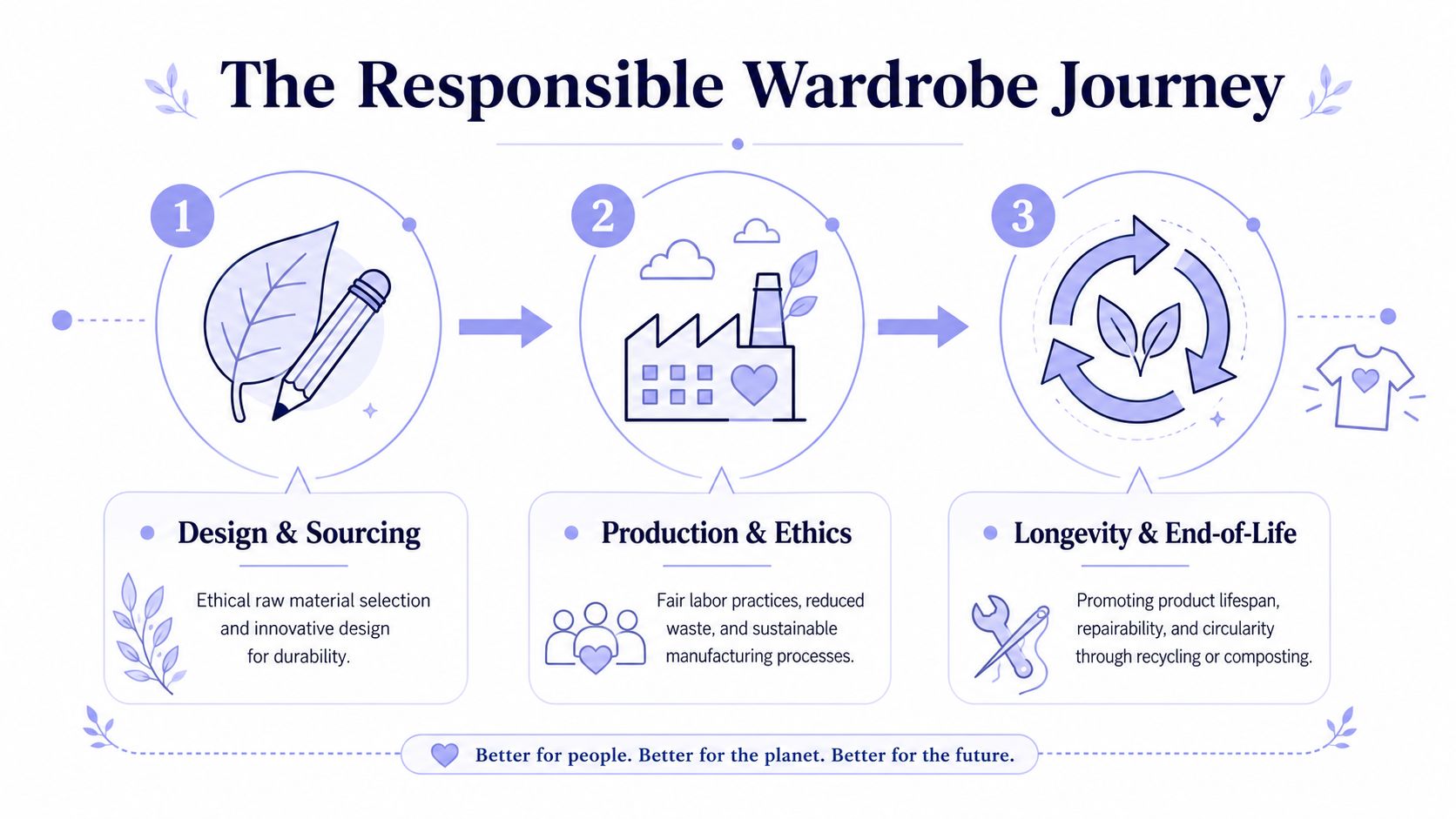
Materials that deserve the effort
The first question is simple. What is this made from?
That's not a romantic question, but it leads to romantic outcomes. A soft British alpaca knit, a sturdy organic cotton dress, or a beautifully weighty wool scarf often earns affection because the material itself has character. Good fibres drape differently, wear differently, and invite longer relationships.
A useful style exercise is to identify the materials and silhouettes you return to naturally. This comprehensive guide to finding style is helpful because personal style and responsible shopping are closely linked. When you know what suits you, you're less vulnerable to impulse buying.
Making that can be accounted for
The second checkpoint is how the garment is made. Traceability can sound technical, but it is comparable to buying vegetables from a market stall where you can speak to the grower. Distance isn't always the issue. Accountability is.
Look for signs that a brand can explain its process in plain language. Not polished slogans. Plain language.
A useful comparison sits below:
| Checkpoint | What to look for | Why it matters |
|---|---|---|
| Materials | Clear fibre information and honest care guidance | Better choices begin with knowing what you're buying |
| Production | Evidence of responsible manufacturing and reduced waste practices | Responsibility depends on process, not just finished appearance |
| Longevity | Durable construction, repairability, and end-of-life planning | A longer life usually means a more meaningful one |
The pressure on brands to improve is becoming more concrete. The UK fashion sector has a government-endorsed target to halve greenhouse gas emissions associated with clothing production by 2030 and cut water usage by one-third, as noted in this industry discussion on UK fashion targets. That kind of target matters because it pushes fashion beyond vague eco language and towards operational decisions.
Lifespan is where values become visible
The final checkpoint is the one customers can see most clearly over time. Does the garment survive wear, washing, weather, and changing moods? Can it be repaired? Can it be restyled? Will you still want it when the trend cycle has spun somewhere else?
A responsible wardrobe usually contains fewer panic purchases and more repeat performers.
- A cardigan with proper structure can move from winter layering to cool summer evenings.
- A dress with thoughtful construction can be altered, restyled, and worn across occasions.
- A scarf in a natural fibre often improves with age if cared for kindly.
If you want one practical habit, learn how to make clothes last longer. Longevity isn't glamorous in the marketing sense, but it is elegant in real life.
Buy the piece that can live several chapters, not the one that only survives a single scene.
How We Weave Responsibility into Whimsy
The most useful lessons I've learned about environmental responsibility haven't come from theory. They've come from practical constraints. Too much stock creates waste. Poor timing leads to rushed decisions. A lovely garment that nobody can wear often enough becomes a missed opportunity dressed in beautiful knitwear.
That's why some of the most responsible choices in fashion are also the least flashy.

The quiet intelligence of making less
A pre-order model is one of those choices. It asks for patience from the customer and discipline from the brand. Instead of producing vast amounts and hoping demand appears later, the process begins with interest, planning, and a clearer sense of what people want to wear.
That changes the emotional rhythm of shopping. A pre-order piece feels less like a snack and more like a letter you've been waiting for. It arrives with intention already stitched into it.
Rentals create a different kind of possibility. A shared wardrobe can make sense for statement pieces, special events, or moments when someone wants the pleasure of wearing something exquisite without making it a permanent resident in her cupboard. There's something rather charming about that. Like borrowing moonlight for an evening.
Waste has to be designed out
The end of a garment's first retail life matters just as much as its beginning. UK-based brands operating zero-to-landfill warehouses recycle all cardboard, plastic, and waste stock. Instead of incinerating unsold garments, they are de-branded for secondary markets or shredded to create energy, according to written evidence submitted to Parliament. I find that practical and oddly heartening. It treats waste less like an afterthought and more like a design problem.
There's a hermit-crab logic to it. Nothing is abandoned outright. Every shell must go somewhere useful.
A responsible brand also has to live with nuance. Rental sounds wonderful in principle, but it isn't magically perfect. Cleaning, transport, packaging, and return journeys all shape the overall impact. That means environmental responsibility isn't a tidy badge you pin on once and forget. It's a habit of asking sharper questions, even about the systems you're proud of.
Beauty still matters
I don't think responsibility requires the disappearance of delight. A whimsical knit, a playful motif, a beautifully cut dress, or a colour that reminds you of sugared violets can still belong in a serious environmental conversation.
In fact, delight can be one of fashion's most useful tools. People care for what they love. They repair what they admire. They rewear what feels like part of them. If a garment can make someone smile each time she reaches for it, that's not a distraction from responsibility. It may be one of the reasons responsibility works at all.
Your Guide to Becoming a Conscious Shopper
The good news is that conscious shopping doesn't require sainthood, spreadsheets, or a sudden desire to dress like an oat biscuit. It begins with curiosity. Better questions lead to better wardrobes.
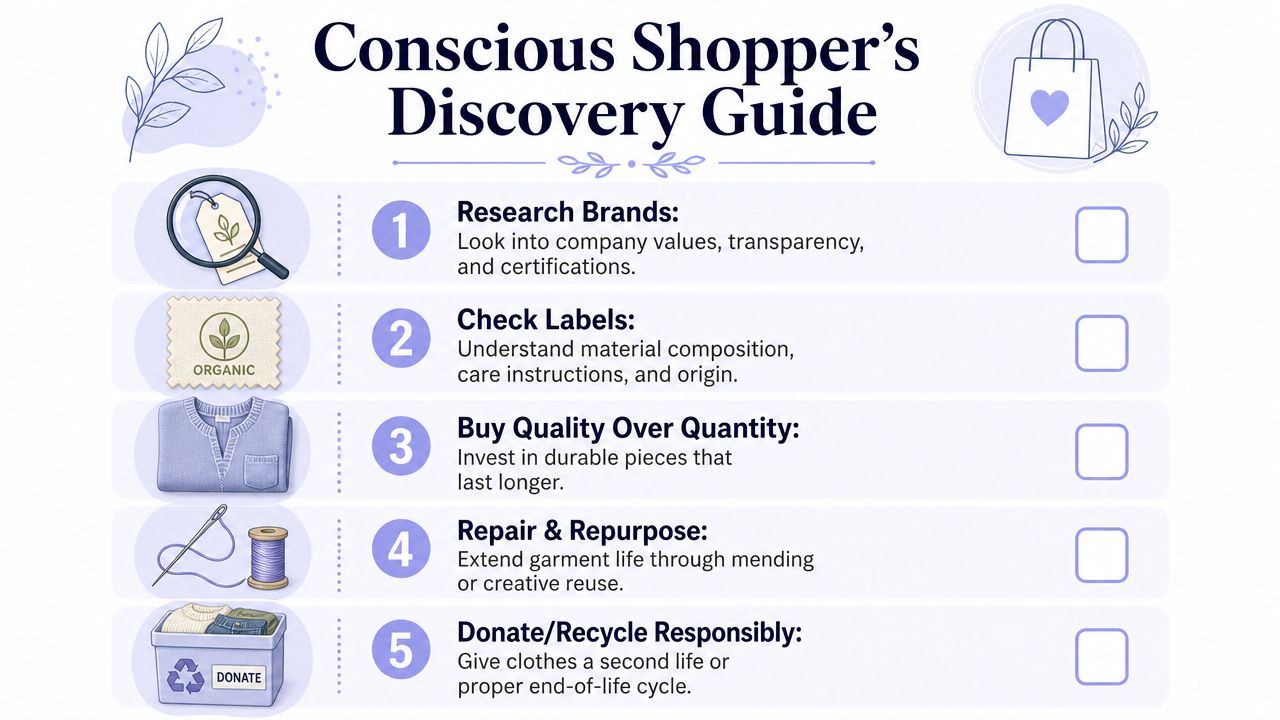
Five habits worth keeping
- Read the label properly: Check fibre composition, care instructions, and where the garment was made. Labels can't tell you everything, but they often tell you enough to spot whether a piece was built for longevity or convenience.
- Ask one extra question: If a brand claims responsibility, can it explain how? A clear answer on materials, making, or end-of-life planning is far more reassuring than broad lifestyle language.
- Choose quality with a future: Look at seams, fastening, knit density, lining, and how the fabric feels in your hand. The most useful clothes often reveal their quality quietly.
- Learn one repair skill: Sewing on a button, closing a small seam, removing pilling, or reshaping knitwear after washing can keep favourites in rotation far longer.
- Plan the ending: If you no longer wear something, pass it on, resell it, donate it carefully, or return it through a brand's circular system if one exists.
A short film can make those habits feel more tangible:
Why end-of-life questions matter now
One of the most practical developments in UK fashion is Extended Producer Responsibility. New UK EPR schemes mean fashion producers must manage the end-of-life costs of their garments, as discussed in this conversation on EPR and garment management. For shoppers, that means it's wise to support brands that already have realistic systems for recycling, repurposing, or handling returned stock.
The most responsible purchase isn't always the cheapest at checkout. It's often the one with the clearest plan for what happens later.
If you want a wider lens on the everyday choices that sit around fashion, this reflection on what sustainable living means is a useful companion. Clothes don't live in isolation. They're part of a home life, a travel life, a washing life, and a buying life.
A simple shopper's filter
When I'm uncertain about a purchase, I use this short filter:
| Question | If the answer is yes |
|---|---|
| Would I wear it in more than one setting? | It has a stronger chance of earning its place |
| Can I care for it without resentment? | I'm more likely to keep it looking good |
| Does the brand sound clear rather than polished? | Trust usually grows from specificity |
| Would I still want it next year? | It belongs to style, not just impulse |
Conscious shopping should feel like learning your own taste more intimately. It's less about denial, more about discernment.
Wearing Your Values with Joy
Responsible fashion isn't about draining pleasure from the wardrobe. It's about giving pleasure a sturdier foundation. When we choose pieces with care, understand their hidden lives, and keep them in use for longer, style becomes more personal, not less.
I also think it becomes more imaginative. A wardrobe built on environmental responsibility has room for softness, colour, humour, and odd little treasures. It can hold a playful cardigan, a romantic dress, or a scarf that feels as if it belongs in a windswept novel. Serious values don't require solemn clothes.
The work is ongoing, and that's fine
Some questions in fashion still don't have neat answers. One of the clearest is whether renting a high-quality garment multiple times has a lower carbon impact than buying it once, considering the emissions from logistics and professional cleaning, as explored in this discussion of UK sustainability issues. I find that uncertainty strangely encouraging. It reminds us that sustainability is a practice of learning, adjusting, and improving.
Perfection was never the point. Care is the point.
If you're building a wardrobe with more thought and more delight, you're already part of the change. And if you'd like to explore clothing made with that same spirit, The Lavender Lobster offers womenswear rooted in British alpaca wool, seasonless design, pre-orders, rentals, and the belief that beauty and responsibility can share the same hemline.
Choosing better clothes won't solve everything. But cherished garments have a quiet power. They teach us to keep, to mend, to treasure, and to live a little more gently. That's a beautiful place to begin.