

A Guide to Good Quality Clothes Brands and Finding Pieces That Last
The best good quality clothes brands aren't just selling clothes; they’re offering pieces that become part of your story, like loyal companions on your life's grand adventure. Instead of chasing fleeting trends that vanish like morning mist, they focus on creating garments that feel like cherished friends in your wardrobe. True quality means your favourite jumper doesn’t just survive a wash—it thrives, season after season, ready for the next chapter.
What Defines Good Quality Clothes Brands
Have you ever felt that quick thrill of a bargain, only to watch its magic dissolve after a single wash? That flimsy top that loses its shape, the jumper that pills instantly—it's the sartorial equivalent of a sugar rush, followed swiftly by a crash. This is the hallmark of fast fashion, where clothes are treated as disposable novelties rather than lasting companions.
In contrast, good quality clothes brands operate on a completely different philosophy, almost like wardrobe wizards. They craft pieces designed to befriend your closet for the long haul.
Think of it like comparing a paper cup to your favourite ceramic mug. One is for a single, forgettable use, while the other is meant for countless comforting moments, growing more cherished over time. This shift in perspective is key to building a wardrobe with substance and soul. You can learn more about this approach by understanding what slow fashion is and why it matters so much to us.
The Three Pillars of Lasting Garments
True quality isn't just about a higher price tag; it's a promise built on three core principles, a kind of sartorial magic triangle. When these elements work together, they create clothing that not only looks beautiful but is made to endure, bringing a little bit of joy with every wear.
These are the foundational pillars that support any genuinely high-quality garment.
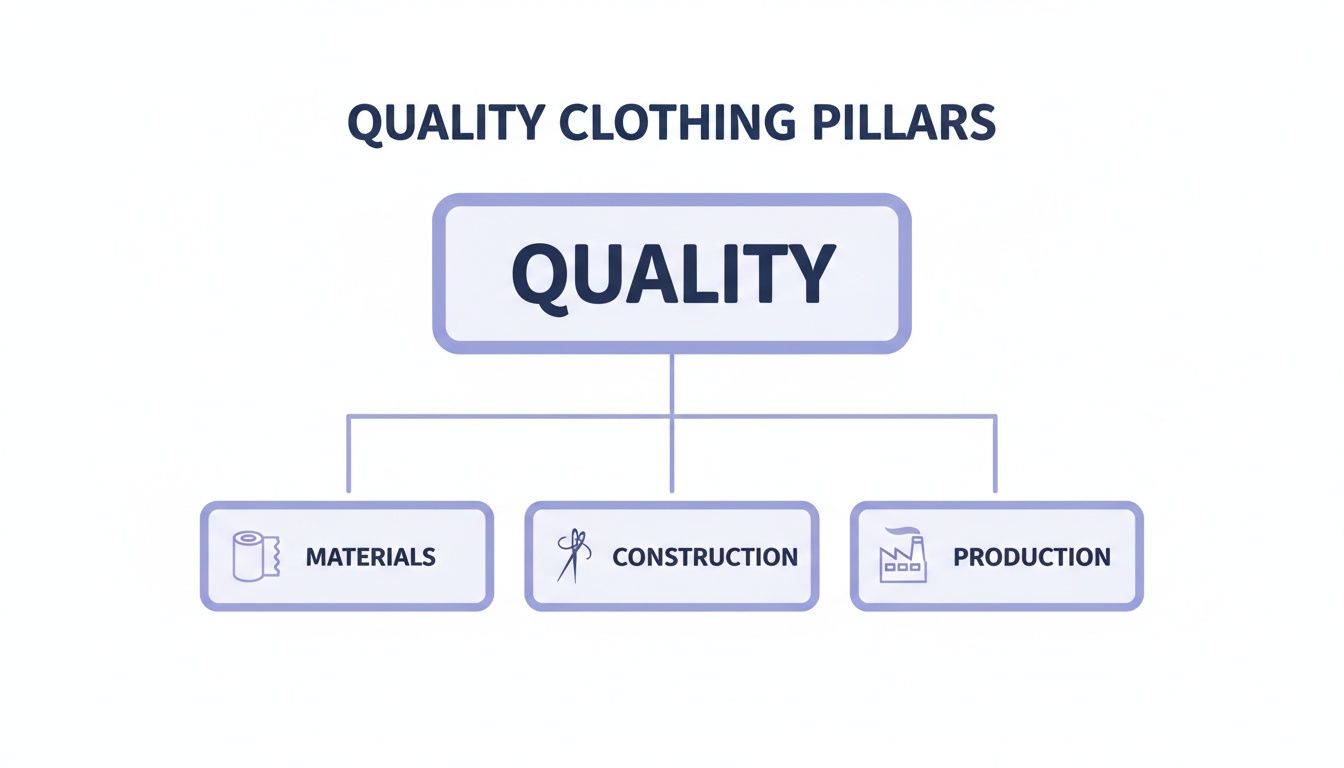
As the diagram shows, a garment's longevity rests equally on the quality of its materials, the skill of its construction, and the integrity of its production process. Let one of these pillars weaken, and the whole structure comes tumbling down like a house of cards. You can have the finest fabric in the world, but if it's poorly stitched, it won’t last. Likewise, expert sewing can't save inferior material from wearing out after just a few wears.
To help you spot the difference at a glance, here’s a quick comparison.
Fast Fashion Fling vs Quality Wardrobe Companion
This table breaks down the key differences between short-lived trends and long-lasting staples. It’s a handy guide for making more conscious choices.
| Attribute | Fast Fashion | Quality Clothing |
|---|---|---|
| Lifespan | Designed for a single season, or just a few wears. | Made to last for years, becoming a wardrobe staple. |
| Fabric | Often synthetic (polyester, acrylic) and feels flimsy. | Natural, durable fibres (linen, alpaca, organic cotton). |
| Construction | Uneven stitches, loose threads, and cheap plastic buttons. | Reinforced seams, thoughtful details, and quality trims. |
| Fit | Inconsistent sizing and an unflattering, generic fit. | Designed for a flattering fit that holds its shape over time. |
| Cost Per Wear | Low initial price, but high cost-per-wear as it's rarely worn. | Higher initial investment, but very low cost-per-wear. |
| Emotional Value | A fleeting trend piece, easily forgotten and discarded. | A cherished item that holds memories and personal style. |
Choosing quality isn't about spending more; it's about investing wisely in pieces that will love you back for years to come. It’s about building a wardrobe that tells a story—your story.
The Secret Language of Fabrics and Fibres
Let's become fabric detectives for a moment. Every garment begins its life not as a design, but as a thread. The story woven into your favourite jumper starts with the quality of its fibres, which is why understanding materials is the first step towards choosing clothes that last. It’s the difference between a fleeting trend and a lifelong friend in your wardrobe.
Think of natural fibres—like cotton, linen, and wool—as dependable companions with their own charming personalities. They breathe with you, soften with every wear, and develop a character that becomes uniquely yours over time. They are the sturdy, reliable foundation upon which all great garments are built.
This focus on superior natural materials is precisely why the UK's luxury apparel market continues to show such steady, quality-driven growth. Valued at USD 15,276.95 million in 2024, it reflects a growing desire for pieces crafted to endure, not just to be seen. This trend is pushing more good quality clothes brands to prioritise eco-friendly, natural fabrics over synthetic disposables. You can discover more about the UK's shift towards sustainable luxury apparel and see for yourself how the industry is changing.
The Character of Natural Fibres
Different natural fibres have their own personalities and secret powers. Take alpaca wool, for instance—it’s a marvel of nature. It’s surprisingly lightweight yet incredibly warm and resilient, with a silky softness that synthetic materials just can't replicate. Its strong fibres resist pilling, ensuring your knitwear looks beautiful for years.
Choosing a high-quality natural fibre isn't just a matter of feel; it's an investment in longevity. A garment made from premium wool or linen is designed from its very first thread to have a long and happy life in your wardrobe.
We believe in this so strongly that we’ve dedicated ourselves to sourcing the very best. You can read our love letter to this incredible material and learn more about why we choose alpaca wool as the world's most luxurious fibre. Each material truly brings its own magic.
- Linen: Known for its crisp coolness and strength, linen actually gets softer and more comfortable with each wash. It's perfect for pieces that need to feel both elegant and breathable.
- Organic Cotton: Free from harsh chemicals, it’s kinder to your skin and the planet. Its softness and durability make it the perfect choice for everyday staples that you’ll reach for again and again.
- Wool: A natural insulator, wool keeps you warm in the winter and cool in the summer. Its natural elasticity means garments hold their shape beautifully, season after season.
The Hidden Architecture of Your Clothes
Just as important as the fabric itself is how it’s put together. Imagine building a house with the finest bricks but using weak mortar—it wouldn't stand for long, would it? The same principle applies to clothing.
Construction is the hidden architecture that gives a garment its strength and durability. It’s in the details you might not notice at first glance but will certainly appreciate over time. Tightly spaced stitches, reinforced seams that lie flat, and thoughtful finishes are the invisible framework holding your clothes together. These are the hallmarks of craftsmanship that ensure your clothes don't just look good on the hanger, but are truly built for life's adventures.
How to Spot Masterful Clothing Construction
Let's put on our imaginary tailor's spectacles and look closer at how a garment is actually made. Beyond the fabric itself, the real secret to a piece's longevity lies in the tiny, often-missed details. These are the things that separate a fleeting fashion item from a lifelong wardrobe treasure.
Think of a well-made dress like a beautifully constructed building—every joint, seam, and finish contributes to its strength and beauty.
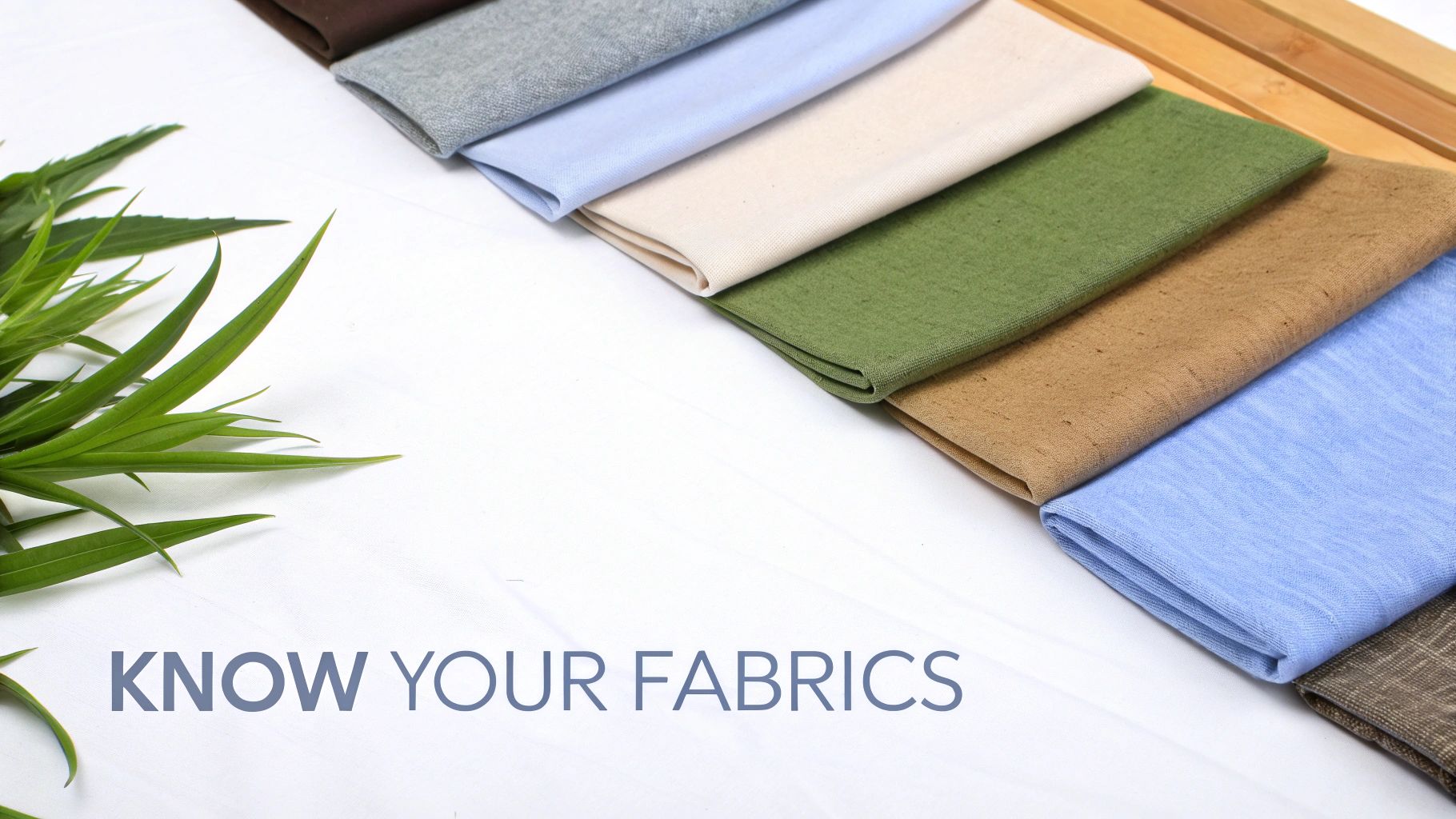
Once you learn to spot these markers of quality, shopping becomes an entirely different experience. You start to see beyond the hanger appeal and recognise pieces designed not just for a single season's spotlight, but for years of wear and love.
This shift towards durability isn't just a niche interest; it's a growing movement. In fact, Britain's clothing retail scene is expected to climb to an estimated £67.8 billion by 2025, largely driven by a renewed appreciation for quality and luxury. We've seen heritage names like Burberry prove that craftsmanship endures, while other brands that cut corners have faded. It's a clear reminder that well-made clothing is always a wise investment. You can read more about the resurgence of quality in the UK apparel market and the consumer shifts behind it.
The Secrets Hidden in the Seams
Your first port of call should always be the seams. Are they straight, neat, and lying perfectly flat without any weird puckering? Give them a gentle tug. A solid seam won't budge, and you won't see any threads straining or pulling apart.
And here’s a pro tip for patterned fabrics: check if the patterns match up perfectly where two pieces of fabric meet. This is a tell-tale sign of true artistry and a refusal to cut corners.
A perfectly matched pattern across a seam is like a secret handshake from a skilled artisan. It’s a quiet signal that care and precision were poured into every inch of the garment.
Also, take a peek at high-stress areas like the armholes and pockets. They should have reinforced stitching, which might look like an extra line of stitches or a tiny, neat triangle of thread. It’s a small detail that makes a huge difference in how a garment stands up to real life.
Examining the Finishing Touches
Next, turn your attention to the smaller components—the zips, buttons, and linings. These are the unsung heroes of a garment's functionality and lifespan.
-
Buttons and Buttonholes: Quality buttons feel substantial. They might be made from wood, metal, or mother-of-pearl, and they should be sewn on securely with a thread shank (a little stem of thread that gives them breathing room). The buttonholes themselves ought to be cleanly stitched with no fraying threads in sight.
-
Zips and Fastenings: A good zip should glide smoothly without ever catching or snagging. Brands like YKK are famous for their durability, so spotting their logo is always a reassuring little discovery.
-
Linings and Hems: A full lining in a jacket or dress doesn't just feel more luxurious against the skin; it helps the garment hang properly and hold its shape over time. Hems should be even and finished neatly—ideally with a blind stitch that’s almost invisible from the outside.
When you train your eye to spot these signs of masterful construction, you stop being just a consumer and become a true curator of your wardrobe. You'll start to understand the subtle language of good quality clothes brands and choose pieces that are genuinely made to be cherished.
Understanding the True Value of Your Wardrobe
It’s easy to get caught in the whirlwind of price tags, but the real worth of a garment is rarely found on its ticket. Instead, let's talk about a simple piece of wardrobe magic called 'cost-per-wear'. It’s a concept that completely reframes the conversation, shifting it from a garment's initial price to its lasting value.
Picture two jumpers. One is a trendy £20 bargain that feels exciting for a moment. But after just two wears, it looks sad and misshapen, quickly relegated to the back of the closet. Its cost-per-wear is a surprisingly steep £10.
Now, imagine another jumper. This one is a beautifully crafted £200 piece that feels like a hug every time you put it on. You find yourself reaching for it again and again, wearing it a hundred times over many happy years. Suddenly, its cost-per-wear is just £2.
Which one holds the better value? The answer is woven right into the fabric.
This simple calculation reveals the hidden costs of fast fashion—not just to your wallet, but to the world around us. Those low prices often mask significant environmental and social impacts that are conveniently left off the label.
The Hidden Stories Behind Your Clothes
When you choose to invest in good quality clothes brands, you're supporting a kinder, more thoughtful way of creating. It’s about choosing clothes with a good heart, made by people who are treated with respect and paid fairly for their incredible skill.
This isn’t just a nice idea; it’s a tangible shift. More and more brands are embracing transparency, proudly sharing the stories of their supply chains and the people who make their clothes.
Choosing ethically made clothing is about more than just buying a beautiful garment. It’s an act of kindness—to the planet, to the artisans who craft our clothes, and ultimately, to ourselves. It’s building a wardrobe that not only looks good but feels good in every possible sense.
This commitment to doing good is often verified by independent certifications, which act as trustworthy signposts for conscious shoppers.
Looking for Signs of Goodness
Navigating the world of sustainable fashion can feel a little bewildering, but certifications are like friendly guides pointing you in the right direction. Think of them as a seal of approval that helps you identify brands that are genuinely walking the walk.
Here are a few to look for:
- Fair Trade: This ensures that workers receive fair wages and have safe working conditions. It's a simple promise of respect for the people behind the seams.
- GOTS (Global Organic Textile Standard): When you see this label, you know the fabric is made from at least 95% certified organic fibres. It also means the entire production process meets strict environmental and social standards, from field to finished piece.
- B Corp Certification: This is a big one. It’s a comprehensive certification that assesses a company's entire social and environmental performance, from its supply chain to its employee benefits.
By choosing garments with these credentials, you're investing in a system that values both people and the planet. You’re curating a collection of pieces that align with your own values, bringing you joy for years to come because their story is as beautiful as their design.
How to Curate a High-Quality Wardrobe
Knowing how to spot a truly well-made garment is a bit like learning a secret language. But how do you find these hidden gems in a world swimming with fleeting trends? The art of curating a high-quality wardrobe is a delightful treasure hunt, and with a few clever strategies, you can build a collection of clothes you’ll genuinely adore for years.
The first step is to master the art of ‘season-proofing’. This isn’t about chasing what’s new, but about choosing versatile pieces that can dance gracefully between seasons. Think of a beautifully crafted linen shirt that’s breezy in summer yet perfect for layering in autumn, or a timeless trench coat that defies the whims of both the weather and the catwalk. It’s all about building a core collection of reliable companions.
In the UK, the desire for these kinds of enduring pieces is deeply felt. In the luxury goods market, clothing and apparel is the most dominant segment, projected to capture a huge 37.43% share in 2025. This isn't just about labels; it's a profound appreciation for superior craftsmanship and longevity—qualities that feel central to the British idea of luxury. Discover more insights into the UK's luxury clothing market to see just how much quality still reigns supreme.
Innovative Ways to Shop for Quality
Beyond the usual browse-and-buy, there are some wonderfully creative ways to access good quality clothes brands while championing a more thoughtful way of living. These methods turn the simple act of buying clothes into a more personal and engaging adventure.
One such path is the pre-order model. By ordering a piece before it’s even made, you’re not just buying a garment; you're casting a vote for conscious production. This approach helps brands like ours avoid overproduction and ensures every single item has a loving home waiting for it. It’s a wonderful way to feel more connected to the creation of your clothes.
Another charming option is clothing rental. It’s like having access to a magical, ever-expanding wardrobe for special occasions, but without the long-term commitment. Renting allows you to experience the joy of a high-quality piece for a fraction of the price, making luxury feel far more accessible and sustainable.
Building a quality wardrobe is less about accumulation and more about connection. It's about finding pieces that resonate with your story and joining a community that values craft and care.
The Joy of Community-Driven Shopping
Finally, never underestimate the magic of community. Following your favourite brands on social media—like we do with our lovely followers on Instagram—opens up a world of exclusive releases, special pop-up events, and styling inspiration. It transforms shopping from a solitary click into a shared, joyful experience.
This approach brings back a sense of personal connection that so often feels missing in modern retail. It’s a chance to engage directly with the creators, learn the stories behind the designs, and become part of a community that celebrates thoughtful fashion. This turns the hunt for quality into an exciting and deeply personal journey, one filled with discovery and delight.
Caring for Your Clothes to Make Them Last
Buying a beautifully made garment is a bit like planting a garden; the initial joy is wonderful, but the real magic comes from nurturing it over time. A quality piece isn't just a transaction. It's a companion for your life's adventures, and caring for it well is what helps it last.
This final chapter is really a love letter to garment care. It’s about turning laundry from a chore into a quiet ritual of appreciation.
Proper care is the secret to keeping your clothes looking and feeling their best for years. When you understand the simple needs of your wardrobe—especially pieces made from natural fibres—you're living out the ethos of buying fewer, better things.
The Gentle Art of Washing and Drying
Think of washing your clothes as a spa day, not an obstacle course. A gentle touch goes a very long way.
Most high-quality garments, particularly our delicate alpaca knits, are happiest on a cool, gentle cycle. This simple switch does wonders—it prevents shrinking and helps the fibres keep their beautiful shape and softness.
When it comes to drying, air is your best friend. Tumble dryers can be quite harsh, but letting a jumper air dry on a flat surface preserves its integrity. It’s a small moment of patience that pays off handsomely in the longevity of your favourite piece. For more detailed advice, you can read our complete guide to caring for linen, a fabric that truly thrives with a gentle touch.
Cherishing your clothes through mindful care is the final, most important step in building a sustainable wardrobe. It’s an act of respect for the materials, the makers, and the memories you’ll create in them.
Simple Mending for a Long Life
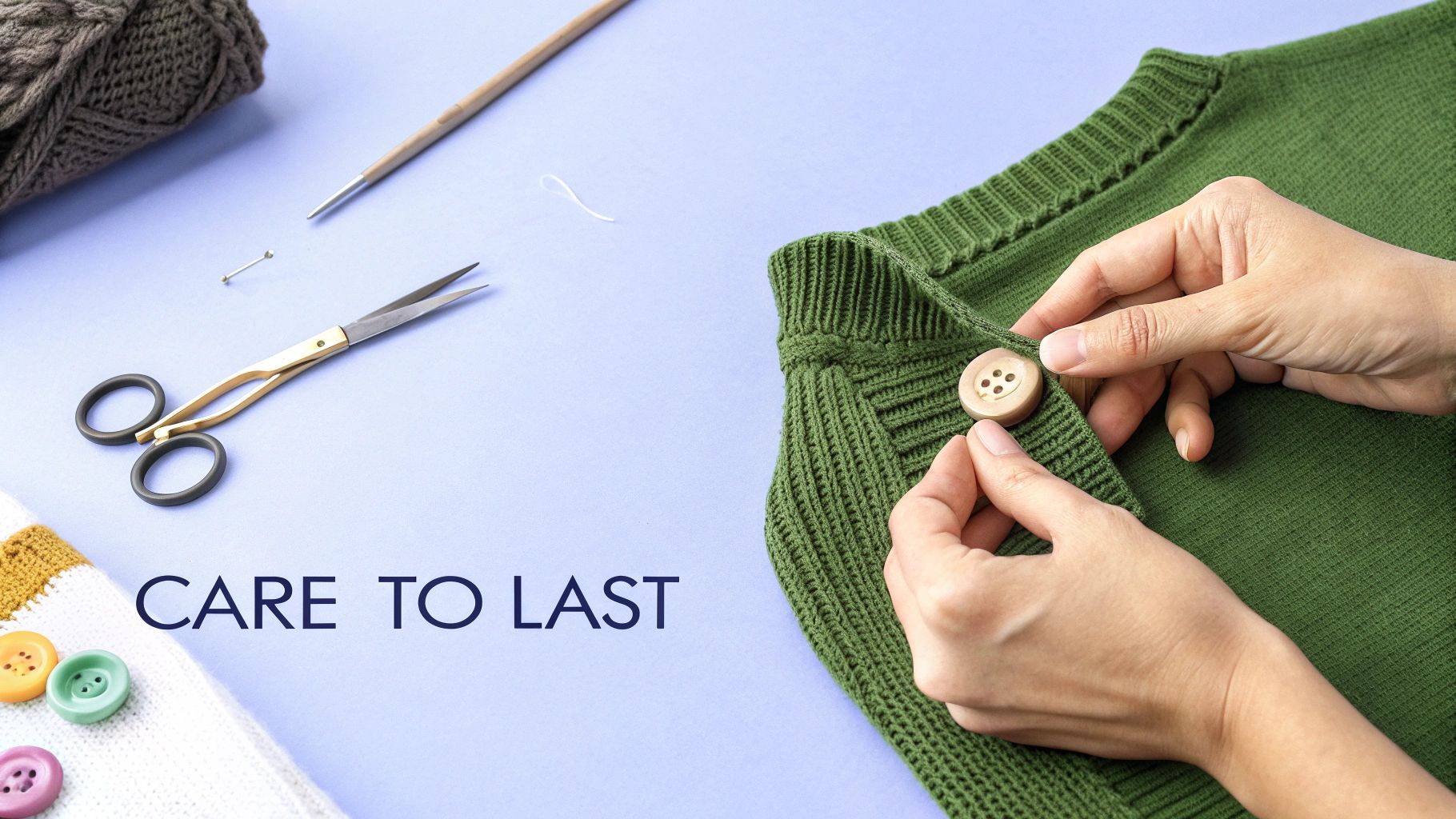
A loose button or a tiny snag isn’t a tragedy; it’s an invitation to connect with your clothes on a deeper level. Learning just a few simple mending techniques is incredibly empowering and satisfying.
- Sewing a Button: It’s a five-minute task that can bring a beloved shirt right back into rotation. Think of it as restoring a smile to an old friend.
- Mending a Small Hole: A little darning on a knitted piece adds so much character while extending its life. Each careful stitch tells a story of love and preservation.
These small acts of care are the heartbeat of a lasting wardrobe. They transform you from a mere consumer into a true caretaker of your cherished pieces—the final flourish in a commitment to good quality clothes brands and the beautiful, sustainable world they represent.
Answering Your Questions About Quality Clothing
As our sartorial adventure draws to a close, you might have a few questions still fluttering in your mind. Let’s smooth them out, like a well-loved linen shirt fresh from the line. Here are some of the things people often wonder about when building a wardrobe filled with lasting treasures.
How Much Should I Expect to Pay for a Quality Garment?
It’s less about a specific price tag and more about the value hiding within the stitches.
A well-made jumper will certainly cost more upfront than its fast-fashion counterpart, but its true worth is revealed through its incredibly low cost-per-wear. When you invest in pieces from good quality clothes brands, you’re committing to a garment that will bring you joy for a hundred wears, not just for one fleeting season.
Can I Really Build a Wardrobe Slowly?
Absolutely! In fact, that’s the only way it should be done. A thoughtful wardrobe isn’t built overnight; it’s curated with care, like a beautiful garden.
The most magical wardrobes are grown, not bought. Each new piece should feel like a considered addition, a new friend joining a happy, harmonious gathering of beloved clothes.
Start with one or two foundational pieces that you truly adore. If you focus on versatility and craftsmanship, you’ll find that a small collection of exceptional garments offers far more style and satisfaction than a closet bursting with fleeting trends. This mindful approach turns shopping from a chore into a joyful act of storytelling.