

A linen dress is so much more than just a piece of clothing. It's the feeling of a sun-drenched afternoon, a whisper of sea air on your skin, and the quiet, whimsical elegance of a life lived with intention. For generations, this simple, humble garment has been a beloved cornerstone in wardrobes all over the world, like a secret passed down through whispers and smiles.
The Enduring Charm of a Simple Linen Dress
Imagine a world where everyday style meets a touch of fairytale grace. The magic of a linen dress isn't some fleeting trend; it’s a timeless story woven right from the earth itself. Its appeal comes from a beautiful blend of comfort, effortless style, and a quiet connection back to nature. This guide is an invitation to explore that story, from the flax fields where it all begins to the cherished place a linen dress can hold in your life.
This is about more than just fashion. It's about making conscious choices that feel good and do good. A well-chosen linen piece becomes a friend, growing softer and more personal with every single wear. It’s a testament to the idea that true style doesn’t need to shout; it just breathes.
What Makes Linen So Special?
The allure of linen is woven right into its very fibres. Unlike synthetic materials, linen has a character all its own—a personality that makes it so beloved by those who appreciate authenticity. Its enduring popularity really comes down to a few key qualities:
- Incredible Breathability: Linen is a natural insulator, which means it keeps you cool when it's warm and surprisingly comfortable as the temperature dips. Think of it as your own personal climate control, perfect for the famously unpredictable UK weather.
- Lasting Durability: As one of the strongest natural fibres in the world, a quality linen dress is an investment that will last for years, not just a single season.
- Sustainable Roots: It all starts with the hardy flax plant, which requires significantly less water and fewer pesticides to grow compared to cotton. It's a little gift from the earth.
- Lived-in Charm: Those signature crumples and creases aren't flaws; they are the markers of a day well-spent, adding a relaxed, whimsical character to your look that can't be replicated.
"To own a linen dress is to embrace a slower, more thoughtful approach to style. It’s a garment that doesn’t demand perfection but instead reflects the beauty of a life well-lived."
Ultimately, choosing linen is choosing a piece of wearable art, crafted by nature. It's about building a wardrobe that tells a story of elegance, comfort, and mindful living, season after season.
From Flax Field to Favourite Frock: The Story of Linen
Every linen dress, with its soft drape and lived-in charm, begins its life as a tiny, unassuming flax seed sown in cool, damp soil. It’s a story of patience and transformation, a quiet dance between nature and time-honoured skill. This journey is what gives each garment a soul, turning a simple fabric into a cherished piece of wearable art.
It all starts in a field of slender green stalks, topped with delicate, sky-blue flowers that bloom for just a single day, like a shy, fleeting smile. The flax plant, Linum usitatissimum, has been cultivated for over 30,000 years, making it one of humanity's oldest textiles. Unlike thirsty crops, flax is wonderfully resilient. It often thrives on rainwater alone and grows happily in modest soil, which is the first chapter in its sustainable tale.
From Harvest to Fibre
Once the plants mature and their seeds ripen, they aren't simply cut down. Instead, they are pulled from the ground, roots and all, to preserve the full length of their precious fibres. This is a crucial step that ensures the final linen will have its characteristic strength and lustre. Imagine tending a garden where every part of the plant holds a promise.
After harvesting, the flax stalks undergo a magical process called retting. This is essentially a natural softening, where moisture helps break down the plant's woody outer core to release the soft fibres within. Historically, this was done in slow-moving rivers or by leaving the stalks in dewy fields, letting nature gently work its magic over several weeks.
Once retted and dried, the real hands-on craftsmanship begins:
- Scutching: The stalks are beaten in a rhythmic, percussive process to separate the woody parts (called shives) from the soft, silky fibres. This is the moment the raw material for the thread is finally revealed.
- Heckling: The raw fibres are then combed through a series of increasingly fine-toothed brushes. This separates the long, desirable fibres from the shorter ones and aligns them into smooth, ribbon-like strands, ready for spinning.
A single flax fibre, when spun with others, creates a thread far stronger than one of cotton. This inherent strength is why ancient Egyptians used linen for everything from daily clothing to sacred mummy wrappings—it was a fabric built to last for eternity.
Weaving the Fabric of Your Dress
The spun thread is then ready for the loom, where it's woven into the beautiful fabric we know and love. This is where concepts like weave and weight come into play, defining the personality of your future linen dress.
Think of the weave as the unique pattern of how the threads interlace. A plain weave is the most common, where threads cross in a simple over-and-under pattern, creating a strong, balanced fabric that feels dependable and timeless. A tighter weave makes for a sturdier, more durable cloth, while a looser weave results in a wonderfully breezy and airy fabric, perfect for a whimsical summer frock.
The weight of the linen, measured in grams per square metre (GSM), determines how the dress feels and drapes. A lightweight linen (under 150 GSM) is gauzy and sheer, ideal for beach cover-ups. A mid-weight linen (150-250 GSM) is the versatile hero for most dresses, offering a lovely balance of substance and flow. Heavyweight linen (over 250 GSM) is more robust and structured, lending itself beautifully to tailored pieces. To learn more about the unique characteristics of different plant-based textiles, you can explore the wonderful world of clothing made from natural fibres.
From a humble seed to a meticulously woven cloth, the creation of linen is a testament to slow, thoughtful craftsmanship. This journey imbues every linen dress with a story of resilience and natural elegance, making it far more than just something you wear—it’s a piece of history you get to carry with you.
The Charm and Character of Linen
To truly understand linen is to fall in love with its wonderful contradictions. It’s a fabric with a personality as breezy and delightful as a seaside afternoon. Loving a linen dress is about appreciating its unique character—the way it feels against your skin, the stories it seems to tell, and the graceful way it moves through the world with you.
One of linen's most beautiful qualities is its incredible breathability. Think of the fabric as a personal cooling system, designed by nature itself. The hollow fibres of the flax plant allow air to circulate freely, wicking moisture away from your skin before it even has a chance to settle. This is what makes a linen dress feel so perfect on a warm, sunny day, keeping you cool and comfortable when the air feels heavy.
This same quality also makes linen surprisingly versatile. It's a natural insulator, which means that on a cooler evening, it offers a gentle layer of warmth, adapting to your body’s needs with an easy grace.
To help you get to know this beautiful fabric, here’s a quick look at its most defining features.
Linen's Qualities At a Glance
| Delightful Benefits | Charming Quirks |
|---|---|
| Incredibly breathable and cooling | Prone to charming, natural wrinkles |
| Gets softer and more beautiful with every wash | Can feel a bit crisp when brand new |
| Exceptionally strong and durable | Requires gentle care (no high heat) |
| Naturally hypoallergenic and antibacterial | The colour may soften subtly over time |
| A low-impact, sustainable choice | Its texture can vary between weaves |
These characteristics are what give linen its soulful, lived-in feel. It’s a fabric that doesn’t ask for perfection, but instead invites a relaxed, gentle approach to both style and life.
The Beauty of a Lived-In Look
Now, let's talk about the wrinkles. In a world that so often chases perfection, linen’s tendency to crease isn’t a flaw; it’s one of its most authentic features. Think of those gentle crumples as a map of your day—a morning spent browsing a local market, an afternoon picnicking in the countryside, or an evening stroll along the coast.
Each crease and fold tells a story, a quiet reminder of moments lived and memories made. To wear a linen dress is to embrace a relaxed elegance, celebrating the beauty found in a life that isn't perfectly pressed.
This lived-in charm is what gives linen its soul. It doesn't demand to be pristine. Instead, it invites you to simply live in it, becoming softer, more comfortable, and more uniquely yours with every single wear.
This simple infographic illustrates the beautiful journey from a tiny seed to your treasured dress.
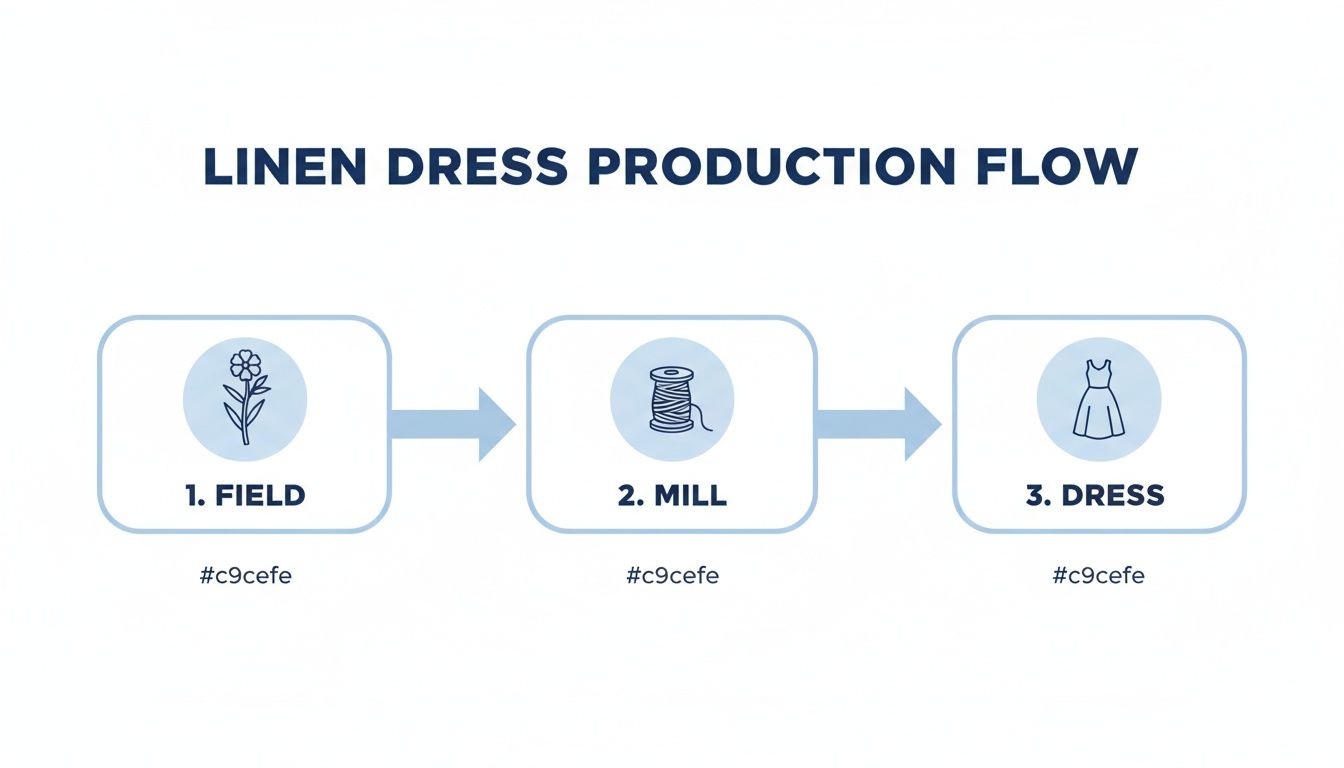
This process highlights the natural, hands-on craftsmanship that transforms a humble plant into a timeless garment.
A Conscious Choice for Your Wardrobe
Choosing a well-made linen dress is also a wonderfully conscious decision, particularly right now. As more of us become thoughtful about our purchases, the idea of investing in fewer, better things is really taking root. A durable, high-quality linen piece fits this philosophy perfectly, promising years of wear and enjoyment.
This shift towards mindful consumption is happening during a time of economic pressure. In the UK, the textile wholesaling industry has seen a downturn, with revenues projected to decline by 3.9% annually through 2026. This is largely because around 60% of adults are cutting back on non-essential spending. For women who value a seasonless wardrobe, this presents an opportunity to choose pieces that truly last.
Investing in a timeless linen dress from a thoughtful brand like The Lavender Lobster, known for its enduring natural fabrics, counters this trend. It prioritises longevity over fleeting fashion, ensuring your wardrobe is filled with pieces you'll treasure for years to come. You can explore more about these market dynamics and find additional insights into the UK textile industry.
Ultimately, understanding linen's personality means appreciating its blend of practical benefits and poetic imperfections. It's a fabric that doesn't just look good but feels good to wear and own, aligning with a more intentional and joyful way of living.
How to Style Your Linen Dress All Year Long
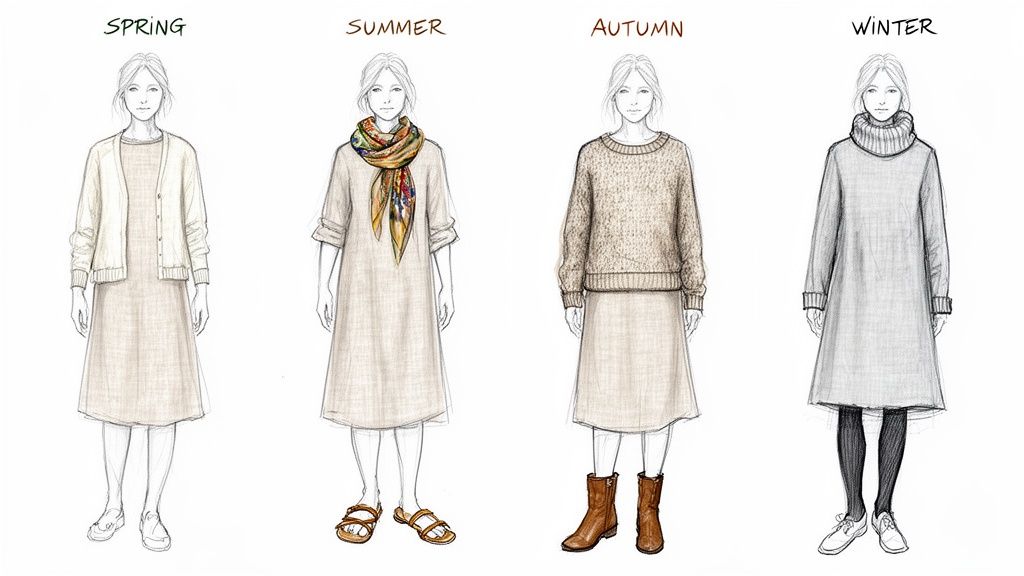
There’s a lovely misconception that a linen dress is purely a summer affair, something to be brought out only when the sun is high and the days are long. But that’s selling this wonderfully versatile piece far too short. Your favourite linen dress is a true chameleon, ready to reflect the mood and palette of every season.
With a little creative layering and some thoughtful accessories, this simple garment can journey with you from the first crisp days of spring to the deep quiet of winter. It isn’t about packing it away; it’s about seeing its potential anew.
Think of your linen dress as the constant, steady friend in your wardrobe. It’s not meant to hibernate. It’s meant to adapt, changing its character to match the light, the air, and the feeling of the world outside.
A Whimsical Spring Awakening
As the world reawakens and the first daffodils appear, your linen dress can emerge right alongside them. Spring styling is all about gentle layers, soft textures, and optimistic colours—creating an outfit that feels as fresh and hopeful as the first warm breeze.
A simple linen midi becomes the perfect foundation. Imagine it paired with a fine-knit cashmere or alpaca cardigan in a soft, chalky pastel. This adds just enough warmth for those brisk spring mornings without weighing down the dress’s natural breeziness.
To complete the look, consider these gentle additions:
- Footwear: Classic white trainers or simple leather loafers keep things grounded and comfortable for weekend wanderings.
- Accessories: A delicate silk scarf, tied loosely at the neck, can bring in a touch of pattern and timeless elegance.
- Outerwear: For those cooler, showery days, a classic trench coat is the perfect companion. Its structured silhouette is a beautiful contrast to the relaxed drape of the linen.
The Radiance of Summer Sun
Summer, of course, is when a linen dress truly shines. This is its moment—a celebration of effortless, sun-drenched style. The goal here is simplicity and lightness, letting the fabric’s incredible breathability do its work. It’s a season for minimal additions and maximum comfort.
A simple shift or a flowing maxi dress needs very little help. Pair it with strappy leather sandals and a woven straw tote for a look that feels just right, whether you’re at a bustling farmer’s market or walking a quiet coastal path.
The essence of summer styling is to let the linen breathe. Choose accessories that complement its natural, earthy texture rather than compete with it. A simple piece of jewellery or a beautifully woven hat is often all you need.
For a touch more polish, perhaps for an evening garden party, you can elevate the same dress with espadrille wedges and a simple clutch. To learn more about embracing linen’s natural elegance in warmer months, explore this essential summer linen style.
An Autumn Embrace of Cosy Textures
When the air turns crisp and the leaves begin their beautiful blush, it’s time to invite warmer, richer textures into the picture. Styling a linen dress for autumn is all about creating a layered look that feels both cosy and chic by pairing its lightness with more substantial fabrics.
A midi or knee-length linen dress makes a brilliant base. Try throwing a chunky-knit alpaca jumper over the top, allowing the hem of the dress to peek out from below. This mix of textures—the smooth, cool linen against the soft, warm wool—is wonderfully tactile and interesting.
To build your perfect autumnal outfit:
- Layering: A fine-gauge merino wool turtleneck worn underneath a sleeveless or short-sleeved linen dress is a surprisingly chic way to add warmth.
- Footwear: Swap your sandals for a pair of soft suede or leather ankle boots. A rich chestnut or deep tan works beautifully with linen’s natural tones.
- Outerwear: A long, tailored wool coat in camel or charcoal will keep you warm while adding a sophisticated finish to your entire look.
The Quiet Magic of Winter Layers
It might seem unconventional, but a linen dress can be a secret weapon in your winter wardrobe. The art here lies in clever, insulating layers that trap warmth without adding bulk. Your dress becomes a graceful mid-layer, adding structure and length to your ensemble.
Start with a warm foundation, like a pair of fleece-lined tights or leggings. Next, layer a thin, long-sleeved thermal top or a cashmere roll-neck underneath your dress. This creates a cosy base that locks in heat right from the start.
Finally, pull on your warmest outerwear—think a quilted down coat or a thick wool pea coat. Add a chunky scarf, a beanie, and insulated boots, and you’ll be perfectly snug. Your linen dress, nestled amongst the layers, adds a whisper of unexpected elegance to an otherwise practical winter outfit.
Caring For Linen Like a Lifelong Friend
Caring for a linen dress isn't a chore; it's a quiet ritual, an act of love for a garment that only gets better with you. Think of it like a cherished friendship. With a bit of tenderness, your dress will soften, its character deepening until it becomes part of your story.
This beautiful fabric doesn’t ask for much. In fact, its care is wonderfully simple, rooted in gentle methods that honour its natural origins. Forget harsh chemicals and aggressive cycles; the secret to keeping your linen lovely is a soft touch.
The Gentle Art of Washing
The most wonderful thing about linen is that it loves water. Unlike other materials that might weaken, linen fibres actually become stronger when wet. This is why a simple, gentle wash is its best friend, making it softer and more supple over time.
For your beloved linen dresses, a cool or lukewarm wash is ideal—around 30°C. It's warm enough to clean properly but gentle enough to protect the fibres and colour. Always opt for a mild detergent and a gentle cycle on your machine.
- Avoid Overcrowding: Give your dress plenty of room to dance in the drum. This prevents deep creasing and ensures an even, thorough clean.
- Separate Your Colours: Wash whites, darks, and coloured linens separately to keep their hues pure and bright.
- Consider Hand Washing: For a particularly delicate or treasured piece, a gentle hand wash in a basin of cool water is a lovely, meditative way to care for it.
Remember, linen is a natural fibre with a soul. Treat it with the same kindness you’d show a delicate wildflower, and it will reward you with years of beauty and comfort.
The Magic of Air Drying
If there’s one secret to perfect linen care, it’s this: step away from the tumble dryer. High heat is linen’s enemy; it can cause the natural fibres to become brittle and even shrink. Instead, embrace the simple, timeless magic of air drying.
Just give your dress a good shake after washing to smooth out the biggest wrinkles, then hang it on a padded hanger or a washing line. Drying it outdoors in a gentle breeze is the best way to let nature do the work, leaving your garment with a fresh, clean scent. If you’re drying it indoors, hang it in a well-ventilated room away from direct heat or sunlight.
To Iron or Not to Iron
And here we are, at the great linen debate. Should you iron it? The honest answer is: only if you want to. Part of linen’s charm is its relaxed, lived-in texture. Those gentle crumples aren't a flaw; they're a sign of a day well-lived.
If you do prefer a crisper look, the trick is to iron while the fabric is still slightly damp. Use a medium-hot iron and press gently. This will smooth the fibres without scorching them, leaving you with a beautifully neat finish. For extra protection, you can place a thin cloth between the iron and your dress. To go a bit deeper, you might find our complete guide on how to care for linen helpful.
For very delicate items or stubborn stains, you might consider professional linen cleaning to ensure your garment is handled with expert attention. Proper care ensures your linen dresses will join you on countless adventures for years to come.
How to Choose a Linen Dress You Will Treasure
Choosing a new linen dress should feel less like a transaction and more like discovering a future heirloom. It's a chance to shop with both your heart and your head, moving beyond fleeting trends to find a piece that truly resonates with you. Think of it as investing in quality and craftsmanship, creating a connection to a garment that will join you on countless adventures.
By learning to recognise the subtle markers of a well-made dress, you can make a choice that feels good, does good, and brings you lasting joy. It’s about finding that one perfect piece you’ll reach for year after year, a dress that grows softer and more personal with every single wear.
Decoding Quality Beyond the Price Tag
The true value of a linen dress isn't just in its price, but in the thoughtful details that promise it will last a lifetime. When you’re looking for your perfect match, let your senses guide you. High-quality linen has a lovely, substantial feel to it—it shouldn’t be flimsy or overly coarse to the touch.
To find a dress you'll truly treasure, look for these key indicators:
- Fabric Origin and Weave: European linen, particularly from Ireland or Belgium, is often considered the gold standard. This is thanks to a long history of excellent flax cultivation. Look for a consistent, even weave without any noticeable slubs or imperfections.
- Thoughtful Construction: Take a close look at the seams. French seams, where the raw edges are neatly tucked away and enclosed, are a beautiful sign of high-quality construction that prevents fraying and ensures the garment lasts.
- Finishing Details: Spend a moment inspecting the buttons, the buttonholes, and the hems. Are they secure? Are the stitches neat and even? These small, often overlooked, details speak volumes about the care that went into making the dress.
Conscious Ways to Shop for Your Linen Dress
In today’s world, how we shop can be just as meaningful as what we buy. The good news is that many brands are embracing more thoughtful ways of doing business, making it easier than ever to support practices that align with your values.
One such approach is the pre-order model. By ordering a dress before it's made, you help a brand produce exactly what’s needed, which dramatically reduces waste. It’s a beautifully simple idea—a quiet rebellion against the fast-fashion cycle of overproduction. Another wonderful option is renting, which lets you enjoy the whimsical charm of a beautiful linen dress for a special occasion without the long-term commitment. For more inspiration, you can discover a curated list of sustainable dress brands to know.
"Choosing a linen dress is an act of intention. It’s a commitment to a garment that embodies grace, sustainability, and a story waiting to be told."
The enduring appeal of linen is reflected all across the UK market. While we often associate it with apparel, bed linen actually holds a dominant 45.92% share of the home textile market, showcasing the fabric's deep-rooted popularity. Even as economic pressures affect spending, the natural, breathable qualities of linen continue to drive demand among conscious consumers who prioritise quality and longevity, whether for their homes or their wardrobes. You can discover more about these market trends and linen's role within them.
This parallel shows that investing in a high-quality linen dress is a choice that echoes a wider appreciation for durable, natural materials that stand the test of time. It's about empowering yourself with the knowledge to select a piece that feels both beautiful and responsible.
Your Linen Dress Questions Answered
Even the most devoted admirers of linen have questions. It’s a fabric with such a rich history and a personality all its own, after all. Think of this section as a friendly chat, answering some of the things we often hear people wonder about.
We’ve gathered these little curiosities to offer clear, simple answers, hoping to help you feel even more confident and joyful in your choice to wear linen. Let’s unravel these mysteries together.
Will My Linen Dress Shrink When I Wash It?
This is a very common concern, and a fair one! The short answer is that high-quality, pre-washed linen should experience very minimal shrinkage.
To be on the safe side, always follow the care instructions on the label. We recommend a gentle, cool wash and steering clear of the high heat of a tumble dryer. Air drying on a line, with a gentle breeze as its partner, is linen's best friend. This gentle approach not only prevents shrinking but also helps your dress last for many seasons, becoming softer and more lovely with each wash.
Is Linen Suitable for Formal Occasions?
It absolutely can be. Linen possesses a wonderful versatility that can dance between worlds. While its relaxed texture is perfect for a casual Saturday, a beautifully cut linen dress can be styled wonderfully for more formal events. The key lies in the silhouette and your accessories.
A structured midi or maxi linen dress paired with elegant heels, delicate jewellery, and a smart clutch can look incredibly chic. Think of the dress as your canvas; it's perfect for countryside weddings, garden parties, or an elegant evening dinner.
Are Linen Dresses a Sustainable Choice?
Yes, linen is one of the most sustainable fabrics available today. It comes from the flax plant, which requires far less water and pesticides to grow than something like cotton. Better yet, the entire plant can be used, leaving behind minimal waste.
Linen is also naturally durable and completely biodegradable. By choosing a high-quality linen dress and caring for it properly, you’re investing in a piece that can last for decades—the very cornerstone of a conscious wardrobe. It’s a choice that’s truly kinder to our planet.