

A Guide to Sustainable Dress Brands Weaving Whimsy and Worth
Choosing a sustainable dress brand is about more than just a passing trend; it’s a quiet, enchanting shift toward fashion that’s kinder to the planet and its people. This guide is your map to exploring this inspiring world, helping you move beyond fleeting styles to build a wardrobe you can truly cherish, like a collection of captured daydreams.
The Allure of Conscious Fashion
Think of your wardrobe as a secret garden. For it to truly flourish, it needs more than just a quick watering; it needs patience, respect for nature, and thoughtful cultivation. This is the heart of conscious fashion—a movement away from disposable pieces and towards clothes that tell a story of care.
The journey into the world of sustainable dress brands is about discovering garments that aren't just worn, but are woven with purpose. It’s an invitation to connect with your clothing on a deeper level, to understand its story from the very first fibre to the final, magical stitch.
A New Chapter in Your Style Story
Choosing a sustainable dress is a bit like planting a perennial instead of an annual. Fast fashion offers a quick burst of colour that fades after one season, but consciously made garments are designed to grow with you, becoming more beloved over time. It’s a philosophy that completely reshapes our relationship with clothing, encouraging us to value:
- Timelessness Over Trends: Focusing on classic silhouettes and beautiful construction ensures your dress remains a favourite for years, not just weeks.
- Quality Over Quantity: Investing in fewer, better pieces reduces clutter and waste, leaving you with a more curated and meaningful collection.
- Connection Over Consumption: Supporting brands with transparent practices fosters a real connection to the artisans and the natural materials behind your clothes.
Consider this guide your enchanted compass for navigating this beautiful and rewarding landscape. It's designed to help you distinguish the genuinely-rooted brands from the flimsy imitations.
By the end, you'll feel empowered to find pieces that not only look beautiful but also resonate deeply with your values, turning your wardrobe into a true reflection of conscious elegance.
Ultimately, this is about more than just buying a dress. It’s about joining in on a whimsical, yet powerful, idea: that our clothes can be a force for good, carrying stories of intention, artistry, and respect. Let's begin this enchanting journey together, one thoughtfully chosen dress at a time.
What Makes a Dress Brand Truly Sustainable?
The word ‘sustainable’ is scattered across the fashion world like wildflower seeds, but not everything that’s planted truly blooms. So, what transforms a simple dress into a real testament to sustainability? It’s not just about using organic cotton; it’s about embracing a completely different philosophy from the seed in the ground to the final seam, and even what happens after you take it home.
Imagine a truly sustainable dress not as a product, but as a miniature, thriving ecosystem. This little world is built on a few core principles that have to work in harmony. It starts with healthy soil (the materials), is nurtured by skilled and respected hands (the makers), and is designed with the resilience to flourish for many seasons (its longevity).
This approach goes far beyond a simple checklist. It’s a holistic view that considers the entire life of a garment. A genuinely sustainable dress brand doesn’t just ask, "What is this made of?" but also, "Who made this, and how can we ensure this piece has a long and happy life?"
The Three Pillars of a Conscious Brand
To really get to the heart of what makes a brand sustainable, we can look at three foundational pillars. These elements are all connected, and a brand’s commitment to all three is what separates the authentic from the aspirational. A weakness in one pillar can cause the whole structure to wobble.
- Environmental Impact: This is all about treading lightly on the earth. It covers everything from the water used to grow fibres to the dyes that colour the fabric and the carbon footprint of shipping that final dress to your door.
- Social Responsibility: This pillar focuses on people. It’s about ensuring every single person involved in creating the dress, from the farmer to the seamstress, is treated with dignity, paid a fair wage, and works in safe conditions.
- Circular Design: This is the magical, forward-thinking part. It’s about designing waste out of the system from the very beginning. It means creating dresses that are made to last, can be repaired, and, at the very end of their long life, can return to the earth without causing harm.
A brand might use a lovely organic fabric, but if its workers are underpaid, it isn't truly sustainable. In the same way, a brand paying fair wages but using toxic dyes that pollute rivers is missing a crucial part of the picture. True sustainability is the delicate balance of all three. You can learn more about how we work to integrate these pillars by exploring our commitment to sustainability.
Beyond the Buzzwords
When we drill down a bit deeper, we find that these pillars are supported by tangible actions and real commitments. These are the details that give the word 'sustainability' its proper meaning and power.
For instance, environmental impact isn't just a vague concept. It involves very specific choices.
A sustainable dress brand prioritises materials like organic linen or cotton, which require significantly less water and no synthetic pesticides compared to their conventional counterparts. This choice alone can reduce a garment's water footprint by up to 91%.
Furthermore, social responsibility means radical transparency. It’s the willingness to share stories from the factory floor and prove that ethical claims are backed by fair practices. It’s about seeing garment workers not as a line item on a budget but as skilled artisans and partners in the creative process.
Finally, circularity is where whimsy meets practicality. It’s the art of creating a dress so timeless and well-made that it sidesteps the frantic cycle of trends entirely. A sustainable dress brand designs for longevity, encouraging a world where clothes are cherished, mended, and passed down rather than discarded after a few wears. This thoughtful, soulful approach is the very heart of conscious fashion.
How to Evaluate a Sustainable Dress Brand
With so many brands calling themselves conscious or sustainable, it can feel like wandering through a delightful but confusing secret garden. How do you tell the deeply-rooted perennial from the fleeting annual? Learning to spot the difference is easier than you think. It's not about being a detective, but about learning to read the story a garment tells.
Once you know what to look for, you stop seeing just a pretty dress. You start to see a story—one of healthy soils, skilled hands, and thoughtful design that's meant to last. This little guide will help you ask the right questions, so you can peer behind the marketing and find the brands that are truly committed to a better way of making clothes.
The Story of the Fabric
The first chapter of any garment’s story begins with its materials. The fabric is the very soul of a dress, and its origins tell you a huge amount about a brand's priorities. A truly sustainable brand treats its fabrics like precious ingredients, choosing them for their quality, purity, and gentle impact on the earth.
This means favouring natural, renewable fibres that can one day return to the soil. You’ll often find them championing materials like:
- Organic Cotton: Grown without synthetic pesticides and fertilisers, it uses far less water than its conventional cousin.
- Linen: Crafted from the flax plant, this wonderfully breezy fabric is resilient, needs minimal water to grow, and is naturally biodegradable.
- Hemp: A famously robust and fast-growing plant that actually enriches the soil it grows in.
In contrast, fast fashion often relies on synthetic fabrics like polyester and nylon, which are derived from petroleum. While recycled synthetics are a step in the right direction, they still shed microplastics with every wash. A brand’s material choice is one of the clearest signals of its environmental heart.
This focus on natural and recycled materials is becoming more than a niche preference; it's driving real market change. The UK sustainable fashion market, valued at USD 596.94 million in 2024, is projected to grow to an incredible USD 3,285.57 million by 2033. This growth shows a major shift as UK consumers actively seek alternatives to fast fashion, an industry responsible for 10% of global carbon emissions and 92 million tonnes of textile waste each year.
The Hands That Made the Garment
Once you know the fabric's story, the next chapter is about the people who brought it to life. A truly sustainable brand is built on a foundation of respect, ensuring that every person in its supply chain is treated with fairness and dignity. It’s about honouring the artistry and skill of garment workers, not exploiting them.
Transparency is key here. Brands that are proud of their ethical practices will be open about them. They’ll share stories from their workshops, introduce their artisans, and provide evidence of fair wages and safe working conditions.
Look for certifications like Fair Trade, which guarantee workers are paid a living wage. If a brand is quiet about who makes its clothes, it's worth asking why. True sustainability celebrates the human element of fashion, viewing artisans as partners, not just cogs in a machine.
This decision tree shows the core pillars to consider when looking at a sustainable dress brand, focusing on materials, labour, and overall design philosophy.
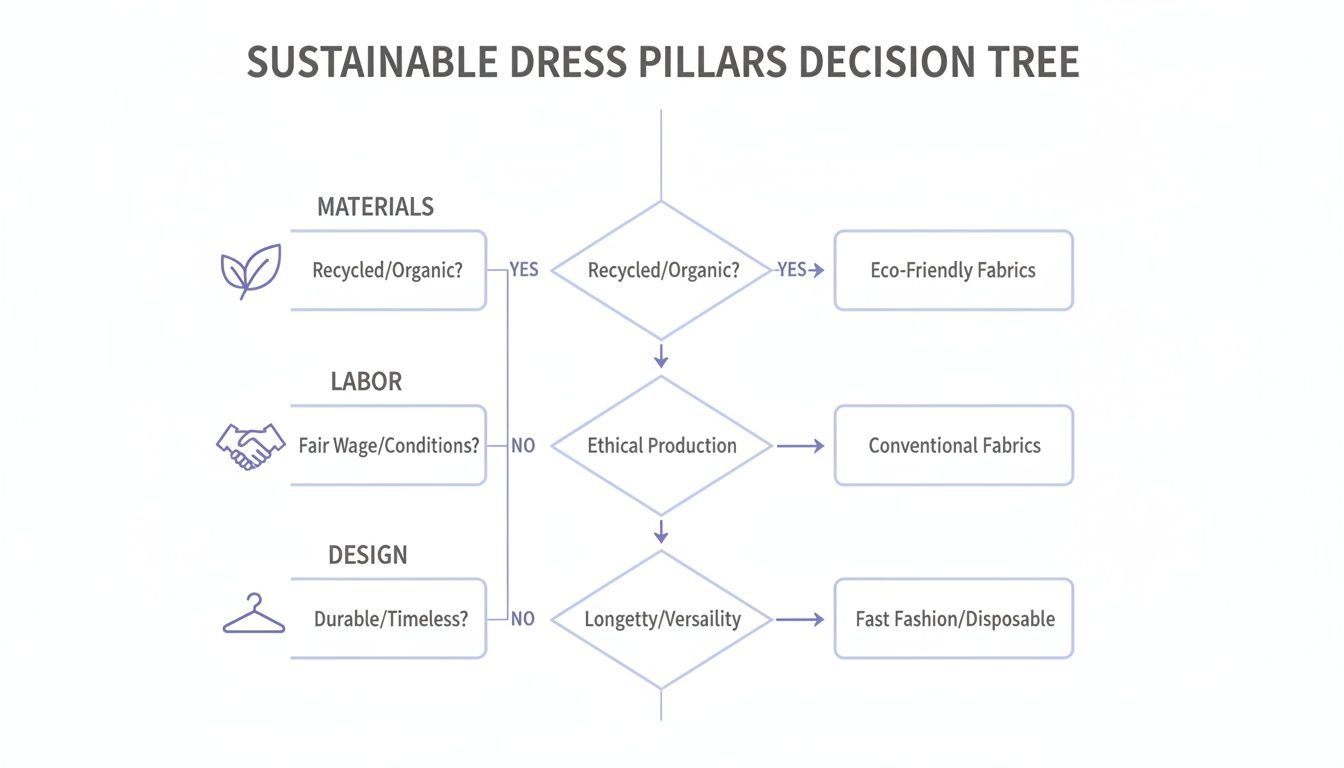
The infographic simplifies the process, guiding you to check for natural materials, fair labour practices, and a timeless design ethos as the foundations of a genuinely conscious brand.
A Design Philosophy of Longevity
The final, and perhaps most important, piece of the puzzle is the brand’s design philosophy. Sustainable brands aren’t interested in fleeting trends that are here today and in a landfill tomorrow. They design clothes to be loved and lived in for years, becoming part of your personal story. This is the heart of slow fashion, an idea you can explore further in our guide on what slow fashion is and why it matters.
This means focusing on:
- Timeless Silhouettes: Creating classic, versatile shapes that won't feel dated next season.
- Quality Construction: Using durable stitching and finishing techniques so the garment can withstand countless wears and washes.
- Thoughtful Details: Adding elements that enhance both beauty and practicality, making the dress a joy to wear again and again.
This approach views a dress not as a disposable item but as a future heirloom. It’s a commitment to creating something so beautiful and well-made that you'll want to mend it, care for it, and perhaps one day, pass it on. This is where sustainability and true style meet.
The End of the Story and a New Beginning
A conscious brand also thinks about a garment's final chapter. What happens when a dress reaches the end of its long and happy life? Forward-thinking brands have a plan for this. They embrace circularity, designing waste out of the system entirely.
This can mean offering repair programmes to extend a garment's life, take-back schemes that repurpose old clothing, or using materials that are fully biodegradable and can return to the earth. It's a beautiful, holistic vision where nothing is wasted.
To help you see the differences clearly, here is a simple comparison of the two approaches.
Sustainable Brand vs Fast Fashion: A Quick Comparison
This table highlights the fundamental differences in philosophy between a brand committed to sustainability and one built for disposability.
| Evaluation Criteria | Sustainable Brand Approach | Fast Fashion Approach |
|---|---|---|
| Materials | Prioritises natural, organic, or recycled fibres with low environmental impact. | Relies heavily on cheap, virgin synthetics like polyester and nylon. |
| Labour | Transparent about its supply chain, ensuring fair wages and safe conditions. | Often lacks transparency, with a focus on minimising labour costs. |
| Design | Focuses on timeless, durable designs intended for long-term wear. | Chases micro-trends, producing low-quality items for short-term use. |
| End-of-Life | Offers repair, take-back, or recycling programmes and uses biodegradable materials. | Has no plan for garment end-of-life, contributing directly to landfill waste. |
Ultimately, choosing a sustainable dress brand is about investing in quality, ethics, and a story you’re proud to wear. It’s a shift from consuming fashion to curating a wardrobe that truly reflects your values.
Cultivating Your Own Conscious Wardrobe
Choosing a dress from a sustainable brand is a wonderful first step, but the real magic happens once you bring that piece home. Building a truly conscious wardrobe has less to do with shopping and more to do with tending a garden. It’s about cultivating a personal collection of cherished pieces, where each one is chosen with intention and cared for with love.
This shift in thinking turns you from a consumer into a curator. It’s a whimsical yet powerful idea: your wardrobe can become a sanctuary of pieces that outlive fleeting trends, each one holding a story. This isn't about restriction; it's about finding a deeper joy in the clothes you already own and the few you thoughtfully add.
And the good news is, this mindful approach is gaining serious traction. The UK sustainable fashion market was valued at USD 261.04 million in 2024 and is expected to grow to an incredible USD 1,757.42 million by 2033. This surge is powered by people like you seeking out ethical, eco-friendly clothes. You can discover more insights on the UK's sustainable fashion market and its impressive trajectory.
The Art of the Seasonless Wardrobe
The most sustainable piece of clothing is the one you wear over and over again. A seasonless wardrobe is a collection of high-quality, versatile pieces that work beautifully across different times of the year, freeing you from the relentless cycle of trends. Think of a beautifully cut linen dress that’s perfect for a summer picnic but can be layered with a woolly cardigan and boots for an autumn walk.
Creating this kind of collection means asking different questions when you shop. Instead of asking, "Is this in style right now?" you start to ask:
- Can I style this in at least three different ways? A truly versatile piece can be dressed up or down with ease.
- Will I still love this in five years? Focus on classic silhouettes, beautiful fabrics, and colours that make you feel wonderful.
- Does this fit my life and my personal style? Your wardrobe should be a true reflection of you, not a temporary costume.
This thoughtful process means you buy less, but you love what you buy so much more. Each piece earns its place, becoming a trusted friend rather than a fleeting acquaintance.
Exploring New Ways to Refresh Your Style
Cultivating a conscious wardrobe doesn't mean you can never enjoy something new. It simply opens up more creative and sustainable ways to refresh your style beyond the traditional checkout. These alternatives are not just better for the planet; they reduce waste and often support innovative sustainable dress brands.
Supporting brands with pre-order models is a powerful choice. This flips the traditional fashion system on its head by producing only what is ordered, completely eliminating the problem of overproduction and unsold inventory that often ends up in landfill.
Clothing rental services also offer a brilliant way to experiment with new looks for special occasions without the commitment of ownership. It’s like having access to a magical, endless wardrobe—perfect for weddings, parties, or simply trying a bold style you're curious about. It’s all the fun, with none of the long-term clutter.
The Gentle Art of Garment Care
Extending the life of your clothes is one of the most significant sustainable acts you can perform. Proper care is a form of respect for the materials and the artisans who created your garment. It’s a gentle ritual that can dramatically increase how long your cherished pieces last.
Small changes in your laundry routine can make a huge difference. Washing clothes in cold water, for instance, not only protects the fibres but also saves a surprising amount of energy. Air-drying your clothes instead of using a tumble dryer is much kinder to the fabric and reduces your carbon footprint even further.
Learning simple mending skills, like sewing on a button or fixing a small tear, is another wonderfully empowering act. It turns a potential discard into a story of care and renewal, adding character to your garment. For specific materials, understanding the nuances of proper care is key. You can find detailed guidance in our article on how to properly care for linen to keep it beautiful for years.
Ultimately, this relationship with your wardrobe becomes a source of profound satisfaction. It’s a move away from the frantic pace of consumption and towards a slower, more intentional way of living and dressing—one cherished, well-cared-for garment at a time.
Navigating Greenwashing and Marketing Claims
In the world of sustainable fashion, words can be enchanting. Brands often whisper sweet nothings about being ‘eco-friendly’ or ‘conscious’, but how can you tell a real commitment from a clever marketing spell? This is the art of spotting greenwashing, and it’s a bit like learning to tell a real wildflower from a very convincing plastic one.
Greenwashing is what happens when a brand spends more time and money telling you it’s sustainable than it does on actually being sustainable. It’s the fashion equivalent of a beautifully decorated cake that’s disappointingly hollow inside. Learning to see through these claims is empowering; it helps you put your support behind brands with true integrity.
The practice can be surprisingly subtle. It might be a brand shining a huge spotlight on a tiny ‘conscious collection’ made from organic cotton, while the other 95% of its business churns out polluting, throwaway clothes. Or it could just be the use of vague, feel-good words like ‘green’ or ‘earth-friendly’ without a single fact to back them up.
Decoding the Language of Sustainability
To become a confident navigator, you need a compass. Your best tool is a healthy dose of curiosity and a refusal to take vague marketing claims at face value. A truly sustainable brand isn’t afraid of your questions; in fact, it welcomes them.
Here are a few common greenwashing tactics to watch for:
- Vague and Fluffy Language: Phrases like "made with love for the planet" sound lovely, but they mean very little. Look for the specifics. How is it better for the planet? Which materials are used?
- The Hidden Trade-Off: This is when a brand boasts about one positive thing while ignoring a host of negative ones. A dress made from recycled polyester is a step up from virgin polyester, but what about the microplastics it sheds with every wash? A truly honest brand will talk about the whole picture.
- Lack of Proof: Any brand can call itself sustainable. The ones that mean it will show you the receipts. This means sharing certifications (like GOTS or Fair Trade), details about their supply chain, and measurable data on their impact.
A brand's transparency is its most telling feature. If information about their factories, wages, and material sourcing is hard to find, it’s often a sign that there’s something they’d rather you didn’t see. True sustainability isn't a secret.
This growing demand for honesty is powerfully reshaping the industry. Consumer demand for ethical fashion in the UK is leading to major market shifts, with natural fibres like cotton and wool dominating in 2024. With over 64% of Gen Z shoppers now actively choosing sustainable brands, the pressure is on for real change. You can explore more about this trend in the UK sustainable fashion market.
The Cost Versus Value Conundrum
One of the biggest hurdles when exploring sustainable dress brands is often the price. Why does a thoughtfully made dress cost so much more than its fast-fashion counterpart? The answer lies in shifting our mindset from 'cost' to 'value'.
The low price of a fast-fashion item is a direct result of cutting corners somewhere important—paying garment workers unfairly, using cheap and polluting materials, or skipping quality construction. The true cost is simply hidden, paid by the planet and the people who made the clothes.
A sustainably made dress, on the other hand, reflects the real cost of quality and care. That price tag includes fair wages for skilled makers, premium eco-friendly fabrics that feel beautiful against your skin, and meticulous construction designed to last for years, not just a season.
Instead of just looking at the initial price, think about the cost-per-wear. A £30 fast-fashion dress that falls apart after five washes has a cost-per-wear of £6. But a beautifully made £150 dress from a sustainable brand that you wear 50 times over several years? Its cost-per-wear is just £3.
This simple bit of maths reveals that investing in quality isn't just an ethical choice; it's often a more economical one in the long run. It’s a move towards a wardrobe filled with cherished pieces that bring you lasting joy and timeless style—and that’s the most valuable asset of all.
A Legacy of Timeless Style
As we reach the end of our journey into the world of conscious fashion, all the threads we’ve explored weave together into a beautiful, coherent story. Choosing a dress from a thoughtful brand is so much more than a simple purchase; it’s a quiet, powerful vote for a healthier planet and a more compassionate way of making clothes.
It's about embracing the simple yet profound idea that our clothes can carry stories. Not tales of fleeting trends, but of genuine care—for the soil that grew the fibres, for the skilled artisans who stitched the seams, and for the personal style you cultivate with every piece you decide to cherish. This philosophy transforms your wardrobe from a collection of items into a living, breathing part of your life.
Building a Wardrobe with Heart
When you choose a dress made with intention, you’re stepping away from the endless cycle of disposability. You are curating a collection filled not with momentary whims, but with pieces that hold real meaning and are built to last. It’s a joyful act of rebellion against the pressure to constantly consume, turning instead toward the deep satisfaction that comes from quality and longevity.
Imagine your wardrobe as a book of your favourite stories, where each dress is a cherished chapter. This perspective brings a new sense of empowerment and optimism to the simple act of getting dressed each day.
Choosing a sustainable dress is an act of self-love and world-love, intertwined. It’s a declaration that beauty and responsibility can, and should, dance together in perfect harmony.
This shift doesn’t happen overnight. It’s a gentle, deliberate process of falling in love with your clothes all over again. It’s about finding the magic in a well-made garment and the confidence that comes from knowing its story is one you are proud to wear and share.
The ultimate message is one of hopeful action. By making conscious choices, you contribute to a more beautiful and responsible fashion landscape. You are not just buying a dress; you are investing in a future where style and substance coexist, building a legacy of timeless elegance, one cherished piece at a time.
A Few Lingering Questions
Dipping your toes into the world of sustainable fashion often brings up a few questions. Let's sit down with a cup of tea and chat through some of the common thoughts that come up, so you can feel completely confident on your journey.
Are Sustainable Dresses Really More Expensive?
That higher price tag can feel a bit daunting at first, but it’s worth looking at it a little differently. Instead of just the initial price, think about the ‘cost-per-wear’.
A beautifully made dress from a conscious brand is designed for a long and happy life in your wardrobe. It often works out to be far more economical than buying several fast-fashion pieces that wilt after just a few washes. That price reflects fair wages for artisans, gorgeous eco-friendly materials, and quality construction that lasts—it's an investment in a better, kinder way of doing things.
What Is the Most Important Thing to Look For?
If you could only focus on one thing, let it be transparency. A truly sustainable brand isn't hiding anything; it throws open its doors and invites you to see how things are made.
It will openly share details about its supply chain, the origins of its materials, and its manufacturing process. A lack of specific information is often a red flag for greenwashing, while honesty—even about the areas they’re still working to improve—is a sign of genuine commitment.
A brand that tells its full story, including the parts it's still working on, is one you can trust. It shows they are on a real journey, not just putting on a show.
Can a Polyester Dress Ever Be Sustainable?
Now, this is a tricky one. Virgin polyester is a petroleum-based plastic, so it's not a sustainable choice by any measure.
However, you might see brands using recycled polyester (rPET), which is often made from old plastic bottles. This is a much better alternative, as it diverts waste from landfills and gives it a new life. The catch? It still sheds tiny microplastics when you wash it, which can pollute our waterways. For now, beautiful natural fibres like organic cotton or linen remain the most earth-kind choice for your wardrobe.
Built with Outrank tool