

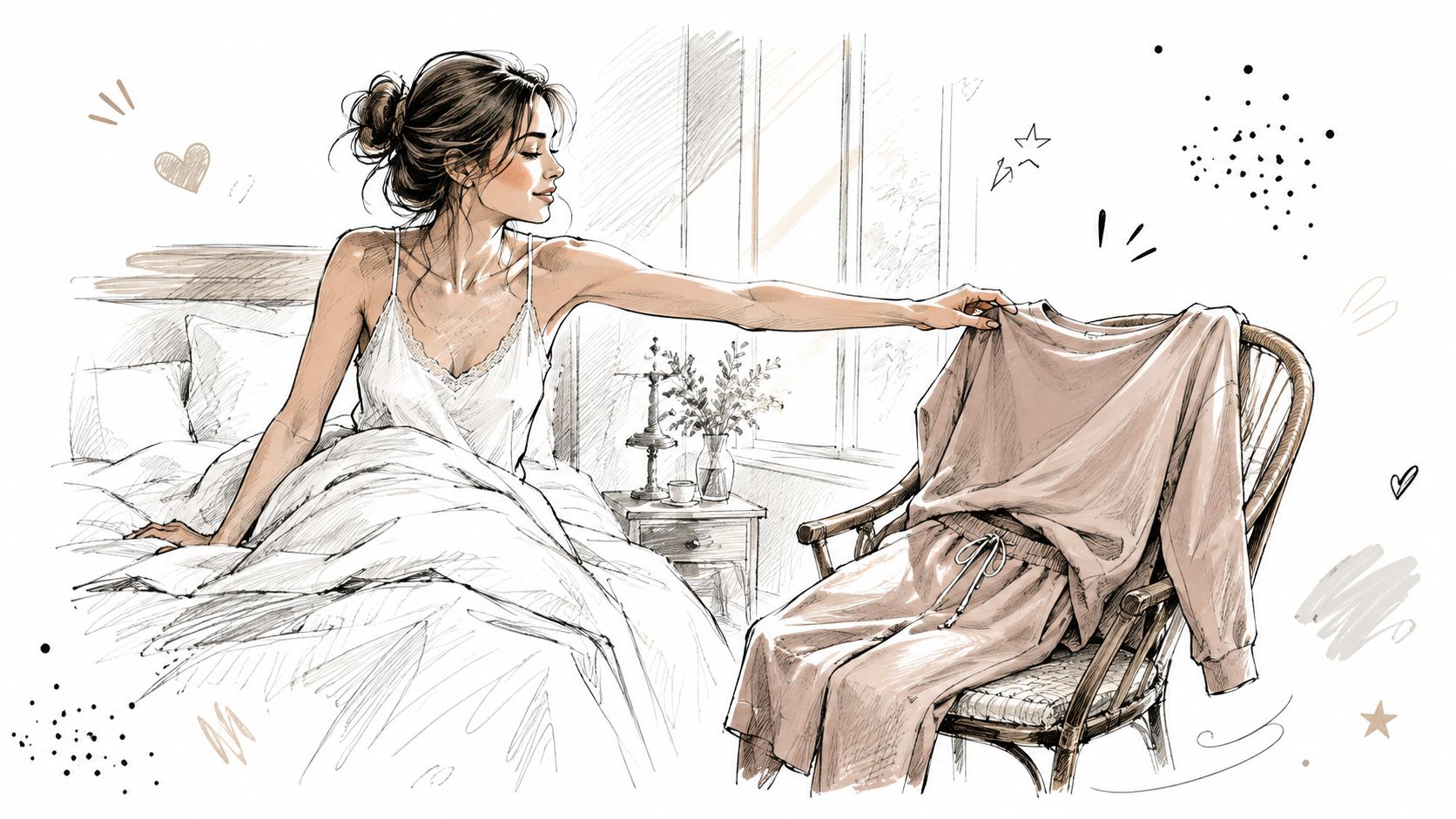
The day begins with a small wardrobe negotiation. Your alarm rings, the kettle mutters in the kitchen, and the matching set draped over the chair looks far more appealing than jeans with a stubborn waistband. You pull it on for coffee, keep it on for the school run, then add a coat before stepping out for an afternoon errand. Somewhere between the sofa and the front door, loungewear has become your uniform.
The useful question isn't whether women should wear loungewear outside the house. It's which loungewear sets for women can earn a permanent place in a seasonless wardrobe, feeling soft at home while still looking considered in public. The answer lives in fabric, fit, care, and the charming little details that make comfort feel like a choice rather than surrender.
Why Loungewear Has Become Your Daily Uniform
At eight in the morning, a matching set can seem like a kindness from your future self. The top doesn't need negotiating, the trousers move when you move, and the colours already belong together. Add trainers and a wool coat, and the same outfit can carry you to the post office without announcing that you dressed beside a pile of laundry.
That shift reflects real changes in how women use their wardrobes. A 2024 survey of 1,000 people found that 80% of Britons wear loungewear more often than conventional clothes, averaging 3.5 days per week, or about 182 days a year. That works out at roughly half the year, which makes a loungewear set less like an occasional treat and more like a frequently used garment. The survey reported by FashionUnited also found that women spend 52 more days per year in loungewear than men, a clear signal that comfort-led dressing has particular weight in the UK women's market.
The wardrobe maths of everyday comfort
A set worn for lounging, travel, errands, and hybrid work needs more from its construction than a set reserved for Sunday mornings. The waistband should stay comfortable through a long day. The fabric should recover after sitting. The top should sit neatly beneath a cardigan or coat, and the colour should cooperate with shoes, scarves, and outerwear already in your wardrobe.
Quality becomes practical rather than precious. A well-made set can reduce the morning scramble because its pieces already form an outfit, while separate trousers and tops can work with other garments. Look for relaxed movement, dependable fit, and a finish that survives repeated wear, not decorative details that only look exciting in a product photograph.
For a useful primer on choosing cuts, waistbands, and everyday comfort, these women's loungewear tips offer a helpful starting point. Then ask yourself where your own set must travel. If it only needs to reach the reading chair, softness may lead. If it needs to handle a nursery pick-up or train journey, structure and layering matter just as much.
A matching set is a tiny wardrobe system. Treat it that way, and the sofa becomes its first destination, not its final address.
Choosing Fabrics That Feel Like a Gentle Hug
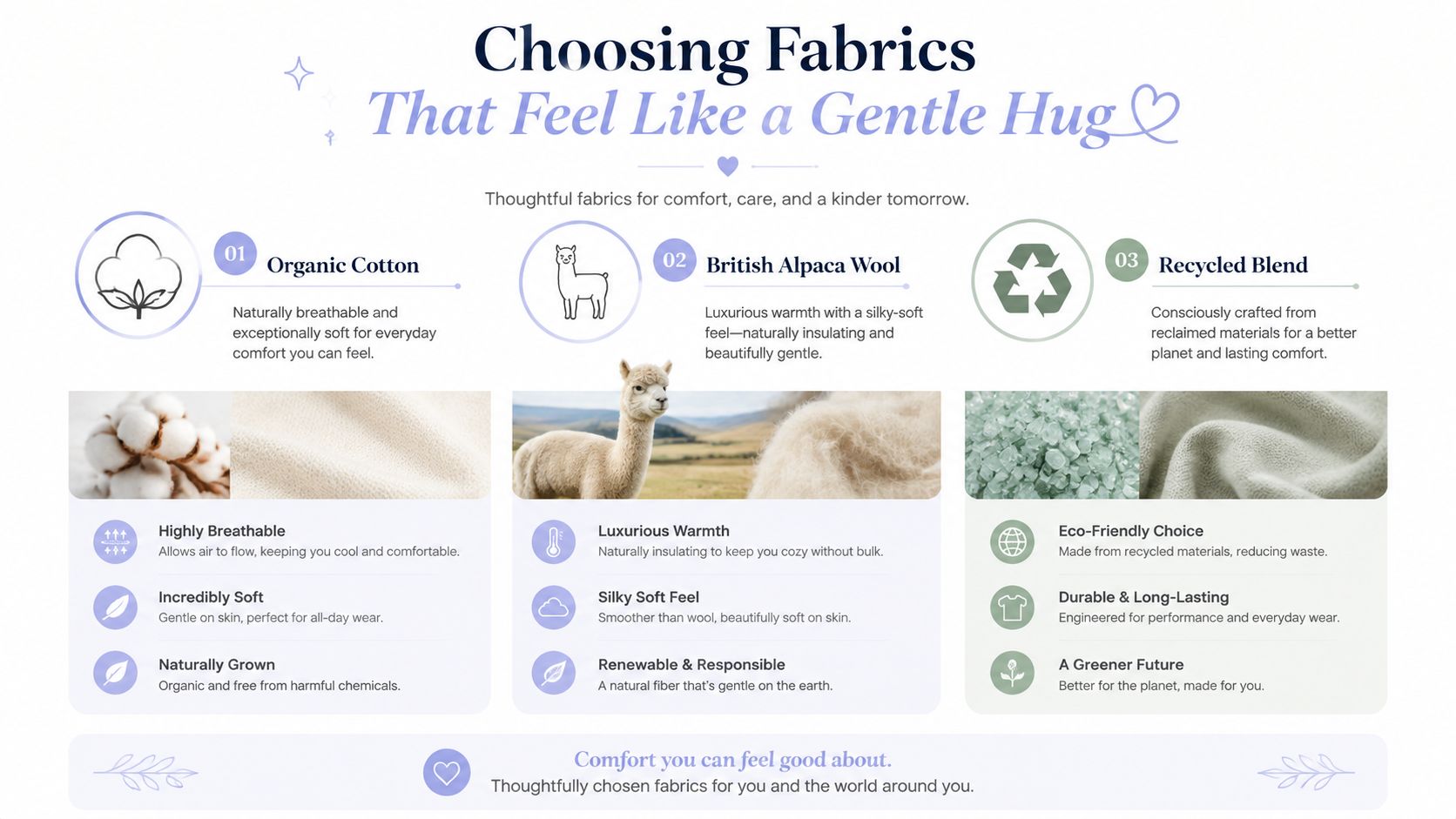
Fabric makes the first impression on your skin, but it also determines how a set behaves during the day. Organic cotton can feel crisp, breathable, or brushed depending on its construction. Alpaca wool brings a floating warmth that suits cooler rooms and brisk walks. A recycled blend may offer useful resilience, especially where repeated movement and washing would test a delicate fibre.
Textile comfort research connects fabric mass, thickness, density, and air permeability with thermal and moisture-related outcomes, including water vapour permeability, water vapour resistance, and thermal resistance. The practical lesson is simple: fabric isn't just a mood. Its construction affects whether you feel fresh, cosy, overheated, or clammy. The textile comfort research available through CORE supports matching knit structure and fibre blends to both season and setting.
Let the season choose the texture
For summer, warm homes, or anyone who runs hot, a lighter and more open construction can help air move around the body and reduce heat build-up. Organic cotton is a natural choice for this role because it can feel soft against the skin while remaining easy to wear for sleep, lounging, and daytime errands. A fine jersey may feel fluid and forgiving, while a lighter woven cotton can look more polished with a structured jacket.
Winter asks for a different kind of comfort. Denser knits hold more warmth, although they can also retain moisture if the wearer becomes too warm. British alpaca wool suits the person who wants luxurious insulation without a heavy, cumbersome feel. The Lavender Lobster uses British alpaca wool in pieces such as its Sailor Scarf, giving the fibre a place in a wider wardrobe of natural textures rather than treating warmth as a purely indoor requirement.
Thoughtful blends sit between softness and durability. Recycled fibres can bring an eco-minded perspective, but always consider the actual hand feel, breathability, care label, and intended use. A blend designed for movement may be more useful than a fragile fabric that feels beautiful for ten minutes and fussy for the rest of the day.
Fabric rule: Choose the lightest construction that keeps you comfortable in the setting where you'll wear the set most.
Sensitive skin deserves its own attention. Seams, dyes, finishes, and fibre texture all matter, so the guide to fabrics for sensitive skin can help you inspect a garment beyond the charming colour on the label.
Even small household details can carry this tactile, leisurely spirit. The Clubhouse Cocktail Napkins | Set of 4 are made from 100% flax linen in a pale blue plain weave with a red stitched border, each featuring a whimsical Lavender Lobster Club scene. It's a reminder that natural fabric can bring atmosphere to everyday rituals, whether the ritual is morning tea or an evening curled beneath a blanket.
Finding the Perfect Fit and Flattering Silhouette
A comfortable set shouldn't disappear into shapelessness. It should give your body room to move while offering enough intention that you still recognise an outfit when you catch your reflection in the hallway mirror.
Start with the job the set must perform. For sleep and slow mornings, a fluid top and generous trouser can feel wonderfully unrestrictive. For travel or hybrid work, choose a shoulder line that sits cleanly under outerwear and a trouser leg that falls rather than clings. A softly oversized cut can look elegant when the fabric drapes well, but oversized everywhere may become visually heavy.
Use proportion as your quiet styling tool
If the top is roomy, a straighter or gently tapered bottom can create balance. If the trousers are wide and fluid, a closer-fitting vest or neat knit can keep the silhouette from becoming a floating fabric cloud. Ribbed textures add visual structure without requiring sharp tailoring, while neutral colours make it easier to separate the pieces and wear them with denim, a blazer, or a long coat.
Seam placement deserves attention because comfort often fails in small places. Check whether the side seams sit where your arms or thighs will rub, whether the crotch allows a full stride, and whether cuffs press against your wrists or ankles. Low-friction construction helps a set feel natural during long periods of sitting, walking, and stretching.
Read the garment before you read the trend
Measure yourself according to the brand's size guide rather than assuming your usual label will behave consistently. Compare the garment measurements with a favourite piece you already own, especially at the waist, hip, rise, and sleeve. If the fabric has stretch, ask whether it recovers after movement. Stretch that only feels generous in the fitting room can become sagging after repeated wear.
Look closely at the waistband. A broad, stable band may distribute pressure more comfortably than a narrow elastic strip. Check hems, ribbing, button finishes, and pocket openings. These details won't shout from across the room, but they decide whether a set remains polished after it has accompanied you through many ordinary days.
A seasonless palette can do much of the flattering work. Cream, navy, soft grey, muted blue, and gentle lavender tend to partner easily with existing layers, while a playful embroidered detail or unusual button can add personality without making the whole set feel tied to one fleeting trend.
Why Sustainability Matters in Your Loungewear Drawer
A loungewear set spends intimate time with you. It rests against your skin, follows you through repeated washes, and can become the garment you reach for when everything else feels too demanding. That makes durability a sustainability decision, not merely a quality preference.
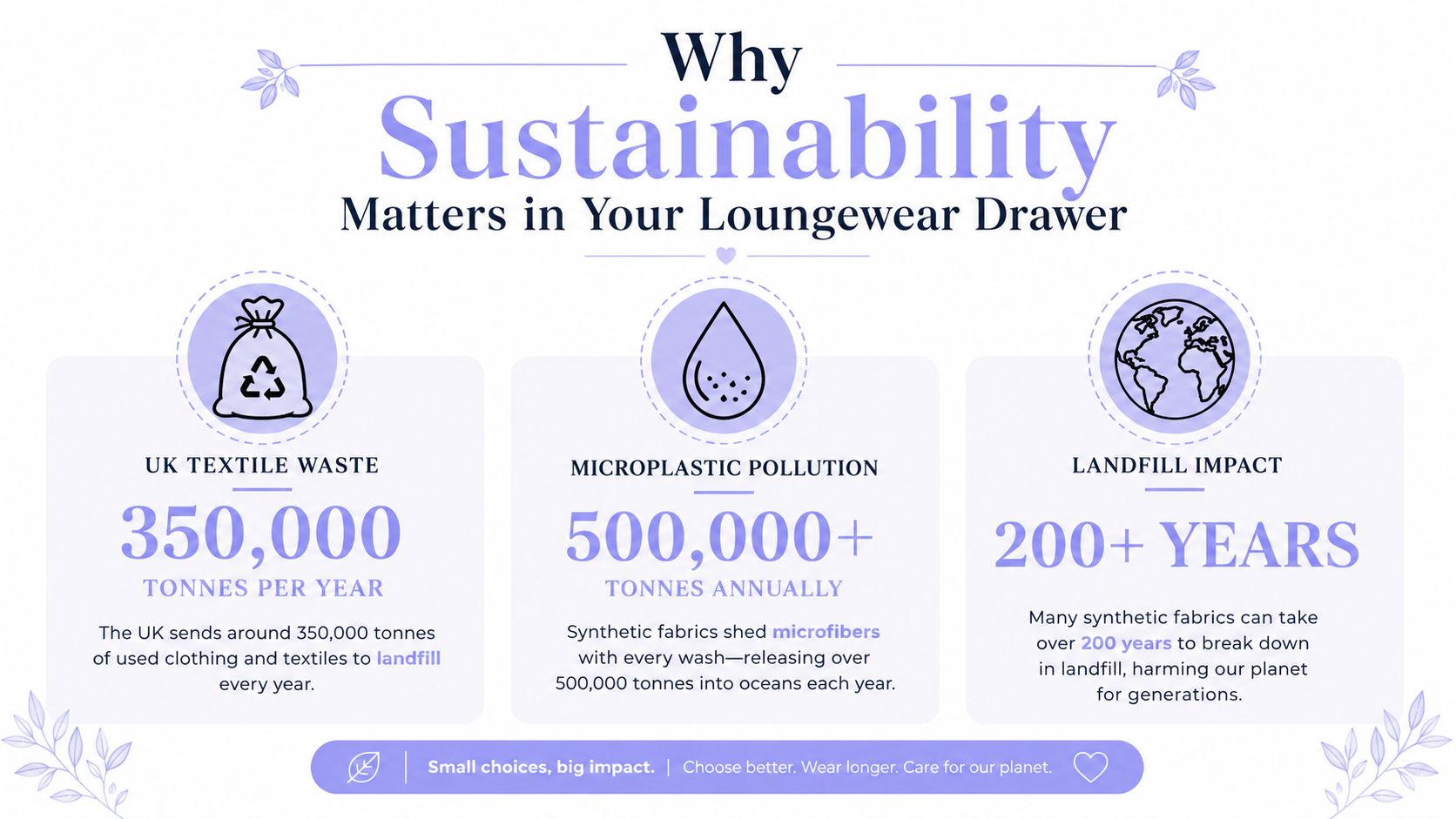
The UK's textile waste problem gives that decision weight. Research on UK clothing found that, as of 2007, about 2 million tonnes of textile waste were generated annually, including roughly 1 million tonnes of clothing. Of that clothing waste, 24%, or 523,000 tonnes, was collected for reuse and recycling, while 47%, about 1 million tonnes, entered the municipal solid waste stream for landfill. The Natural England report shows why a cheerful set still needs a serious life plan.
Buy for the life after the first excitement
The most responsible set isn't automatically the one with the most virtuous-sounding fibre story. It's the one you'll wear repeatedly, care for properly, repair when possible, and pass on when it no longer suits you. A natural fibre label doesn't erase waste created during spinning, knitting, cutting, and sewing. WRAP identifies cotton as the fibre type with the highest overall waste levels, particularly across processing and production stages, as documented in its Textiles Waste Hotspots report.
That changes the shopping question. Instead of asking only whether cotton is natural, ask whether the garment has a useful silhouette, whether the fabric suits your climate, and whether the maker appears to have thought about production waste. A set with a timeless shape and reliable construction can be more useful than a novelty piece bought for a single photograph.
The scale of unused clothing makes overbuying feel especially wasteful. A UK consumer-fashion report counted 1.7 billion unused clothing items in wardrobes, valued at about £30 billion, and noted that around one-third of clothes bought in the UK end up in landfill after their first owner finishes with them. The Textile Recycling Association's summary of WRAP research supports a persuasive wardrobe habit: buy fewer pieces that can move through more parts of your life.
End-of-life planning matters too. Parliamentary evidence reported that kerbside clothing collection had doubled since 2002 to more than 30% of households, while still lagging behind collection for glass and plastics. London had kerbside textile collection in 11 of 33 boroughs, and the UK had about 15,000 kerbside clothing banks, according to the Environmental Audit Committee evidence.
The routes exist, but access is uneven. Choose garments sturdy enough for resale, look for take-back options where available, and keep a set in circulation rather than treating it as a disposable cuddle cloud.
For a natural-fibre example beyond loungewear, The Lobster Bisque Dress is described as 100% organic linen with a soft, organic cotton lining. Its breathable construction illustrates the same seasonless principle: comfort and responsibility can share a wardrobe without becoming visually worthy or dull.
Caring for Your Sets and Styling Them Beyond the Sofa
A set earns its keep when it leaves the sitting room. Start with care, because the softest garment can become a sad little pancake if washed too hot, twisted harshly, or abandoned damp in a basket.
Give delicate fibres a gentler routine
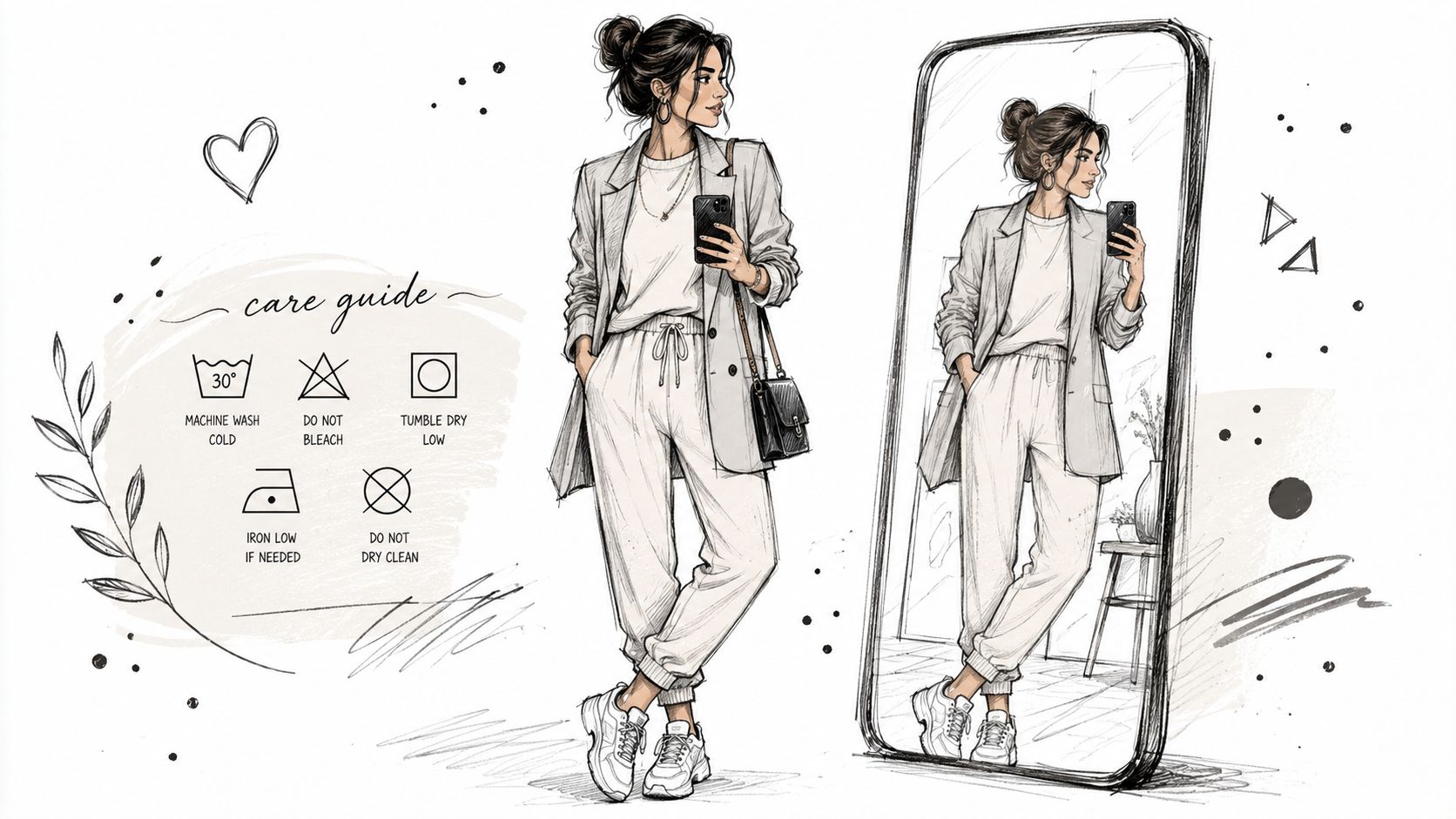
Read the care label before washing, especially for wool and structured knits. Use a gentle detergent, avoid unnecessary heat, and air-dry where the instructions allow. Lay alpaca knitwear flat rather than hanging it while wet, and spot-clean small marks instead of washing the whole garment for every minor mishap.
Cotton jersey may tolerate more regular washing, but it still benefits from moderate handling. Turn pieces inside out, avoid overloading the machine, and store them folded so shoulders and waistbands don't stretch under their own weight. A small cedar block or lavender sachet can make the drawer feel like a seaside cottage with excellent housekeeping.
Care habit: Fewer, gentler washes usually preserve the hand feel and shape you bought the garment for.
Styling begins with proportion. Wear the matching set alone at home, then add a long cardigan and clean trainers for coffee. Separate the trousers and wear them with a crisp shirt, or pair the top with jeans beneath a neat coat. For hybrid work, a structured blazer gives relaxed trousers a deliberate frame, while simple jewellery brings focus to the face during a video call.
The guide to matching top and bottom sets can help you think about coordination as a wardrobe system rather than a one-outfit purchase.
After at least one careful wash, inspect how the pieces behave in motion. Do the knees hold their shape? Does the top tuck without bunching? Can you sit, reach, and walk without adjusting the garment every few minutes? Those answers matter more than a dramatic styling image.
For a visual cue on combining care and presentation, the following fashion illustration keeps the everyday details in view.
A playful scarf, embroidered motif, or softly coloured bag can add personality without turning the set into a costume. Think of the outfit as a quiet stage, then let one whimsical accessory play the lobster in the leading role.
Embracing Rentals, Pre-Orders, and Seasonless Wardrobes
Buying isn't the only way to enjoy beautiful clothing. A rental can let you wear a special piece for a trip, gathering, or photograph without asking your wardrobe to house every possible occasion. The practical details of renting clothes in the UK are worth considering when you want variety without constant ownership.
Pre-orders offer another route. They allow a brand to understand demand before committing to a larger production run, which can support more deliberate small-batch making. For a shopper, the trade-off is patience. The reward is a purchase made with intention rather than an impulsive click during a passing trend.
Build a little wardrobe fleet
A seasonless loungewear capsule might include:
- A breathable everyday set: Choose a lighter construction for warm rooms, errands, and layered travel.
- A warmer knit layer: Pick a denser natural knit for chilly mornings and restful evenings.
- A versatile neutral bottom: Let it work with shirts, jumpers, and outerwear beyond its matching top.
- One spirited accessory: Use colour, embroidery, or a scarf to keep the capsule from becoming overly solemn.
The Lavender Lobster's made-to-order The Sailor Hats are crafted from offcuts of larger garments, giving leftover fabric a second life. Each is made by seamstresses in the UK, with Garden Society, Ledger, and Regatta Stripe prints available, alongside custom print requests subject to fabric availability.
Follow product drops, pop-ups, and styling ideas through the brand's Instagram community, but keep your own wardrobe rules close at hand. A seasonless collection should serve your real week, not an imaginary one filled entirely with yacht clubs and perfect weather.
The most liberating assumption to challenge is that novelty creates style. Often, repeat wear creates style. A set that works with a coat in February, sandals in summer, and a cardigan on a rainy afternoon becomes part of your visual language. It may even acquire a little history, like a favourite mug or a loyal garden gnome.
Choose one loungewear set by its fabric, fit, care needs, and number of places it can go, then wear it deliberately through the week. Explore The Lavender Lobster for natural-fabric womenswear, seasonless outfit ideas, rentals, and pre-order pieces that bring a little seaside mischief to conscious dressing.