

You spot it in the fitting-room mirror: buttercup-yellow cotton, scattered with navy spots, and suddenly your reflection looks more cheerful than it did five minutes ago. That's the particular magic of a polka dot yellow dress. It brings movement, warmth and a little seaside whimsy to an outfit without demanding an entirely new personality.
The print's return in 2026 deserves attention, but not blind trend chasing. Polka dots have survived repeated style cycles, from their named appearance in print in 1857 to the playful oversized dots of the 1950s and the bold multicolour interpretations of the 1980s, as documented by The National and The Independent. Today's version feels fresh because the best dresses pair the cheerful print with considered cuts, wearable fabrics and styling that works beyond one sunny afternoon.
You'll get the most from yours by choosing the right silhouette, judging dot scale with discipline, checking fabric quality, sourcing thoughtfully and caring for the garment properly. The result should feel less like a costume and more like a wardrobe heroine with excellent manners.
The Joyful Pull of a Yellow Polka Dot Dress
You pull a yellow dotted dress over your head before a grey British morning, and the outfit already feels brighter. Navy remains useful, black looks polished and cream adapts easily, but yellow brings optimism, creativity, warmth, happiness and energy to everyday dressing. Its wider cultural associations include light, intellect, spirituality, femininity and status, as explored by House of Colour.
Choose the yellow with care. Butter yellow feels soft and current, marigold has theatrical warmth, and lemon yellow gives a crisp, graphic finish. Hold the dress beside your face in daylight before buying. Warm changing-room bulbs can flatter a shade that looks much sharper outdoors.
My rule: if the dress makes you smile before you add shoes, give it a proper fitting-room audition.
The pattern has useful British vocabulary. Polka dots are also commonly called a spot print in the UK, and the design uses filled circles arranged across a ground fabric, as described in this definition of the polka dot. Search both terms when browsing independent shops, vintage platforms and resale sites. That small adjustment can reveal dresses listed under different descriptions.
The 2026 revival matters because dots are returning as a repeatable style code, not a disposable novelty. ELLE UK reports in its Spring/Summer 2026 trend coverage that the print is “everywhere again”, with attention on cleaner styling and contemporary silhouettes. Its staying power also has cultural roots. Norma Smallwood wore a polka-dot swimsuit as Miss America in 1926, and Disney gave Minnie Mouse yellow polka dots by 1935, helping establish the colour and motif in popular visual culture.
Buy for ordinary use, not one photogenic afternoon. A good dress should suit a market morning, workday, family celebration and evening meal, with accessories doing the seasonal work. Prioritise durable fabric, a dot scale you can live with and a shape that earns repeated wear. That is how a cheerful print becomes a serious wardrobe investment.
Choosing the Right Silhouette and Fabric
A yellow polka dot dress succeeds or fails on two decisions: the shape must support your movement, and the fabric must let the print look alive. Start with the cut before you fall for the colour.
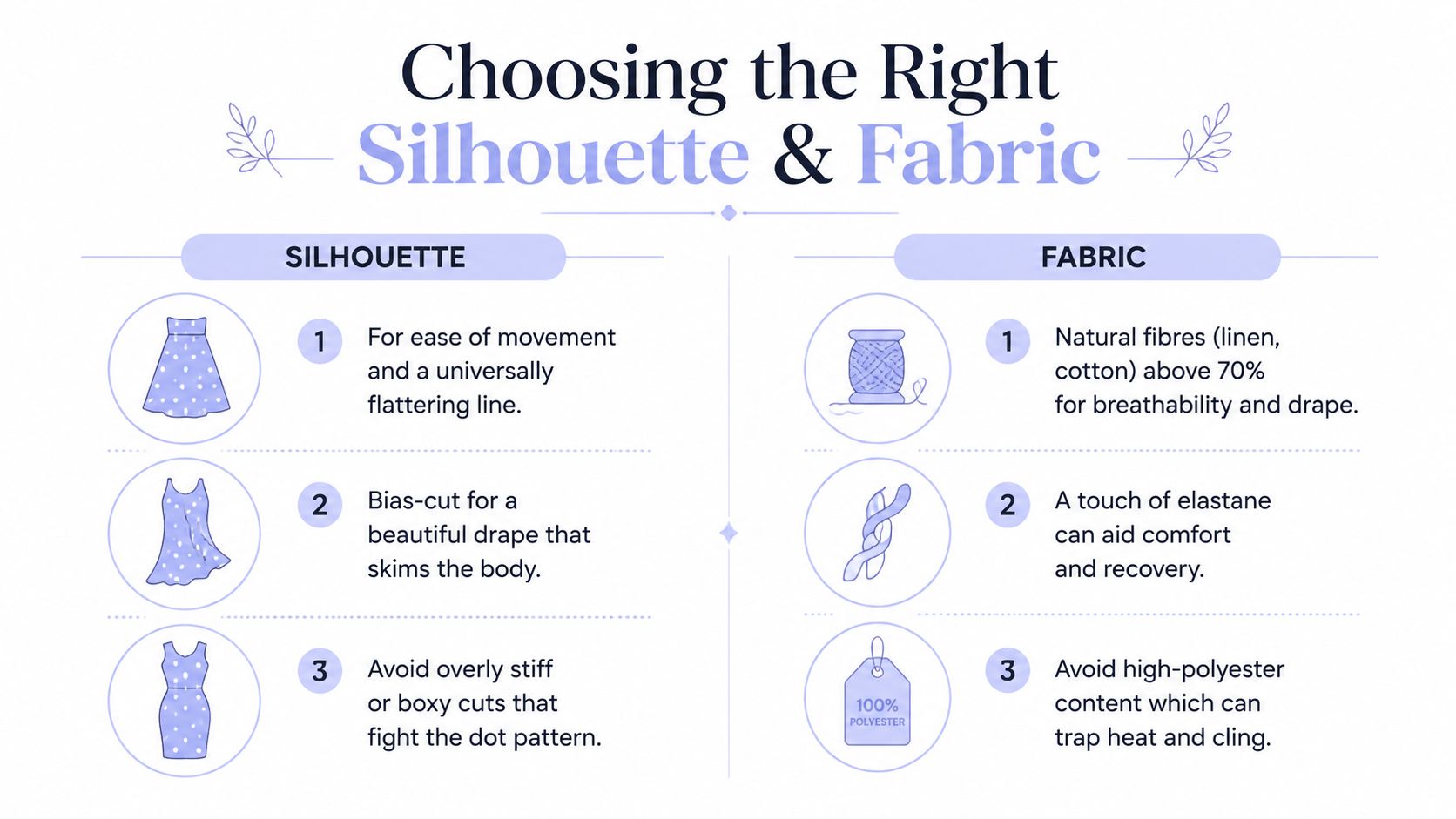
An A-line shape is my first recommendation. It skims the waist and releases over the hip, creating movement without asking the wearer to pose. A bias-cut dress offers a softer alternative because the fabric falls diagonally and follows the body rather than sitting rigidly on it. Shirt dresses earn their place through versatility, especially when you want to wear the piece open over a vest or belted for definition. A tea-length midi usually looks polished without feeling formal, and it pairs neatly with trainers, ankle boots or low heels.
Overly bodycon cuts are harder to style in a bright colour and bold dot. The close fit can make the pattern feel busy, particularly when seams distort the circles. I'd also avoid stiff, boxy shapes unless the print is very small and the construction is exceptional. For more silhouette guidance, compare these flattering dress styles before you shop.
Feel the cloth before judging the print
Look for fabrics that breathe and hold their shape gracefully. Tencel, organic cotton poplin, lightweight linen and viscose each offer useful qualities, although their drape and care requirements differ. Cotton poplin feels crisp and supports shirt dresses or gathered skirts. Linen looks relaxed and develops character through wear. Tencel and viscose tend to create fluid movement, which can soften a lively spot pattern.
Check the reverse of the fabric, not only the front. A good print should remain clear, with no muddy colour at the seams and no obvious transparency across the bodice or skirt. Run the material through your fingers. Stiff synthetic cloth often traps heat, clings in motion and makes yellow look dull. A small amount of stretch can improve comfort, but it shouldn't replace a well-designed fit.
If you're drawn to natural construction, The Lobster Bisque Dress is made from 100% organic linen with a soft organic cotton lining. It's a useful reference point for assessing breathable cloth, lining and comfort, even if you're shopping specifically for spots.
Small, Medium or Large Dots
Dot scale changes the entire personality of a dress. It affects how the garment reads from across a room, how much visual movement it creates and how many accessories it can comfortably carry. Don't choose dots by instinct alone. Stand back from the mirror, then take a quick photograph in natural light.
Small pin dots are the quietest option. They suit petite frames, office wardrobes and anyone who wants the brightness of yellow without a loud pattern. Pair them with an A-line, shirt dress or softly shaped midi. Keep accessories fine and deliberate, such as a narrow belt, small hoops and a compact leather bag. Small spots also photograph subtly, which can be useful when you want the dress to look refined rather than overtly retro.
Medium dots are the dependable middle ground. They give the dress a clear identity while remaining easy to accessorise. Choose them for a wrap shape, tea-length midi or gently fitted waist. Medium spots work with trainers, loafers, woven bags and modest jewellery, so they're the strongest choice if you want one dress to cover several parts of your life.
Large dots are for drama. They work beautifully on a simple silhouette because the pattern already provides the statement. A sweeping midi, full skirt or clean column lets the circles breathe. Large spots can balance a broader shoulder line or fuller hip, depending on where the pattern and volume sit. Keep the accessories substantial but sparse, perhaps one sculptural earring or a strong shoe.
| Dot Scale | Best For | Ideal Occasion | Accessory Weight |
|---|---|---|---|
| Small | Petite proportions and understated wardrobes | Office days, lunches and daytime events | Fine jewellery and compact bags |
| Medium | Versatile everyday styling | Work, weekends and smart-casual gatherings | Moderate belts, hoops and shoes |
| Large | Confident statement dressing | Parties, evening occasions and celebrations | One or two bold accents |
These are guidelines, not commandments. A tall wearer can look wonderful in pin dots, and a petite wearer can absolutely own a dramatic oversized spot. Confidence outranks conformity, especially when the dress feels comfortable enough to move, sit and dance in.
Styling a Polka Dot Yellow Dress for Every Occasion
The best yellow spotted dress should adapt to British routines, including the sudden shower that arrives halfway through your picnic. Build each outfit around the same principle: let the dress lead, then add layers that either calm the print or echo its warmth.
Daytime ease
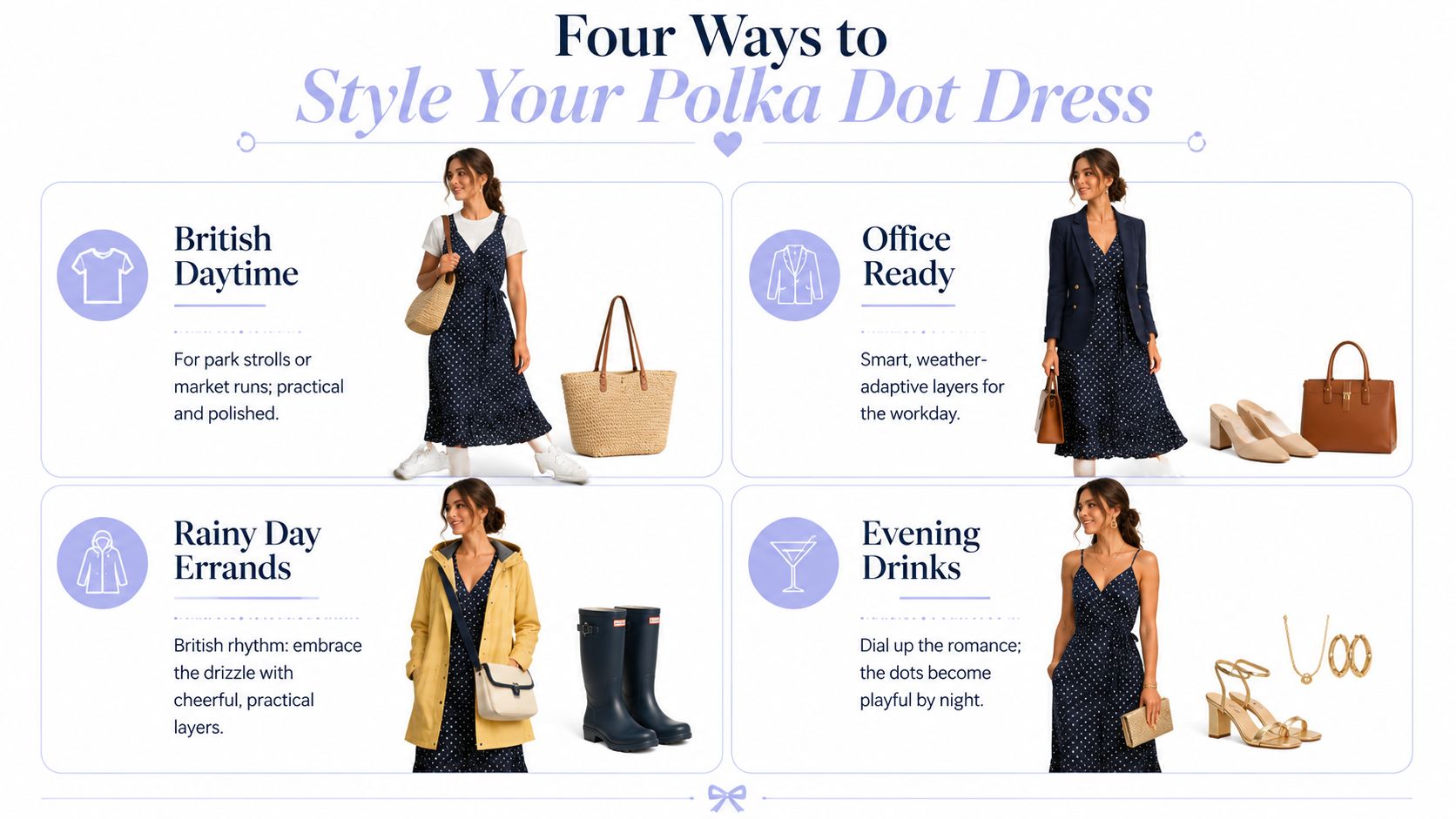
For a park stroll, market run or pub lunch, layer the dress over a crisp white cotton tee. Add white trainers and a raffia tote for a fresh contrast. Ivory works just as well as white if the yellow is soft, while tan leather and camel canvas make the outfit feel grounded rather than sugary.
A light denim jacket is practical, but check that its blue doesn't compete with navy or cobalt spots. In drizzle, choose a compact waterproof mac and a canvas crossbody. Those pieces tolerate damp pavements better than suede, and they won't make you anxious about enjoying the day.
Workday polish
For work, use structure to temper the print. A softly shaped navy blazer, closed-toe mules and minimal gold hoops make the dress feel intentional. You can also tuck a lighter dress into high-waisted trousers, leaving the skirt visible as a playful layer, although this works best with a fine, fluid fabric rather than crisp linen.
A structured leather bag protects the look from becoming too sweet. Sage green offers a more unexpected pairing, particularly with butter yellow, while camel brings classic warmth. Avoid adding another competing print. One pattern is enough; the rest of the outfit should provide rhythm and restraint.
Evening glow
For drinks or dinner, remove the practical layers and let the colour take centre stage. Slingback heels, a velvet clutch and a red lip create a romantic contrast against buttery yellow. Gold jewellery catches the warmth of the dress, but keep the shapes clean if the dots are large.
If you're hosting rather than heading out, small decorative details can carry the same playful mood to the table. This guide to unique bar and table accents for hosts offers ideas for making the setting feel considered without turning the room into a theme party.
Weddings and christenings
For a wedding or christening, add a wide-brim hat, a lace-trimmed slip and a low block heel. The slip helps with modesty and coverage, especially when the outer fabric is pale or fluid. Choose ivory accessories only when the event's dress code allows it, and use navy or sage if you want a stronger distinction from bridal tones.
The dress should still feel like you, not like borrowed occasionwear. A low heel that survives grass and uneven pavements is more useful than a delicate shoe you'll spend the day avoiding.
Sourcing Sustainably and Shopping with Intention
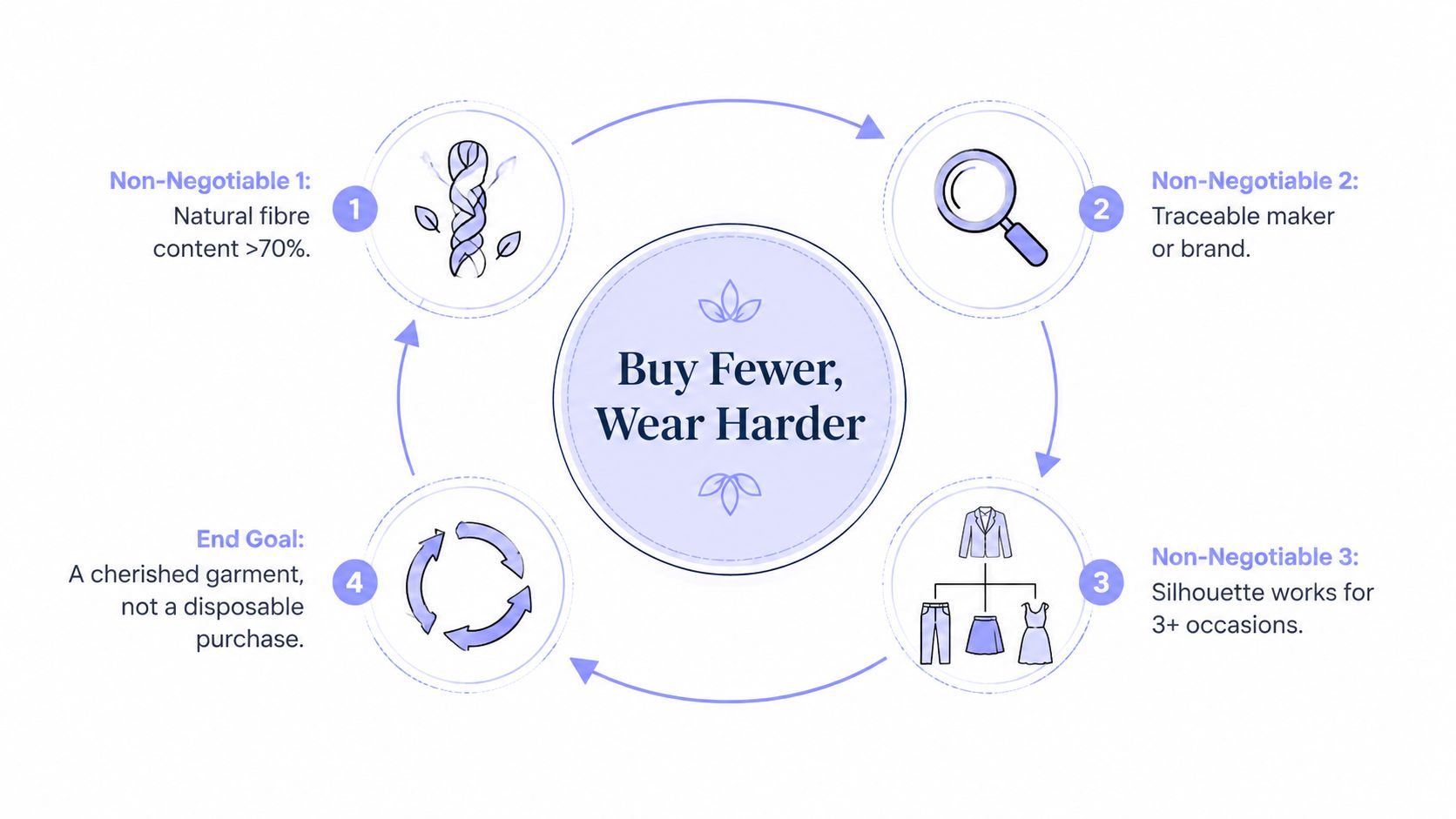
A cheerful dress becomes a responsible purchase only when you plan to wear it repeatedly. My essentials are simple: natural fibre content above 70%, a maker or brand you can trace, and a silhouette that works for at least three occasions. The sustainable-fashion conversation can become abstract, but your buying decision doesn't need to be.
Start with the fibre label. Linen and organic cotton are strong choices for warm-weather wear and can become more appealing with age. Viscose, modal and Tencel offer beautiful drape, but check the care label and construction before assuming softness equals longevity. A fabric that needs delicate handling may still be worthwhile, provided you'll maintain it.
Make provenance part of the fitting process
Independent ateliers and small-batch UK labels deserve a closer look when they publish information about fabric origin, manufacturing and pre-order models. Vintage platforms can also uncover dotted cotton, linen or silk pieces that already exist and deserve a second life. Inspect underarms, seams, hems and fastenings carefully. Yellow can hide subtle staining under warm lighting, so view the garment near a window.
The UK market is sizeable but softening. IBISWorld estimates that UK clothing retailing reaches £49.4 billion in 2026, with 11,261 businesses in the sector, while its narrower forecast gives the market a 0.9% CAGR over 2021 to 2026. That low-growth environment makes thoughtful product development and durable construction more valuable than disposable novelty.
Do the cost-per-wear maths
Divide the purchase price by your estimated wears over three years. A £180 dress worn weekly can make more sense than a £45 fast-fashion dress worn twice, because the lower ticket price doesn't compensate for a garment that quickly leaves your wardrobe. Those examples are a decision-making illustration, not a promise of value. Be honest about your habits.
Before paying, ask:
- Fibre: Is the natural fibre content above 70%, and does the cloth feel suitable for the climate?
- Traceability: Can you identify the maker, fabric origin and care requirements?
- Versatility: Can you name three occasions without inventing an imaginary lifestyle?
- Repairability: Are the seams, buttons and hems accessible to an alterations professional?
- Fit: Would a small adjustment make the garment a long-term favourite?
For more considered labels and materials, browse this guide to sustainable dress brands before opening another fast-fashion tab.
Caring for Your Dress So It Lasts for Seasons
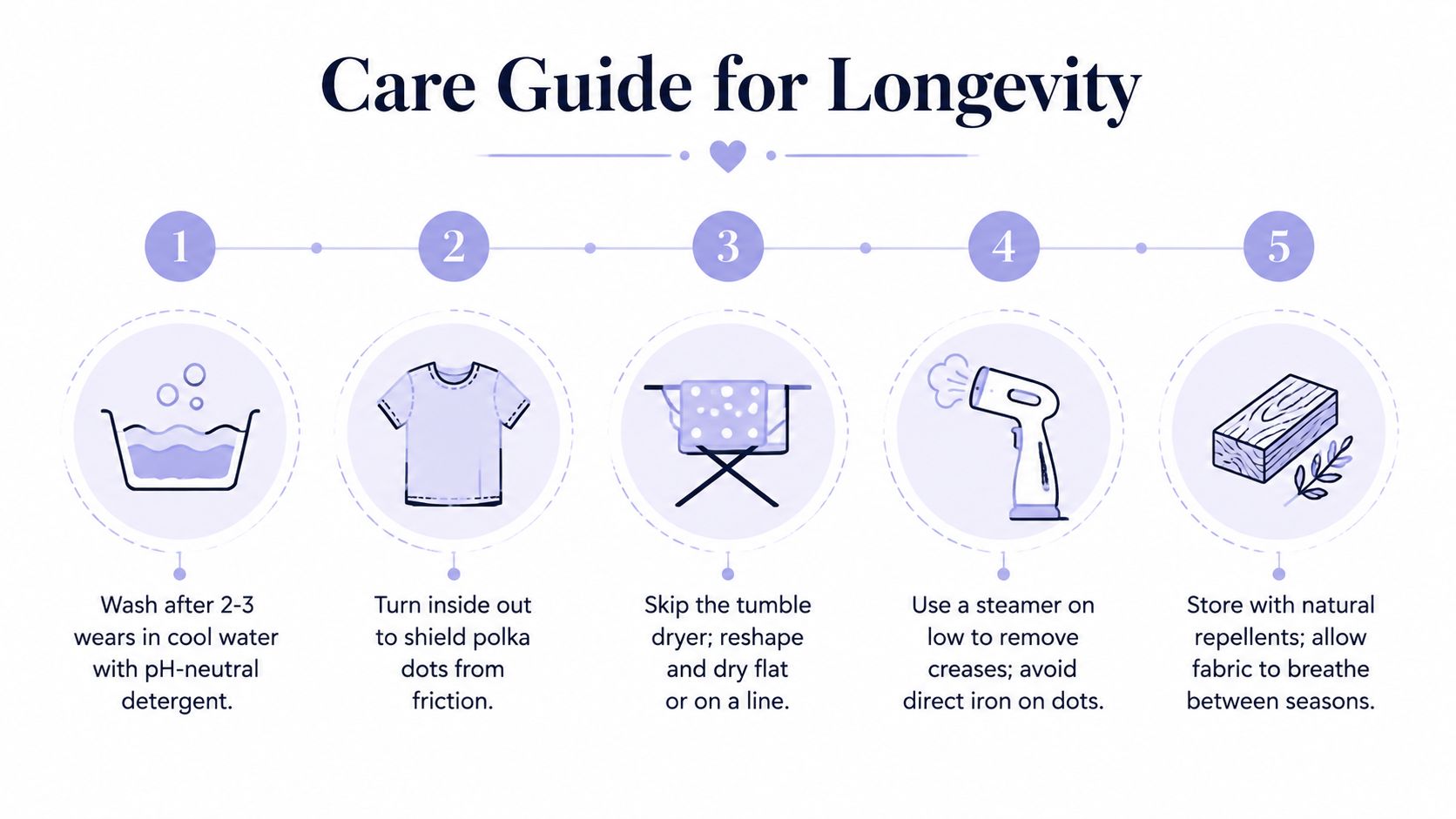
Yellow stays brighter with gentle handling. Wash after every two to three wears, or sooner if the dress is visibly soiled or has absorbed odours from food or weather. Use cool water and a gentle, pH-neutral detergent unless the care label says otherwise. Turn the dress inside out before washing to reduce friction on the printed surface and protect the dots.
Skip the tumble dryer. Reshape the dress while damp, then hang it on a wide wooden hanger away from direct sunlight. Delicate or bias-cut fabrics need extra support as they dry, otherwise the shoulders and skirt can stretch out of proportion.
Protect the surface and the shape
Steam the dress instead of ironing whenever possible. If pressing is necessary, turn it inside out, choose low heat and place a pressing cloth between the iron and fabric, especially over the printed dots. Direct heat can flatten texture or leave a shine on some materials.
Deal with small faults early. A loose hem, popped seam or minor snag is usually a manageable repair, while a £10 haberdasher visit may make more sense than replacing a favourite dress. Store spare buttons in a labelled envelope so they remain easy to find.
Keep the dress in breathable cotton, never sealed plastic. A lavender sachet can help deter moths, while allowing the fabric to breathe between seasons protects its condition. Rotate the dress with other garments so the shoulders and folds do not sit under constant pressure.
At each seasonal change, inspect the seams, refresh the buttons and record repairs in a simple care notebook. That small ritual keeps maintenance practical rather than urgent. For more ideas on making clothes last longer, build care into your regular wardrobe routine.
Your Forever Polka Dot Companion
A yellow polka dot dress earns permanent wardrobe status when it supports real life. Choose an A-line, bias-cut, shirt or tea-length silhouette that lets you move comfortably. Select a dot scale that looks deliberate from across the room, then choose fabric with enough breathability, drape and durability for the seasons you'll face.
The most useful version won't sit untouched until summer. Wear it with trainers and a mac, a navy blazer and closed-toe shoes, or a block heel and velvet clutch. Layering turns a bright dress into a spring, summer and early-autumn piece, while thoughtful care protects the colour and print from becoming yesterday's whim.
Keep this close: buy fewer dresses, wear them harder, and let your accessories change the story.
Trend forecasts can point you towards a print, but your own wardrobe should make the final decision. Start with one thoughtfully sourced dress, check its fibre content and construction, and ask whether you can name three genuine occasions for wearing it. If the answer is yes, let the spots bring a little sunshine to the week.
Choose your silhouette and fabric first, then shop with purpose. Find a yellow polka dot dress you can wear through changing British weather, style across ordinary and special occasions, and care for season after season. Your next fitting-room mirror may be friendlier than expected.