

You're standing in front of the mirror with a scarf that's a little too long, a pair of ends that don't know where to go, and that faint feeling that the whole thing is about to slide from elegant into chaotic. The floor has already taken one reluctant loop of fabric, and the temptation to throw a quick granny knot at the problem is very real.
That's exactly where the sailor scarf knot earns its keep. It's a tidy, anchored finish with proper maritime roots, the sort of knot that feels at home on a Cornish harbour wall, in the square-rigged discipline of the Royal Navy, or paired with something softly draped and modern like The Lavender Lobster Sailor Scarf in alpaca. One small tie can shift posture, sharpen the face, and change the whole read of an outfit. And yes, there's a little whimsy in it too, which is part of the charm.
A Whimsical Welcome to the Sailor Scarf Knot
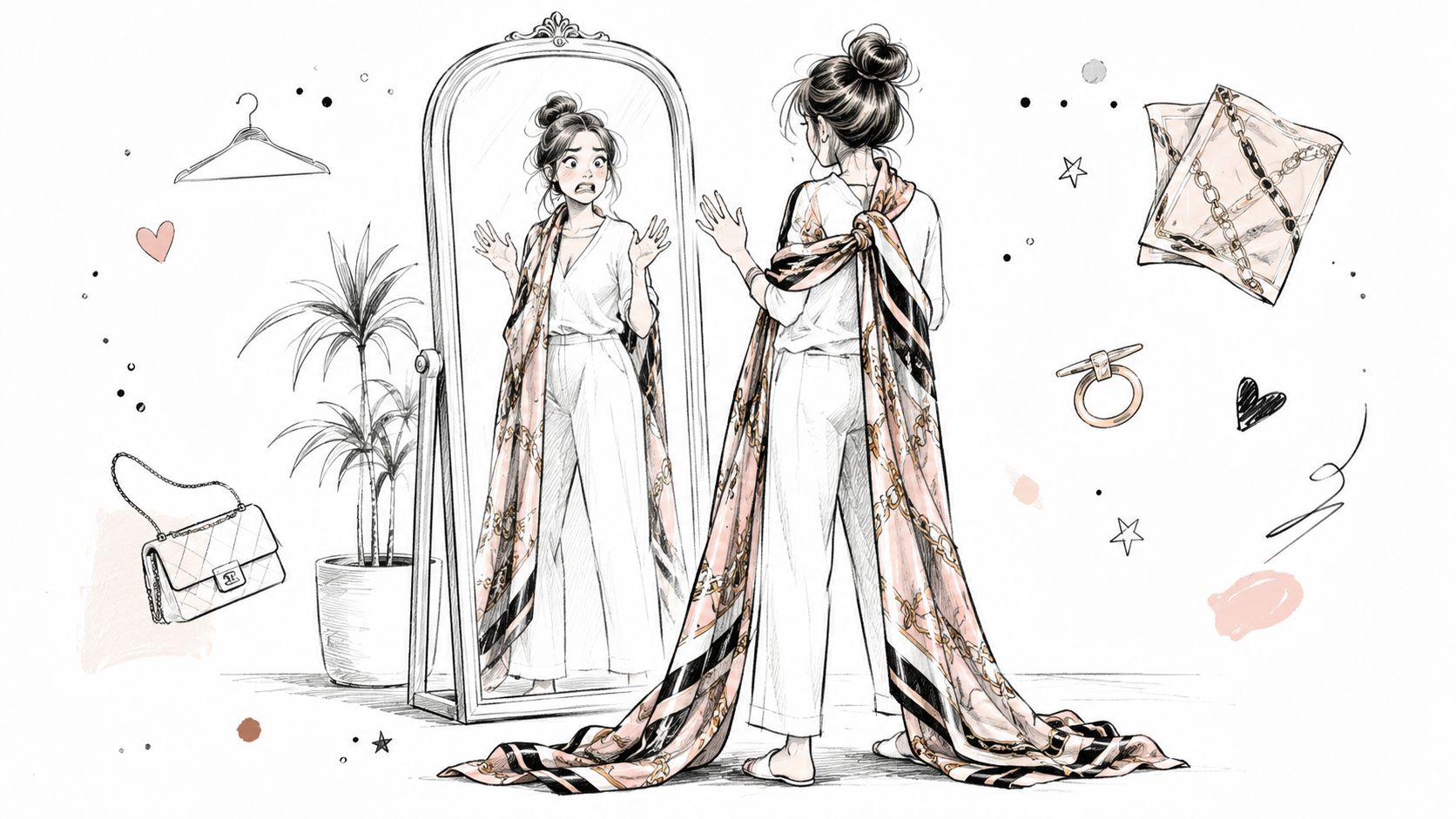
A lot of people meet this knot on an ordinary morning. They've got a long scarf, a cold hallway, and ten seconds before the coat goes on, and suddenly the fabric seems to have opinions of its own. That's usually the moment the knot gets yanked too tight or tied too loosely, and the neckline ends up looking fussy instead of neat.
The sailor version has a more grounded pedigree than trend-chasing fashion language suggests. Victorian Britain gave neckwear a real taxonomy, with the Victoria and Albert Museum noting four distinct necktie styles in the second half of the 19th century, including the scarf or neckerchief and the four-in-hand, also called the sailor's knot or long tie (V&A record). That matters, because it places the look inside a documented dress system, not just a cute styling trick.
There's also a practical maritime thread running through the story. A preserved Royal Navy example dated 1892–1899 shows sailor's neckerchiefs still being issued to new entrants, and the museum record says they were given out “as late as 1899,” which ties the knot to real uniform practice rather than costume nostalgia (Des Pawson museum record). The result is a look that feels both historic and surprisingly fresh, especially in a fibre with enough softness to keep it human.
Practical rule: if the scarf feels like it's wearing you, it's too tight. If it vanishes into the coat, it's too loose.
Tying the Knot from Drape to Finish
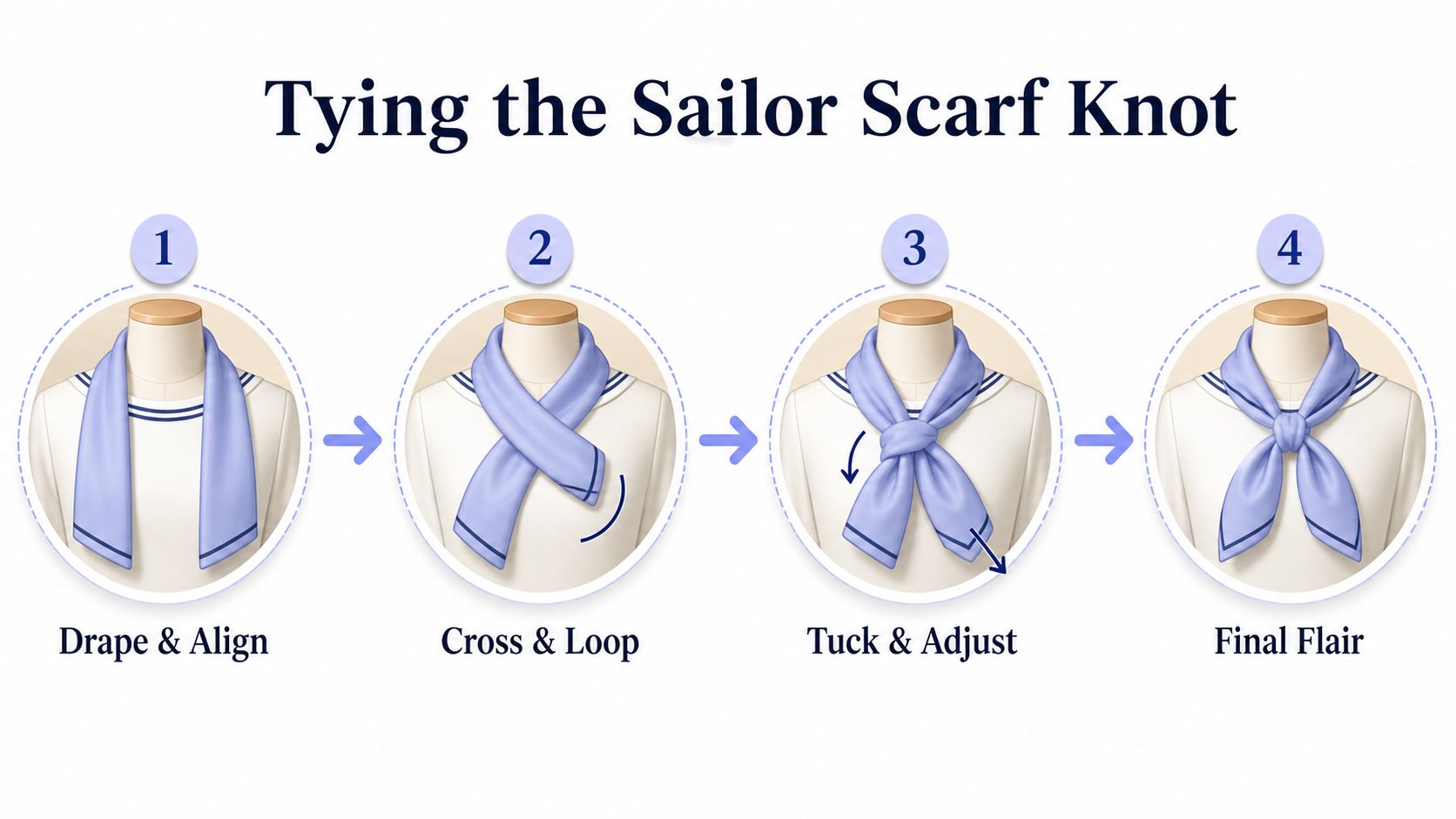
Start by letting the scarf sit evenly over both shoulders, then check the front fall. The sweet spot is just below the collarbone, because that gives the knot room to sit without crowding the throat or disappearing under a lapel.
Bring the right end under the chin and over the left shoulder, then let the left end cross the front and travel up through the loop you've just made. Keep the movement smooth rather than aggressive. The knot needs tension, but not a wrestling match.
Shape the centre, then settle the tails
Once the loop is formed, square the knot against the sternum with your fingertips. Pull from underneath so the top stays flat, then let both tails hang with matching length, ideally finishing near the waist for a classic line. If one side feels longer, pause before tightening and rebalance it now, not after the knot has locked.
A neat sailor finish depends on balance, not force. UK-facing scarf guidance uses the same logic when it recommends a longer rectangular scarf, a back-of-neck placement, and a controlled feed-through that keeps the knot anchored rather than bulky (Scarf styling guide). The geometry matters because longer scarves use length quickly, while shorter ones lose the ability to form clean loops.
If you like tidy accessories with a bit of craft behind them, The Sailor Hats are made from offcuts of larger garments, come in Garden Society, Ledger, and Regatta Stripe prints, and are individually made in the UK. That kind of finish pairs naturally with a scarf knot that's meant to look considered, not overworked.
Keep the tightening from underneath. That's the bit most people skip, and it's the difference between a flat knot and a lumpy one.
Common Mistakes and How to Fix Them
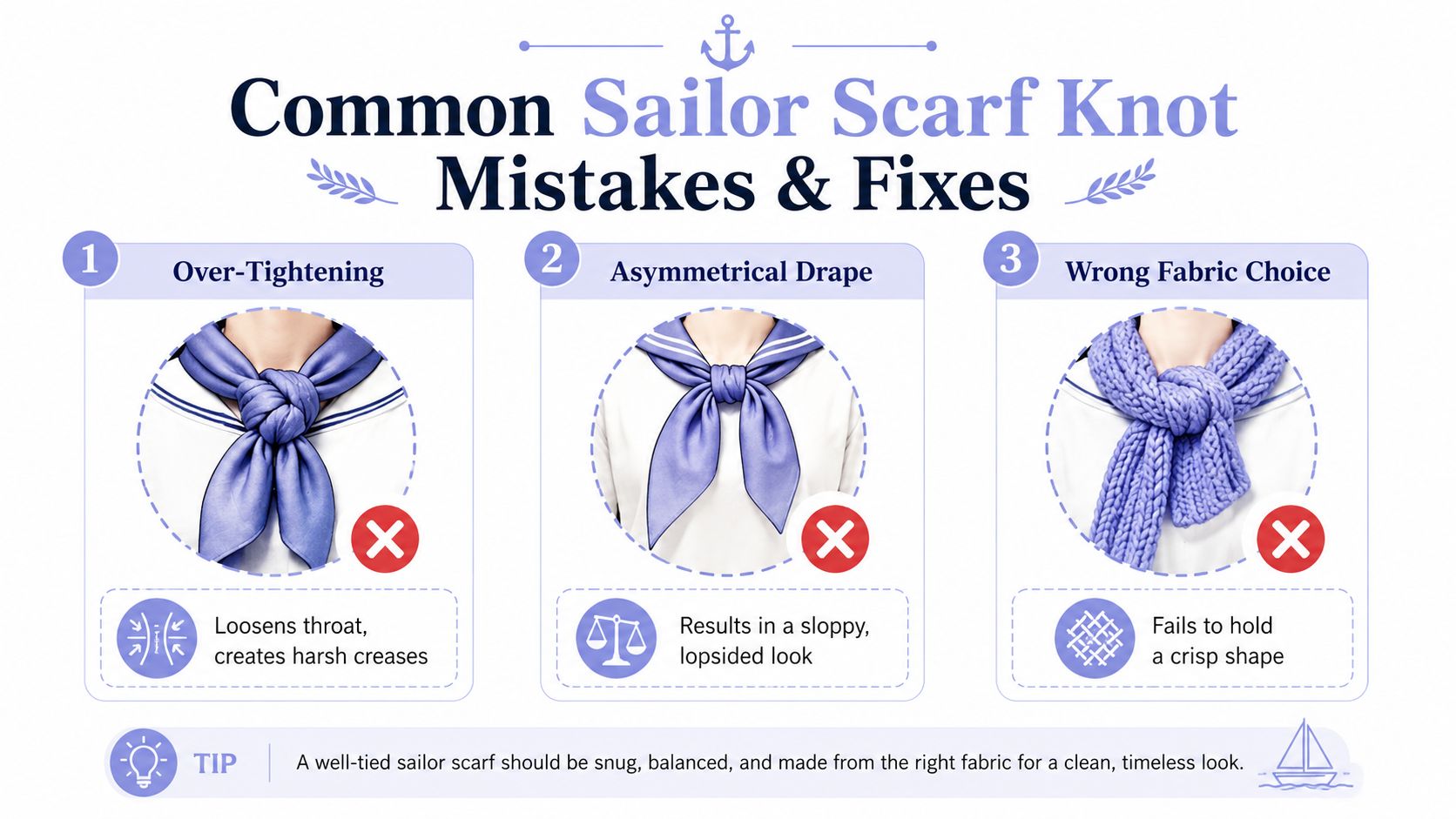
The biggest mistake is over-tightening. It bunches fabric at the throat, throws harsh diagonal creases across the front, and makes even a beautiful scarf look strained. The fix is simple, ease the loop open by about a finger's width before you settle the knot.
Stop the twist before it starts
The second problem is the granny-knot look, where the ends rotate the wrong way and the knot sits crooked. That's why the crossing direction matters so much, the right end needs to go first, then the second pass must reverse cleanly so the finish stays flat and honest. Scouts guidance on the reef knot uses the mnemonic “left over right and under, right over left and under”, and that same opposite-direction logic is what keeps a sailor-style finish symmetrical (Scouts knot guide).
Uneven tails are the third trap. Check the lengths at eye level in a mirror before you do the final tuck, because once the knot is cinched down, small differences become obvious. If you're working with a slippery silk scarf, a tiny half-twist at the back of the neck can add grip, but don't add bulk where you don't want it.
The The Lobster Bisque Dress gives a useful wardrobe comparison here, because its organic linen and cotton lining create a clean, breathable line that shows how much a controlled silhouette matters when the neckline is doing the talking. A scarf knot behaves the same way, if the top line is calm, the whole outfit looks more deliberate.
Quick self-check: flat top, balanced tails, no throat squeeze, no twisted front.
Why Fibre Choice Changes Everything
Silk, wool, cashmere, and alpaca each behave differently once you start tying. The sailor scarf knot gives fibre no room to hide, because the material decides whether the shape holds, drapes softly, or slips into a loose fold.
Fibre by fibre, the knot tells the truth
Silk slides. That makes it elegant, but it also asks for firmer tension and careful balancing, or the knot loosens before lunch. Wool grips more confidently, yet thicker yarns can make the knot feel heavy at the neck.
Cashmere drapes beautifully, which is lovely until repeated tying softens the outline too much. Alpaca sits in a useful middle ground, especially in British pieces. It has a matte finish, warmth without obvious weight, and enough memory to keep the triangular silhouette from sagging into a shapeless fold.
| Fibre | Drape | Knot Hold | Warmth | Best For |
|---|---|---|---|---|
| Silk | Fluid and sleek | Needs firm control | Light | Crisp, dressy neckwear |
| Wool | Structured and fuller | Strong grip | High | Coats and colder days |
| Cashmere | Soft and elegant | Gentle, less rigid | Warm | Luxurious layering |
| Alpaca | Clean with subtle body | Balanced, stable | Warm without weight | Refined sailor knots |
That balance is why a mid-weight alpaca scarf gives such a pleasing result. The folds at the throat stay crisp, the tails fall evenly, and the whole line feels nautical without looking stiff. British alpaca also suits the practical side of this knot, because it supports shape while still letting the scarf move when you walk. Maritime dress has always relied on that same mix of order and ease, a neat finish that still works in real weather.
Styling the Knot in Real Outfits
A sailor scarf knot works best when it's attached to a real outfit, not a fantasy one. The look earns its place when it can do a job, frame the face, tidy the neckline, or add a bit of texture where the coat would otherwise feel plain.

Weekend coastal walk
For a weekend walk by the sea, pair a navy peacoat, Breton stripe, and well-worn jeans with a British alpaca scarf in oat or ecru. Tie the knot once at the collarbone and let the tails sit neatly over the coat front. That's where the shape feels most natural, because the contrast between a sturdy coat and soft knitwear makes the knot look intentional rather than over-styled.
Autumn workwear
For work, the sailor knot slips neatly over a camel coat and roll-neck. The triangle peeks above the lapel without fighting the coat's structure, which is exactly what you want when the rest of the outfit is already doing enough. The clean front line reads polished in a way a loose loop usually doesn't.
Evening layer
At night, loosen the knot into a single soft loop and let it sit over a black merino dress. The scarf becomes more of a shawl-like frame than a strict tie, and the movement is what keeps it interesting. A piece like The Lavender Lobster Sailor Scarf in alpaca can feel especially useful, because the fibre holds a graceful line without becoming heavy.
The old nautical vocabulary helps here too. A knot is a unit of speed equal to exactly one nautical mile per hour, as explained by the Royal Museums Greenwich, and that little maritime fact gives the whole look a playful anchor point (Royal Museums Greenwich). Fashion doesn't need a lecture, but it does love a good seafaring wink.
Caring for Alpaca and Other Natural Scarves
Alpaca likes a gentler life than it is often given. Air the scarf between wears, and only wash when it needs it, because over-washing flattens fibres and shortens the life of the drape. Spot-clean small marks first, then move to hand-washing in cool water with a gentle wool detergent if the scarf needs a full refresh.
Roll it in a towel to press out moisture, then flat-dry it away from direct heat or sun. Hanging sounds convenient, but it can stretch the triangle and pull the edges out of line. For storage, fold it flat in a drawer or roll it loosely, then add cedar to help deter moths.
The care advice for alpaca is closely linked to how the knot looks later. When the fibre keeps its body, the sailor finish sits better at the throat and the tails stay more even after repeated wear. If you want a broader washing reference, the brand's own how to wash alpaca wool guidance sits naturally alongside the same principles.
For a surprisingly useful household comparison, the microwave flower pressing method from Little Green Leaf shows the same basic logic of gentle handling and careful drying, even though it's for flowers rather than scarves (microwave flower pressing method). Delicate things tend to reward patience.
A quick steam-only pass before retying is often enough to bring the drape back to life.
Easy Variations and a Sailor's Send-Off
The core knot gives you three easy directions to play with. A loosened sailor loop works for weekends, where you dress only the first pass and let the ends swing freely. A French-inspired neckerchief tuck sends the knot beneath a collar for a cleaner shirt-and-blazer pairing. A generous shawl drape turns an oversized alpaca wrap into something softer and more fluid.
Choose the version that suits the day
For the relaxed loop, a longer rectangular scarf works best, especially in alpaca or wool, because there's enough fabric to keep the fall easy. For the neckerchief tuck, a medium scarf sits well under a shirt collar and keeps the finish neat. For the shawl version, wider alpaca wraps give the most elegant line, since the fibre can hold a soft fold without losing presence.
That seafaring spirit has always carried a bit of theatre. Merchant crews, Breton fisherfolk, and even a wink at HMS Pinafore all sit somewhere in the style's long memory, which is one reason the look still feels cheerful rather than costume-like. Large varieties of knots evolved as vessels became more advanced, so a scarf knot borrowing from that history feels fitting rather than forced (Liverpool Museums note on knot development).
If one variation feels right this week, wear it twice. Once in daylight, once under softer evening light, then notice whether the knot sits calmly with your coat or fights it for attention. That's the easiest way to learn what your own wardrobe likes.
Try one version, take a quick mirror photo, and share it with someone whose opinion you trust. A good sailor scarf knot should feel like a small act of order with just enough whimsy to keep you smiling.