

Imagine a dress that feels like a sunbeam on your skin—soft, breathable, and woven with a little bit of magic. That’s the heart of an organic cotton dress. It’s more than just a piece of clothing; it's a thoughtful choice, spun from cotton grown as nature intended, without harsh pesticides or genetically modified seeds. The result is a garment that’s kinder to your skin and a friend to the planet.
Why Choose an Organic Cotton Dress
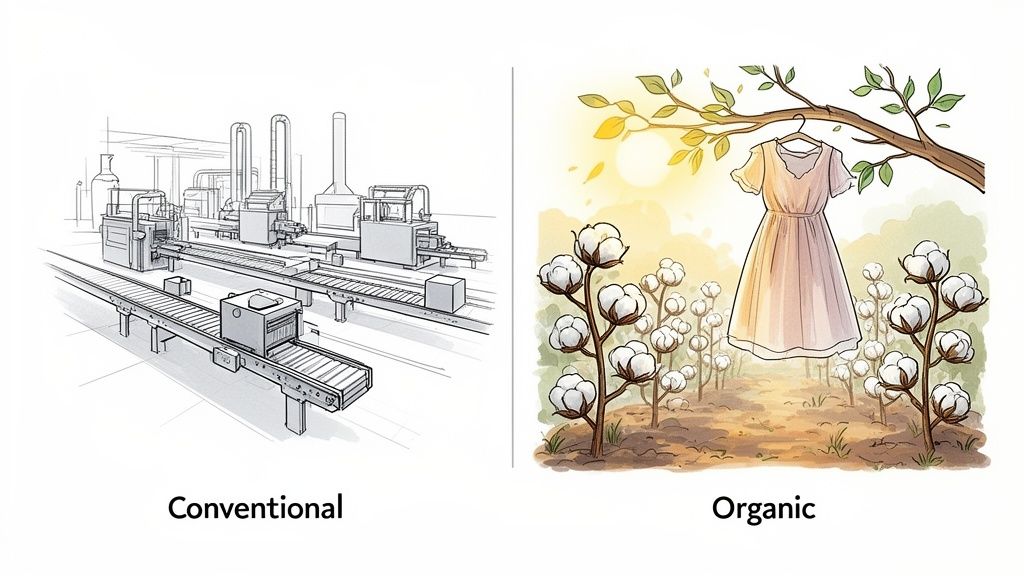
Choosing organic cotton isn't about jumping on a trend; it's about embracing a philosophy. Picture conventional cotton production as a frantic, high-speed factory, demanding enormous resources and chemical inputs to get its product out the door. It’s efficient, sure, but often at a real cost to the environment and the delicate balance of our ecosystems.
In beautiful contrast, an organic cotton farm is like a patient, sun-dappled garden. Here, everything works in harmony with the earth’s natural rhythms, a gentle waltz between soil and seed. The earth is nurtured, water is used sparingly, and wildlife is encouraged to flourish. This gentle approach isn’t just a lovely idea; it’s a fundamental difference you can feel in every fibre of the final dress.
This dedication to natural cultivation is exactly why an organic cotton dress feels so different against your skin.
The Purity of the Fibre
When cotton is grown organically, it’s completely free from the harsh synthetic pesticides and fertilisers used in conventional farming. That means no unwanted chemical residues are woven into the fabric that rests against your body all day. You get a material that is not only incredibly soft but also naturally hypoallergenic, making it a soothing choice for everyone—especially those with sensitive skin.
The principles behind this gentle cultivation are beautifully simple:
- No GMOs: Seeds are natural and unmodified, preserving precious genetic diversity, like heirloom secrets passed down through generations.
- No Toxic Chemicals: Farmers rely on natural methods like crop rotation and introducing beneficial insects to manage pests.
- Healthy Soil: Practices are focused on building rich, fertile soil that retains water better and supports a thriving ecosystem.
This mindful beginning sets the stage for a garment that is pure, right from the ground up.
A Conscious Choice in a Changing World
The move towards organic cotton isn’t happening in a vacuum; it’s part of a bigger awakening among shoppers. Here in the UK, the desire for fashion that aligns with our personal values has grown remarkably. A 2024 study revealed that 52% of women aged 25-45 now actively seek out organic cotton dresses, a huge jump from just 31% in 2020. This shift is largely driven by concerns over microplastics and water pollution from synthetic fabrics, showing a deeper desire for clothing with a clear conscience. You can explore this growing movement and discover other like-minded creators in our guide to ethical UK clothing brands.
Choosing organic is an act of care—for your own well-being, for the farmers who grow the cotton, and for the planet we all share. It's a small decision that contributes to a much larger story of positive change.
Here is the rewritten section, crafted to match the human-written, expert tone of The Lavender Lobster.
The Benefits for Your Skin and the Planet
Choosing an organic cotton dress is more than just a style choice; it’s a quiet act of kindness, a connection between you and the world around you. The story begins with how it feels against your skin—a tangible softness that whispers of its gentle origins. But it doesn’t end there. That feeling ripples outwards, nurturing the very earth the cotton came from.
This decision creates a beautiful circle of benefits, linking your personal comfort to the well-being of our planet. Let’s explore this, starting with how these thoughtful garments look after you.
A Gentle Embrace for Your Skin
Imagine wrapping yourself in something that feels as soft as a cloud. That’s the sensation of truly high-quality organic cotton. It’s grown and processed without the harsh chemical cocktails—like synthetic pesticides, chlorine bleach, or formaldehyde-based finishes—that are so common in conventional cotton. The result is a fabric that’s fundamentally purer and gentler.
This natural softness isn't just a luxury; it's a blessing for sensitive skin. With no lingering chemical residues to cause irritation, organic cotton is naturally hypoallergenic. For anyone prone to itchiness or discomfort, an organic cotton dress offers a peaceful, breathable sanctuary. The fibres haven't been weakened by harsh treatments, leaving them wonderfully soft and surprisingly resilient.
Beyond its softness, organic cotton has this incredible breathability.
- Keeps you cool: On a warm summer afternoon, the fabric lets air circulate, wicking moisture away and preventing that sticky feeling.
- Offers warmth: Yet, in the cooler months, those same natural fibres provide a light layer of insulation. It's a bit like a secret superpower.
This natural temperature regulation means your dress works with your body, keeping you comfortable whatever the season. It’s a garment that truly breathes with you.
Choosing an organic cotton dress means you’re wearing the fabric as nature intended—unburdened by harsh chemicals, allowing its inherent softness and strength to shine. It's comfort you can feel good about, inside and out.
Nurturing the Earth with Every Fibre
While an organic cotton dress is a gift to your skin, its greatest benefits are shared with the planet. This is where a simple choice becomes part of a powerful, positive movement, supporting healthier ecosystems one garment at a time. The difference begins in the soil.
Organic farming methods are designed to build and maintain healthy, living soil. Instead of depleting the ground with monoculture crops and synthetic fertilisers, organic farmers use natural techniques like composting and crop rotation. This creates rich, thriving soil that’s better at absorbing carbon from the atmosphere and holding onto water.
And that leads to one of the most significant environmental wins.
The Power of Water Conservation
Conventional cotton is notoriously thirsty. Organic cotton farming, in contrast, uses up to 91% less water. This incredible saving is possible because healthy, organic soil acts like a sponge, holding onto rainwater far more effectively. In many places, this allows farmers to rely almost entirely on rainfall, preserving precious local water for communities and wildlife.
This mindful approach also fosters biodiversity. The absence of toxic pesticides means that bees, butterflies, birds, and beneficial insects can thrive. Fields of organic cotton become vibrant habitats rather than sterile environments, protecting the delicate web of life that sustains us all. By choosing an organic cotton dress, you are directly supporting farming practices that enrich the earth instead of stripping it of its vitality. It’s a beautiful way to wear your values.
Decoding Certifications and Eco Labels
Stepping into the world of sustainable fashion can sometimes feel like trying to read a map written in a secret language. With so many symbols and acronyms fluttering on clothing tags, how do you know which ones truly matter? Think of these labels not as complicated rules, but as friendly signposts on the journey of your organic cotton dresses, confirming they've travelled a kind and thoughtful path to reach you.
These certifications are like a passport of trustworthiness, stamped at each important milestone. They tell a clear story, ensuring the cotton in your dress began its life as a natural, non-GMO seed and was grown in healthy soil without toxic pesticides. More than that, they guarantee that every person involved in bringing your garment to life was treated with fairness and respect.
Learning to recognise these stamps empowers you to shop with genuine confidence.
Your Guide to Organic Cotton Certifications
Here’s a quick comparison of the most common certifications you'll find on organic cotton dresses and what they mean for you and the planet.
| Certification | What It Guarantees | Why It Matters |
|---|---|---|
| GOTS (Global Organic Textile Standard) | The highest standard for organic fibres. Guarantees a minimum of 95% organic material, no harmful chemicals, and fair labour practices from farm to final product. | It's your all-in-one assurance of environmental and social responsibility. The gold standard for a truly conscious wardrobe. |
| Soil Association Organic | The UK's leading organic certifier. Guarantees that the cotton was grown without harmful pesticides or synthetic fertilisers, protecting soil health and biodiversity. | A trusted UK-specific seal often found alongside GOTS, it gives you extra confidence in the garment's organic origins. |
| Fair Trade Certified | Guarantees that farmers and workers receive fair wages, work in safe conditions, and benefit from community development funds. | This label puts people first. It ensures your purchase directly supports the livelihoods of the artisans who made your dress. |
While each label has a unique focus, they all work towards the same goal: creating a fashion industry that is kinder to both people and the planet.
The Gold Standard: GOTS
If there's one certification to look for, it’s the Global Organic Textile Standard (GOTS). When you see this label, you can breathe a sigh of relief. It's the leading global standard for organic fibres, and its requirements are wonderfully thorough, covering the entire journey from the farm to the final stitch.
A GOTS-certified organic cotton dress guarantees:
- True Organic Content: The garment must contain a minimum of 95% certified organic fibres. This is your assurance that you’re getting the real thing.
- Environmental Protection: All dyes and processing chemicals must meet strict environmental criteria. This means no hazardous heavy metals or formaldehyde touching your skin.
- Social Responsibility: The standard also includes vital social criteria based on the International Labour Organisation (ILO), ensuring fair wages and safe working conditions for everyone involved.
This all-encompassing approach makes GOTS the most reliable indicator of a truly sustainable and ethically made garment.
Think of the GOTS label as a promise. It’s a promise that your dress is gentle on the planet, safe for your skin, and made by people who are treated with dignity. It’s the ultimate seal of approval for conscious fashion.
The infographic below highlights the dual benefits—for you and the planet—that certifications like GOTS help to protect.
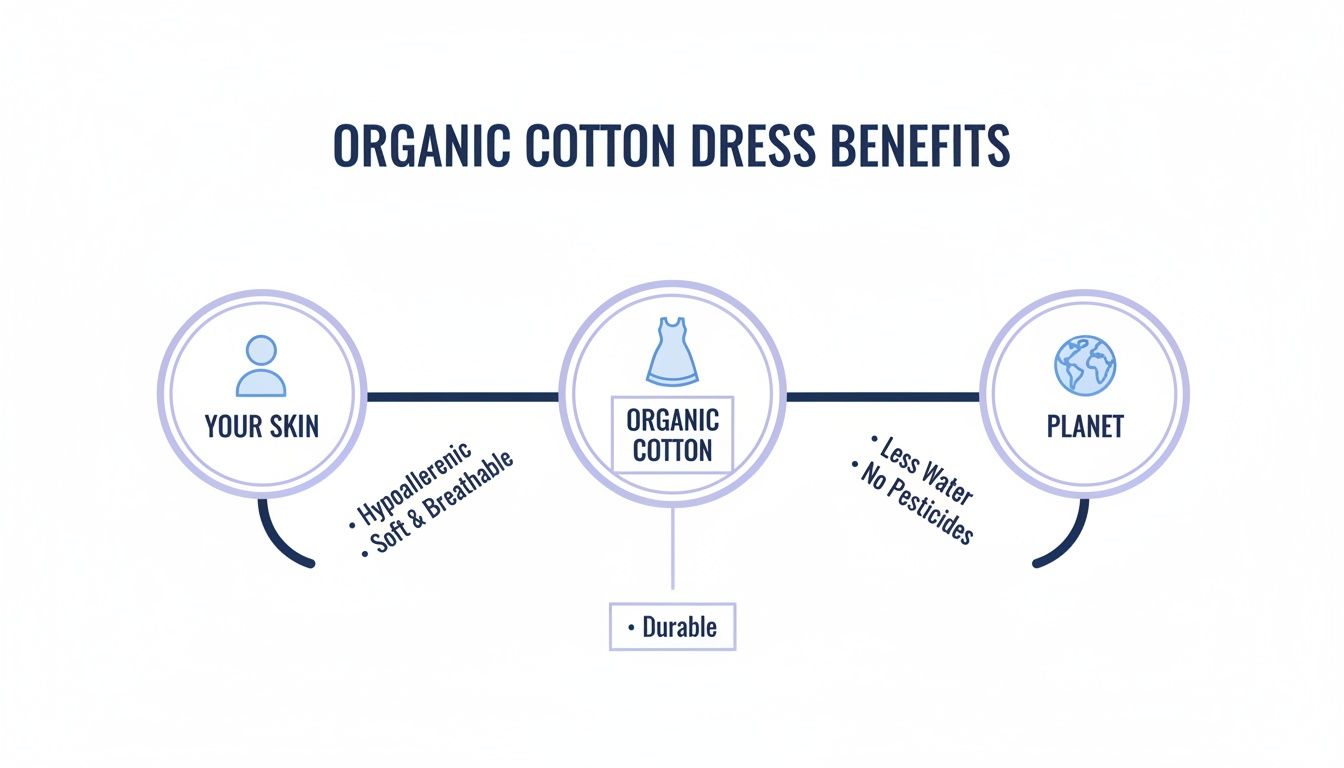
This visual beautifully illustrates how a single choice—an organic dress—creates a positive connection between personal well-being and planetary health.
Other Labels to Know
While GOTS is the most comprehensive, you might see other valuable labels on your journey. The Soil Association, for instance, is the UK’s leading organic certifier, and their logo often appears alongside GOTS on products sold here, providing an extra layer of trust.
The desire for this transparency is growing. In the UK, the organic market reached £3.2 billion in 2024, and textiles make up a significant part of that. This shift is powered by shoppers just like you—with a 35% increase in preference for certified organic womenswear among younger people, showing just how important trusted certifications have become.
Guides that explain GOTS certifications and eco labels can be incredibly helpful as you build your knowledge. This isn't just about deciphering logos; it's about connecting with the story behind your clothes and supporting the best ethical fashion brands who share your values.
How to Identify a High-Quality Garment
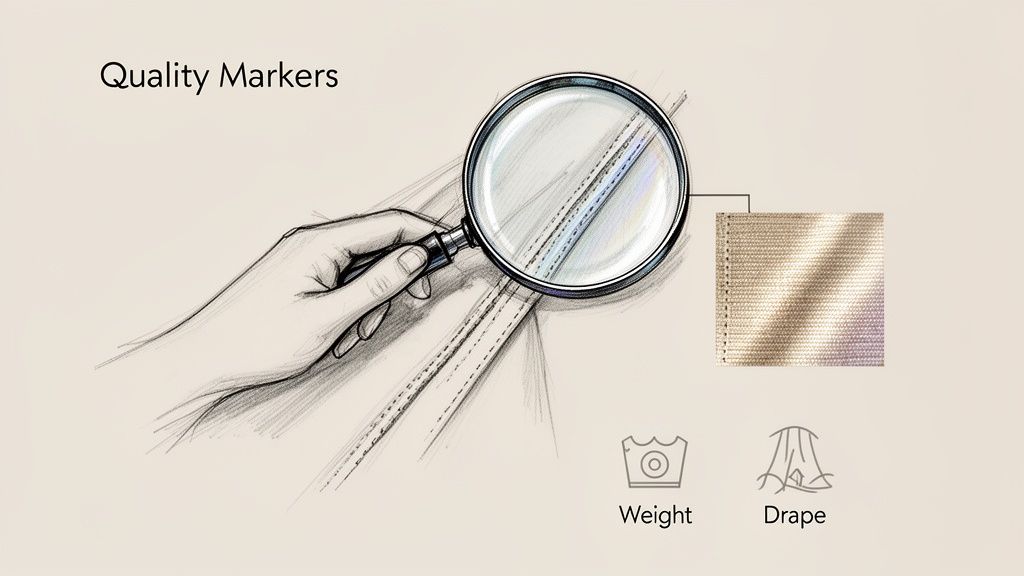
Finding the perfect organic cotton dress—one that feels like it was made just for you and will last for years—is about learning to look beyond the surface. It’s about using your senses to uncover the hidden gems and spot true craftsmanship.
The journey begins not with a price tag, but with your fingertips. A truly exceptional organic cotton dress tells a story through its texture, its weight, and the care woven into every single seam. Learning to read these clues is the secret to choosing a piece that’s not only beautiful but beautifully made.
This simple skill can transform shopping from a transaction into a mindful act of discovery.
Feel the Difference in the Fibres
The first whisper of quality comes from the fabric itself. Gently run the material between your fingers. High-quality organic cotton, especially long-staple varieties, feels incredibly soft and smooth, with a subtle, reassuring substance to it. It shouldn't feel thin or flimsy, which is often a sign that shorter, weaker fibres were used.
Think of it this way: short fibres are like tiny, tangled pieces of thread, prone to breaking and pilling. Long-staple fibres are more like continuous silk ribbons—stronger, smoother, and creating a far more luxurious and durable fabric. This is what gives a garment its gentle lustre and stops it from going bobbly after just a few wears.
The weight of the fabric is another important clue. While a summer dress will naturally be lighter than a winter one, the material should always feel appropriate for its purpose. A good quality fabric has a confident weight and a lovely, flowing drape, rather than feeling stiff or insubstantial.
Look for Signs of Thoughtful Construction
Once you’ve fallen in love with the feel of the fabric, it’s time to play detective and look at how the dress was put together. A beautifully made piece is a collection of tiny, thoughtful details that add up to create something both durable and elegant.
Here are the key markers of quality craftsmanship to look for:
- Stitching: Look closely at the seams. The stitches should be small, straight, and evenly spaced. Loose threads or crooked lines are a clear red flag. If you gently pull at a seam, it should feel strong and secure, not weak or strained.
- Seams and Hems: The best garments have finished seams, like French seams, which enclose the raw edges for a clean look inside and out, adding extra durability. Check the hem, too—it should be even, lie flat, and have enough fabric to hang beautifully.
- Patterns and Prints: If the dress has a pattern, like stripes or florals, check if they match up at the seams. This is a hallmark of meticulous craftsmanship that fast-fashion brands often skip to save time and fabric.
A well-made garment is a testament to care and patience. Every detail, from the buttons chosen to the finishing of a seam, reflects a commitment to creating something not just for a season, but for a lifetime.
Why Quality Construction Matters
Choosing a well-made organic cotton dress isn't just about how it looks; it's a deeply practical decision. A recent DEFRA survey found that 61% of UK women now prefer organic cotton specifically for its durability, with garments lasting up to 50% longer than their conventional counterparts. This growing preference for clothes that are ‘made to last’ shows just how much quality construction really matters. You can explore the full findings on cotton preferences and durability.
Investing in quality means you're choosing a dress that will hold its shape, resist wear and tear, and become a cherished friend in your wardrobe for many adventures to come.
Styling Your Dress for Any Occasion
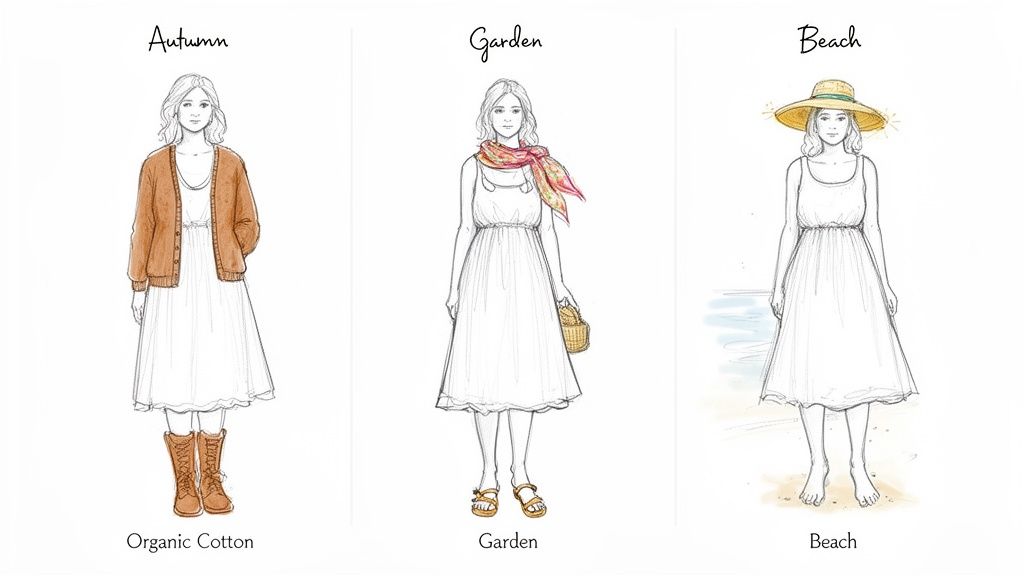
A beautiful organic cotton dress is really a blank canvas, a simple, elegant piece just waiting for your personal touch. Its real magic is in its versatility—the way it can transform with just a few thoughtful additions, carrying you through seasons and settings with an easy grace. This isn’t about needing a wardrobe full of clothes; it’s about seeing the endless potential in one cherished piece.
Think of your dress as the hero of your outfit. A simple change of accessories can completely rewrite its story, making it a true cornerstone of a conscious, adaptable wardrobe. This is the secret to creating timeless looks that feel completely, uniquely you.
Let's wander through the seasons and see how one dress can blossom in different lights.
From Autumn Walks to Winter Warmth
When that first crisp chill arrives in the air, your organic cotton dress becomes the perfect layering piece. Imagine it paired with a cosy, chunky-knit cardigan in a warm, earthy tone—perhaps a soft British alpaca wool that adds a touch of countryside charm. Add a pair of rich brown leather boots and thick, woollen tights, and you’re ready for a walk through crunchy autumn leaves.
As winter deepens, that same dress can be styled for both warmth and elegance.
- Layer a thin polo neck underneath for a chic, sophisticated look that adds an extra layer of warmth.
- Cinch the waist with a stylish leather belt over a fine-knit jumper to create a flattering silhouette.
- Accessorise with a silk scarf tied neatly at the neck for a pop of colour and a touch of classic flair.
These simple additions transform a breezy summer staple into a cosy winter essential, proving that style and comfort can go hand-in-hand. To make sure your dress truly shines, knowing how to dress for your body type can help you choose the most flattering cuts.
Spring Gardens and Summer Seasides
When the world reawakens in spring, your dress is ready to bloom right alongside it. For an elegant garden party or a sunny brunch, pair it with delicate espadrilles and a light, woven shawl. A little simple gold jewellery and perhaps a straw boater hat add a touch of playful whimsy. Exploring different patterns can also bring a fresh feel; you can find inspiration in our guide to the timeless appeal of floral dresses.
An organic cotton dress is your invitation to play. It asks you to be creative, to mix textures and colours, and to find joy in creating looks that are both beautiful and kind to the earth.
Then, for those perfect, sun-drenched summer days, styling becomes beautifully simple. Wear your dress with bare feet as you walk along the beach, a wide-brimmed sunhat protecting you from the afternoon rays. All you need is a simple canvas tote bag for your book and essentials. It’s a look that speaks of carefree elegance and a deep connection to the natural world—the very essence of what makes organic cotton dresses so special.
Caring for Your Organic Cotton Garment
A well-loved dress becomes a trusted friend, holding memories of sunny afternoons and special moments. Caring for your organic cotton dress isn't a chore; it's a quiet ritual that honours the beautiful, natural fibres and the earth that grew them. With just a little mindful attention, you can keep its softness and grace for many years.
This thoughtful care ensures your dress remains a beautiful part of your story, season after season. It’s about building a lasting relationship with the clothes you wear, treating them with the same kindness they show your skin.
The Gentle Wash
Think of washing your dress as a refreshing spa treatment, not a rough tumble in a machine. Organic cotton fibres are happiest in cool water, which protects their natural structure and prevents any shrinking. Hot water can be harsh, causing the delicate fibres to tighten and lose their lovely, relaxed drape.
We always recommend choosing a mild, eco-friendly detergent. Harsh chemicals and artificial fragrances have no place here; they can strip the cotton of its inherent softness and leave behind irritating residues. A gentle, plant-based liquid is all you need to keep your dress feeling fresh and clean. This simple switch also helps protect our waterways from unnecessary pollutants.
Caring for organic cotton is an act of reciprocity. By treating the fabric gently, you preserve the very qualities—its softness, strength, and purity—that made you fall in love with it in the first place.
This approach not only extends the life of your dress but also lessens your environmental footprint with every single wash.
The Magic of Air-Drying
The single most magical thing you can do for your organic cotton dress is to let it dance in the breeze. Skip the harsh, high heat of a tumble dryer and choose to air-dry whenever you can. This is the real secret to maintaining the fabric’s shape, softness, and vibrant colour.
Simply give the dress a gentle shake after washing to release any creases, then pop it on a line or a soft, padded hanger. Drying it indoors away from direct sunlight is best for preventing any fading over time. This simple act reduces energy use and protects the delicate fibres from the damage that intense heat can cause.
A few tips for perfect drying:
- Hang carefully: Use a wooden or padded hanger to avoid stretching the shoulders.
- Avoid direct sun: Bright sunlight can act like a natural bleach, so find a shady spot if you can.
- Embrace the steam: If your dress is slightly wrinkled, hanging it in the bathroom while you shower is a wonderful, energy-free way to steam it smooth.
This patient, gentle process is a small tribute to the slow, natural origins of your dress. It’s a quiet moment that connects your daily routine back to the rhythms of nature.
Common Questions About Organic Cotton Dresses
As you begin to explore the world of conscious fashion, a few questions naturally pop up. It’s part of making thoughtful choices, and we love that curiosity. We’ve gathered some of the most common questions we hear about organic cotton dresses, with answers to help you on your journey.
Think of it as a friendly chat over a cup of tea, where we can clear up any lingering doubts and help you feel even more confident in choosing pieces you’ll love for years to come.
Is Organic Cotton Really Better for Sensitive Skin?
Yes, absolutely. For us, the difference is like comparing a wild, untouched meadow to a perfectly manicured but chemically treated lawn. Conventional cotton farming often relies on synthetic pesticides, and the fabric is later processed with harsh chemicals. Traces of these can remain in the final garment, which can easily irritate the skin.
Organic cotton, on the other hand, is that wild meadow. It’s grown and processed gently, without those harsh inputs, resulting in a fabric that’s naturally soft, breathable, and hypoallergenic. It's a soothing embrace, especially for those with sensitive skin.
Do Organic Cotton Dresses Wrinkle Easily?
Any garment made from 100% natural cotton can wrinkle, and our organic dresses are no different. But honestly, we’ve come to see the soft, gentle creases that form as part of their relaxed, whimsical charm. It’s a beautiful sign of a material that’s alive and natural, not rigid and synthetic.
You'll also find that higher-quality, long-staple organic cotton fibres are more resilient and less prone to deep-set creasing. To keep wrinkles at bay, just remove your dress from the wash promptly, give it a good shake to loosen the fabric, and hang it up to air dry. A quick, gentle steam is usually all it takes to have it looking effortlessly elegant again.
The gentle wrinkles in an organic cotton dress are like smile lines—a beautiful sign of a life well-lived and a garment well-loved. They add character, telling a story of comfort and ease.
Why Are Organic Cotton Dresses Sometimes More Expensive?
The slightly higher price tag really tells a story of deeper value—it’s a reflection of a commitment to quality, ethics, and true artistry. You’re not just buying the dress itself, but investing in the entire gentle journey it has taken to reach you.
Here’s what that price truly represents:
- Healthier Farming: Organic farming is more hands-on and labour-intensive. It relies on natural methods like crop rotation and composting instead of chemical shortcuts, which simply takes more time, skill, and care.
- Rigorous Certification: The trusted certifications that guarantee a garment is genuinely organic and ethical involve real costs for audits and compliance, ensuring standards are met every step of the way.
- Fair Wages: A core principle of ethical production is paying farmers and garment workers a fair, living wage for their incredible craftsmanship. This is non-negotiable for us.
- Superior Quality: Brands dedicated to organic cotton, like us, often invest in better construction and timeless designs. We create dresses meant to be cherished for years, not just for a single season.
When you choose an organic cotton dress, you’re not just buying a piece of clothing. You’re investing in a healthier planet, better lives for its people, and a beautifully made garment designed to last.