

You've found the dress. It has the right colour, the right shape, and just enough seaside mischief to make your wardrobe sit up like a curious terrier. Then you spot the small line beneath the buy button: pre-order date.
Does that mean the dress is unavailable? Will your payment be taken now? When will it arrive, and what happens if the date slips while your parcel is still somewhere between the atelier and the sea?
A pre-order date is more than a calendar note. It's the point where a shopper's decision becomes part of a brand's production plan. For a conscious womenswear label, it connects timing, deposits, materials, fulfilment, communication, returns and waste. Read properly, it can help you decide whether waiting is sensible, rather than leaving you to peer at the product page through a fog of uncertainty.
Meeting the Pre-Order Date for the First Time
You're browsing after lunch, perhaps with a cup of tea going cold beside you. The Lobster Bisque Dress catches your eye, and you can already see it at a village fête, a seaside supper or an afternoon when the weather has finally remembered its manners. Under the product details, though, sits a pre-order date.
The natural question is simple: what am I agreeing to if I order today?
A pre-order usually means the brand is accepting orders before the item is ready for immediate dispatch. Your purchase helps the maker decide how many pieces to produce, which sizes or options to prepare, and when to organise materials and workshop time. Instead of selecting a finished garment from a warehouse shelf, you're reserving a place in a planned production run.
That arrangement can help both sides. Shoppers may gain access to a piece that isn't being held in large quantities, while brands can make closer to known demand and avoid producing stock that may remain unsold. The arrangement only works, however, when the date on the page reflects a real operational plan rather than a hopeful guess scribbled on the back of a receipt.
Why the date deserves attention
The phrase can refer to more than one moment. Some brands use it for the order cut-off, the day after which they stop collecting orders and begin production. Others use it for an estimated dispatch date or launch date. A careful product page should tell you which one it means.
For the shopper, the useful questions are:
- What does the date describe? Is it the final day to order, the start of production, dispatch, or expected delivery?
- When is payment taken? The brand may charge the full amount or request a deposit.
- What happens next? Look for a production window, shipping method and update process.
- What happens if timing changes? A trustworthy page should explain how the brand will contact you and what options may be available.
Britain has a long history of ordering goods before immediate fulfilment. By the end of the 19th century, mail order retailing had become an established part of the British market, and its development helped shape modern distance-selling models. After wartime austerity, British mail order didn't regain upward momentum until 1950, then grew rapidly through the 1950s and 1960s as consumer spending rose, as traced in this academic history of British mail order retailing.
So, the pre-order date isn't a strange new contraption. It's a modern label for an old relationship between committing to buy and receiving the finished item. The rest is learning to read the tide table.
What a Pre-Order Date Actually Means
A pre-order date marks a point in the journey from choosing an item to receiving it. Usually, it is the deadline for placing orders before a brand confirms demand and plans production or dispatch. The date is therefore more than a calendar note. It can represent a commitment to make, prepare and send the item later.
Read the wording carefully. “Pre-order by this date” usually identifies the order cut-off. “Shipping from this date” points towards dispatch. One tells you when ordering may close, while the other describes when the finished item may leave the brand. Treating them as the same date can create the wrong expectation about the wait.
A simple order timeline
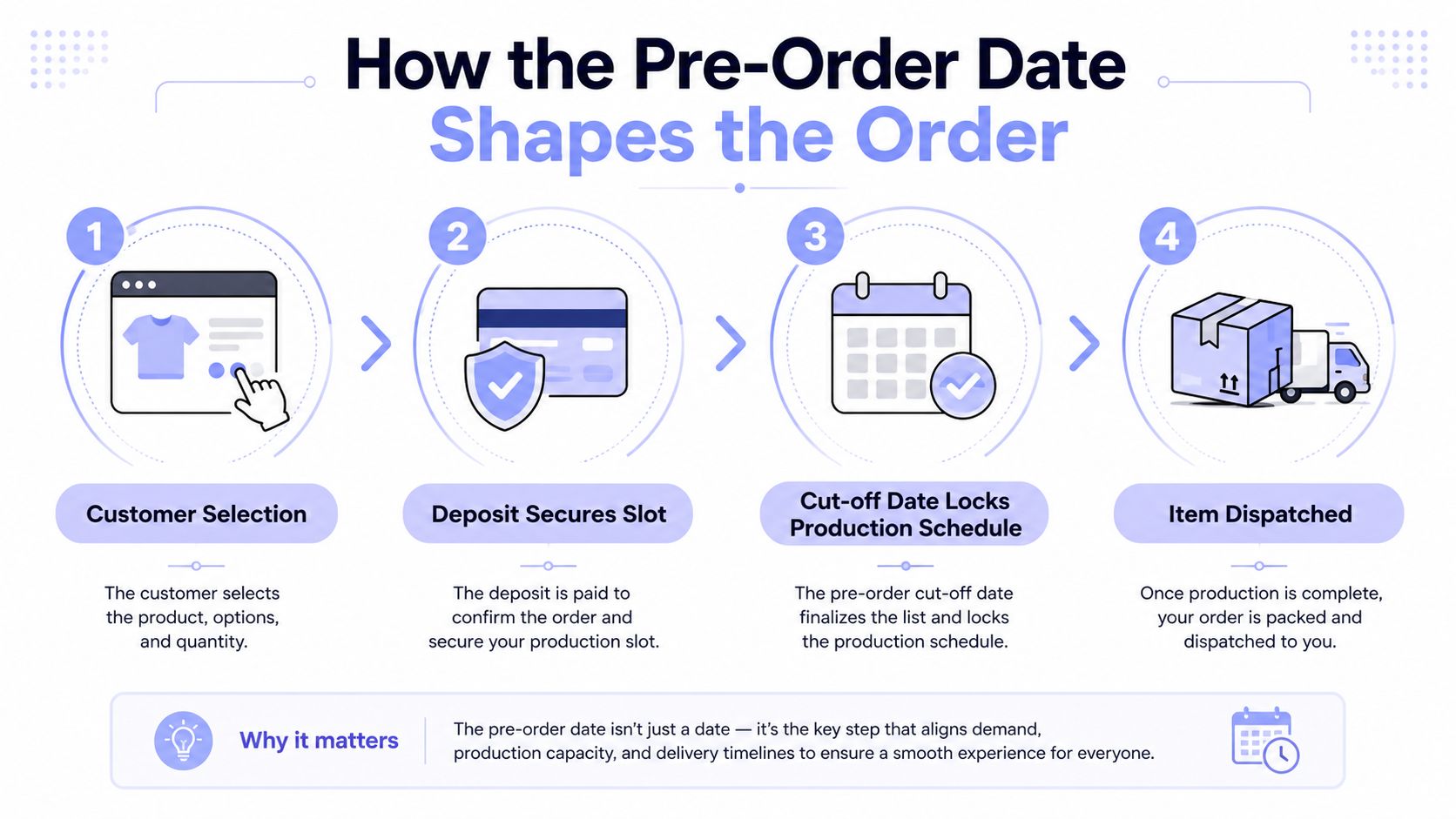
The process is easier to follow as a short procession from choice to parcel:
- Selection: You choose the garment, size, colour and available options.
- Order placement: You submit the order. For a distance purchase, this is the key contract moment.
- Payment or deposit: The brand takes the agreed amount or records a deposit against the order.
- Pre-order cut-off: The order window closes, and the brand confirms what it needs to make or prepare.
- Making and preparation: Materials, maker capacity and workshop time are arranged.
- Dispatch: The finished item leaves the brand.
- Delivery and first possession: The parcel reaches you, and the post-delivery cancellation period becomes relevant.
Ready-to-ship shopping begins with an item that has already been made, so dispatch can usually happen sooner. A waiting list is different again. It may record interest without creating a purchase contract, whereas a pre-order generally involves an actual order and an agreed payment arrangement.
For example, The Lobster Bisque Dress is described as 100% organic linen with a soft, organic cotton lining, with 18 variants across its listed options and availability data for 6 of them. If one version is offered as a pre-order, its date shows where that choice sits in the brand's fulfilment plan. The date alone does not reveal whether the garment is already cut, being made, or waiting for a production run.
The legal date underneath
UK distance purchases also have a legal layer. The Consumer Contracts (Information, Cancellation and Additional Charges) Regulations 2013 came into force on 13 June 2014, and they apply to relevant contracts entered into on or after that date, as set out in the legislation published by the UK government.
The Consumer Contracts Regulations provide the background for delivery and cancellation rights. Their application depends on the contract and the delivery arrangement agreed with the trader, so a pre-order page should state the expected timing plainly rather than leaving the buyer to decode it.
The practical meaning is simple: a pre-order date tells you when the brand intends to stop gathering orders or begin a later fulfilment stage. It does not, by itself, promise that the item will arrive on that day. For a wider explanation of the commercial logic behind advance ordering, why use pre orders on Kickstarter offers useful context when comparing fashion pre-orders with funded product launches.
How the Pre-Order Date Shapes the Order Itself
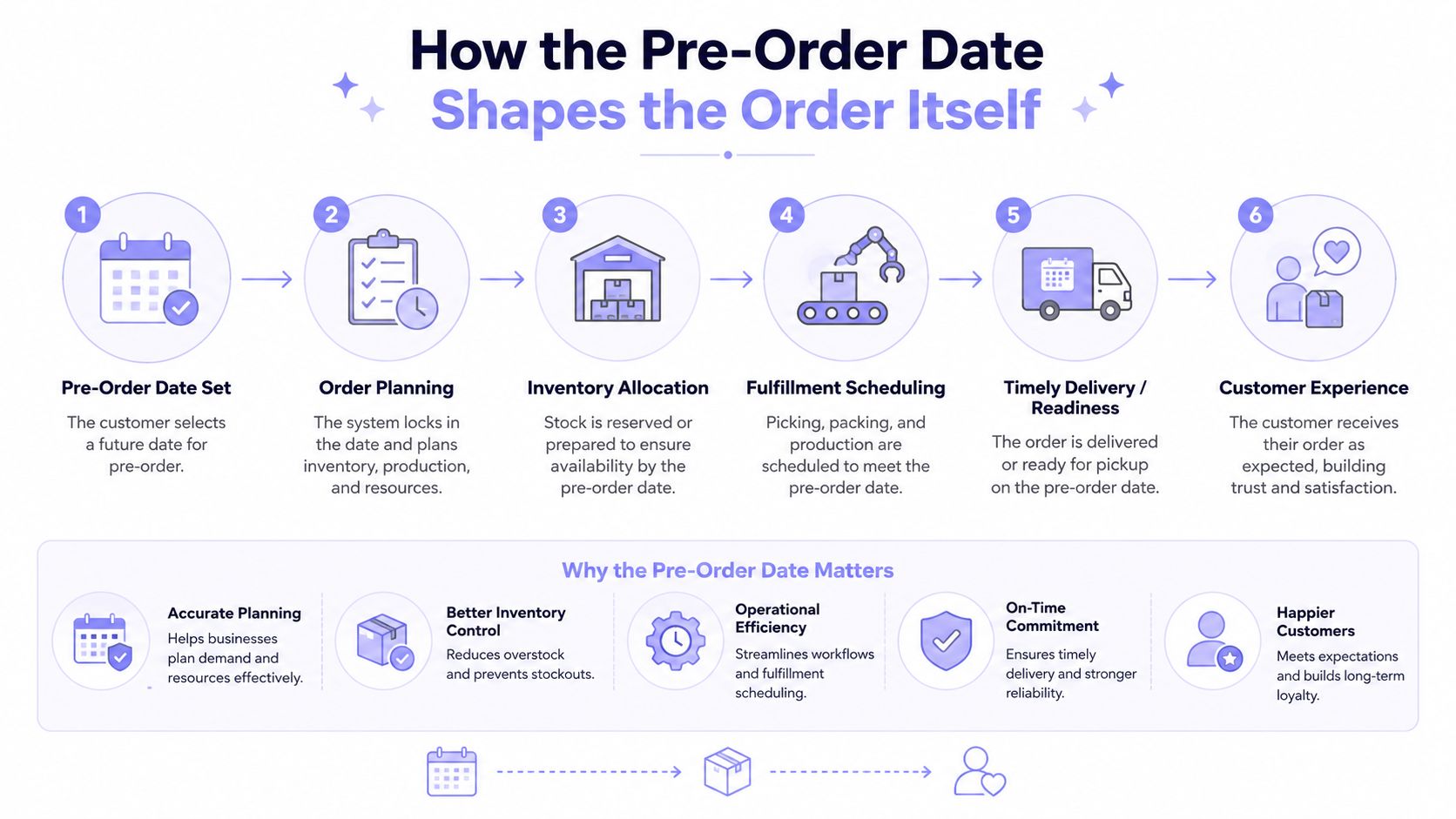
The date changes the order because it changes what the brand does next. Before the cut-off, the brand is collecting demand. After the cut-off, it can turn that demand into a more definite production schedule.
A helpful mental picture is a workshop door. Before the date, customers are still choosing their seats. At the cut-off, the door closes, the maker counts the chairs, and the fabric, thread and time are allocated. It's less romantic than a lobster in a sailor hat, perhaps, but it's much more useful.
The chain from payment to parcel
Production comes first. A brand needs to know whether the maker has capacity, whether materials are available and whether the product requires specialist construction. For UK-made clothing and homeware, the fulfilment phase after a pre-order cut-off typically ranges from four to eight weeks, depending on product complexity, maker or manufacturer capacity and the length of wait customers will tolerate, as described in industry guidance on pre-order fulfilment.
That window isn't a decorative estimate. It's a production commitment. A small team that promises delivery before confirming material lead times is placing the burden of its optimism on the customer.
Payment follows the brand's terms. Some businesses charge in full when the order is placed. Others use a partial deposit to reserve a production slot and collect the balance under stated conditions. The product page and checkout should explain which arrangement applies, when any remaining payment is due, and what happens if the brand can't meet the agreed plan.
Dispatch is a separate event. A pre-order date rarely means the parcel will arrive on that date. Making the garment, checking it, packing it and handing it to the carrier all happen before delivery. A good page separates “orders close”, “estimated completion” and “dispatch window” so you don't have to decode the message like a nautical chart.
What to ask before paying
The best pre-order page answers practical questions before you need to send an email.
- Ask about the cut-off: Find out whether the date is the final ordering day or the expected dispatch day.
- Check the fulfilment window: Look for a range, not just a vague promise that the item is “coming soon”.
- Read the payment terms: Confirm whether you're paying in full or placing a deposit.
- Look for delay communication: The brand should say how it'll update customers if production changes.
- Separate delivery from returns: Your statutory rights after delivery aren't erased by the fact that you ordered early.
A launch calendar can help a brand make these stages visible to customers. The Countdown Calendar launch guide offers context on organising product-launch timing, but a countdown should support an accurate production plan, not distract from one.
Brands can also explain their sourcing and production choices through a dedicated supply chain transparency guide. For shoppers, that kind of information helps answer the more meaningful question behind the date: what am I waiting for, exactly?
UK fashion lead times have also fallen since the start of the pandemic. A Product Lead Time Index covering more than 2,500 businesses across 25 sub-sectors found that delivery lead times for UK clothing, footwear and accessories retailers fell by 49.86% from March 2020, with the category ranked among the fastest-recovering retail sectors in the dataset, as reported in the KPMG consumer pulse snapshot. A shorter cycle can make pre-orders easier to manage, but only when the brand's actual production and inbound logistics are controlled.
Inside a Lavender Lobster Pre-Order
A small-batch womenswear label has a different relationship with time from a large retailer. The work may involve a British maker, natural fibres, limited fabric quantities and a production rhythm that follows seasonal drops rather than an endless stream of identical stock.
The Lavender Lobster presents a UK-based womenswear approach that combines seaside whimsy, countryside grace, natural fabrics and made-to-order production. In practice, that means a pre-order date has to sit inside a wider system. The brand needs to coordinate its atelier, communicate the customer's place in the run and keep the promise clear when a piece takes longer than a ready-made item.
Knitwear and the workshop rhythm
For knitwear such as the Après Ski Cardigan, the date can help organise a group of orders into a manageable run. British alpaca wool and careful construction create a tactile, seasonal object, but they also require the brand to understand the maker's capacity before publishing a window.
The sensible customer experience is straightforward. The product page states the pre-order date, explains what happens after the cut-off and gives an estimated production or shipping window. Once the atelier finishes the piece, the brand communicates dispatch rather than leaving the customer to wonder whether the garment has joined a travelling circus.
Deposits and made-to-order accessories
Dresses and sweaters may use a deposit structure, depending on the product and the brand's terms. The important point isn't whether a deposit feels more comfortable than full payment. It's whether the amount, balance arrangements, cancellation terms and response to delays are written plainly before checkout.
Accessories can follow the same principle on a smaller scale. The Sailor Hats are made to order from offcuts of larger garments, with each hat individually made by seamstresses in the UK. They're available in Garden Society, Ledger and Regatta Stripe prints, with custom print requests welcomed subject to fabric availability. That approach gives leftover fabric a second life, while the made-to-order rhythm means the date should reflect actual sewing capacity rather than an abstract dispatch target.
Communication is part of the product
The customer shouldn't have to chase the brand for every update. A clear cadence might include confirmation after ordering, a reminder when the pre-order window closes, an update during production and a dispatch message when the parcel leaves. If the date slips, the brand should explain what changed, give the revised expectation and set out the customer's available choices.
The Lavender Lobster also uses Instagram to announce product drops, pop-ups and styling inspiration. Social content can create excitement, but the product page and order emails remain the places where the practical promise needs to live. A pretty launch post can invite you aboard. It shouldn't be the only map.
Pre-Orders, Returns and Real Sustainability
A pre-order can feel like a thoughtful alternative to producing piles of unsold clothing. That promise depends on the whole customer journey, including the waiting period, the information provided before purchase and what happens if the item comes back.
Matching production to confirmed demand may reduce unnecessary stock. Yet uncertain ordering, a long delay or several size returns can weaken that benefit. Sustainability is therefore a production commitment, not just a sales deadline.
UK consumer research found that 42% of consumers abandoned an online purchase because free delivery wasn't available, while 41% abandoned one because free returns weren't offered, according to KPMG research on delivery and returns. The same KPMG research also found that 13% buy multiple items in one order and return the rest to find the right fit, while 66% agree that returns are a standard part of e-commerce.
Waiting can change behaviour
A four-to-eight-week fulfilment window gives a shopper time to ask whether a garment belongs in a lasting wardrobe. It can also stretch patience. During the wait, another item may appear, a customer's finances may change or uncertainty about the fit may grow.
A more sustainable pre-order model needs practical help before payment: accurate measurements, useful fit guidance, fabric details, honest timing and a returns policy that leaves room for a fair decision. The date should support considered buying, rather than ask the customer to trust a vague promise.
A useful sustainability test: ask whether the pre-order helps you buy with more certainty, not merely whether it helps the brand make fewer items in advance.
The Clubhouse Cocktail Napkins | Set of 4 shows how material and design choices can carry a clear story. The set uses 100% flax linen in a pale blue plain weave, with a red stitched border and embroidered clubhouse scenes. Its single listed variant does not make it a fashion pre-order, but the example connects material choice, distinctive design and long-term use without relying on a sweeping sustainability slogan.
Signals of a more credible model
Look for these details in the shopping experience:
- Honest lead times: The page names a realistic production or dispatch window.
- Clear order mechanics: You can tell what the pre-order date controls.
- Transparent deposits: The brand explains when money is taken and how the balance works.
- Useful fit guidance: Measurements and garment information reduce speculative ordering.
- Material reuse: Offcut-led products can give fabric another use.
- A visible returns policy: The conditions are available before payment, rather than hidden after delivery.
UK distance-selling rights still apply to relevant online purchases. The Lavender Lobster returns policy explains the brand's own process, while statutory rights provide the wider framework. A responsible pre-order lets the customer wait with clear expectations and still choose fairly if the product is not right.
A Merchant Checklist for Honest Pre-Order Dates
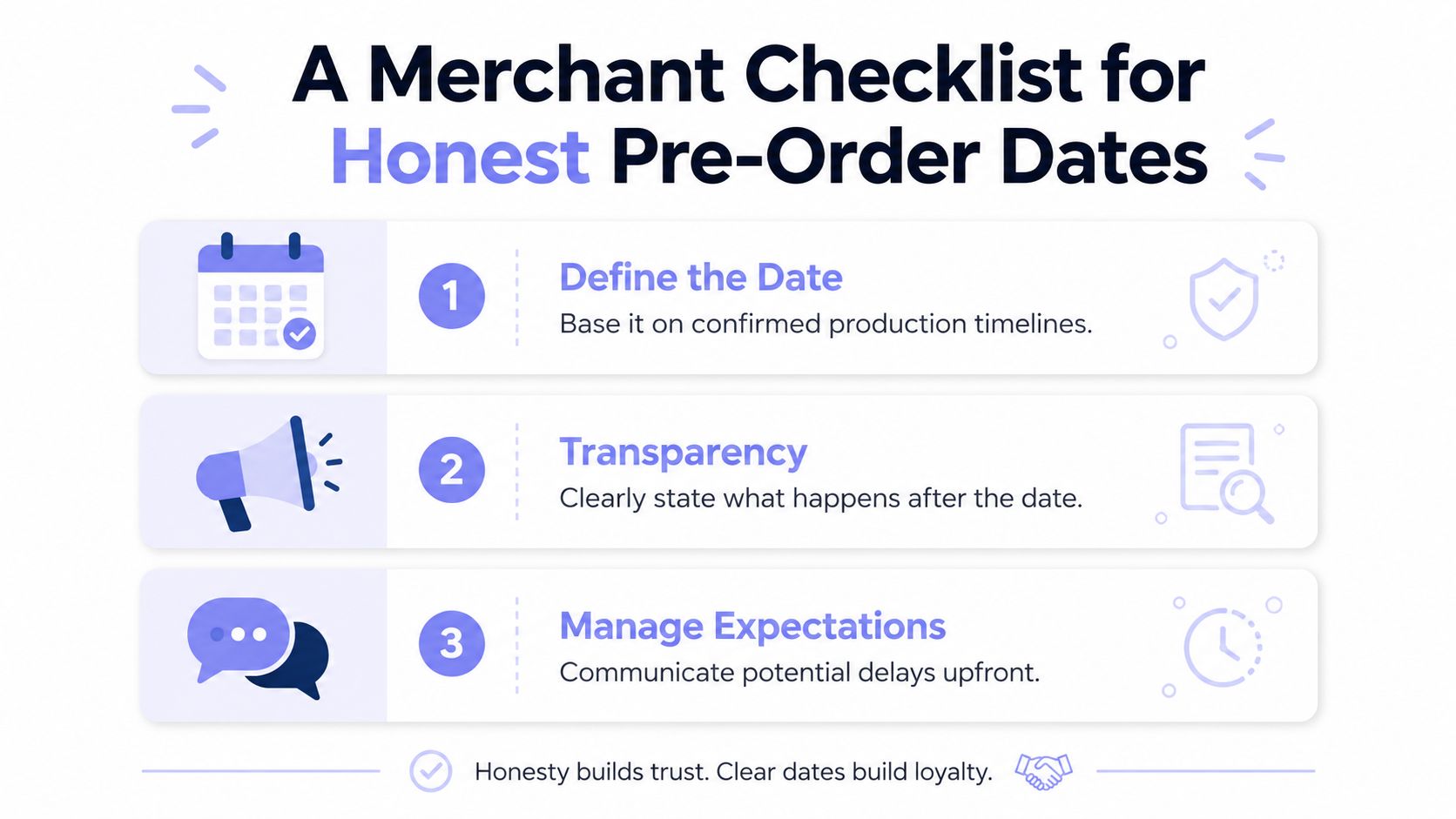
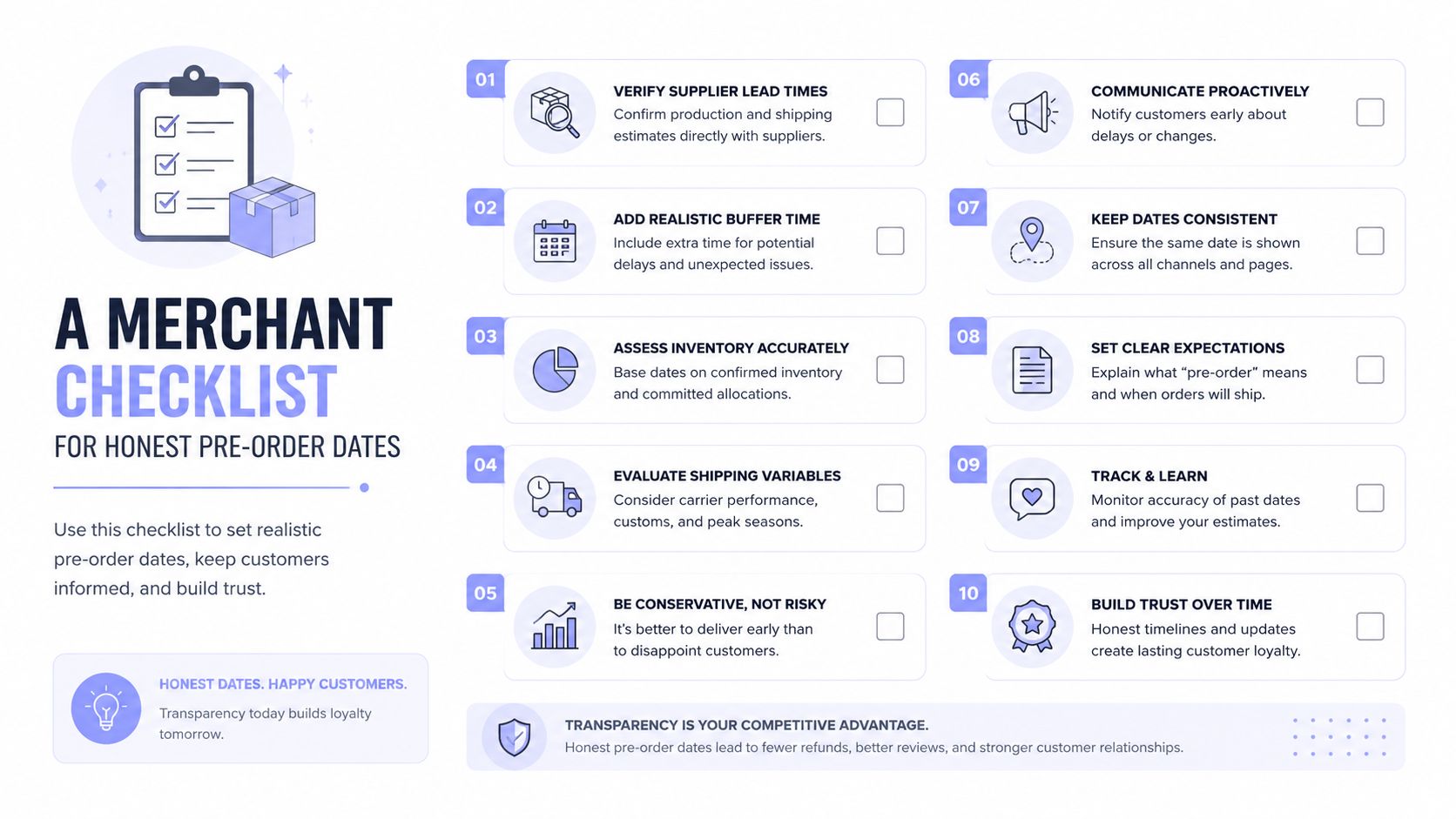
A pre-order date is an operations promise before it becomes a sales message. Before publishing a new drop, the merchant can use this practical check.
- Confirm production capacity. Speak with the maker, check the materials and match the planned quantity to the workshop time available. A full order book is only useful if the sewing room can keep pace.
- Agree the cut-off. Set the final ordering date with the person producing the goods. The calendar must follow the workbench, not race ahead of it.
- Set a realistic delivery window. Base the customer promise on the confirmed production plan, allowing room for ordinary changes rather than relying on the most hopeful estimate.
- Publish both milestones. Show the pre-order date and the expected shipping or delivery window on the product page. Explain, in plain language, which date closes ordering and which describes fulfilment.
- Prepare the delay message. Decide who will contact customers, what update they will receive and how the brand will handle a revised date. Clear communication turns an unexpected tide into a manageable change.
The UK Consumer Contracts Regulations provide guardrails for delivery. Where no different arrangement has been agreed, goods should arrive without undue delay and within the applicable legal timeframe. A brand cannot use “pre-order” as permission to place an order in an indefinite queue.
The post-delivery cancellation period is separate. Business Companion explains the 14-day consumer cancellation period in its distance sales guidance, beginning the day after the goods enter the customer's physical possession. The statutory timeline therefore does not begin on the pre-order date.
A small team can use this small-batch production resource to connect production choices with the wider Lavender Lobster approach. The practical test stays plain: can the business make what it promised, by the time it promised it, and explain the plan if circumstances change?
Reading a Pre-Order Date With Calm Confidence
A pre-order date becomes much less mysterious when you place it inside the whole journey.
You choose the item and place the order. The brand takes the agreed payment or deposit, then closes the order book at the stated cut-off. Production follows, then dispatch, delivery and your first possession of the goods. After delivery, the statutory cancellation process has its own timeline. GOV.UK explains that online, mail and telephone order customers have 14 days to tell the seller they want to cancel after receiving the item, followed by another 14 days to return it, as set out in its consumer returns and refunds guidance.
The brand controls its production plan, materials, capacity, updates and delivery promise. You control whether the timing suits your life, whether the fit information gives you enough confidence and whether the item earns its place in your wardrobe. Neither side benefits from pretending that a slow process is effortless.
For a conscious shopper, the date can be a useful pause. It gives you room to check the fabric, measurements, payment terms and returns information before committing. For a maker, it creates an opportunity to produce with greater care and less guesswork, provided the date is based on the workshop rather than wishful thinking.
The Lavender Lobster's world of wearable whimsy, natural fabrics and pieces intended to last across seasons makes that pause feel less like a delay and more like part of the garment's story. A dress, cardigan or made-to-order accessory doesn't need to tumble instantly from warehouse shelf to doorstep to be worthwhile. It does need a clear promise.
A date on a product page is a promise. Knowing how to read it is half the joy of slow fashion.
Before ordering, write down the pre-order cut-off, expected fulfilment window, payment arrangement and returns terms. If those details are clear and the wait fits your plans, place the order with confidence, then let the atelier get on with its careful little bit of magic.
If you're considering a pre-order, visit the product page, read the timing and returns information in full, and contact the brand before paying if any part of the promise is unclear. If you're publishing a pre-order, confirm the production plan first and put the cut-off, fulfilment window, payment terms and delay process where every customer can find them.