

At dawn on a Somerset hill, an alpaca leans over a gate while a maker rubs fibre between her fingers and checks how it catches the light. By the time the kettle's boiled, she's already talking about drape, warmth, and whether a cloth will hold its shape after a long day in the world. That's uk fashion manufacturing at its most human, part craft, part logistics, part careful listening.
A Morning on a Somerset Hill
A British fibre story often starts before the first stitch. In a field, a fleece has texture, lanolin, and little quirks that tell you how it'll behave later in the process, and in a small workshop, those quirks get translated into cloth, sample, or garment. That distance between pasture and finished piece is short enough that a founder can follow it with real questions, not just a spreadsheet.
There's something unusual about making clothes in Britain. A designer can stand in a mill, touch a roll of cloth, then drive to a sewing unit and ask why a seam puckers or why a lining feels too slippery. That kind of proximity makes traceability feel practical rather than performative, which is why domestic production often feels more intimate than offshore production, even before anyone mentions ethics or carbon.
Practical rule: if you can't explain who touches your fabric at each stage, you probably don't yet have a production plan.
The best UK makers often don't sell fantasy. They sell clear communication, small-batch realism, and enough craft knowledge to catch a problem before it becomes a costly mistake. That's also why founders who care about provenance tend to like making in Britain, because the story isn't just where the garment ends up, it's who shaped it along the way.
The Shape of UK Fashion Manufacturing Today
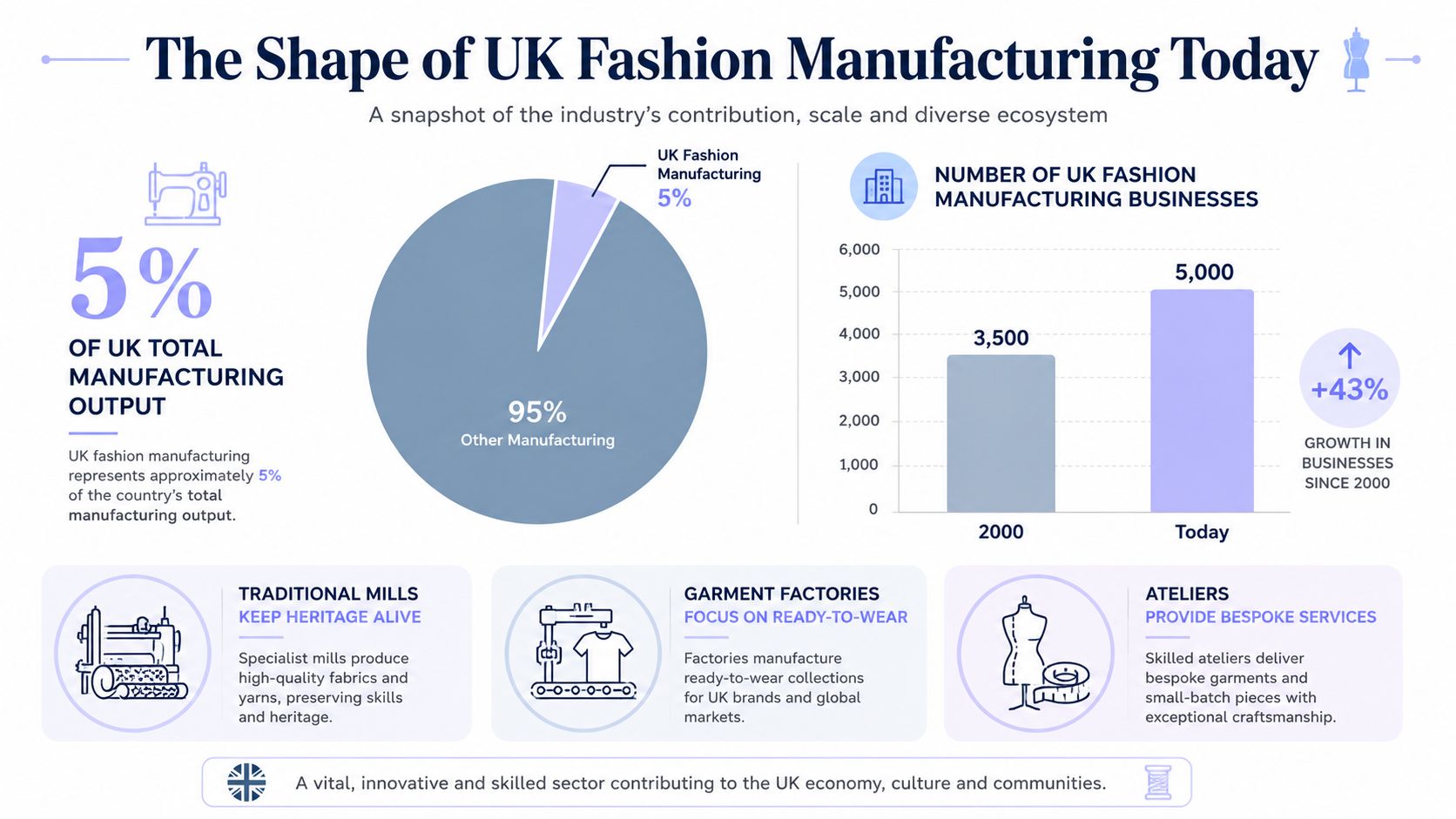
UK fashion manufacturing is not a giant factory machine, it's a patchwork of specialists. IBISWorld estimates the UK Clothing Manufacturing industry at £2.6 billion in 2026, with 3,762 businesses operating in the sector, and a forecast 2.1% CAGR in enterprise count against a 2.5% CAGR decline in market size between 2021 and 2026. In plain English, that means the sector is real, valuable, and active, but it's also modest in scale and built from many small operators rather than a few dominant giants. IBISWorld's industry profile makes the point clearly enough, even before you step into a workshop.
The business is similarly dispersed. ONS data for March 2023 shows 10,685 VAT and/or PAYE fashion and textile manufacturing enterprises across the UK, with 2,525 in London, 1,210 in the East Midlands, 1,185 in the South East, and 1,080 in the North West. That distribution matters because it means a founder often works with regional clusters, not one neat national hub, and travelling to meet makers is part of the job rather than a side quest. The regional enterprise data shows why the map matters as much as the margin.
The shape of the industry is also visible in how many businesses are tiny. ONS fashion-industry data shows 80% of apparel-manufacturing firms sit in the 0 to 9 employee band, which explains why short runs, sampling, and specialist work often happen through networks of small units rather than vertically integrated plants. That's a blessing if you need flexibility, and a constraint if you want huge volumes quickly.
If you're trying to map the sector, the best first read is often a transparency lens like supply chain transparency, because the manufacturers, materials, and handoffs matter more than a patriotic slogan ever will. Opportunity sits in knowing which local partner does which job, and where your label fits into the fabric of the country.
Knowing Your Manufacturers
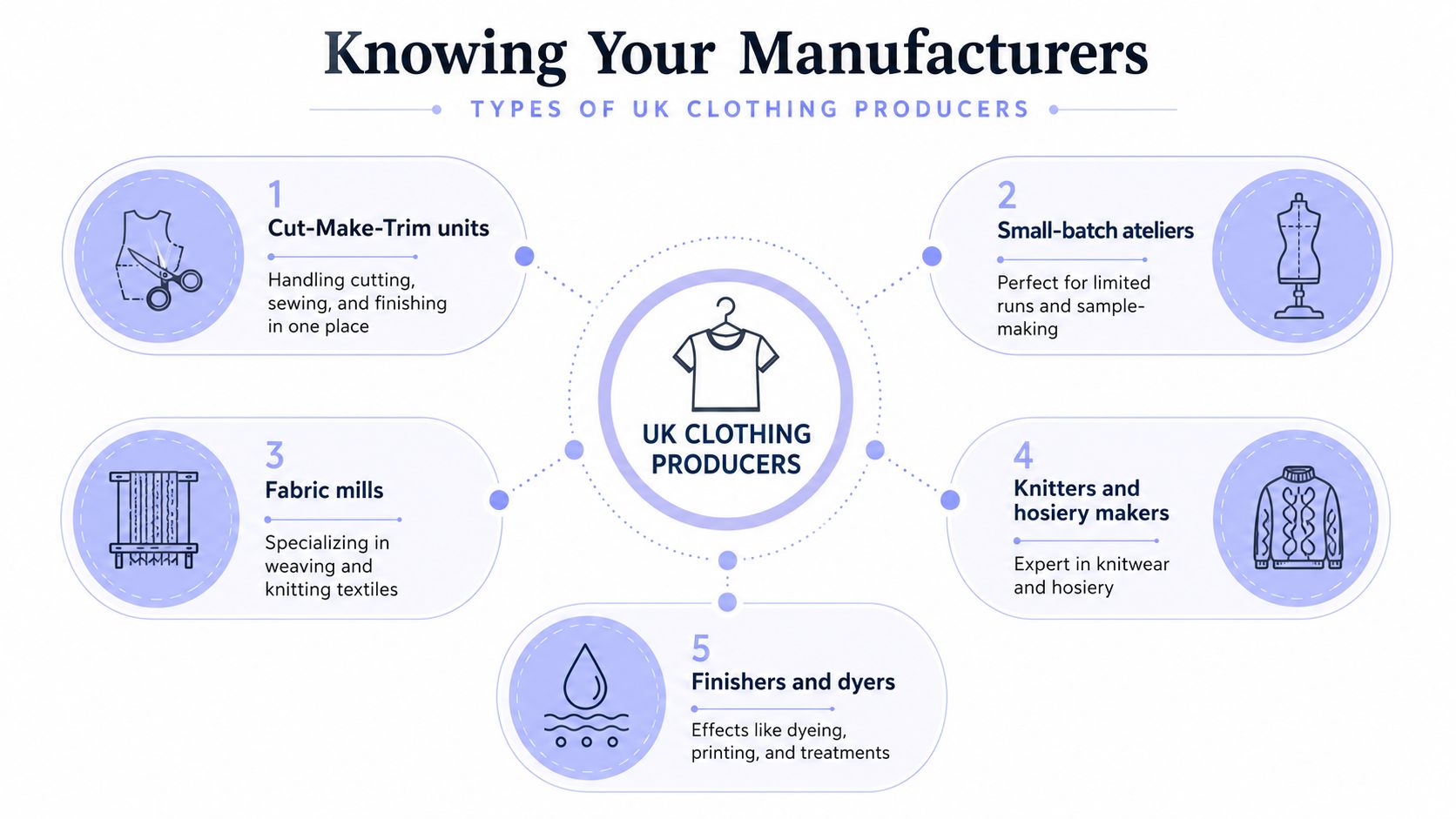
A cut-make-trim unit, often shortened to CMT, handles the simplest version of garment making, where fabric arrives and the team cuts, sews, and finishes it. A small woven label might use this route for dresses, trousers, or shirts when the pattern is ready and the fabric is already booked. If you need a clean, repeatable garment with a reasonably straightforward construction, CMT is often the most practical door into production.
An atelier works differently. It's usually smaller, more hands-on, and better suited to limited runs, prototypes, or technical detail that needs a person, not a production line, to solve. A London atelier might be the right partner for a woven dress label that wants fitted silhouettes, careful pressing, and quick pattern tweaks between samples.
A mill makes cloth rather than garments. That might mean weaving woollens in the north of England or creating fabric structures that later become dresses, jackets, or coats. A knitwear brand, for example, might buy yarn from a Yorkshire spinner, then decide whether the next stage happens locally or elsewhere depending on gauge, finishing, and capacity.
The specialists who often get overlooked are the finishers and dyers. They can alter the feel, colour, shrinkage, or texture of a fabric in ways that change the whole character of a product, which is why a low-impact dye house can be as important as the sewing unit that assembles the final piece.
A useful place to compare terminology is Banger's guide to finding garment makers, because the phrase “garment maker” can mean very different things depending on whether you need sewing, sampling, or the full package.
A mill turns raw material into cloth. A CMT unit turns cloth into clothes. Mix those up, and the wrong first email goes out fast.
The whimsical side of this ecosystem shows up in the details. The Sailor Hats, for instance, are made from offcuts of larger garments, then sewn in the UK by seamstresses into a matching accessory that uses fabric more fully. That sort of production choice only makes sense when a founder understands the difference between leftover cloth, make-to-order sewing, and the rhythm of a small workshop.
Costs, Lead Times and Minimum Orders
Every founder runs into the same triangle, unit cost, lead time, and minimum order quantity. In Britain, that triangle is especially sharp because many makers are small, skilled, and booked in advance, which means the cheapest per-piece route isn't always the safest cashflow choice. A low MOQ can protect you from overbuying, but it can also mean a higher price per garment if the maker has to set up the line for a tiny run.
Here's the simple version. Small-batch knitwear usually asks for more money per piece, because the craft, yarn handling, and machine time are more specialised, but it keeps your capital risk lower. Larger cut-and-sew runs can improve the economics of each garment, yet they also demand confidence, working capital, and patience while fabric, labour, and finishing all line up.
| Production type | Typical minimums | Lead time | Cost driver |
|---|---|---|---|
| Cut-and-sew | Small to medium runs, depending on maker | Varies with capacity and complexity | Fabric choice, pattern complexity, seam detail |
| Small-batch atelier work | Very low runs, often sampling or limited editions | Often the most hands-on and iterative | Labour intensity, fitting time, revision cycles |
| Knitwear production | Often tied to yarn booking and machine availability | Depends on yarn, gauge, and finishing | Yarn quality, knitting time, linking, washing |
For a founder trying to trim waste, it helps to think like an accountant for a minute and like a designer for the next one. A cost-reduction guide such as Stewart Accounting Services' advice on reducing business costs is useful not because it knows fashion, but because it reminds you to separate avoidable overhead from the cost of getting a product right. The same logic applies to production, where the right decision is often about risk, not just the headline quote.
The Lobster Bisque Dress is a good example of how material choice changes the economics of a piece. It's made from 100% organic linen with a soft organic cotton lining, which is the sort of fabric pairing that can be lovely to wear but also needs thoughtful sourcing, cutting, and finishing to make the final garment feel worth the effort.
Practical rule: ask every maker for pricing at your target run size, not for a generic unit price that may never apply to your line.
If you want a fuller treatment of how small runs behave in practice, the internal guide on small batch production sits nicely beside these decisions. Exact numbers always depend on fabric, yarn, and complexity, so the smarter question is, what does this cost when your real order is on the table?
Sustainability Without the Greenwash
A lot of founders come to UK fashion manufacturing for the same reason they choose a particular cloth or trim, they want the material story to feel honest. British alpaca, organic linen, low-impact dyeing, and shorter transport all make sense when you want the supply chain to feel legible rather than mysterious. A made-in-Britain label can support that, but only if the underlying sourcing is traceable.
The catch is that domestic sewing doesn't magically make the whole garment local. UK sustainability evidence says the country isn't a large-scale maker of zips, cotton thread, buttons, or many raw materials, so even British-made pieces still rely on imported inputs. That means “Made in UK” is usually a claim about one part of the chain, not the whole thing, and pretending otherwise only helps marketing, not credibility.
The broader material system matters too. The Cambridge report on UK textiles estimates 3.25 million tonnes of clothing and textiles move through the UK each year, about 55 kg per person, and only about one fifth of annual consumption by weight is made domestically, roughly 0.4 million tonnes. The report also shows that a large share of fibre, yarn, and fabric inputs arrive from abroad, which means localisation usually begins with assembly and finishing rather than total self-sufficiency.
A useful greenwashing check is simple. If a label says it's local, ask which stages are local, and which are not. The internal guide on how to spot greenwashing is handy here because the strongest sustainability story usually comes from specificity, not from halo effects.
The playful side of this world can still be real and useful. Clubhouse Cocktail Napkins | Set of 4 are a small example of how a product can combine 100% flax linen, embroidered detail, and a whimsical visual language without pretending the item is anything other than a carefully made textile piece.
The cleanest sustainability story is the one that names what's local, what's imported, and what still needs work.
Finding, Vetting and Sampling with Confidence
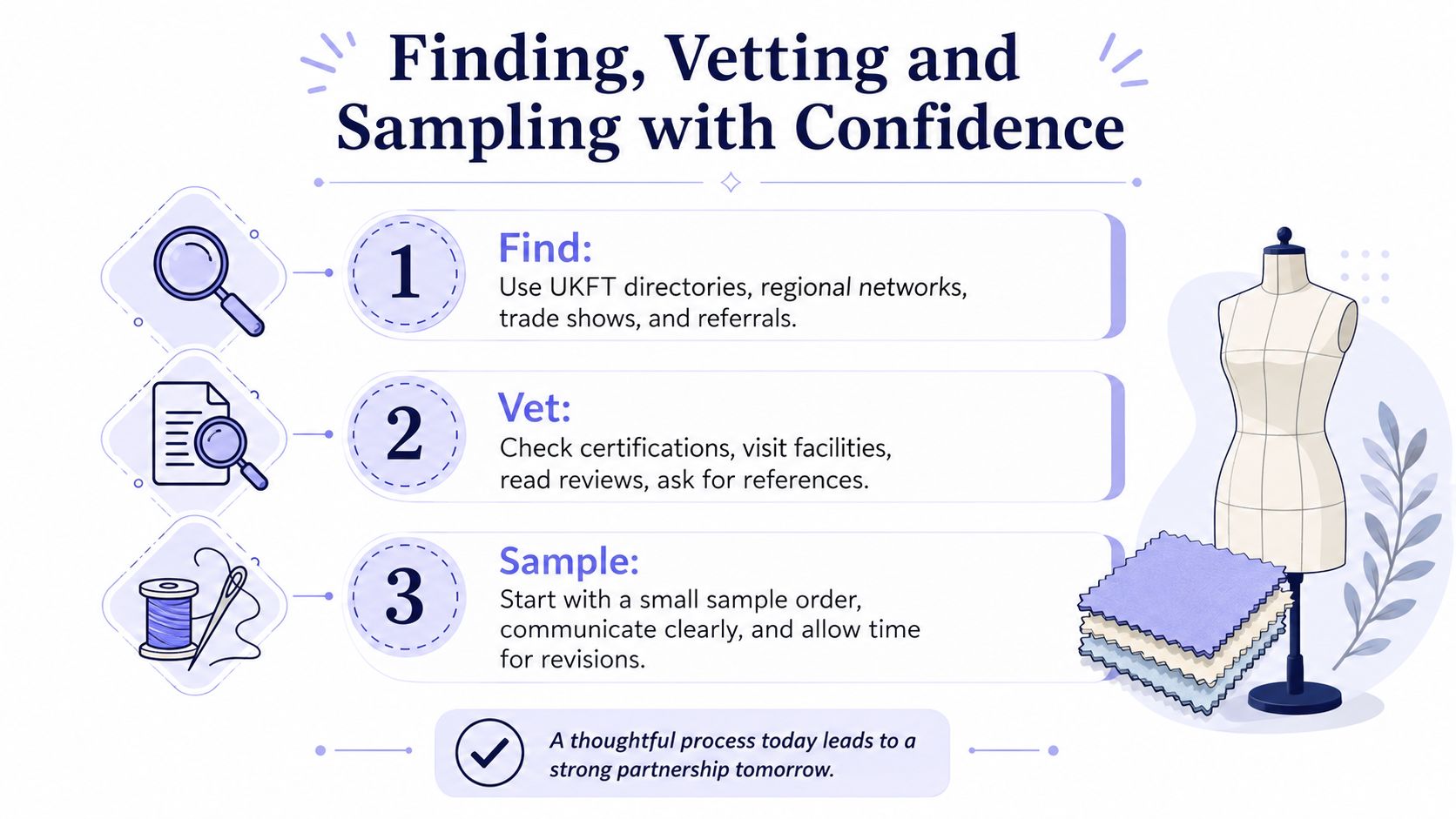
The first good makers rarely appear by accident. Founders usually find them through UKFT directories, regional maker networks, trade shows, and referrals from people who've already been through the sampling grind. A thoughtful first email is short, specific, and respectful of capacity, because makers are more likely to answer a clear brief than a dream dressed up as a production plan.
Ask for the facts that shape feasibility. What product types do you make? What's your current capacity? What are your usual lead times? Do you handle pattern work, grading, or just sewing? Those questions save time because they tell you whether the unit is a fit before anyone spends a day untangling assumptions.
Sampling is the audition. The sample shows how the maker handles fit, communication, finish quality, and pattern adjustments when a design meets real cloth rather than a sketch. If a maker is vague about revisions, slow to answer technical questions, or unwilling to explain how changes are billed, the relationship may become expensive in ways that don't show up on the first quote.
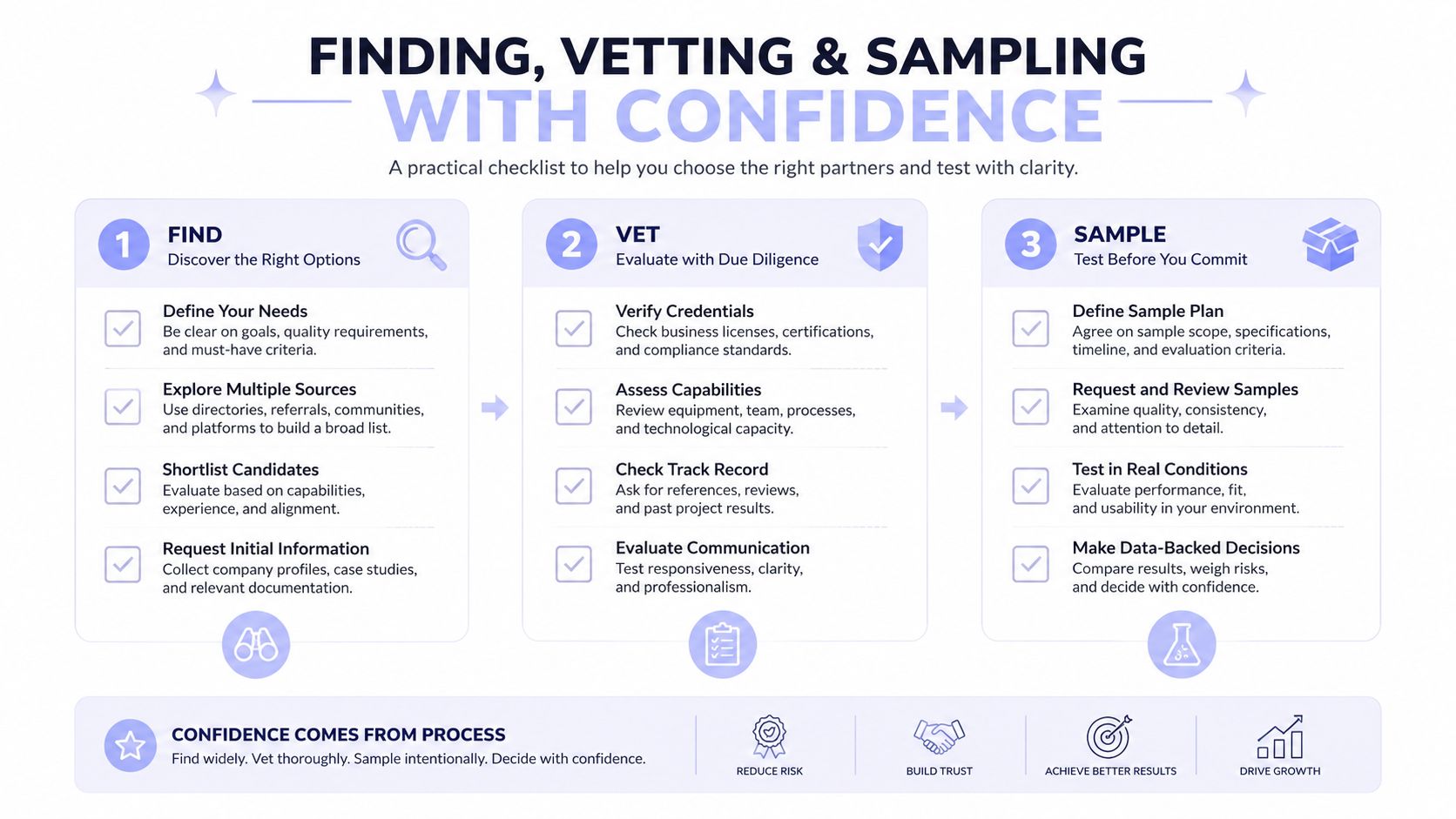
Before you commit, check a few practical things.
- Visit the unit: See who's on the floor, what the machinery looks like, and whether the place matches the email tone.
- Ask for references: A maker who has happy clients should be able to point you to them without drama.
- Confirm pattern ownership: Know who owns the blocks, grades, and technical files before the first sample starts.
- Agree revisions in writing: Clarify how extra fittings, redrafts, and late changes are charged.
A sample agreement doesn't need to be dramatic to be effective. It just needs to set expectations around timing, payment, revision rounds, and what happens if your design changes halfway through. That's where trust lives, not in the first charming conversation.
Funding, Grants and Getting Goods Home
Funding, grants, contracts, quality control, and logistics are not the boring leftovers of production, they're part of the creative structure. UK support can come from regional growth funds, skills and training support, or sustainability-linked programmes, and each one matters because it can open up a stage of the process that would otherwise be too expensive or too slow for a small label to manage alone.
The contract should stay plain. State who owns the patterns, who holds the material risk, what happens to unsold stock, and how delivery delays are handled. If the commercial relationship is fuzzy, quality problems become personal very quickly, so it helps to write things down before anyone has cut a metre of cloth.
Quality control works best in layers, not at the end. Check fabric on arrival, inspect first runs during production, and review finished garments before they go into warehousing or shipping. That way, a problem with stitch tension, trim placement, or shade variation gets caught early, when the fix is still manageable.
Warehousing and shipping deserve their own plan too. Once garments exist, they need a home, a packing method, and a route to customers that fits the way you sell. A small brand with pre-orders, for example, may need a different dispatch rhythm from one doing seasonal drops, and both need a shipping setup that won't undo the care that went into the garment itself.
A Founder's Checklist for Choosing UK Production
Start with your minimum viable run, not your fantasy run. Then write down which stages you can realistically localise, design, pattern work, fabric, cut, sew, or finish, and which stages will almost certainly stay overseas for now. That answer will shape everything else, from cost to scheduling to how much complexity you can support without losing sleep.
Before you speak to a supplier, define your priorities. Maybe you care about fibre origin, labour standards, a particular lead time, or a willingness to do small revisions without a battle. If those priorities aren't clear in your own head, they won't be clear in your first conversation with a maker either.
Budget for sampling as a real cost, because it is one. The sample is where you find out whether the garment works, whether the maker understands the brief, and whether your idea survives contact with cloth in a way that still feels like you.
Making in Britain is rarely the cheapest route, and that's fine. For founders who care about provenance, design integrity, and the quiet delight of knowing who shaped their clothes, it can still be the most rewarding one.